Category Archives: Uncategorized

Monday

Monday 20th August
We slept well and late and woke up to sunshine and ready to take on the day. Keith wasn’t quite so perky after he found that the milk ‘Dana’ had proudly heralded the night before as  awaiting our use in the ‘fridge was dated 26th June……..C’est la vie!
 Seeing this minor stumbling block as a ‘stepping stone’, we set out for ‘brunch’.  This we found in the ‘Two Reubens’  Cafe.   The designer flaky painted plaster, a motley collection of chairs and dehydrated tradescantia plants belied the standard of the food – the poached eggs were perfect!
3587BFCA-73D8-4CBA-BC63-685F11C17BF7.jpeg
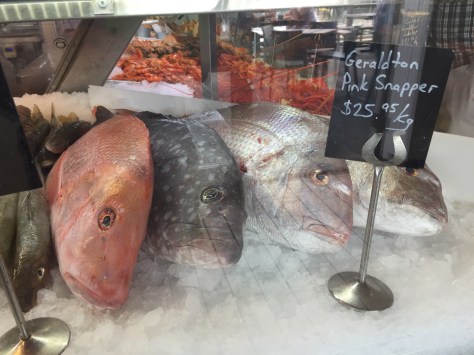
Well sustained, we headed down to the waterfront, passing the Little Creatures Brewery on the way to the fish market where we purchased fish for supper.
143BAE43-CBF9-4D10-A510-C81AD593EA06.jpeg
2727ED3E-7309-424E-B817-8D59DD8892E9.jpeg
Returning to town via the local Cole’s  Supermarket, we headed out again for a further promenade which rather inevitably took us back the Little Creatures Brewery.  This time we took the opportunity to sample their wares……
A couple of hours (and fun people watching) later we abandoned the planned sunset watching from the harbour wall as a big black cloud and weather front looked ominous. We arrived home before the heavens opened and Mr. Gregory rustled up a very tasty Thai style coconut fish curry on cauliflower rice.
All things considered, a good start!

Australia 2018

……and so another adventure begins.   It is 2018.  My 70th year and to date no reins on my roving.  I cannot believe my good fortune and feel duty bound to take advantage of it.  This time a forage into northwestern Australia.  From Perth to Darwin.  Some say ‘there is nothing there’, others recognise the riches and envy the opportunity. I will add another set of chronicles to my travelling diary – so that I can look back and remember.

Saturday 18th August
We set off!  (Very) Light bags packed,
ADCC24B1-A221-4517-AE97-50A82807E9EFwe were collected and delivered to the airport.  Just after 2.30 completely unnoticed by me, we took off.  The Business Class upper deck did not have the usual aura of calm.  Children of all ages, shapes, sizes and tongues surround us and we volunteered our ‘couple friendly’ double seats to an anxious and harassed mother separated by the discrete bars meant for the single occupant. Keith and I met up for a chat at the bar, then went our separated ways until Dubai.
Sunday 19th August
We left Dubai circa 2.00 am. UAE time and settled down to sleep after ‘breakfast’ for the long sleep to Perth.   We arrived at about 5.30 Perth time to a balmy evening with the sun setting as we were whisked from the very empty airport to our Fremantle hideaway.  Coincidentally ‘Dana’ our contact for the accommodation was at the door when we arrived and took us to the fifth floor apartment which is to be home for our stay.
Undeterred by our time confusion we decided to go out and stretch our legs after our fairly lengthy sojourn in the air and rekindle our relationship with the Monk Brewery Bar in downtown ‘ Freo’.  Here we found beer, cider and food. All was very welcome if enjoyed in an atmosphere of quiet contemplation.   We were a little low on conversation and it was not long before we hopped off our bar stools and set out for home and bed.  Tomorrow the 3rd Australian saga begins.

11th November

Time to go home!

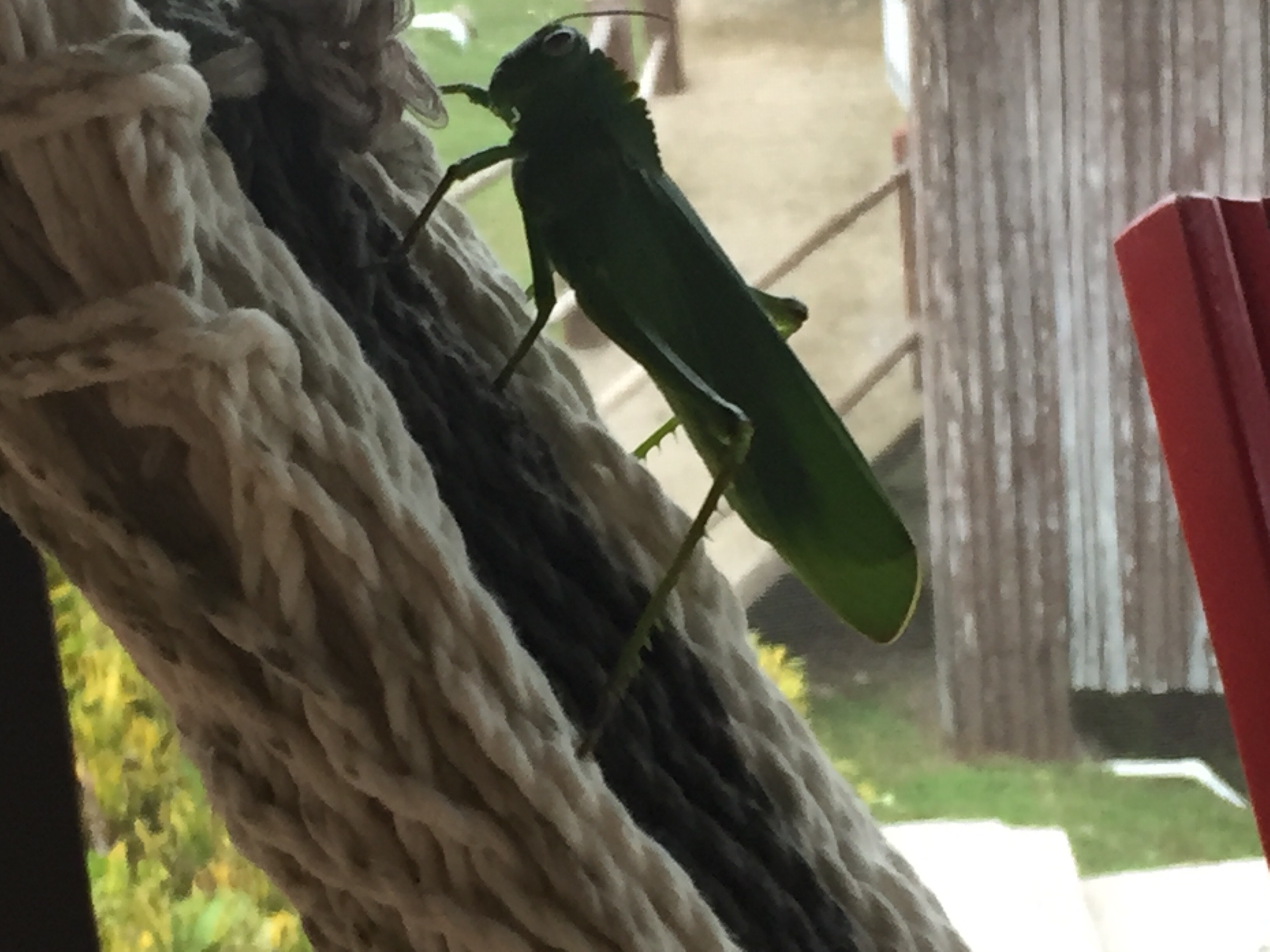
Cases packed and waiting for collection, we said goodbye to a very large grasshopper who had taken residence on the hammock, and fond farewell to the remainder of the rum punch and it was time to go.

We descended from our eyrie, passing the missionaries tucking into a hearty breakfast as we went and we were on our way.

In 24 hours we would be back in the U.K. Another adventure behind us.

Friday, 10th November

It was a lazy and grey start to the day, although it soon brightened. Cases closed (always a bit of a trauma at this stage of any holiday activity involving Monica and me!) we were to leave at 9.00. A veritably skippy time of departure after days of early mornings and allowed us time to wander along the lakeside and take in the view before getting on the bus to head off to Belize.

After our stroll it was time to get on the bus with the lovely Oscar for the last time. It was not a long run to the border, but crossing into Belize was a very different experience to entering Guatemala. Large trucks were parked and patiently waited to be called forward and men with large guns oversaw proceedings. It had taints of those border crossings on the Silk Road. No wandering ducks and clucking chickens. Belize obviously takes itself very seriously.

Formerly called British Honduras, Belize is now independent. It lies on the eastern coast of Central America, bordered on the north by Mexico, the south and west by Guatemala and on the east by the Caribbean Sea. The official language spoken is English, but it sounded a sort of West Indian English with American overtones. Low and rich.

Our first experience of these bass tones was when we were taken to a sort of hamburger establishment quite close to our final destination. The young man who took our order had a voice from the ‘Deep South’ – probably because that is where we are!! He proved to be very efficient wherever he came from and the beer and burger went down well.

Our hotel had been changed from the centre of San Ignacio to the Cahal Pech Hotel, high on a hill out of town. The first problem was getting up the hill. We had by now been offloaded into two small mini bus type vehicles. Ours could not get up the hill. In the end the attempt was abandoned and we were taken on a sort of tacking route, around the hill until we got to the top. One could be forgiven for thinking that this might be the end of our difficulties. It wasn’t.

I am not sure why, but the sight of perhaps 30 Christian missionaries sitting in the reception area when we arrived at the hotel, I found somewhat daunting. How did we know they were missionaries? Their matching wordy tee-shirts told us so! Eyeing them a bit warily we quietly waited for room keys. When these had been distributed we found that the Cahal Pech Hotel – named after the Mayan archeological site next door – sported 3 swimming pools (a la Marbella and complete with sun beds and other pool side paraphernalia) but that most of the accommodation was in rush roofed huts cascading down the hill. Very attractive paths meandered through the gardens to these pseudo Mayan dwellings. Ours was towards the farthest reaches of the establishment.

We had nearly got there, under the supervision of a super human young man carrying both our cases, when we realised Monica had forgotten to pick up her natty pink, but by now quite heavy, ruck sack. No worries, say I, I will go back……. having negotiated the route back (heat circa 35 degrees, humidity factor highest), I retrieved said bag and trekked back to our room. On arrival M informed me that for some unknown reason our ‘hut’ had only one small bed in it. Now Monica and I have been chums for many years and have on many occasion shared a double bed, but this was little more than a single bed, it was very hot and we needed to sort out our bags. It would not do.

No worries, say I, I will go back. So back I go to reception. The long suffering Ana is still there and after a brief discussion, I am told not to worry, there is a futon in the room which can be opened up. Fine. I trek back with the news, only to realise that with the ‘futon’ opened up, there would be no floor space. Needed for opening cases and final packing. It would not do. Back I trek to reception, feeling a little less than ‘cool as a mountain stream’ and not really very interested in the fact that there might not be anything else…….. changes were going to have to be made.

Eventually a very helpful young man came with me to collect Monica, still waiting in hut one and by now very much aware that a number of our fellow travellers had two if not three beds in their huts (grrrrrrr!), and our luggage and move us to another, bigger hut even further away from reception (!). Great. This had a king sized bed in it and lots of floor space. It was inevitably reached by a number of steps. Oh good!

Feeling somewhat less irritable, I half jokingly said that perhaps a thirst quenching drink was in an order to compensate us for our trouble. ‘What sort of drink?’ Was the reply. Anything, even a coke would do……. was my response. ‘We only do rum punch as a free drink…..’. ‘That would do’ I responded through gritted teeth. Leaving with the commen that he would ‘have to confer with his manager’ , our helper departed with the parting shot that another bed would also be sent.

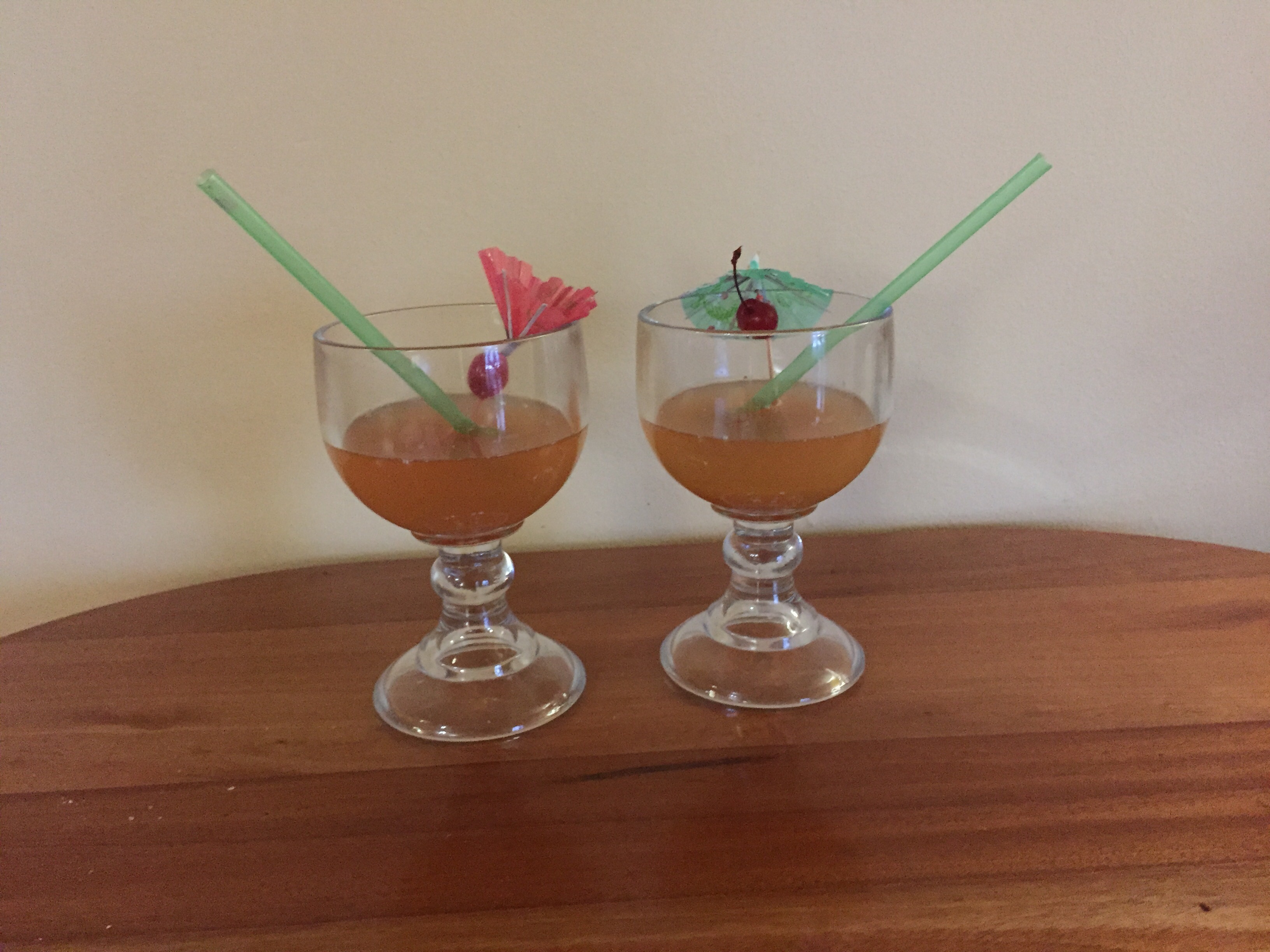
Monica and I sat in the recovery position for some time, swinging in our hammock, and were very surprised to see chummy back with two very large rum punches, complete with umbrellas! I felt a bit ashamed. I felt even more ashamed when a stick insect of a chap arrived at the foot of the steps to our, I have to say rather sumptuous, ‘hut’ almost eclipsed by the double mattress he was carrying! Eek! By now we had decided that a king sized bed was quite big enough and sent him away. Three hours later sheets turned up. This time the young lady insisted that we keep the blankets she had brought us (IN THIS HEAT?!?).

A few sips of rum punch and a rejuvenating snooze later, we rallied ourselves to go to visit our last Mayan Site, Cahal Pech next door. Time was getting on so we just about caught the sun going down through the trees, but we were proud of ourselves identifying features that we have seen before. Always good to feel you have learnt something!

When we arrived back at the hotel, there was an amazing sky and our missionaries had been augmented by their motorcycle fellows. Motorcycle missionaries, once again clearly labelled! Who new?!?

Our last supper was held in a Sri Lankan curry house, down n the town centre. It was a good night, with good food in the open air and lots of laughter, although it came to a rather precipitate end when it started to rain. It was then home to our rather large bed….

Tomorrow we head for home……

Tikal is, once again, a UNESCO site situated in what is now a national park. It was one of the largest Mayan sites and only 30% has been restored to date. The rest is still to be uncovered. It is estimated that it was established circa 741 AD. This is likely to be fairly accurate as dates have been found on door lintels and there has been a lot of pottery found on the site.

We had a special guide for our trip there. He was excellent. Very informative, but with a light touch. It was a good job – we were to be there all day!! He was useful in providing us with background information about Guatemala. The lowland area where we were produces grain and beans for the whole of Guatemala. Cattle were only introduced into the country in 1500 and a number of the indigenous people are still lactose intolerant. There are three main contributors to the economy, cattle farming for Mexico (although this is illegal), oil and tourism. I think the guide’s name was Vicente and he had a lovely term of phrase when talking of people who have died – he talked of ‘those who are one step ahead’. What a wonderful thought….

Anyway, back to Tikal. We left quite early as usual, the day already quite steamy. Tikal is located in thick jungle about a half an hour’s drive from Flores, which was originally a Mayan site in its own right. On the way we saw the people of the countryside waking up and at one point saw young boys playing in a large pond by the side of the road. They were having a great time. Having said this, we saw more schools in Guatemala than in Mexico and more young people seem to go to school. A bus passed, full to bursting with people sitting on the roof.

We have been lucky enough to have had a number of our archeological expeditions to sites to ourselves. Not this one. Several groups arrived when we did and set off down the jungle path with us. Most of them had guides. Apparently there have been deaths at.the site where people have left guides and not obeyed the warnings not to leave the designated areas. Looking at the thick jungle vegetation around us, there was little chance of me stepping out of line!

It was a broad cleared path, riddled with tree roots. However, the thick forest on either side provided welcome shade. It was probably a couple of kilometres of walking before we arrived at the first buildings. The whole area was vast. The centre of the royal city covers an area of 16 Km’s. This housed the royals. Others lived outside of this huge central area. Before we arrived at the site we had seen a model of the layout of Tikal to give us a bit of a feel for the place. It is vast

We also saw the model of the royal tomb found in Temple 1. The skeleton was of a male, 1.8 m tall, who was found with 32 lbs of jade buried with him. Mayan jade is less common than Chinese jade apparently, but quite sort after.

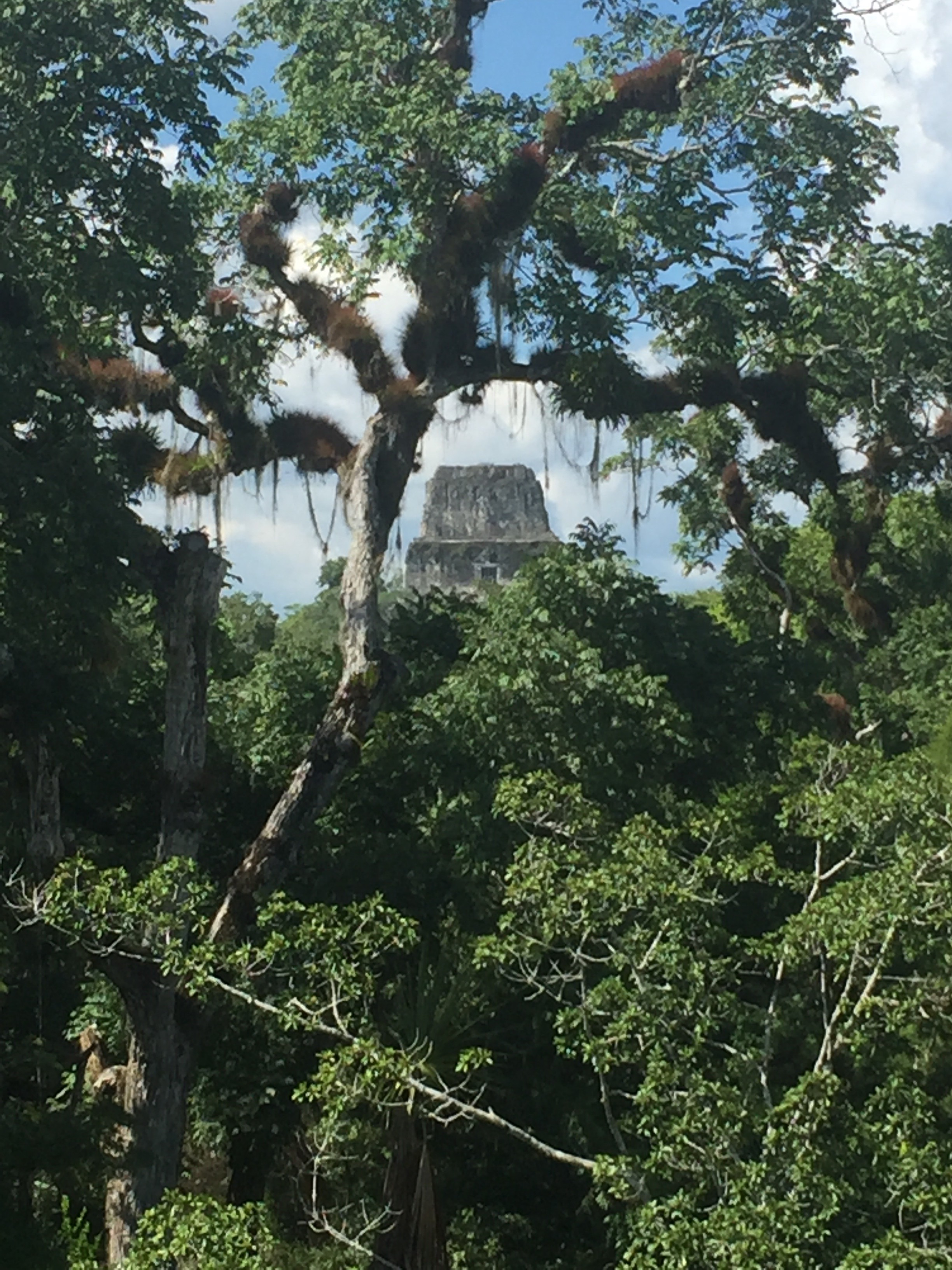
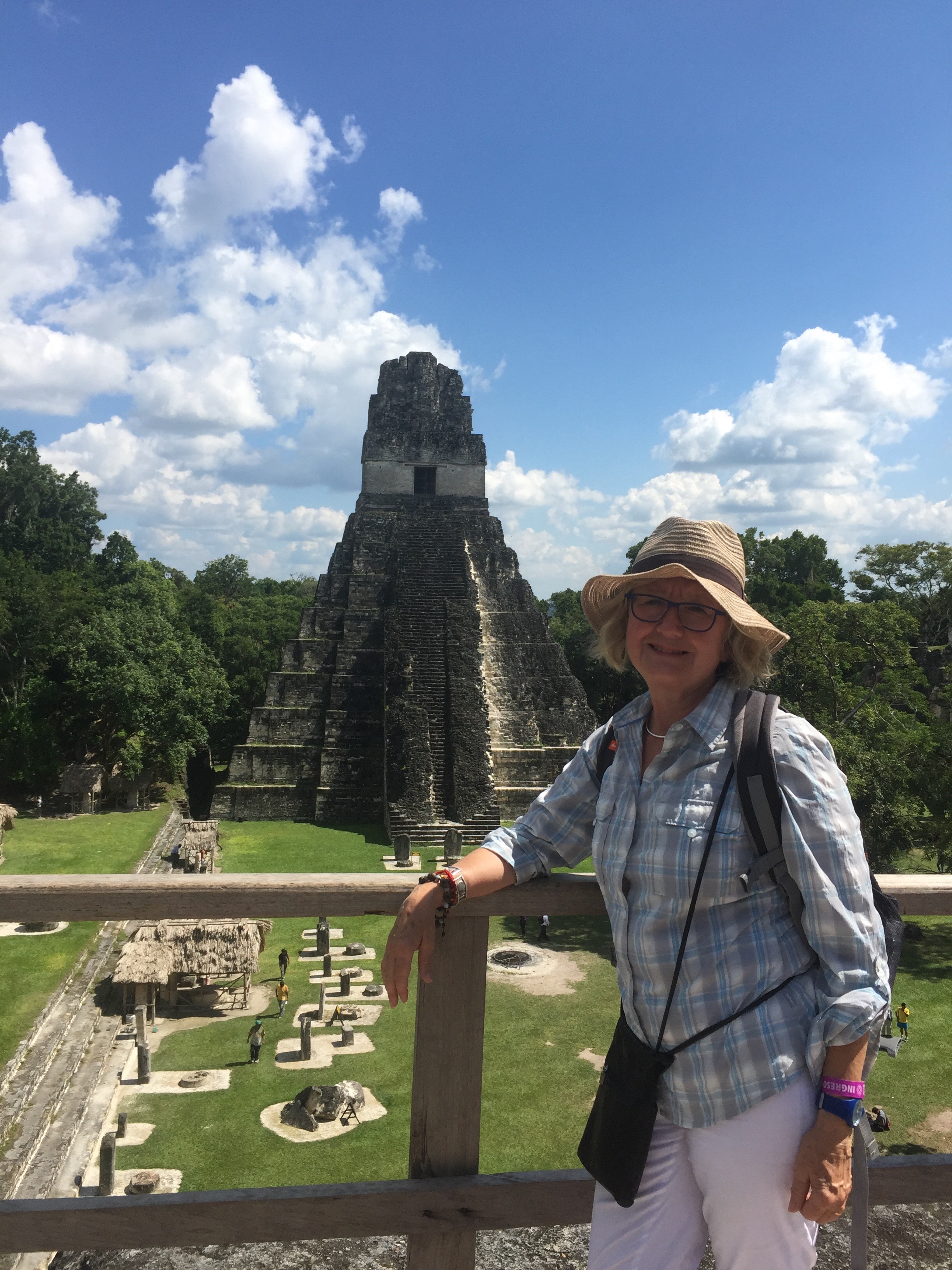
Our first view of an actual building was the top of Temple I which we could see through the trees. The temple soared high over the tree canopy.

The cleared path had grown even broader and gradually climbed as we followed the Mayan processional route. We eventually emerged into the first cleared area with a temple and 9 stelae with sacrificial stones in front of it at its base.

We learnt that Mayan plazas with their associated buildings were built on the compass points arrived at by the Mayan study of the stars. Monuments were positioned on each of the cardinal points and are likely to have been coloured to reflect their location. East red (the rising sun), west black (to reflect darkness), north blue or white and south yellow. The centre was green. This is where the king stood. He would wear jade.

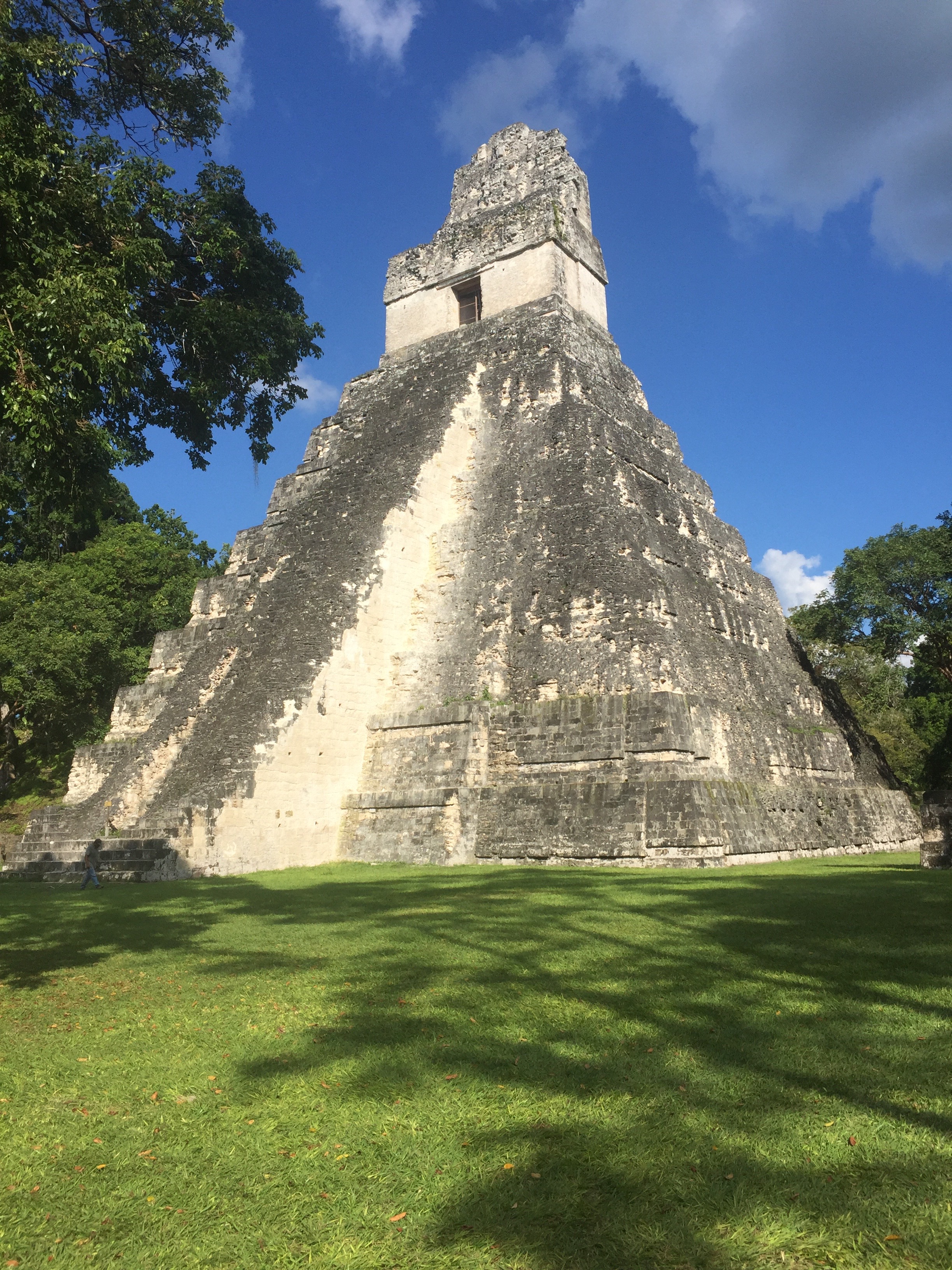
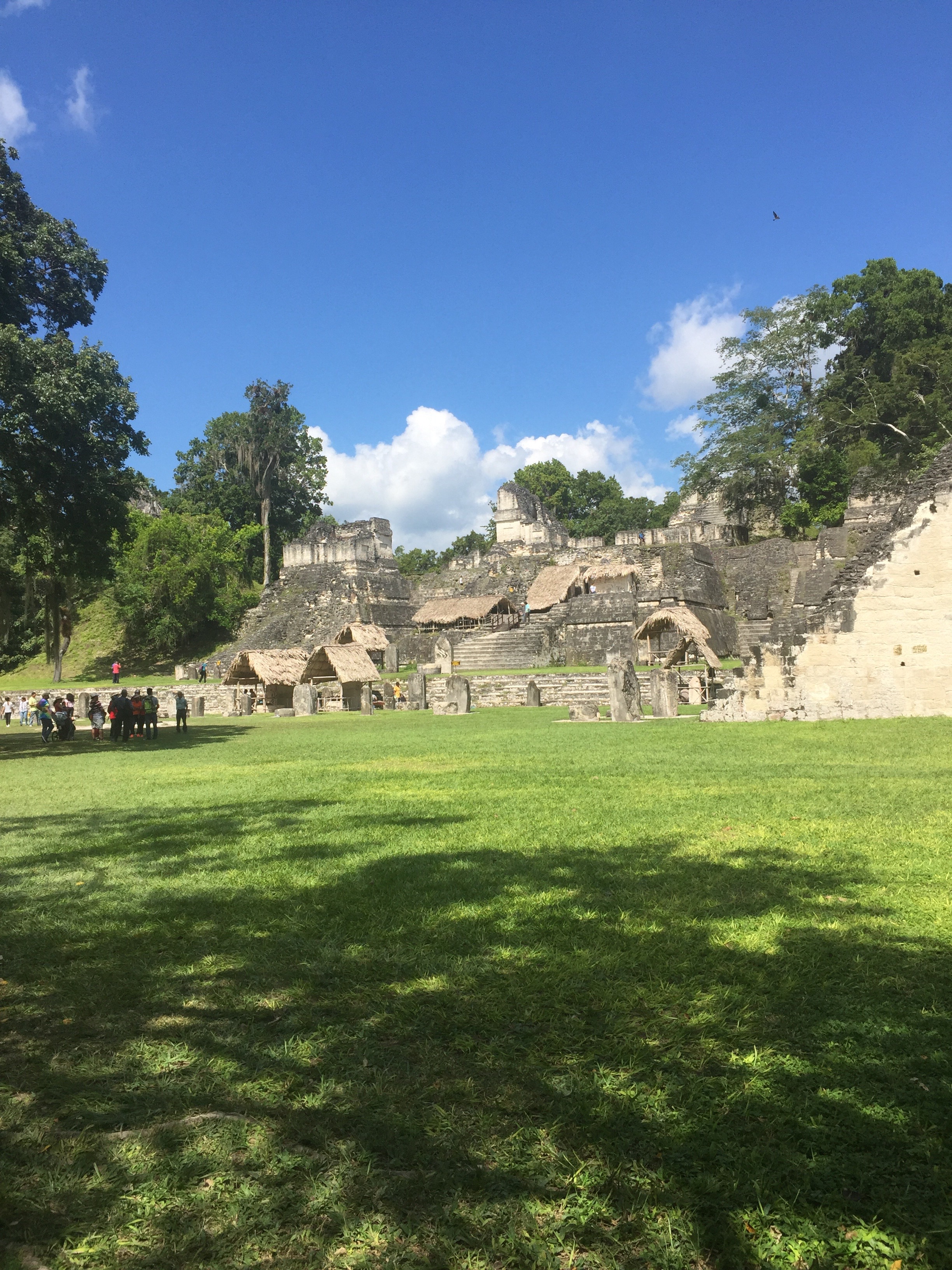
We walked on. We then emerged in the main plaza. On one side was the Temple 1, where the tomb was found in its base, built by Jasaw Chan K’awill when he was king. The Temple rose high into the air and apparently goes down 7 metres underground. Along the broadest side of the plaza stood the buildings of the administration area banked up high, where kings were crowned and burial ceremonies took place. Facing Temple 1 on the opposite end of the plaza another tall temple, dedicated to Jasaw Chan K’awill’s wife. On the 4th side of the square were the buildings believed to be the royal bedrooms.

The highest of the temples we saw at Tikal was 70 meters tall. Only the top of this was excavated. This was the temple of the Double Headed Serpent. We climbed a couple of temples, with the help of wooden stairways that had been built behind the temples to prevent the buildings being damaged. These made climbing much easier and gave us great views over the plaza and the vast rain forest canopy that makes up the site. Tikal was a truly incredible place.

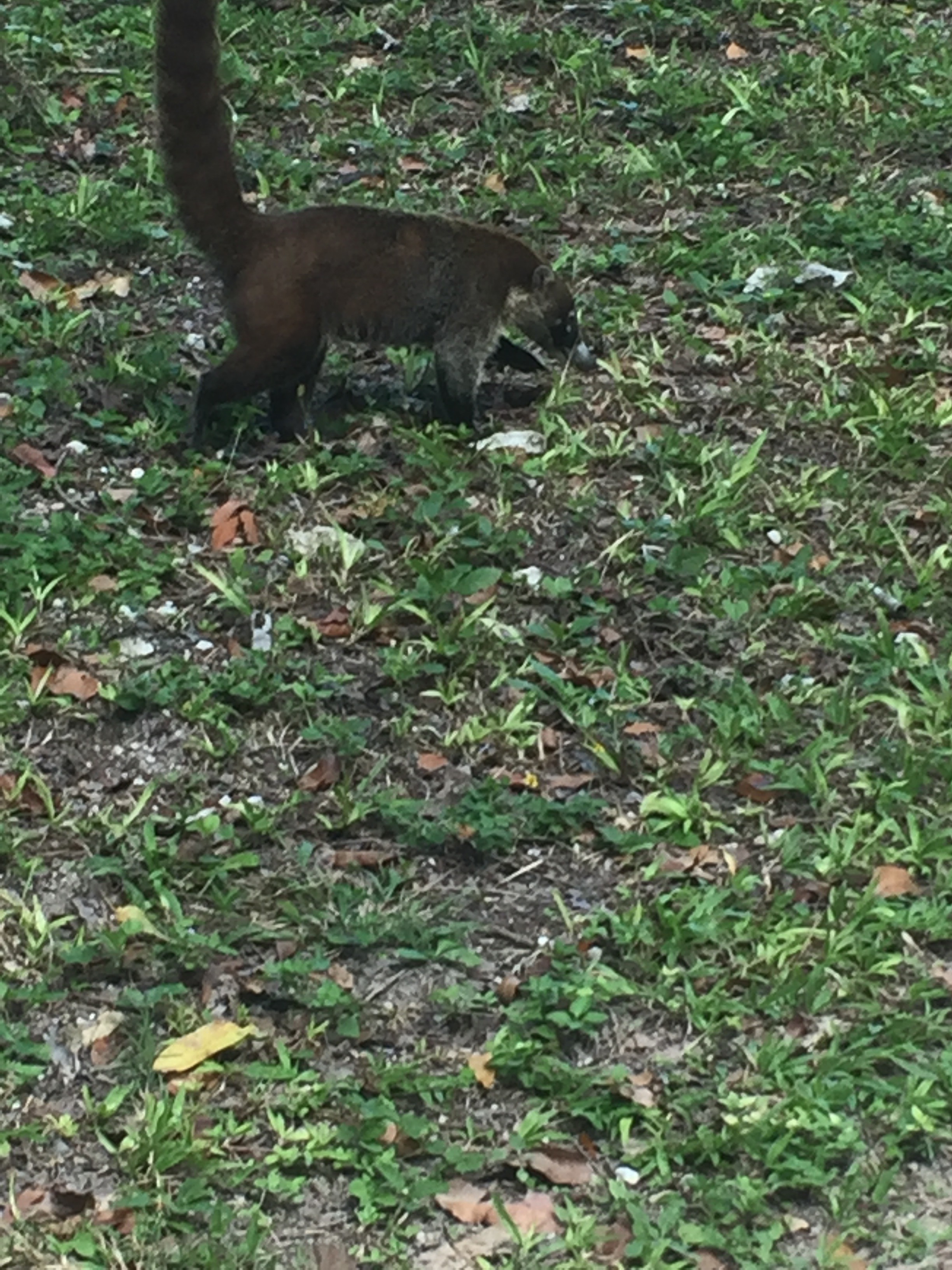
There was so much to see we had a picnic lunch (watched by a coatimundi) on the site and continued our perambulation well into the afternoon.

One of the things that I found particularly fascinating was that it was the need to produce food that led the Mayan’s to become astronomers. They needed to plot the best times to plant, given the short growing season. Plant too early and humidity killed the seeds. Too late and torrential rains would ruin the crop. This gives a window of just 6 weeks in which to plant safely with a fair chance of success.

We were fairly exhausted by the time we arrived back at the hotel, but luckily rallied in time to do a bit of final shopping in Flores. Another lovely sunset……..

………. supper and then bed. We leave for Belize tomorrow, the final leg of our journey.

.

Wednesday 8th November

I showered to the sound of howler monkeys calling in the forest behind us.  We left our thatched accommodation early. 


 It had rained overnight and grey clouds glowered overhead.  Despite the hour, the young lad with his board of trinkets was out and helpfully set up his stall just as we descended to the rivers edge to provide us with a useful aid to ridding ourselves of the odd Mexican pesos in our purse. Enterprising or what? More likely a canny young lad doing his best for his family……..


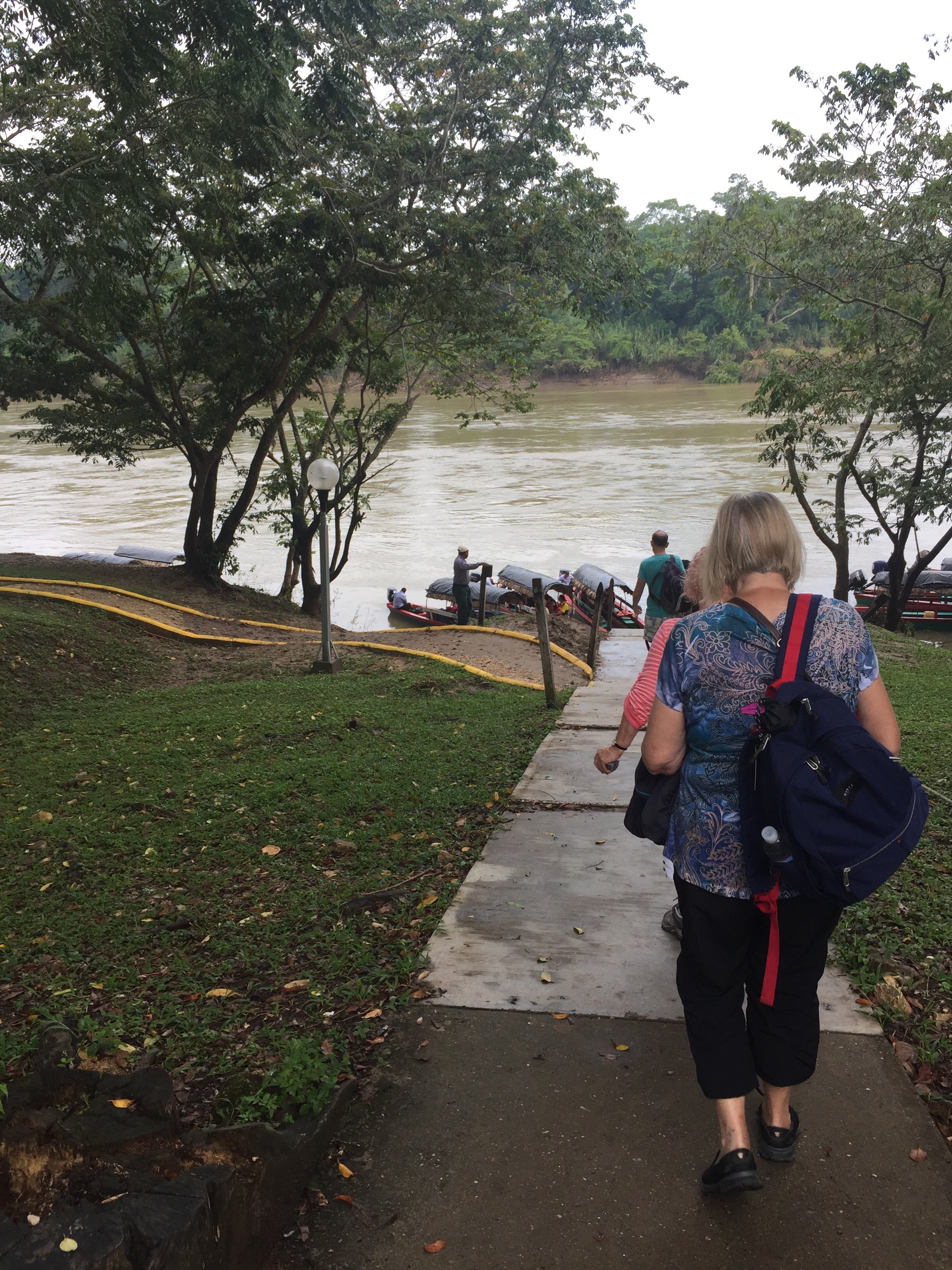
We took off by boat again, this time to go up river against the tide. Once again there was rich vegetation on either bank.   We glimpsed a church tower over the trees on the Guatemala side, near a thatched hut settlement.   A group of women and children were washing themselves and their laundry in the river.  The motor of the boat engine purred the journey away.  


To say our arrival in Guatemala was low key, was an understatement!  It took us perhaps 30 minutes to travel up the river to Bethel where the border post is. Leaving our boat we clamboured up a steep, muddy and very slippy riverbank covered in gnarled tree roots. Helping hands were extended from above to haul us up the incline and eventually we were landed like beached whales on the jungle path.  

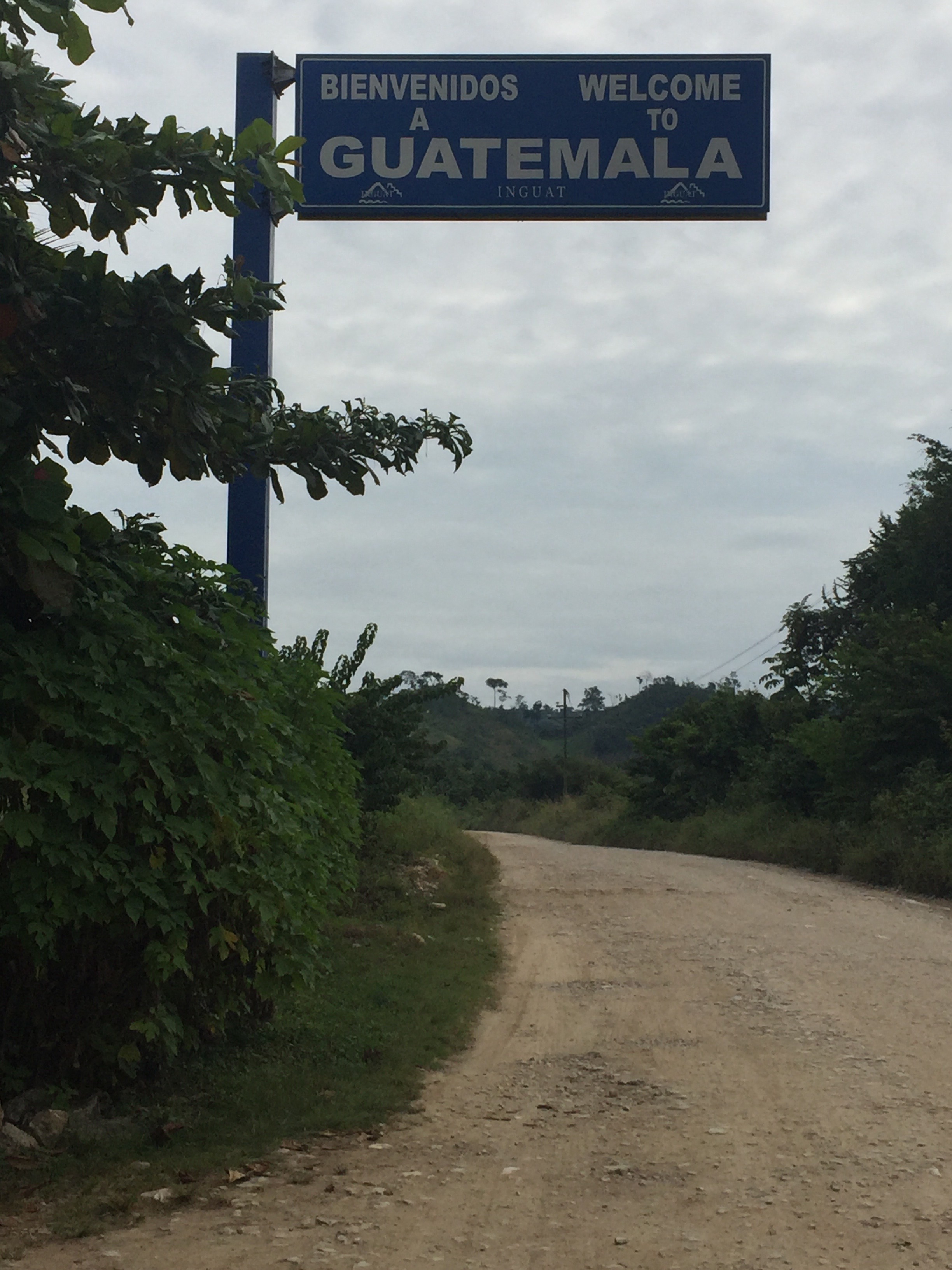
A much smarter bus than we had been led to expect waited for us with the lovely Oscar as driver. Strong young lads retrieved our luggage from the boat and helped  load our cases on the roof, Oscar covered them with a tarpaulin and we set off. First stop the Guatemalan immigration office. An interesting blue and white building, with a sign outside saying ‘Welcome to Guatemala’ – surrounded by ducks and chicken. It was all pretty rustic……….


We then set out on a very bumpy two hours. The sandy road was not made up and covered in pot holes. We were travelling in the lowlands of Guatemala. The area used to be owned by the state of Chiapas in Mexico (the area we have just left) and resentments still cause some tensions apparently. Guatemala was invaded by Spanish in 1534 and had 300 years of Spanish rule before independence. The majority speak a variation of the Mextic language, although there is a rich culture of the indigenous people who continue to speak in their mother tongue.  

We were heading for the island location of Flores capital of the Departnent of Pepen.  On the way we passed farms and homesteads that looked much more prosperous than those we had left behind in rural Mexico. There were plantations of banana and papaya. Modern farm machinery was neatly parked in barns. Some of the land was quite waterlogged.


 A single horseman appeared looking like a stray extra from a cowboy film, complete with lasso and hat. There were also a lot of pigs. These were black and bristly and are apparently the result of interbreeding between the local wild pig and the pigs the Spanish introduced to the country. 

Having completed the bumpy road section(!) we continued on through several large towns, with motor showrooms and farm machinery factors, until we were eventuallydropped off at a supermarket to obtain provisions for a picnic lunch for our big archeology ‘fest’ on Thursday, when we visit Tikal one of the most famous Mayan sites.  

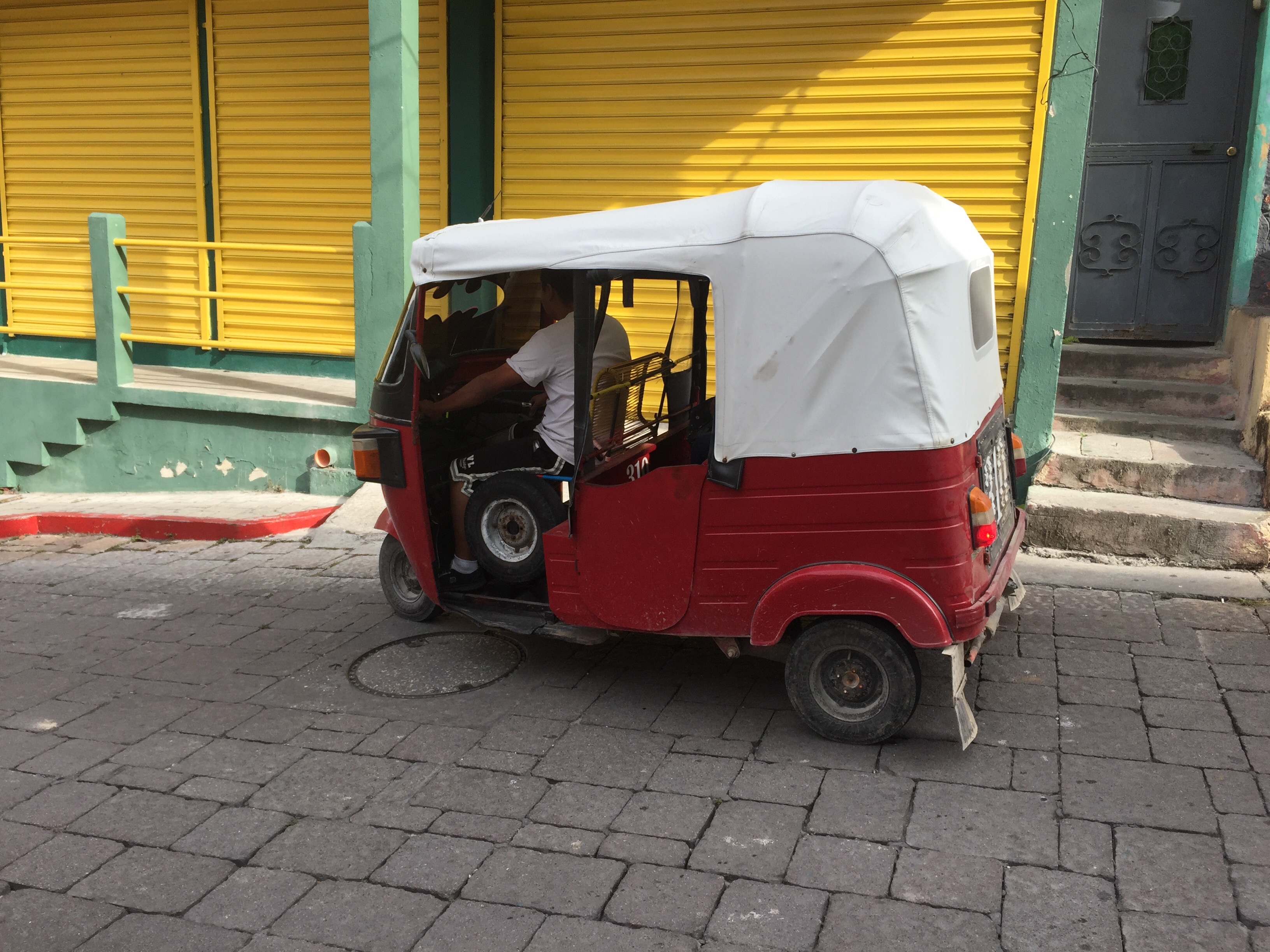
A road bridge led us to the man made island of Flores, a very pretty town of narrow streets and colourful houses. Apparently the area used to be a ‘no go’ area over run by a mafia type group. The local business men, fed up with the situation, appealed to the government for help. No help came so they commissioned another mafia gang to wipe out the original Flores mafia. They did. Sorted! It is now very jolly. Colourful buildings line the narrow roads and little red ‘tuk tuk’ three wheeled cars are the local transport.  


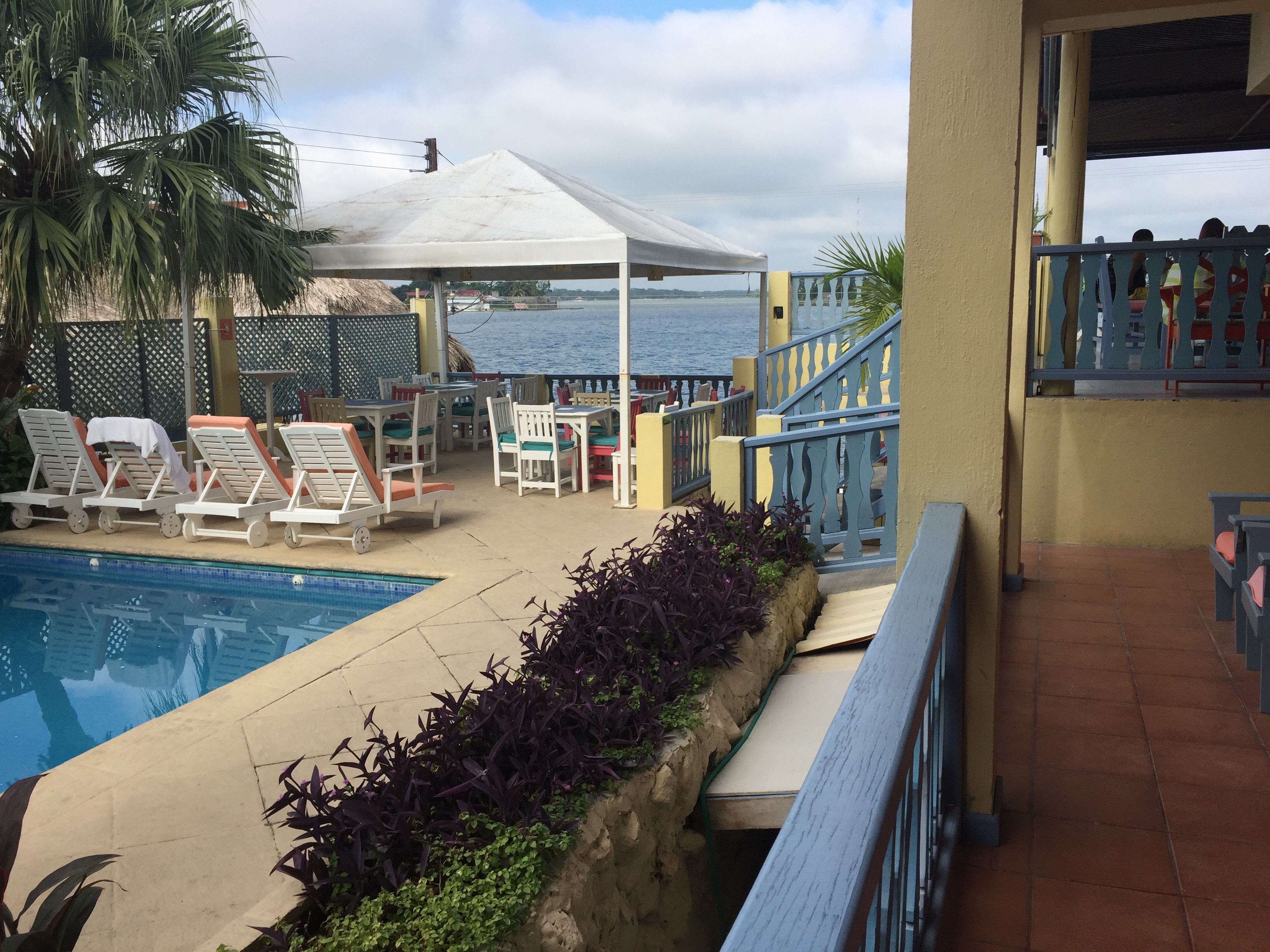
 Our hotel faced the lake on which the island is built, although our room overlooked the pool and had a lovely veranda outside where you could sit and ‘take the air’. 

After lunch, once again with a lovely view over the water, we had a bit of free time before taking a boat trip to explore our surroundings. We chugged along, with a reed canopy over head to keep the sun off and were able to look back over the colourful buildings on the shore and the little white church on the hill on Flores town square. We stopped a while for some of the party to swim and eventually watched the sun go down over the water. I have to say, once the sun has decided to set in these parts, it does it very quickly!


We had supper in a nice restaurant, steps from our hotel. I had some wonderful garlic prawns with rice. They were scrummy although I have to say I have found all the food fine. A good place to come if you like avocado (which I do) and refried beans (not so much!). 

Tomorrow the big one. Tikal. 

7th November

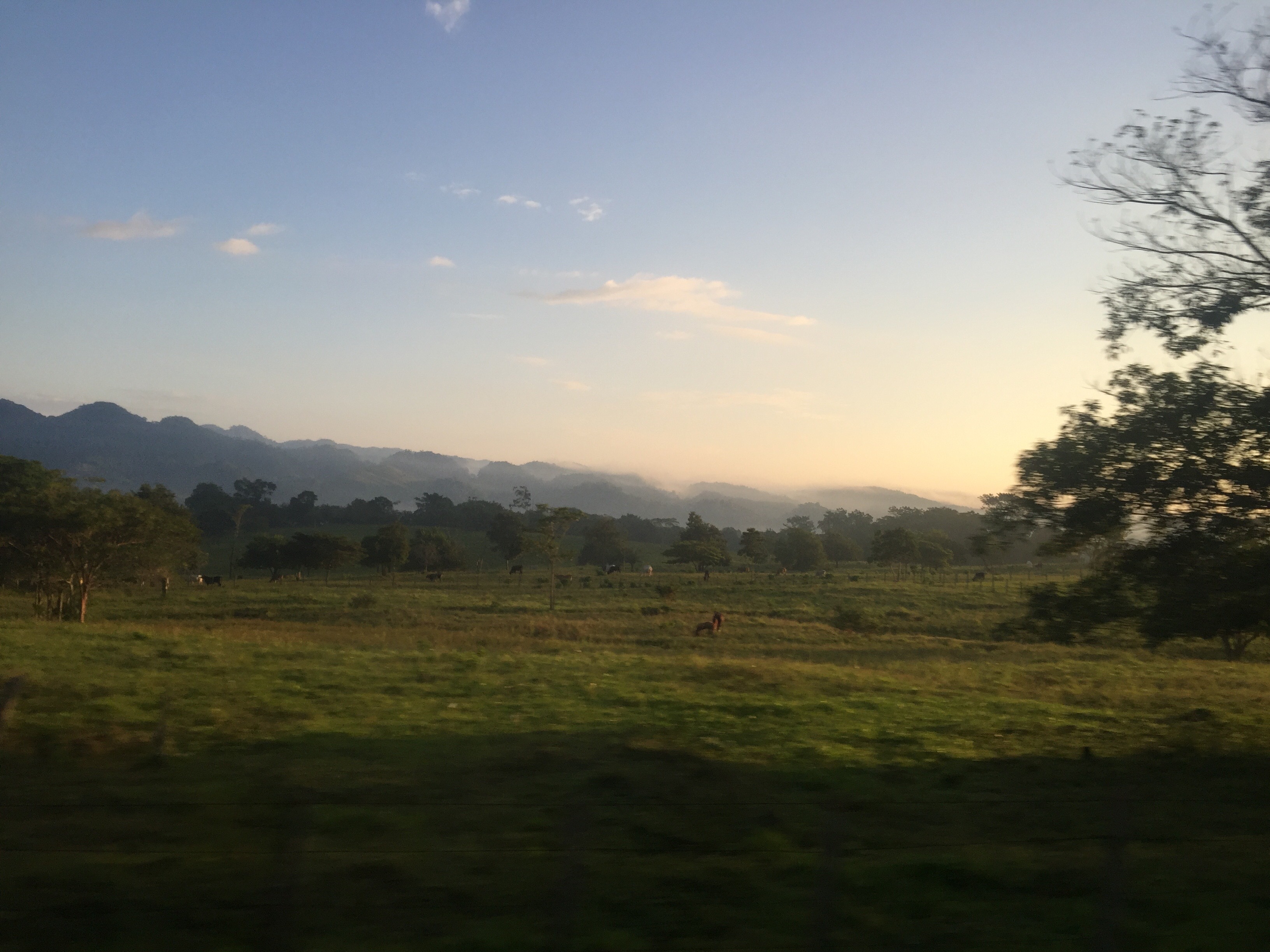
It was an early start. Our bags had to be ready for collection at 5.30. In the pre dawn light we left the hotel. We were going to have our breakfast in picnic form on the bus. The sun rose as we travelled past dense tropical vegetation, banana plantations, and wooded hills with pointy peaks. 

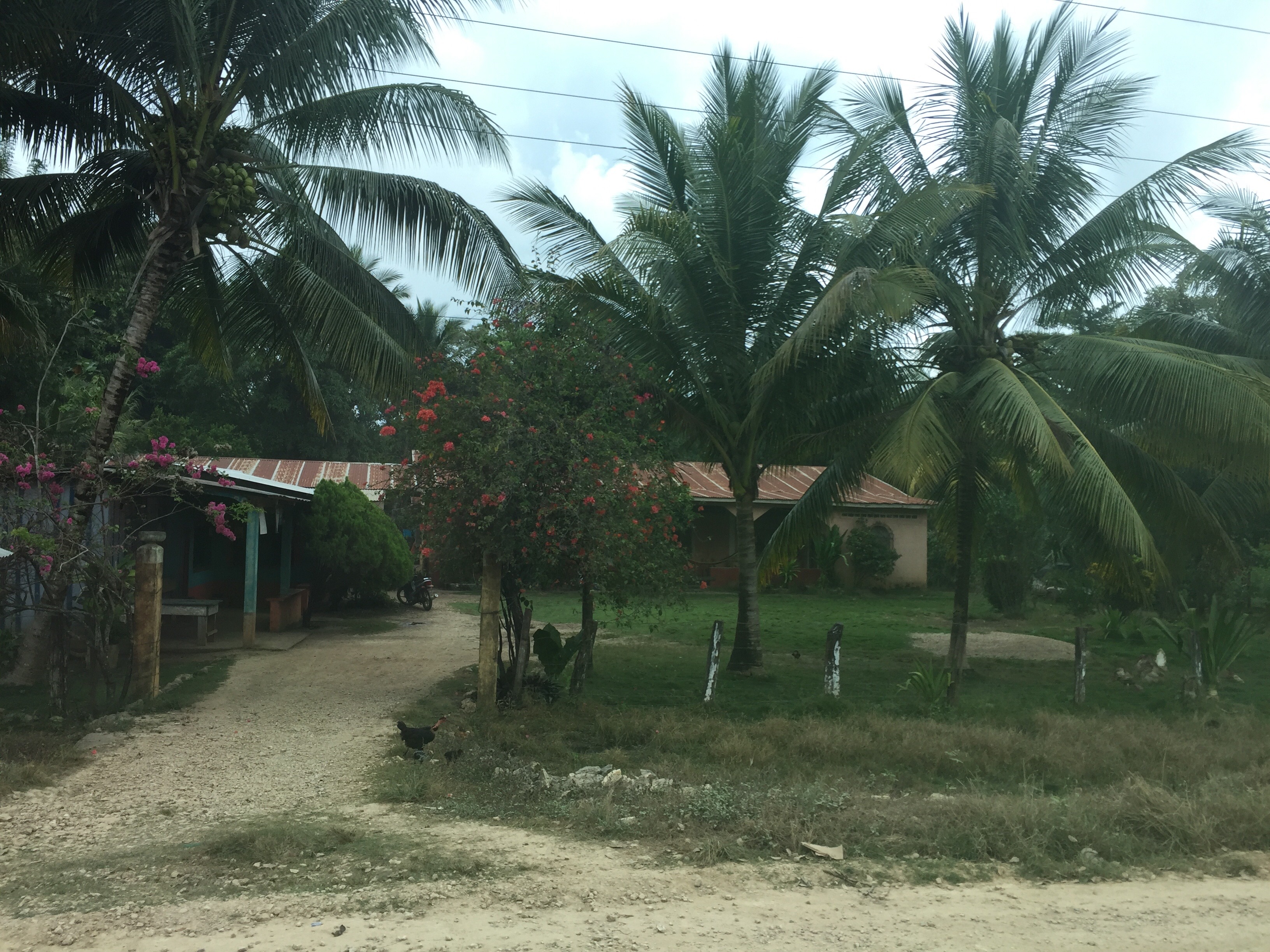
The countryside was stunning, but once again by the side of the road the people lived in poverty. They have no running water, most had no electricity, although occasionally there was a wire to indicate a connection. Most cooked on wood fires but outside one or two there was a television receiver dish. I guess we all have our priorities……… Smallholdings had chickens and pigs in evidence. Many of the wooden buildings were dilapidated. Some had been abandon. Now and then there was evidence of a new building going up.  

We were in the Lacandon rainforest. Most of the vegetation was green but, now and then, a red hibiscus flower appeared.  

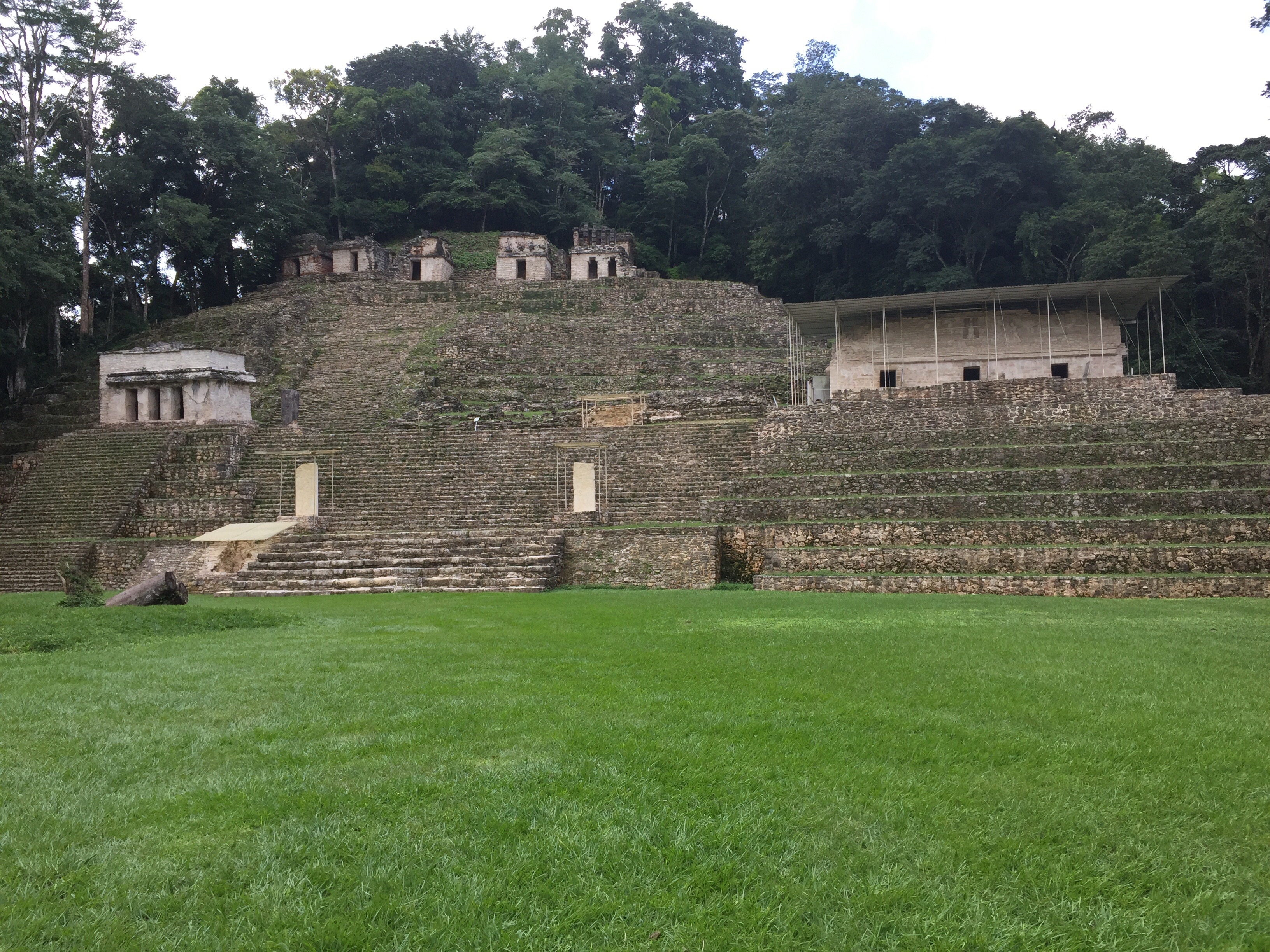
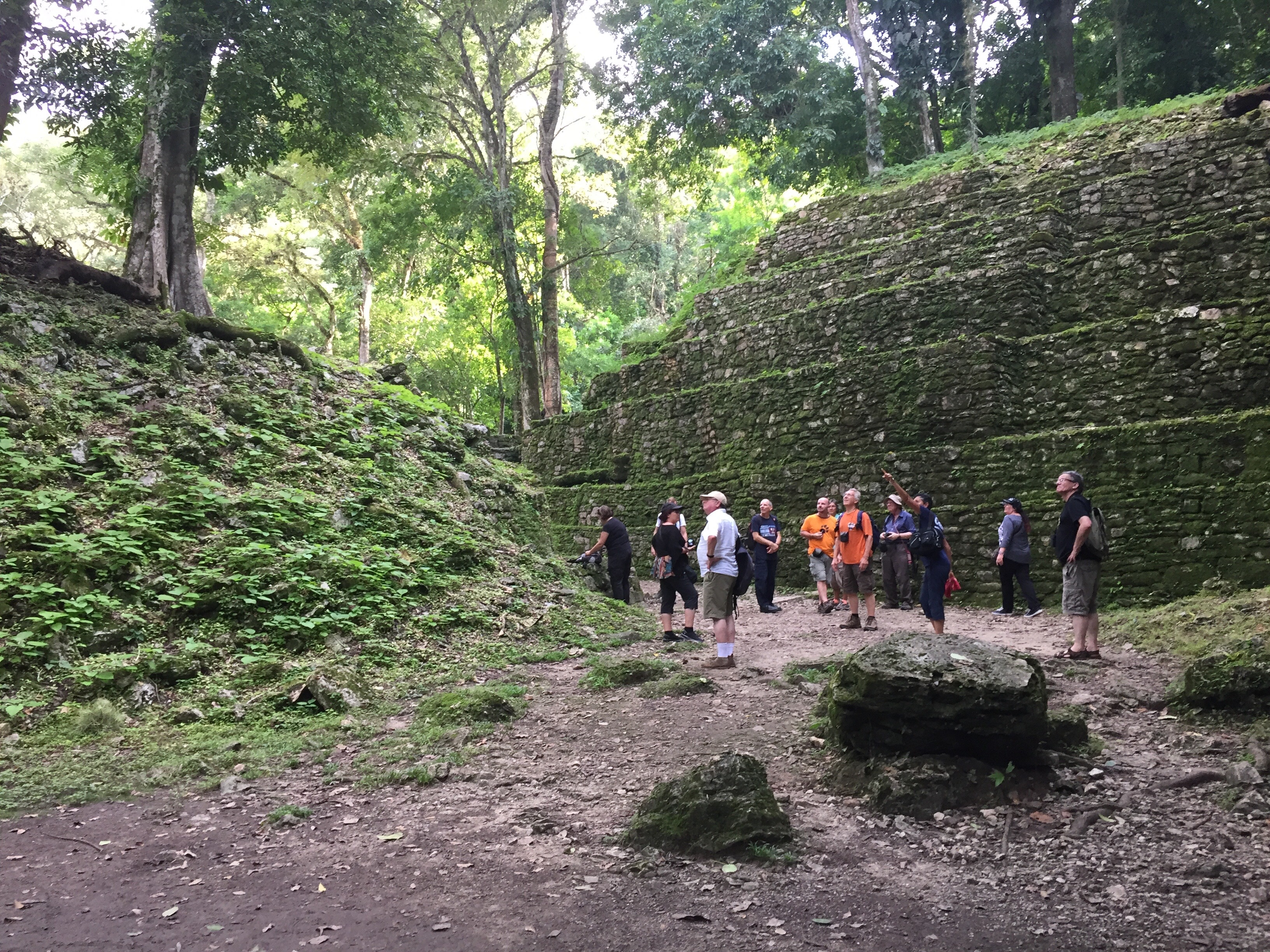
Eventually we arrived near Bonampak our next Mayan site. To get there we had to change to smaller vehicles to travel the 10 Km’s to the ancient city ruins. Monica and I, as the smallest members of the party, were placed in the back of a vehicle on seats at floor level, described by one of our fellow travellers as  ‘like a couple of spaniels in the back’!! 

Bonampak was one of the cities controlled from Palenque. We arrived in the main plaza and could see the acropolis rising up where the most important paintings of the Mayan world can be found and two important stelaes (please note the incorrect spelling of ‘stele’ in my previous missives).   
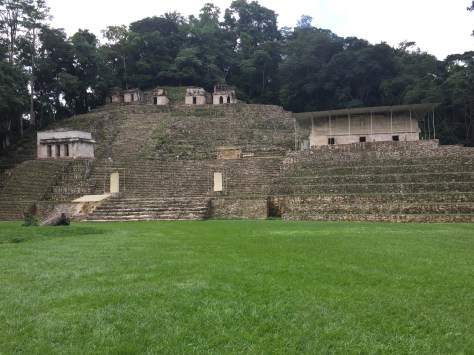

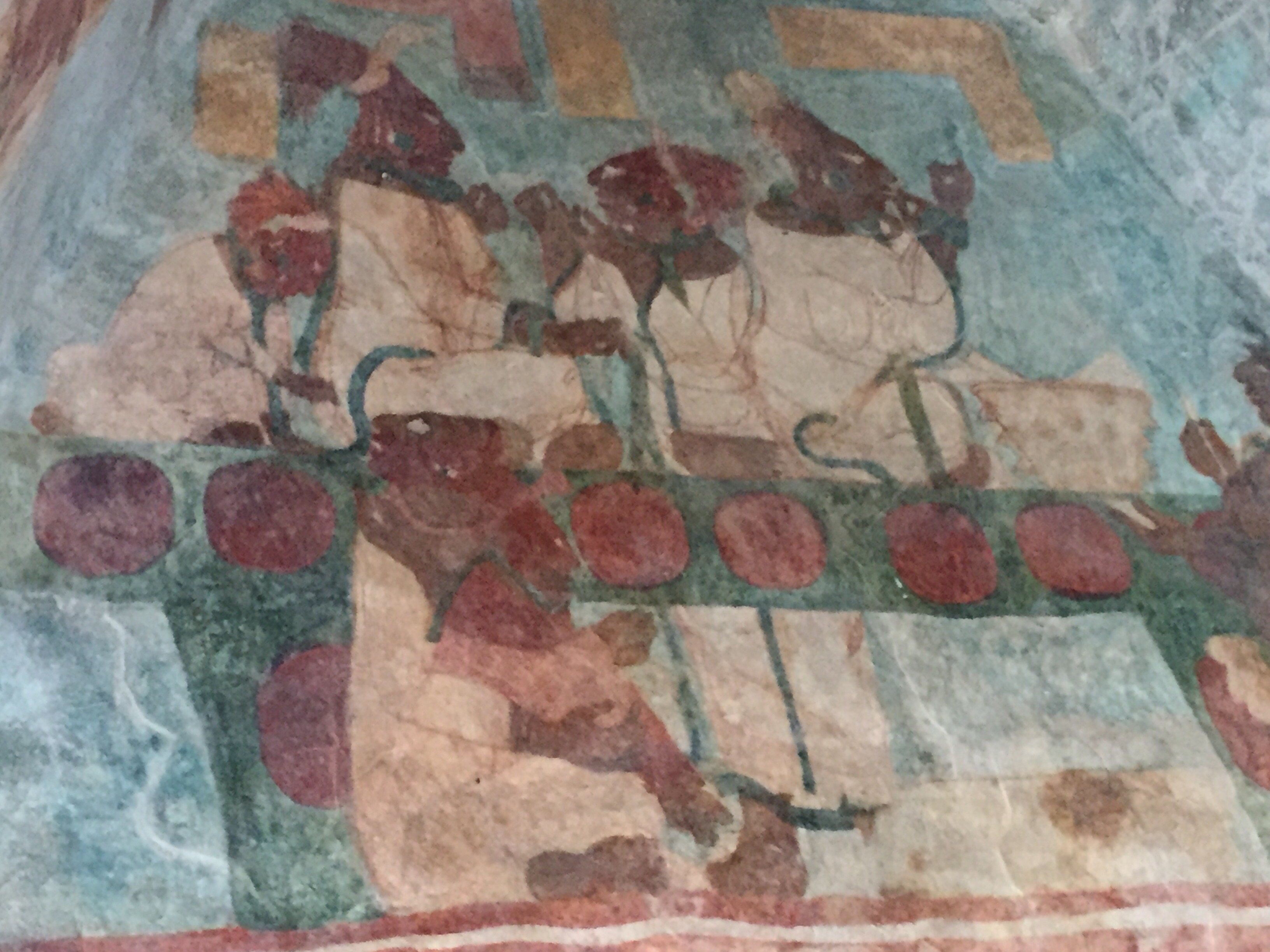
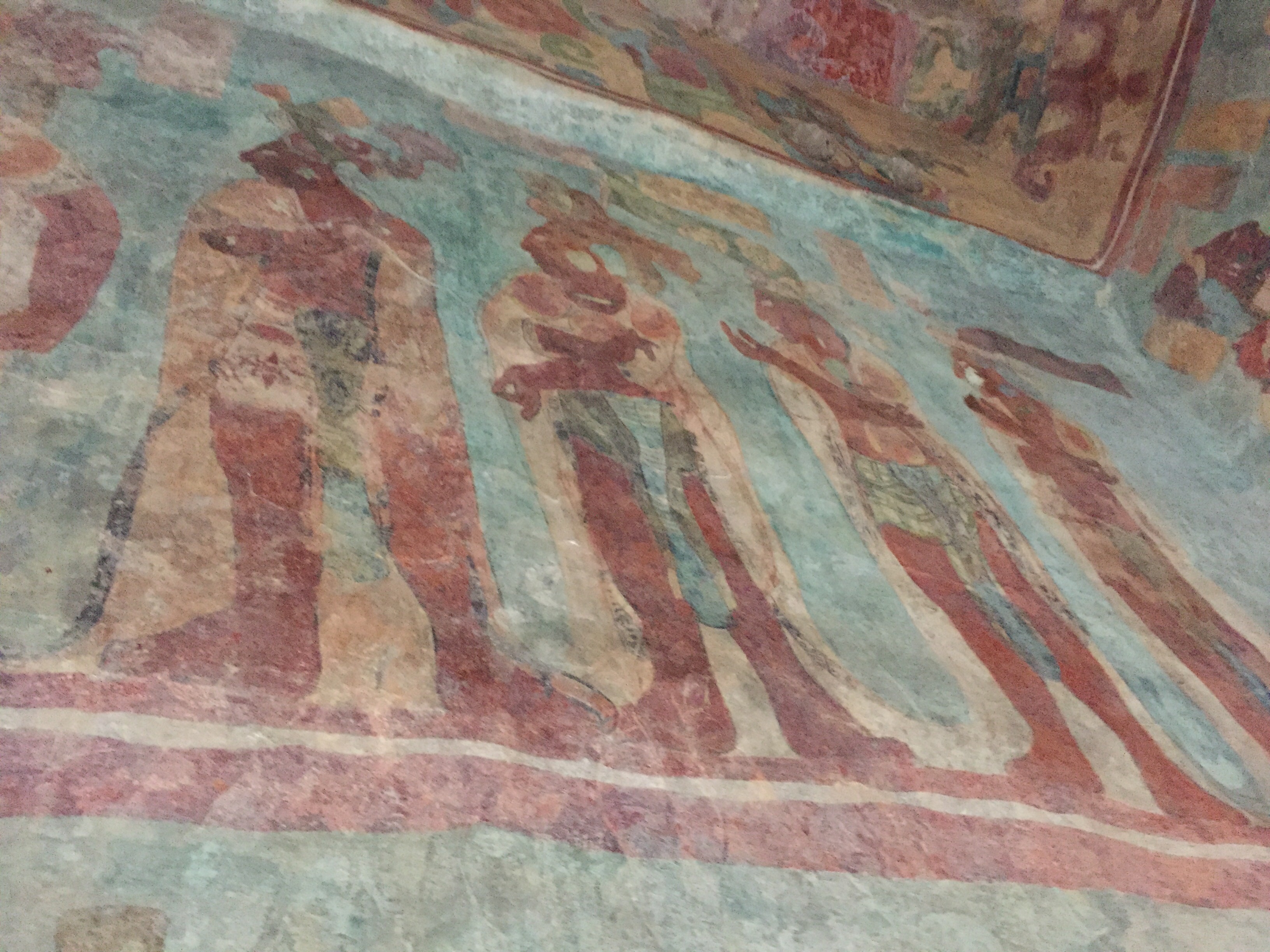
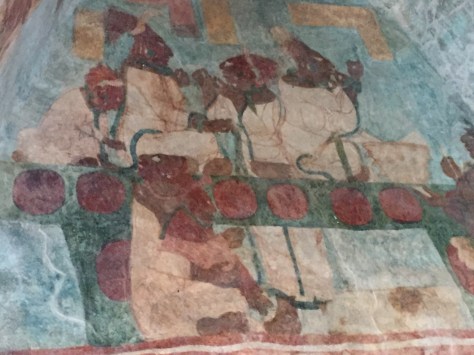
The notable rulers here were Chaan Muen the first and second. The paintings tell the tale of a Mayan society coming to the end of its domination, first ceremonial feasting, then war and then finally showing the ritual perforation of their tongues by the royal women for blood letting.  

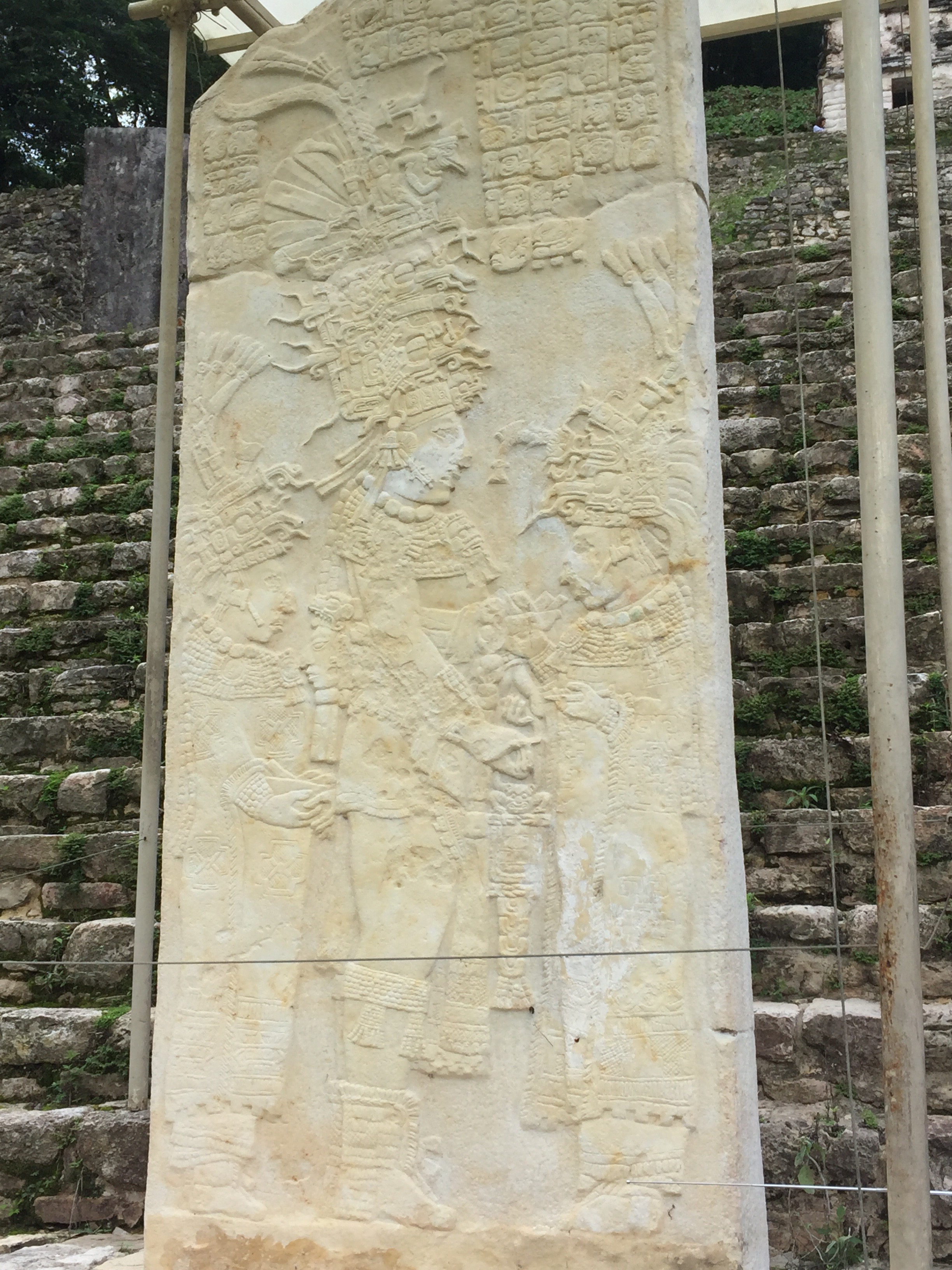
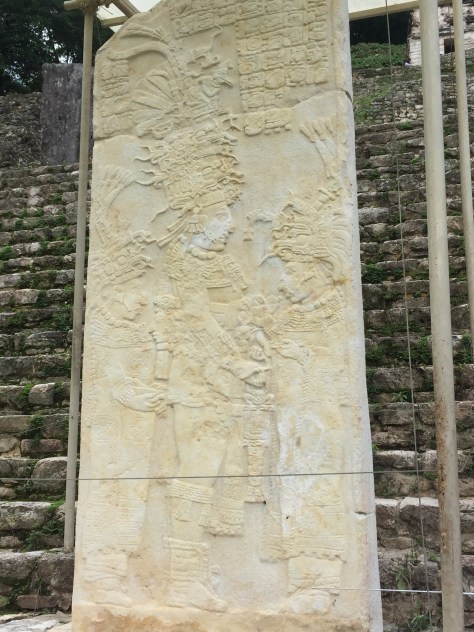
However, before the steps led us up to higher level of the acropolis and the rooms where the paintings are to be found, we saw the stelae showing Chuen Muen on his own and another with his mother and wife – mother in front, wife behind (and who us the most powerful?!). These are both originals, carved with obsidian tools. The minute detail is incredible.  I love the sandals!
We then climbed up to the mural rooms. The paintings in the first and third rooms were quite clear and the colours remarkably strong. The central pictures of the battle scene were more difficult to make out. Given the age of the paintings, they are still extraordinarily well preserved.
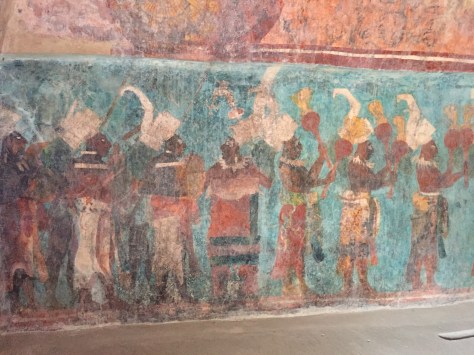
The buildings, though well preserved, are hedged by heavy forest vegetation which looks as though it is only too ready to take back the site it covered for hundreds of years.  

We walked back through an avenue of trinket sellers who had not been there when we arrived but appeared as if by magic to form a guard of honour on our return. The bead work was colourful and there were wonderful feathered dream catchers. We maintained a high resistance, mainly due to our more or less diminished pesos and the fact that tomorrow we remove to Guatemala. 

Back in the coach, we continued our journey to the lodges where we were to stay the night and  travelled up the river to the atmospheric Yaxchilan. After an hour’s break we were off again – this time by boat!
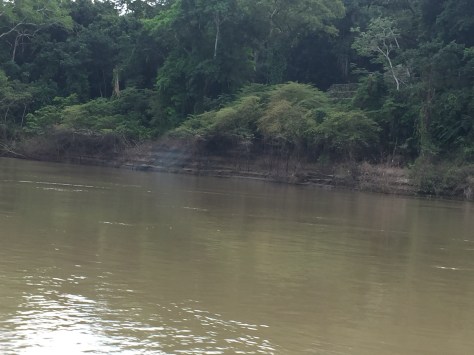
 It was probably nearly an hour’s boat ride on the Usamacinta River, with Mexico on one river bank and Guatemala on the other. Yaxchilan was an important trading city and for over four hundred years it existed as an important trading centre between Bonampak and Tikal, deep in the jungle.   

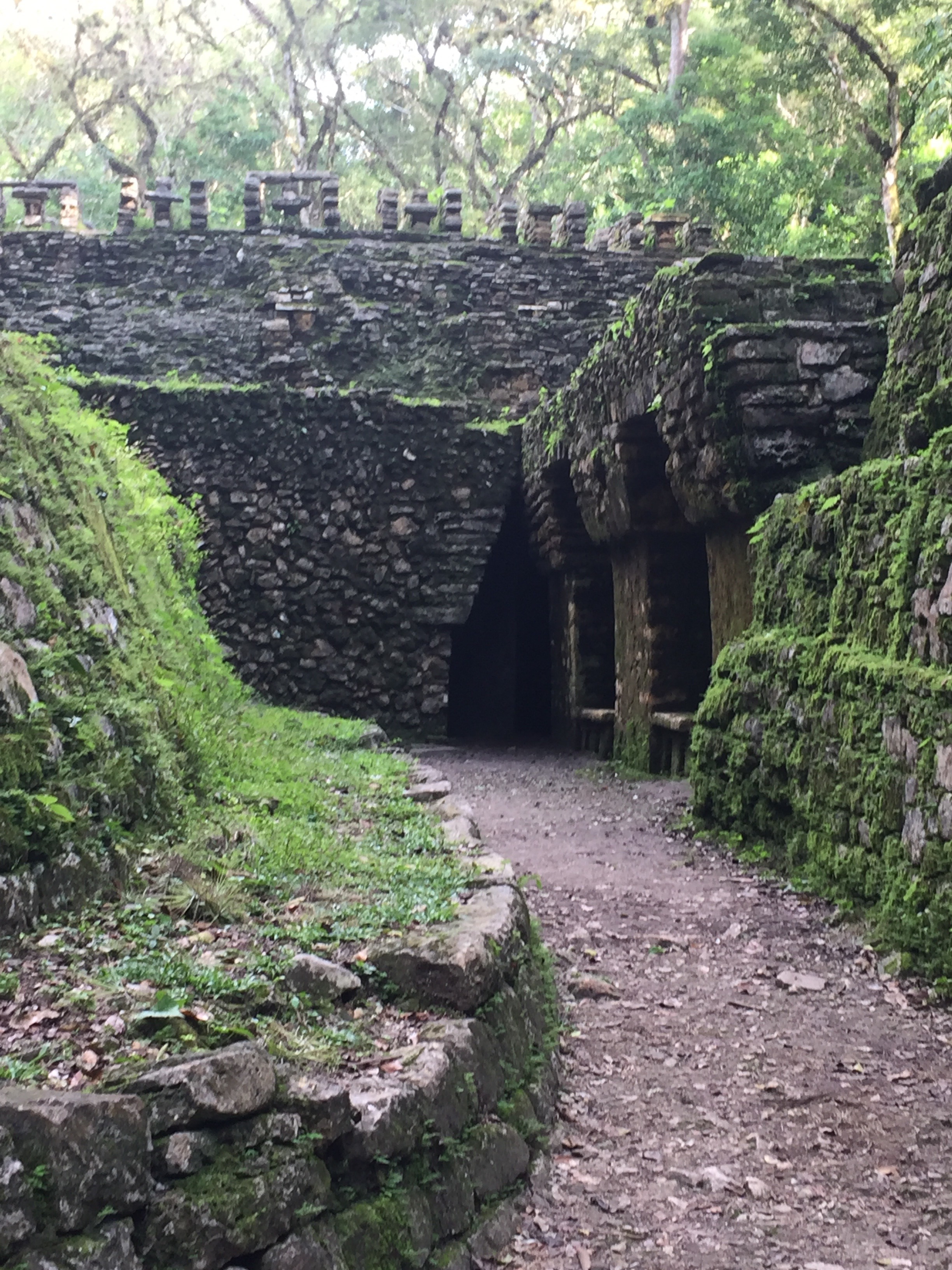
We arrived mid afternoon and the light was just perfect. To get to the site you walk up the path from the river, as the Mayan’s must have done. Eventually a clearing is reached and a large Mayan building blocks the path. This was viewed as representing the underworld and its dark passages had to be negotiated to reach the city’s main plaza.


The route through twisted and turned. Bats flew over our heads.  Our torches exposed spiders on the walls. It was as sinister as I guess it was meant to be. Eventually we emerged into daylight again. It was a place of dark shadows. The green of the jungle was all around us. There is a lot more of the City to be unearthed.  There are a lot of earth and tree covered mounds.  


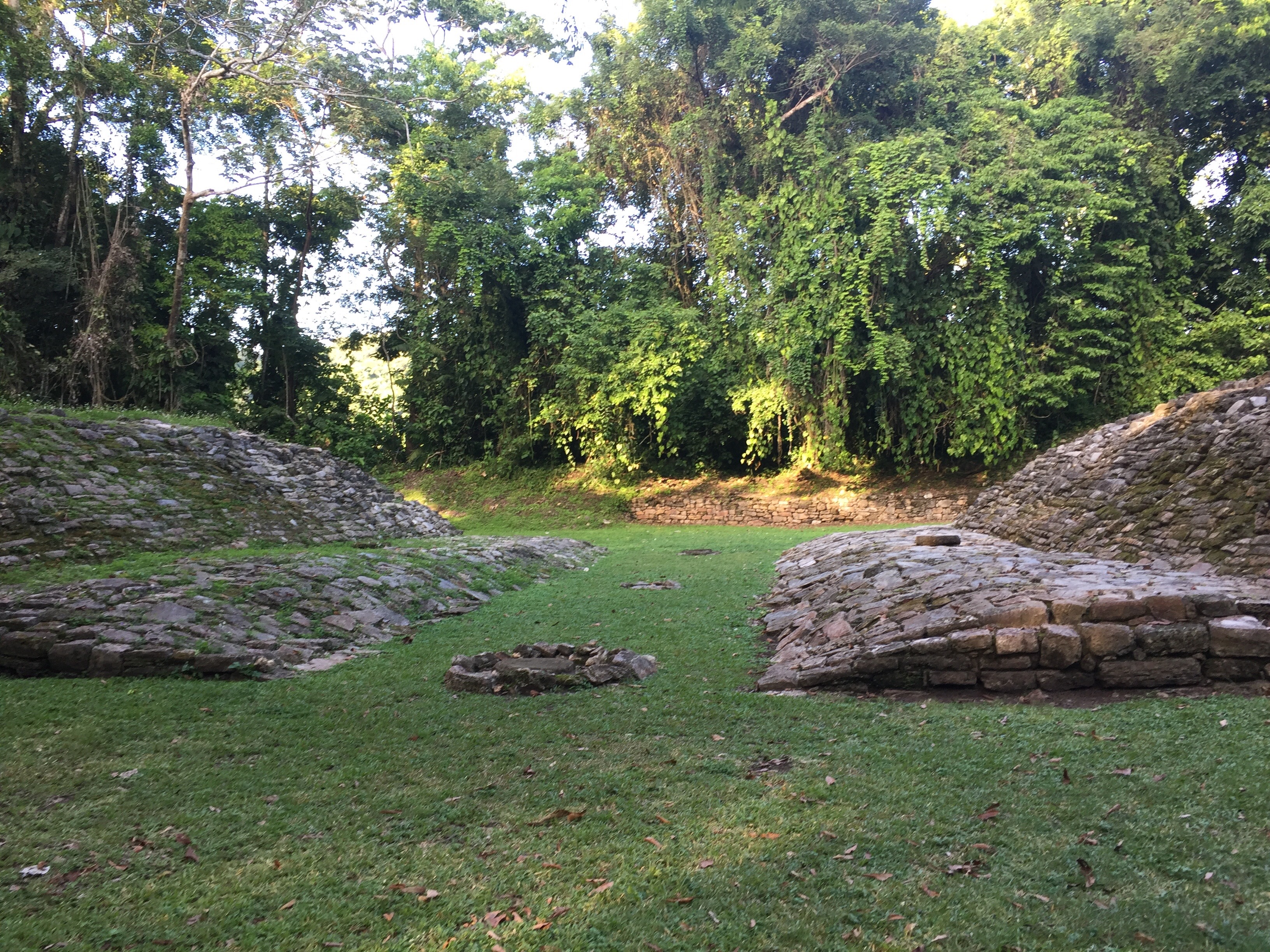
The rulers here had amazing names. Shield Jaguar I, Bird Jaguar IV and Shield Jaguar II. There was a ball court – we are back to human sacrifice here – and wonderfully carved stelae, but the glory of this site is the huge acropolis. 


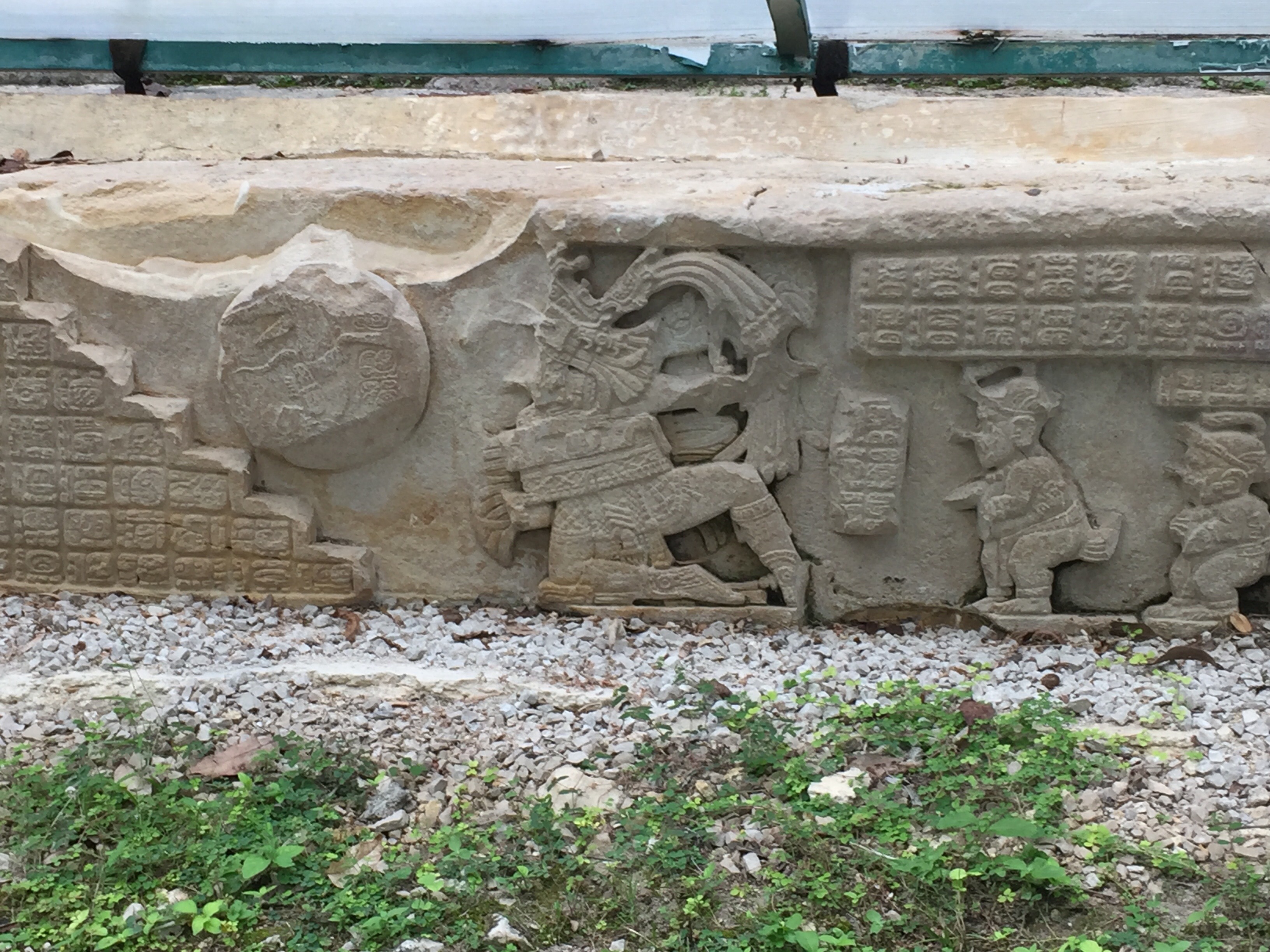
 It is the largest building we have experienced. Its steps went on for ever above us. Not everyone attempted the climb. I did and made the summit eventually. The steps were uneven and went on and on.   Our reward  – a large building with a stone pillar in front of it and some magnificently carved friezes of the ball game, clearly depicting the action of pushing the ball with shoulder and elbow. The building also had the best example we had seen of the ‘roof comb’ the almost honeycombed masonry on the top of the building.  


Having got our breath back, heard all about what we had found there  – those wonerdful ball game friezes ……..

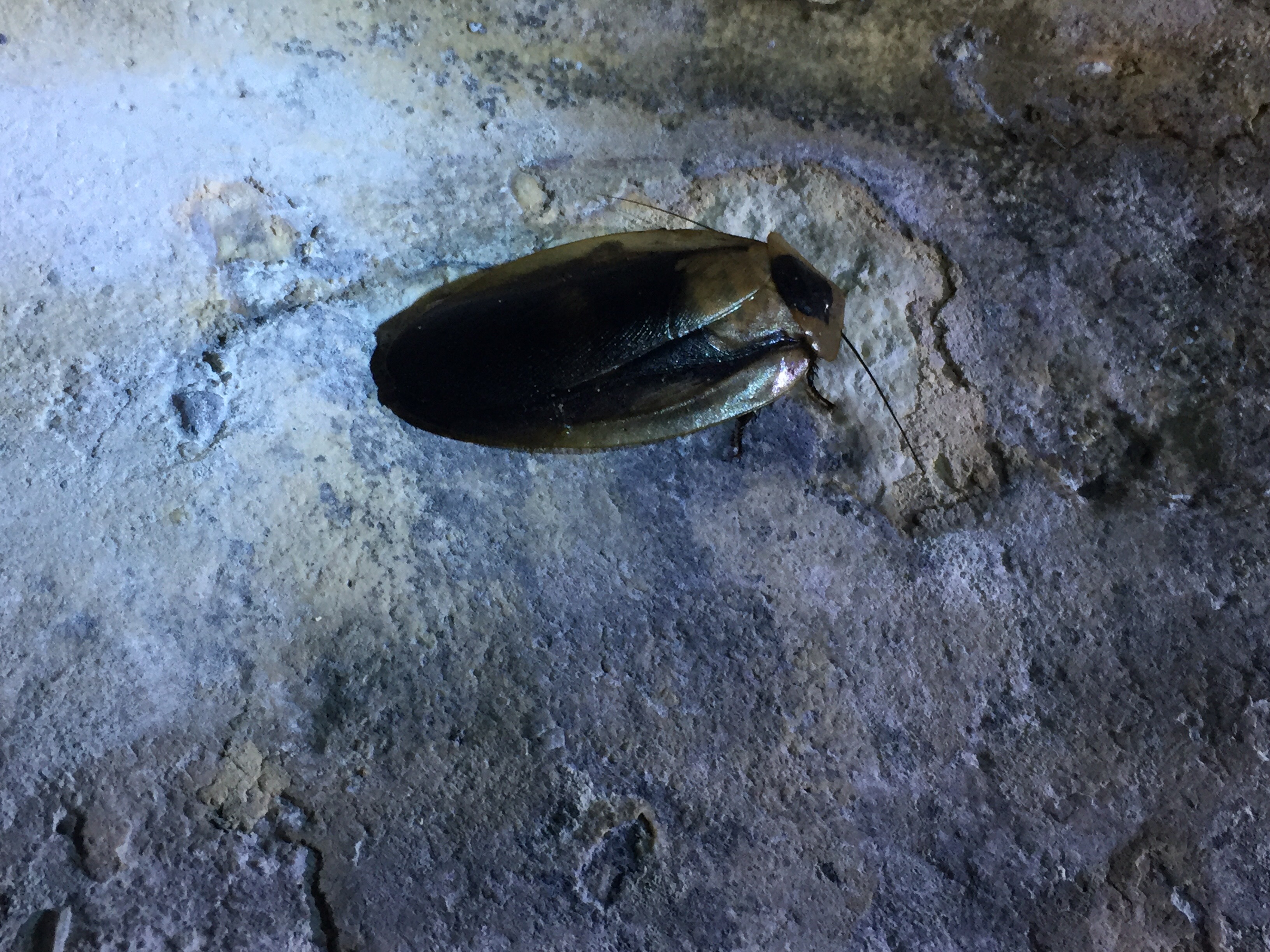
and taken our photographs – including that of a large beatle –
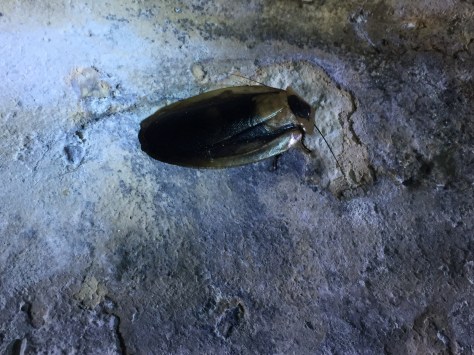

 it was time to descend again. 
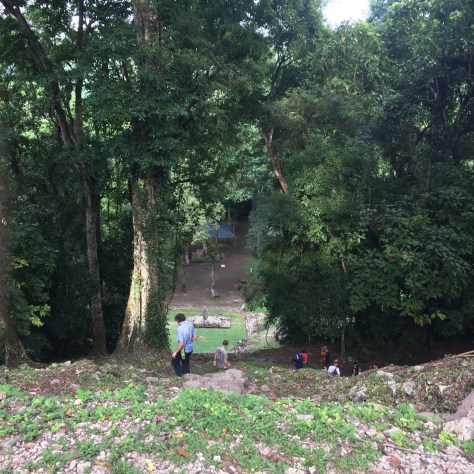

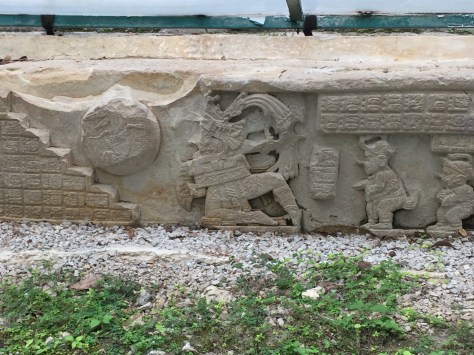
 No mean feat, given the lichen covered steps and steep gradient. Nearly at the bottom we were diverted to another building which housed more wonderfully carved stelae.  The carvings were Impressive.


Including an amazing lintel carving – 


And another rain god…..


We eventually left this magical place to its green tinged splendour, back through the underworld passages and the Mayan pathway to our boat.  Although no the way, martins dipped over the water and stately herons sat in the reeds of the riverbank. Howler monkeys swung in the trees and a crocodile slid into the water……..


We arrived back to our reed thatched accommodation in good time for dinner. One of our party had generously bought wine which he generously shared with us all with dinner and a jolly last evening in Mexico was had by all

. Tomorrow Guatemala.

Monday 6th November

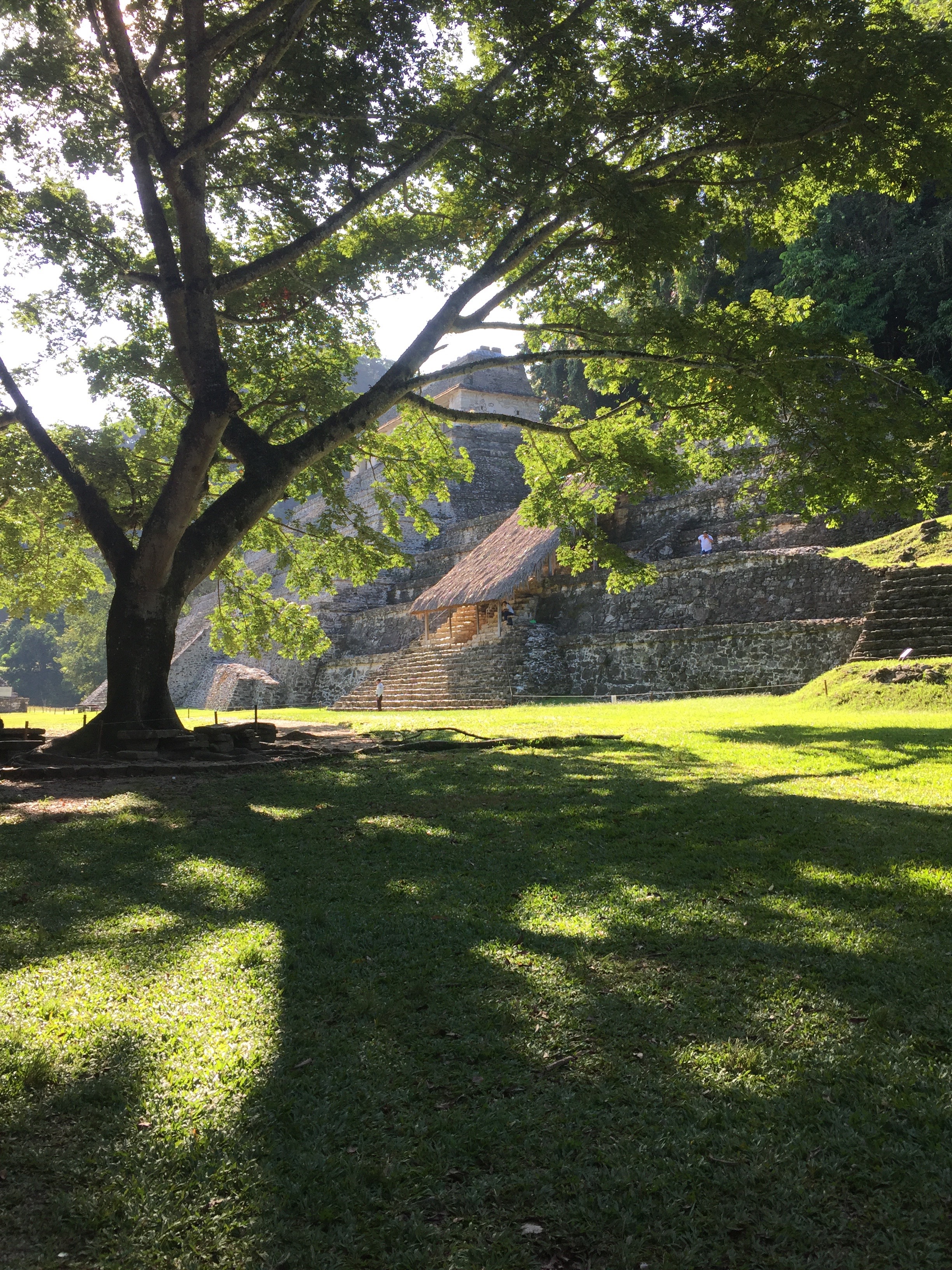
Pelanque is the name given to one of the biggest and most impressive Mayan archeological sites. It is not the original Mayan name, but the one the Spanish could create.    It has UNESCO status. It is the location where the great Mayan leader Pakal’s tomb was found with the famous jade death mask. The site was the day’s focus. It was splendid.  

We arrived at the site at about 8.30. It was already hot and humid. Unlike other places we have visited, Palenque is still surrounded by rain forest. It is believed the whole of this royal location covered an area of 6 to 8 Km’s, much of which is still to be discovered (it is thought that no more than 25% has been revealed so far) and archeological work continues. It is believed that 20,000 people lived there, but interestingly no kitchen or bathhouse has been found. Nor has any evidence been found, thus far, of any human sacrifice. The city fell into decline in circa 900 ad.  

Pakal is the most notable royal of Palenque and as 12 when he became ruler.   He reigned for 60 years. The city was founded by his mother and his son reigned after him, but lost the city in a battle with a rival Mayan tribe. Pakal died when he was 80, but had already overseen the building of his tomb housed in what is now known as the House of the Inscriptions. 


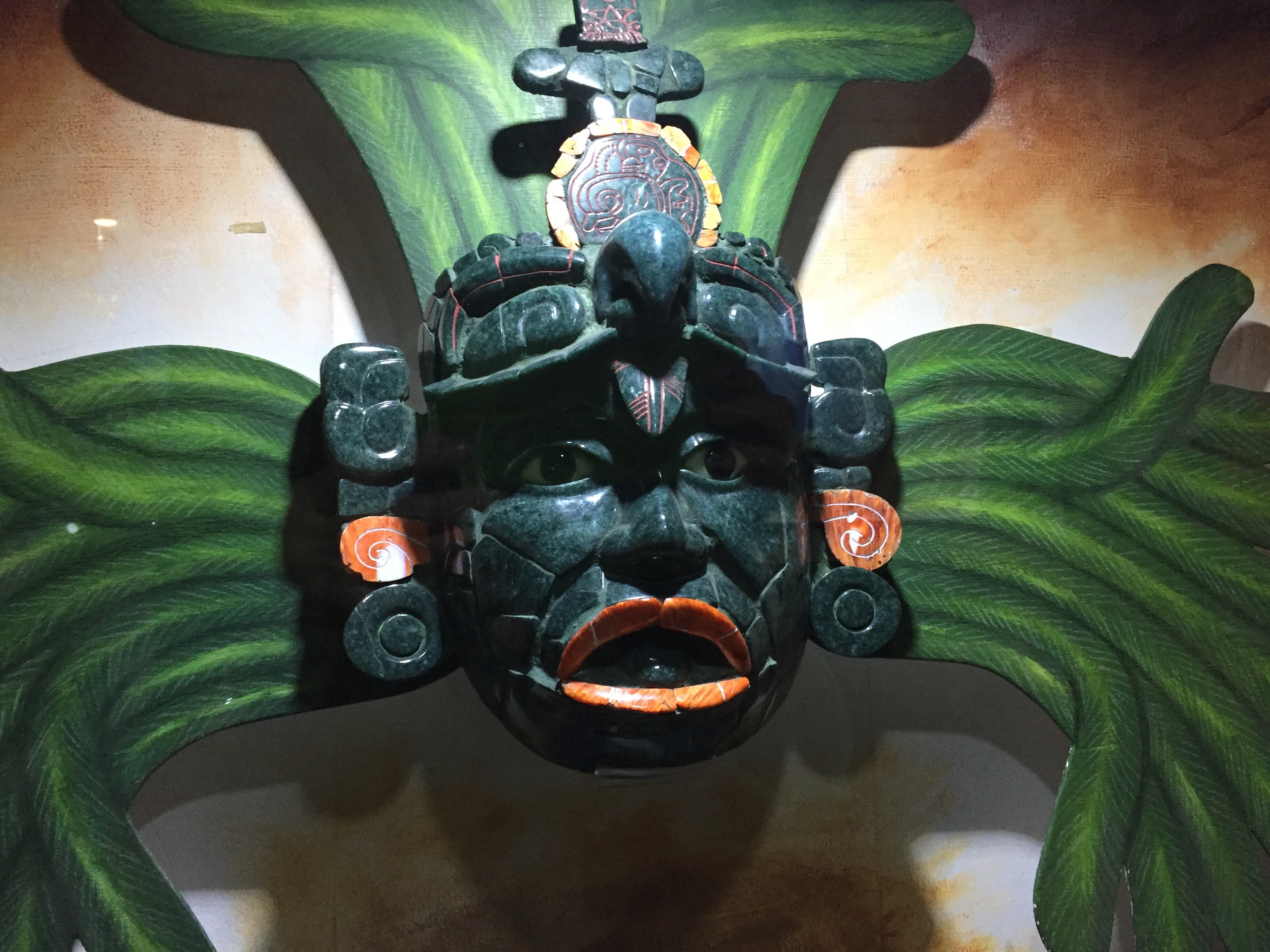
 It was while working on the hieroglyphics in the upper part of this building that an archeologist came across the opening to the staircase that led down to the tomb at its base. It took years of digging before the final discovery of the sarcophagus was made.  We saw a model of the tomb in the jade museum in St Cristobel where the jade mask is on display. 

In another building,  the tomb of Pakal’s mother was found, referred to as the ‘red woman’. This is because some time after the initial burial, bodies were exhumed when all the flesh had gone, and the bones were painted red. The body was then reburied.  

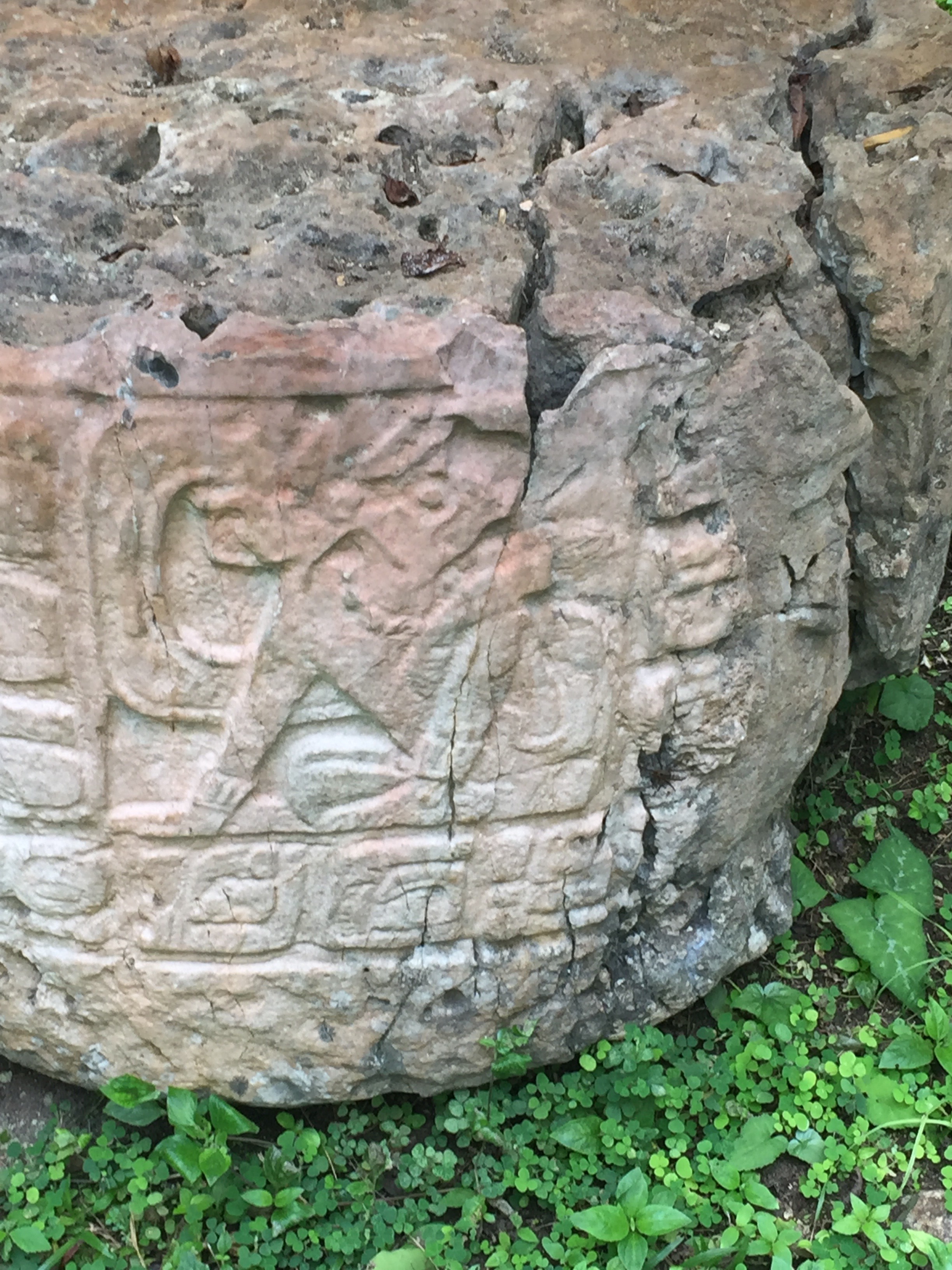
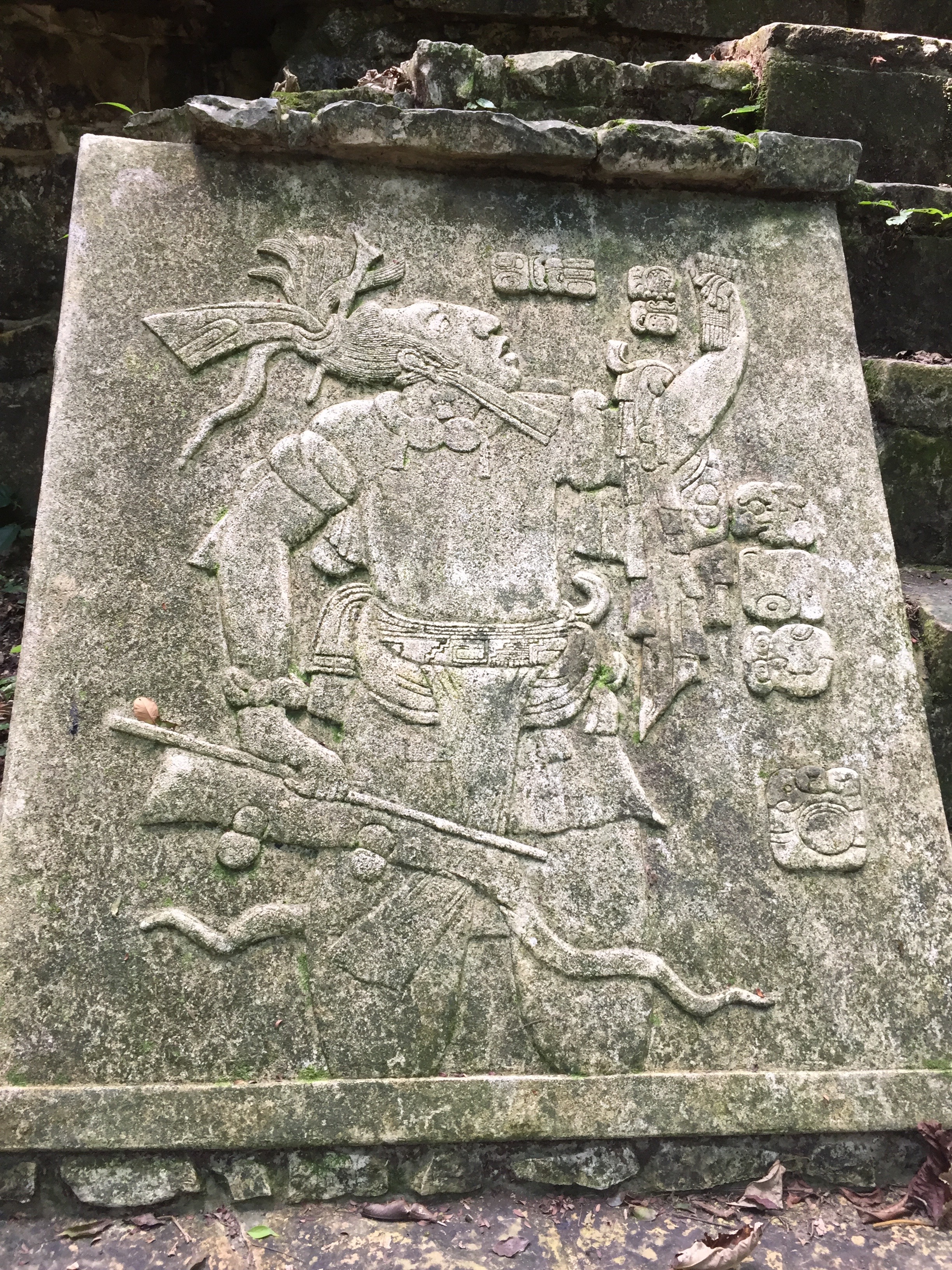
We clambered up all the buildings we were allowed (a number have been closed to public access after some serious accidents) to be rewarded with amazing carvings and evidence of the royal Mayan way of life, including stella’s showing  their slaves.  


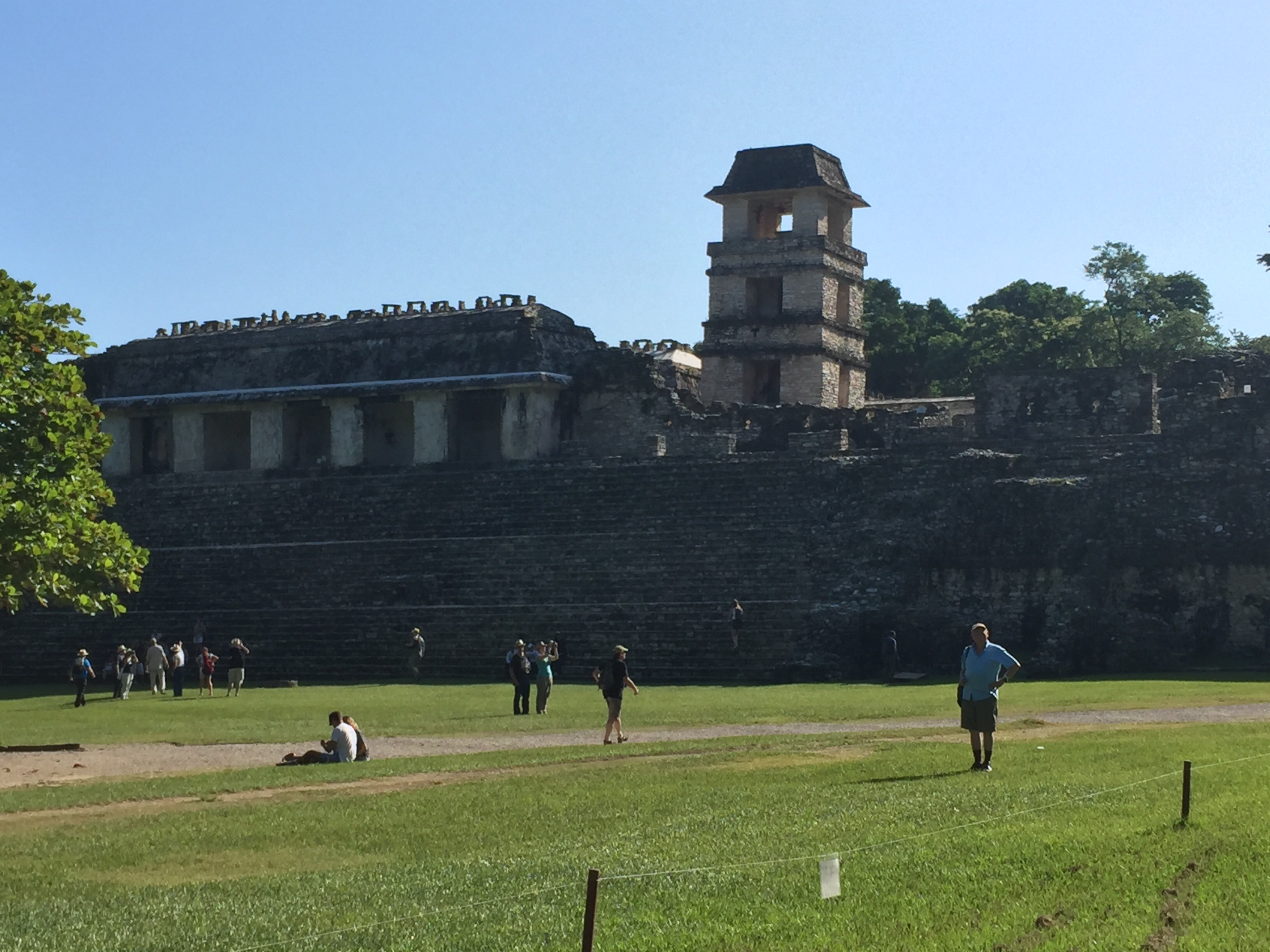
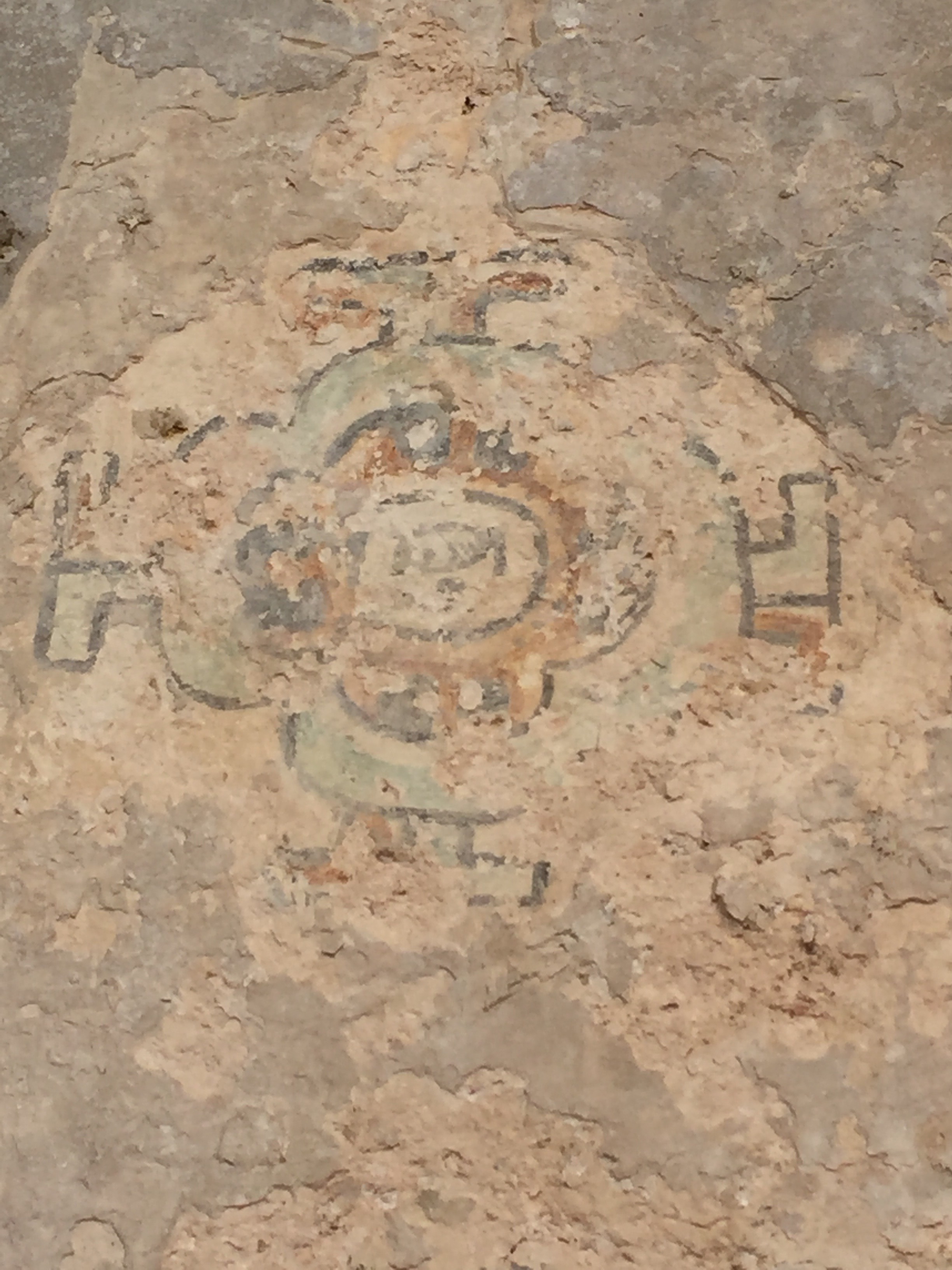
The palace, situated on the long side of the plaza, included an observatory (the towel poking up) and a ball court and some of the very best examples of Mayan architecture, some of which still had evidence of the original paint colour.  The inner rooms had an interesting pointed A shaped roof line – a corbel arch(!?)

The twiddly bits on the top are known as ‘roof combs’……  

Monica clearly visible here modelling her pink sun hat – Ana our guide on the left. 


It is thought the whole city would have been predominantly coloured red (how man cochineal bugs would that take?!) . In the carvings you could clearly see the head deformation they practised (they squashed children’s heads to make them flat), and that they saw cross eyes as an attractive feature.  They often removed teeth either side of the two central molars, to give a ‘goofy’ appearance! No accounting for taste!

The ball court………

Physically for us short people it was quite a work out! The steps were steep (Mayan royalty is known to be tall!) and the humidity saw us dripping with perspiration, but it was worth it. It was the best site we have seen so far. 

It was interesting to note that the Mayans also had a tree of life, the Ceiba tree. So many religions seem to have one!  It also gave us the opportunity to have a welcome sit down while we learnt about the life on earth as shown by the branches above the ground and the underworld represented by it’s roots. 


Vultures circled over head.  

After nearly three hours of scrambling up and down and wonderful explanations from Ana who has a Masters degree in archeology (aren’t we lucky!) it was time to take off to a waterfall and a swim for those thus inclined.  

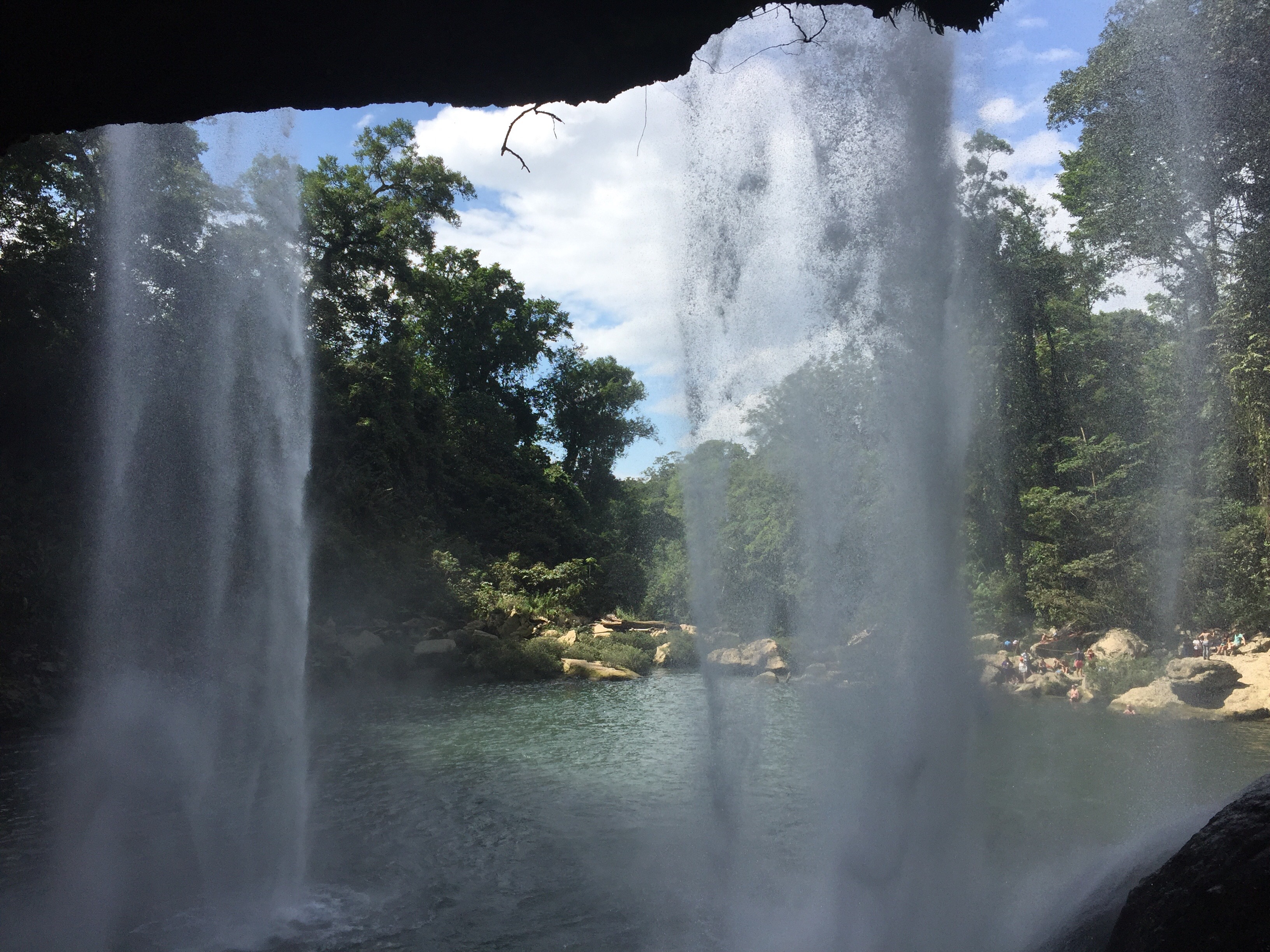
It took about an hour to get there and when we got out of the coach, somehow it was much less humid. We strolled down to the waterfall area and walked behind the water


It was cool. 

Then it was time to return to the bus and an afternoon of preparation for the day ahead when food purchasing opportunities would be limited. 

 It was something of a culture shock to find the supermarket bedecked with Christmas apparatus!  Somehow Santa’s stockings edged with snow and piped Christmas music doesn’t feel quite right in the heat!

We joined the majority of the group for supper and had an early night. We set off at 6.00 tomorrow.  

Sunday 5th November

When we had eventually wended our way to the the outskirts of St Cristobel de Las Casas and reached the coach we found we had the prized front seat. It was a day of driving – an ideal day to have the best view!!
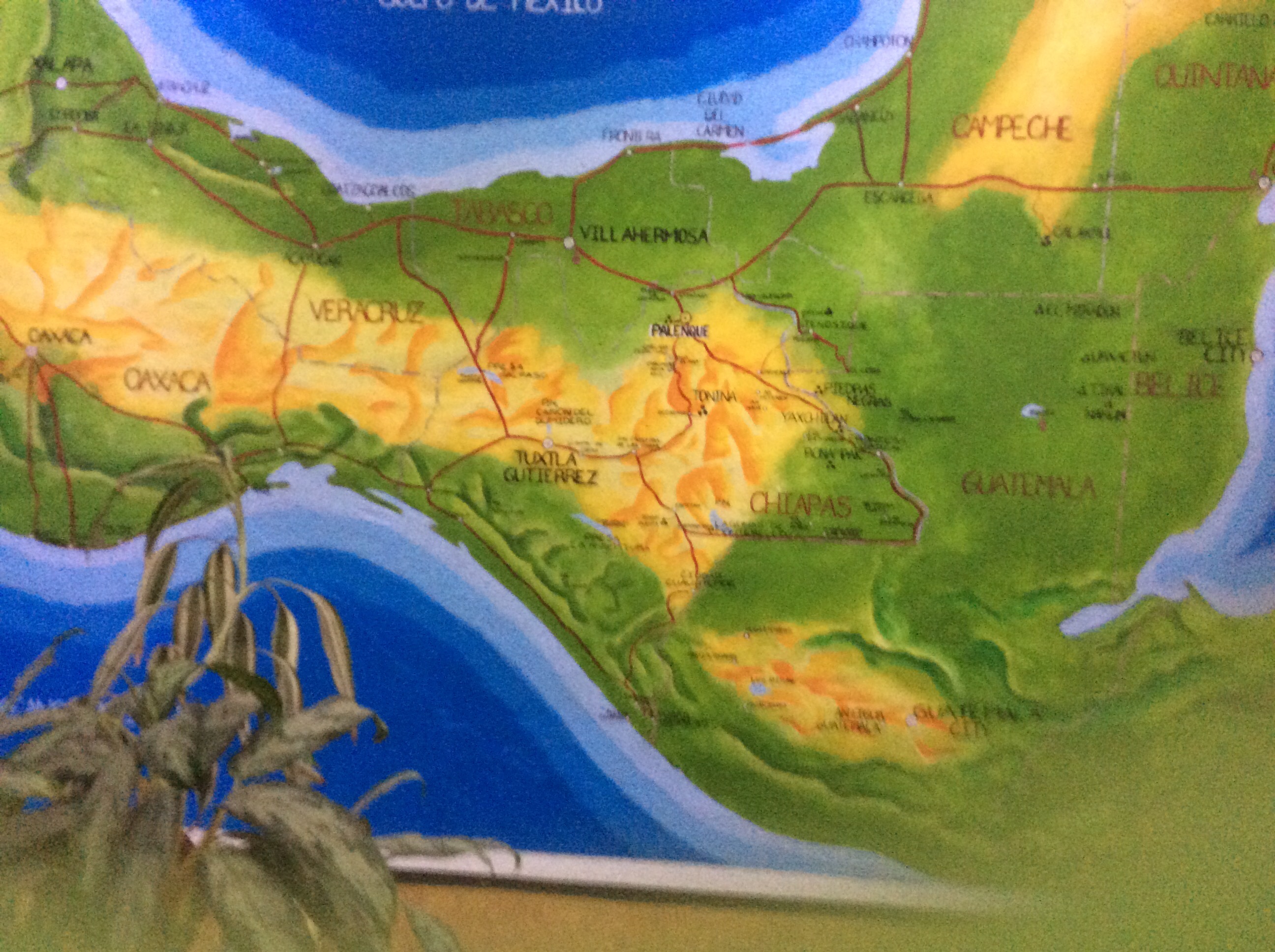
We were descending from the highlands of St Cristobel to the the comparative lowlands of Palenque. Our route had to be changed due to a huge landslide on the road we were supposed to take and so we set off on our diverted route to travel via Tabasco. ‘Oh good’ I thought ‘I will be able to buy some sauce for home….’. ‘Oh no.’ said Ana, ‘Tabasco sauce is made in California!’. Feeling a trifle foolish I slunk back to my seat…….


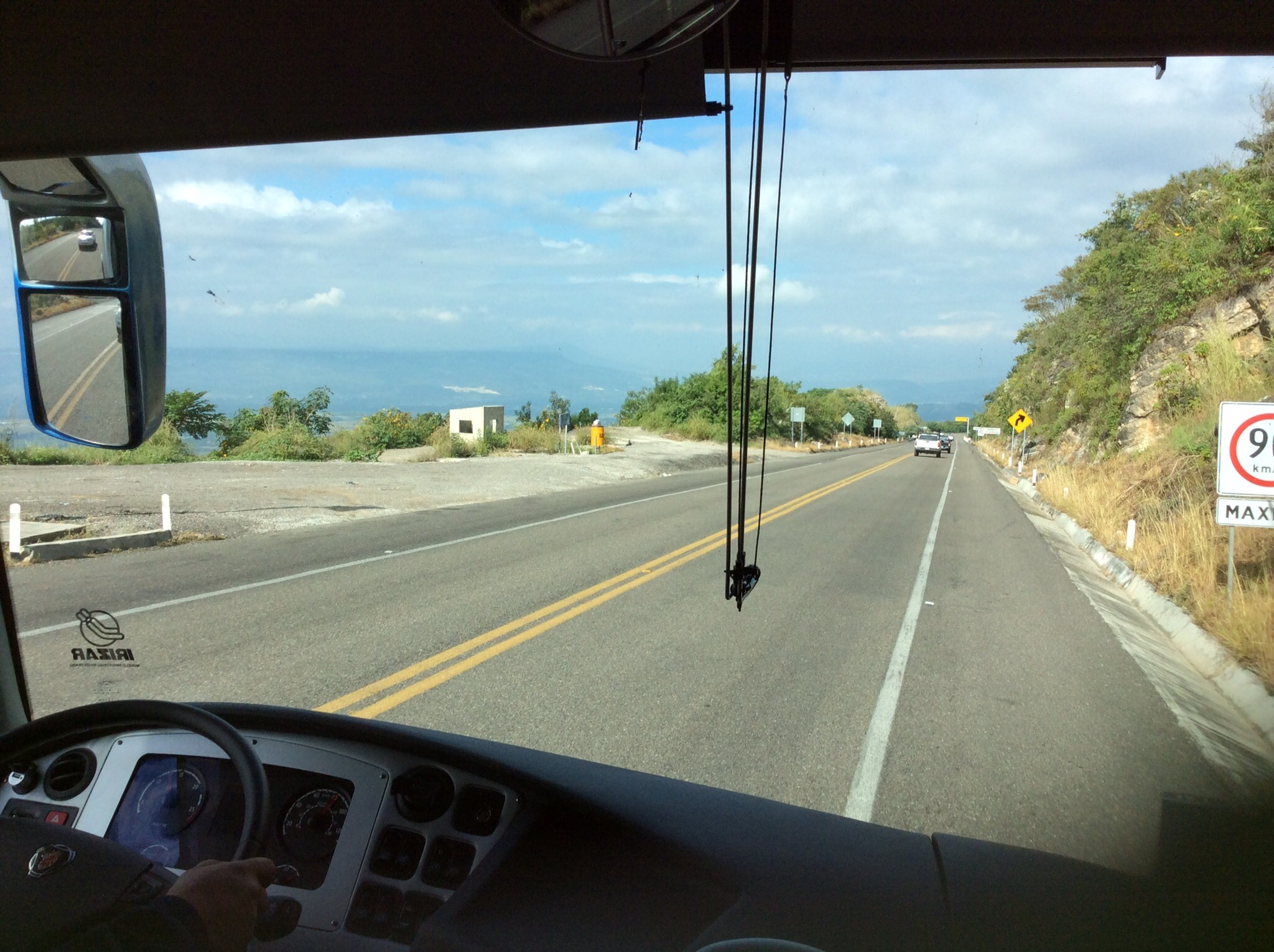
The start of our journey was descending into a deep valley with a magnificent wide view as we rounded the corners as the road zig zagged down. 


Having reached the valley bottom we travelled on tolled motorways for some time. Just watching the traffic is interesting.  Whole families sta no in the back of trucks like penned cattle……..


 We then turned off onto a road very reminiscent of an English country lane initially. Except for the vegetation!


 At one point two little pink pigs dashed across the road in front of us. They had obviously escaped from somewhere and were enjoying their dash for freedom! Occasionally a dog could be seen trotting along the side of the road and as it got less green and more dusty, groups of children passed us and an old man walked down hill with a stick. 

We eventually reached the capital of Tabasco, the large city of Villahermosa. The cities of Tabasco were mainly founded by the Olmec people, those of the large heads in the Museum of Anthropology in Mexico City (which seems all those years ago!).

In mid afternoon we arrived at Palenque, the location of the large Mayan site. Our hotel was nice – clean and comfortable, although sadly we had no outside window, which made our room feel rather cell like.  Nevertheless we brushed up reasonably nicely and I had a gin and tonic by the pool.  Very satisfactory!


Very little more to report for this day. Tomorrow the Mayan City of Palenque and the tomb of the great Pacal. Can’t wait!! 

Saturday, 3rd November

It was a rest day. Inevitably we woke early and were up and out before the streets had aired. It had rained during the night but the day was right and sunny and only the puddles in the frequent craters in the pavement gave any indication of the how wet it had been. 

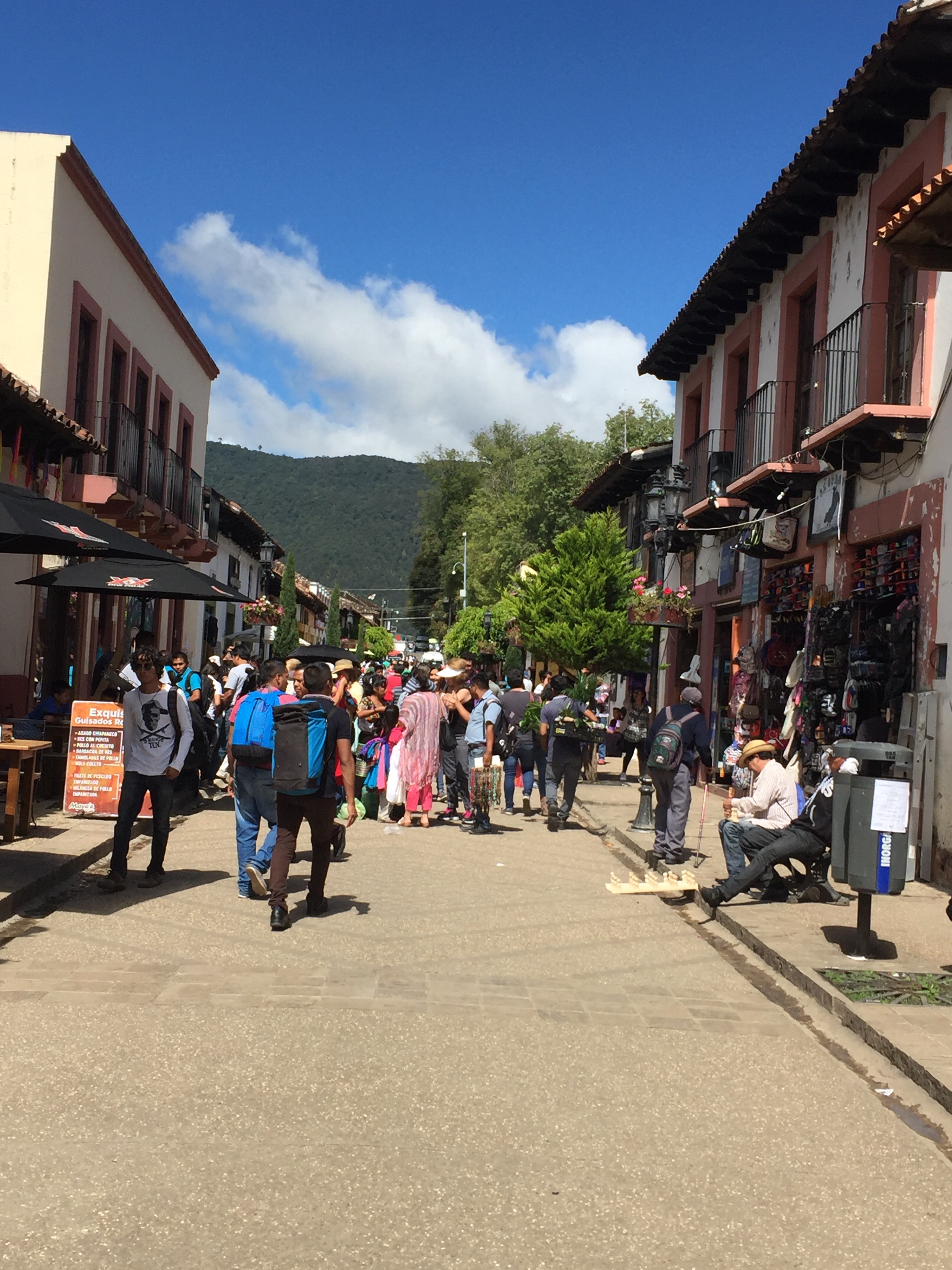
We walked back to the zocalo (those who have been concentrating will know this to be the town square). The roads leading to it were narrow, pedestrianised and lined with two storied small shops. As we walked through, shopkeepers were beginning to open up and the pavement traders were starting to set out their wares. A few cafes were open and serving breakfast. It is quite a cosmopolitan town, with language students, modern day hippies,  tourists and locals all mingling and enjoying the laid back atmosphere. 

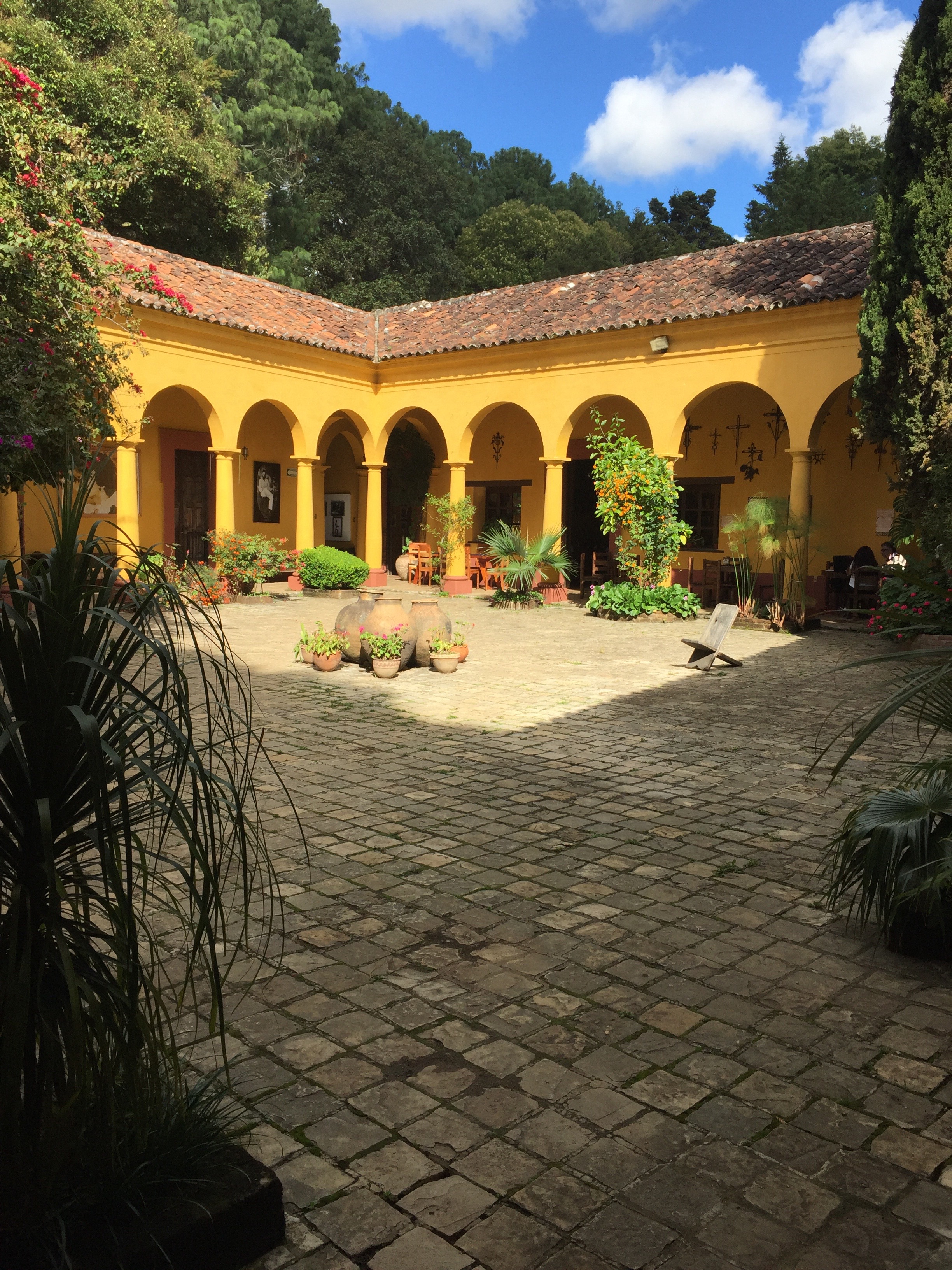
On reaching the square we found the tourist kiosk and then set off to find our first museum. It was not to be. After trudging down the road to find number 38 and knocking virtuously on the door ( it was just 10.00 am and we were at our first museum!) a man emerged, saying that the museum was closed (guidebook opening times 10.00 until 6.00) and that his sister would open at 5.00. With this and after providing us with the merest glimpse of the courtyard behind him, he slammed the door shut and left in an awaiting taxi. Well. That was it. Crushed in our first pursuit of learning for the day, we went shopping……. I don’t think we will be back.

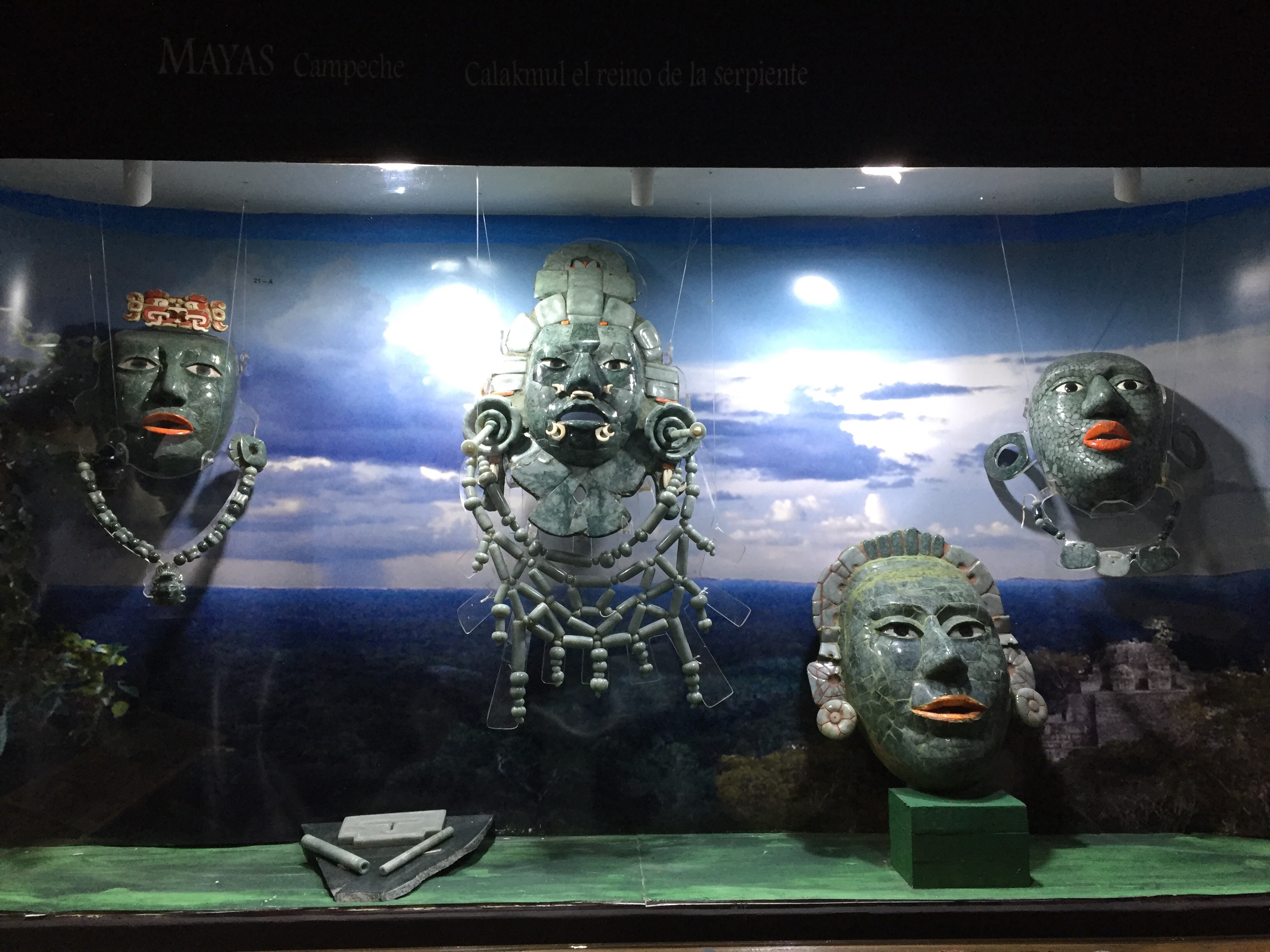
Before thar was the Jade Museum, briefly visited the day before to take a better look at the wonderful jade masks which were found in tombs we were to see later in our travels.

 
 After that the shops. The market full of all manner of colourful trinkets and blankets, the textile shop with its amazing embroideries, you name it we visited.  No stone was unturned. We even had a very nice waiter called Riga (‘I lived in California for 40 years, came to St Cristobal for a five day holiday last year and never left’) the waiter in a coffee stop negotiating for a hat for Monica with one of the street traders. It was great fun. However there is a negative side to the women of all ages who wander the street with their wares on their arm or on their back. Many of them have been abandoned by husbands who go to the US to make their fortunes and never return. So the wives are left to make what living they can. Many had very young children with them. Of the street hawkers and those in the better position of having pitches in the plastic covered market that covers a vast area in front of the St Domingo Church, most of them were women. There from early morning until late into the chilly night. Many sold the same goods. How many could a living I dread to think.  


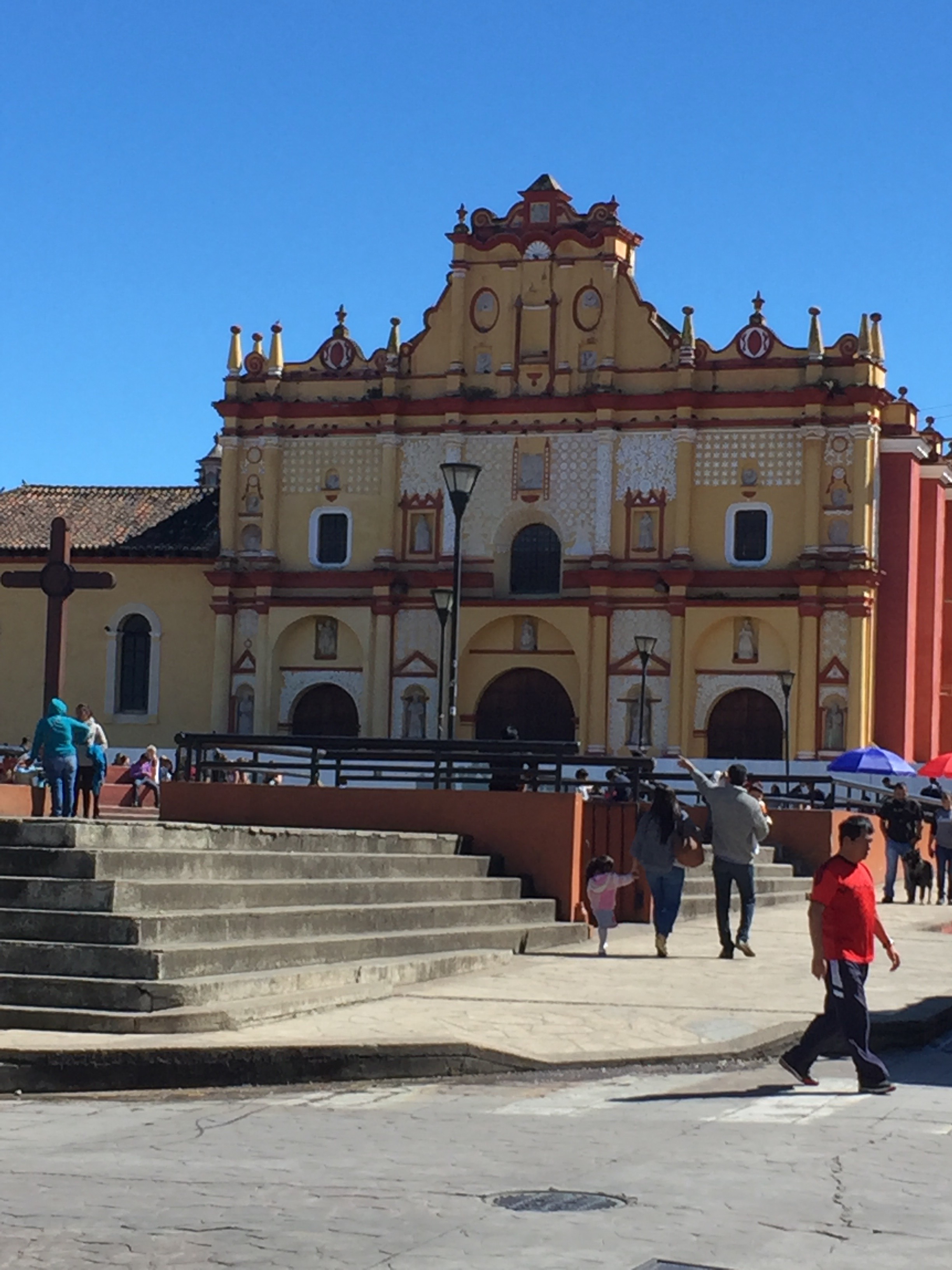
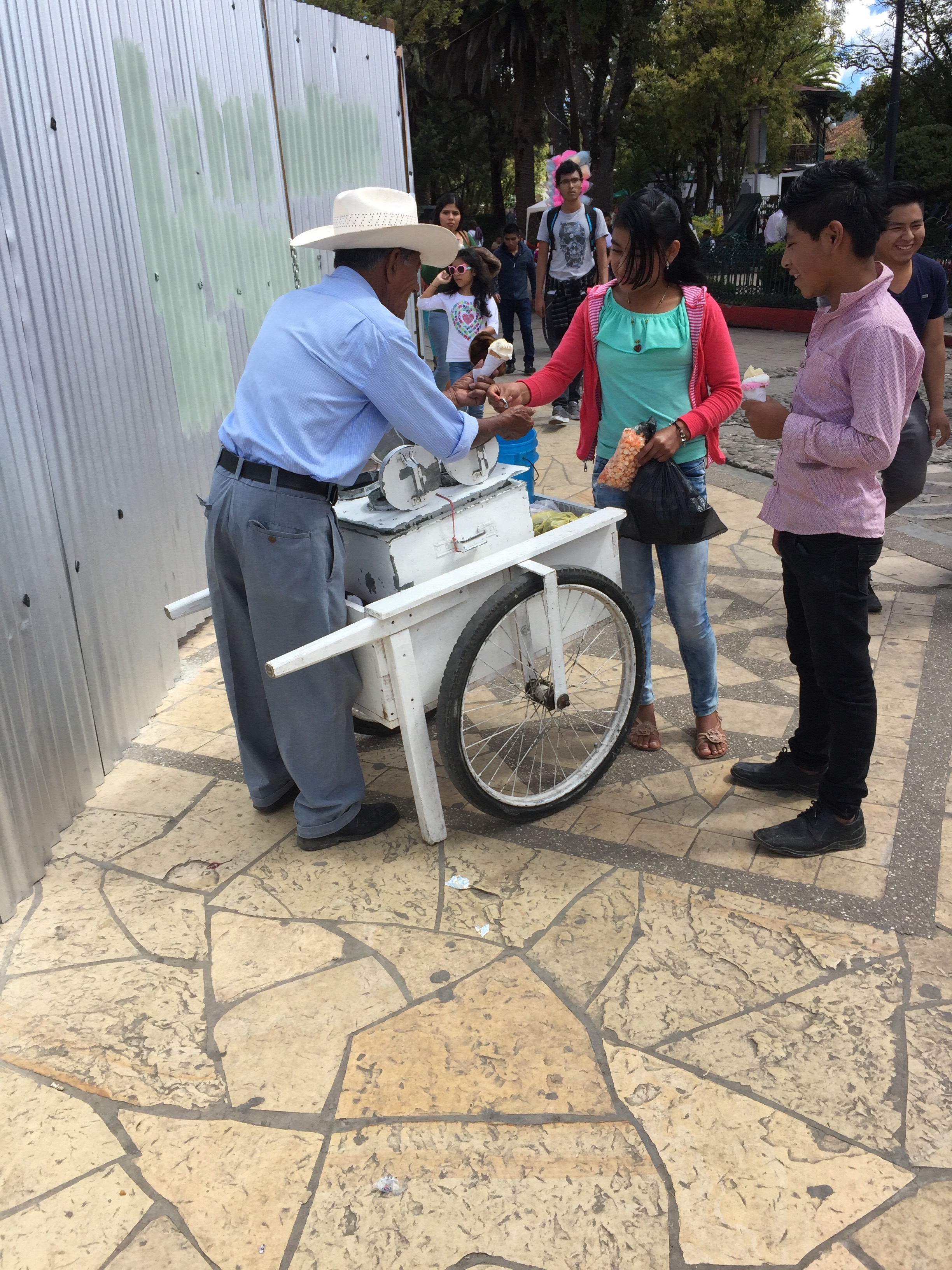
We eventually wandered back to offload our purchases, passing the cathedral (closed due to earthquake damage) and an ice cream vendor on the way.

We also found some enthusiastic (if a little bashful) group of young dancers performing on a stage set up across the road. It was all very colourful if a little haphazard. The music broke down at one stage leaving the young people at something of a loss, although they heroically kept dancing!


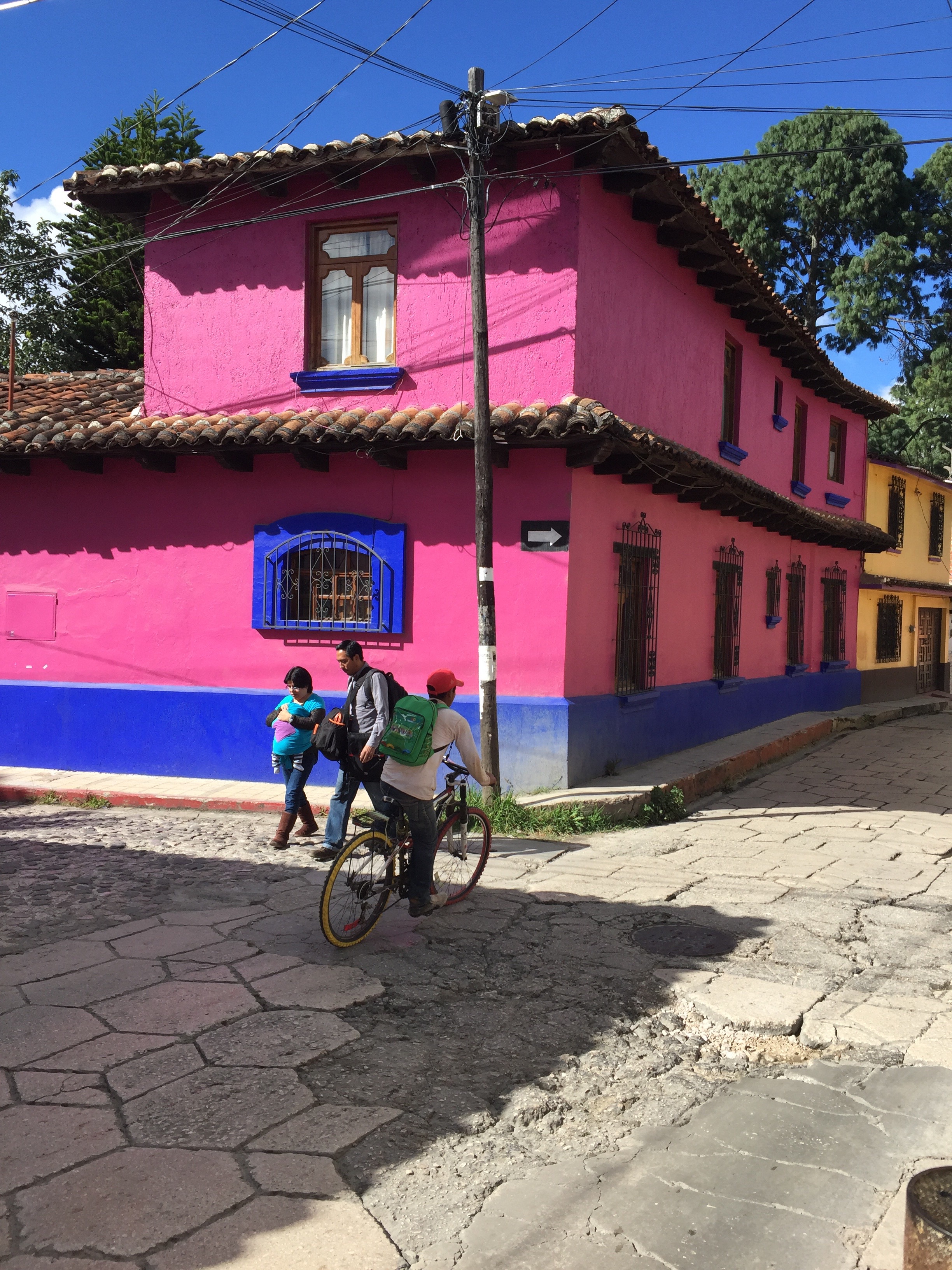
We eventually found our way back to our hotel, dropped off our purchases, and set off once again, in the opposite direction to find another museum. The pavements are narrow, very high and quite clear uneven.  Some of the houses were extreme colourful.


We were headed for the The Na Bolom (Jaguar House) Cultural Centre. This time the mission was successful. 

The Museum was once the home of Frans Blom and his wife Gertrude Duby. She was a Swiss journalist and photographer and he was something of an explorer. They left their home in St Cristobel (a disused monastery) to the nation as a place of study and research, a museum and providing accommodation to those who look to carry on their work, having spent a lifetime supporting the native Mayan people save their habitat, the rain forest of Lacandon. It was an interesting place with many photographs and artefacts from their travels.  

We returned to the hotel to gather ourselves together (we move on again tomorrow), hopefully collect our laundry and go out with the group in the evening. In the event we did not eat with the others but returned to the restaurant where we had eaten the previous night and watched the dancing of the floor show which we had not seen the precious evening. 


In fact the whole town was full of musicians of all musical genres playing in the squares and streets.  


A very pleasing end to a pleasing stay….