Thursday Xianhe and the Grassland

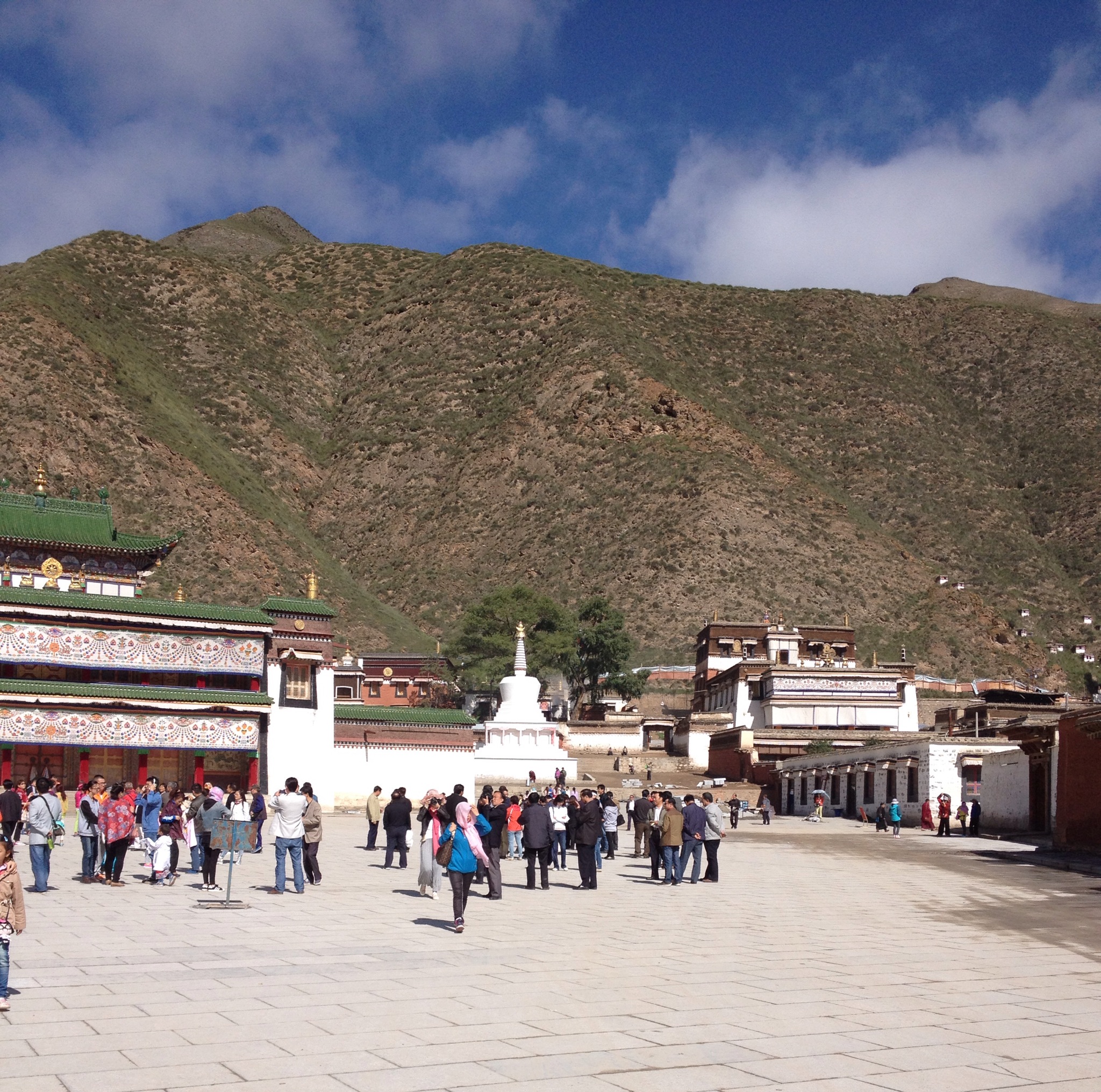
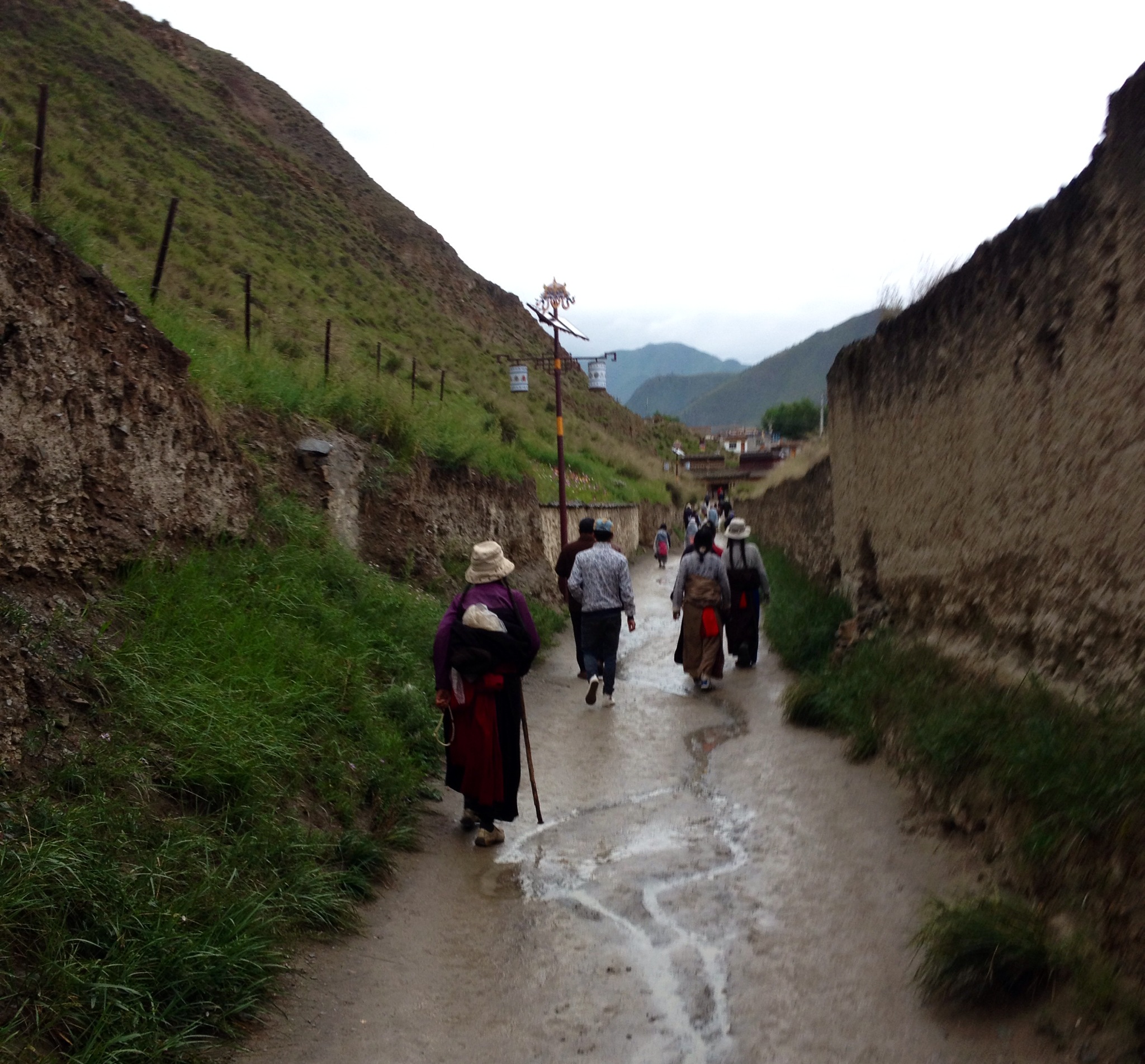
We woke early and completed what seems to have become our ‘constitution al’ – an early morning walk with the faithful around the Labrand Temple. It was dull and and there was a thick mist on the hill tops.

There had been talk over several days of ‘The Grasslands’ an area north and higher than Xianhe where we would stay overnight in a ‘home stay’ with local people. The big issue was whether the truck would get up there given what was described as a difficult road made worse by rain. The last trip had been unable to make it and there was serious doubt as to whether it would be possible for us. Emma and Simon (the crew) had undertaken a reconnaissance mission and decided it was ‘no go ‘ for Penelope, but they thought that it would be possible to get there independently by taxi for a return trip in a day. A final, final decision could only be made on the day, taking weather into account. Of course, we wanted to go. Once again we were not sure what would be involved, but like most condemned men, we ate a heart breakfast and waited for a verdict on the weather.

Despite rain being forecast, it was thought we could make it, so Jason the Chinese guide was despatch to find two taxis. Seven of us had decided on the excursion and we decided to take Jason along to educate him,as he had never been before, and for translation purposes.

So we piled in. Girls in one car with Jason and boys in the other, having taken the precaution of purchasing water. bread and tomatoes in case we got hungry. The cars were small people carriers and quite modern, but not four wheel drive, and we got very skippy when found seat belts. Our thoughts of safety with these were quickly dashed as we found that the natty black covers with red spots were aesthetically pleasing but successfully covered all the seatbelt anchor points. So much for that…….

So we set off. We had not got more than 2 kilometres out of town before we had run out of ‘tarmaced’ road and were bouncing around as the car swerved around potholes. It became apparent that the road was in the early stages of construction and that there was a considerable civil engineering project in progress. Initially there were large cement blocks or a low wall to ensure that the joggling vehicles did not fall over the edge, but these soon ran out. At this early stage the sky was still overcast which added drama to the situation when two large lorries (there were plenty of these in evidence and were probably the cause of the major mud churning that had taken place) had approached the same spot from different directions and it seemed had got locked together. It looked like two dinosaurs fighting! Add to this the fact that each lorry headed a phalanx of cars and motorcycles that had attached themselves behind them to charge their way through and dominate the right of way and it was a real mess. It took a considerable time and much hooting to sort it all out.

Eventually things got freed up again and we were moving forward. We passed major earthworks and big craters in what is obviously going to be fantastic when it’s finished. There was also lots of concrete involved and major stone shifting. All the time traffic weaved around it. We even occasionally saw a surveyor looking very important and completely impervious to the chaos going on around them. Just when we thought things could not get more busy, a herd of yaks appeared in front of us and sauntered across the road prior to mounting the steep hill on the other side of the road. Marvellous!

While the road continued to prove challenging, the scenery had begun to change dramatically. On either side a vast plateau was developing with hills in the far distance. There was not a tree to be seen but green grassland, as advertised. Some areas were being cultivated near to the road but only for a kilometre or so and then it was just meadowland as far as the eye could see with no fences or walls to break it up. Near the road we saw people working with scythes cutting their barley and gathering it up to dry. Occasionally there were houses. Single storey, with a walled compound around them. They often appeared in clusters as though they huddled together for comfort. What was pleasing was evidence of very efficient electricity wires running parallel to the road – much more promising than ours at home which have been known to fail on more than one occasion!

Another feature was bee hives. We saw a number of these often where there was a collection of buildings.

By now the sun had come out and we were thoroughly enjoying the scenery. We stopped the car frequently to take in the view. The uncultivated meadowland had lots of flowers and the whole area had an alpine feel. Whenever we stopped we saw the heads of marmots peering at us from the safety of a good distance away and birds soared overhead.

After about 30 Kilometres a high mud wall came into view. By now the road had dramatically improved and we rounded a corner to enter quite a sizeable village. There were shops and young children wandering about and the wall, though seriously damaged in places, had obviously once encircled the area and still stood proudly protecting its people. At what was obviously once one of the entrances to the town we stopped and got out. From nowhere a man arrived with very official tickets inviting us to climb onto the wall. The ticket usefully informed us we were in Gan jia Bajiiano City. It was built 2,000 years ago, originally with two outer walls and a moat around it to protect the people who lived there from their enemies. From the top of the wall you could look down into the village where the people were living almost medieval lives. Their mud brick, low dwellings had flat roofs and walls divided what looked to be family enclosures. There were low haystacks drying hay and we saw carts carrying water drawn from a communal well being pulled along by a young lad. The village yak was tied up close by. Outside of the wall the hills beyond the plain had become quite mountainous.

We continued along the road for a couple of kilometres and at the base of a craggy mountain pass found a small, but obviously at one time important, Buddhist Temple. We were told it was closed for a retreat but the notice outside informed us it was the Braker Monastery. Built in 1634 it had once housed ‘thousands’ of monks. Today it stands fairly isolated. We saw a couple of monks outside but little evidence of life within its walls. Retreating is obviously a fairly private business. A sign close to the entrance gate indicated the monastery hospital. Along the exterior walls the ubiquitous prayer wheels stood silent. They were without the patterning of the Labrang Monastery wheels but were gold coloured. The roof of the main buildings were also gold and they all twinkled in the sunlight. It would have been great to know more.

There was news of another monastery site close by, so the decision was made to head there and make it our picnic stop. Our route again provided amazing views and then we came to a small group of houses and a tent that was operating as the local shop. Shortly beyond that the monastery came into view. Three elderly men sat outside in the dust talking. There was no-one else around.

The Tsewey Monastery was very impressive, but there was not a person to be seen. A notice told us it was 900 years old and dedicated to the Yungdrung Bon religion which is the oldest in Tibet. Apparently there were thousands of Bon temples in its heyday and there are still 350 in Tibet. We wandered around the buildings which were very colourful and saw a couple of young monks but no-one else. A highlight occurred when an elderly lady and little girl appeared demonstrating what we had learnt – that here they walk in an anti-clockwise direction when they spin their prayer wheels. The opposite to every temple we have visited thus far!!

The monastery was the final stage of our trip and we headed back to Xianhe very pleased with our day.

The mud on the road had turned to dust for our return journey so we arrived back dusty but happy. A final meal in the Nomad and home, tomorrow we head off for our first night of camping.

What a day!
Wednesday Xiahe and the Labrang Temple

We woke early and decided to walk the Kora, the three kilometre walk round the perimeter of the Labrang Temple. It was 6.30 and had started to rain by the time we left the hotel but already the bread sellers were setting up their stalls.

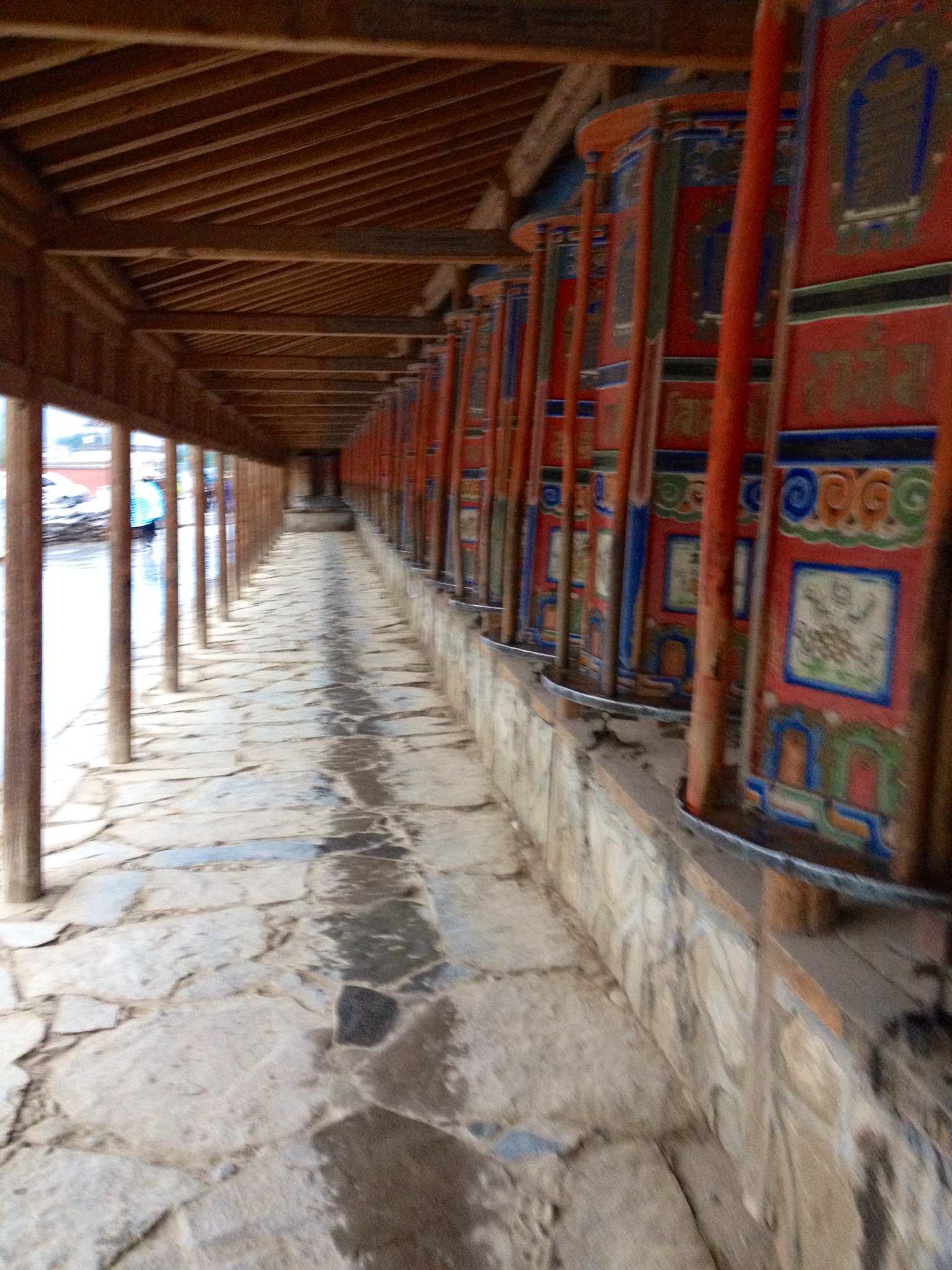
We weren’t sure of our route, but need not have worried as it is obviously a ritual for the local people and pilgrims so we just followed the crowd as they spun the prayer wheels which encircle the temple complex. I guess it is the ‘regulars’ who we notice wear a glove on their spinning hand! It was a slow stroll as the air is noticeably thinner and to walk at any sort of ‘pace’ you become conscious of your breathing.

There were a few tourists but the majority of those we walked with were there to carry out their Buddhist rites. The prayer wheels spun and the pray-ers chanted and it gradually stopped raining and got lighter. There is evidence of improvements going on around the temple. As it is, rain soon turns the pathways not paved (the majority) into a mud bath. Even so you can’t help wondering what impact the modernisation that is moving up the valley is going to have on life in the monastery and it’s surroundings.

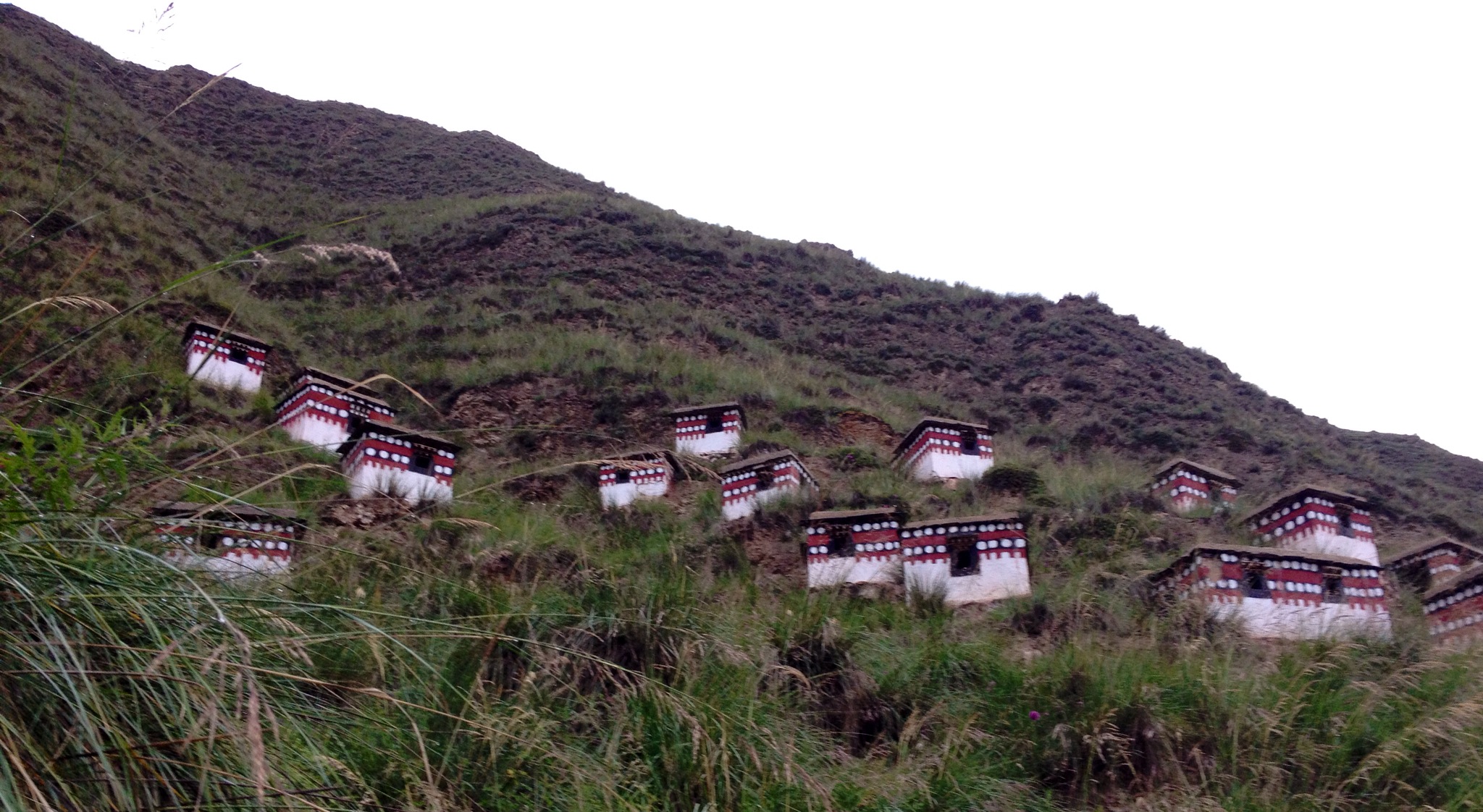
We were really pleased we had made the effort to get up and be part of the early morning activity. In addition to the temple buildings we came across two big white ‘stupas’ topped with gold and saw on the hillside some small black and white single cell like structures. It turns out that these are exactly what we guessed they were – solitary confinement for the young monks who misbehave. A real ‘naughty boys’ section!

We completed the circle and bought some walnut bread and yoghurt for breakfast and met up with a few other members of our party who had also been early risers. By now the number of bread stalls had multiplied and there were many shops open and a range of hats and scarves for sale.

We hired the English speaking monk for a tour of the monastery but had been warned that he could be grumpy. I don’t think he has quite got the positive karma thing. He was certainly in a bit of a mean mood and our tour was definitely a little bit grudging, but we did get to see inside the temples which we would not have been able to do without him. It is obviously a very special place although we had not anticipated anger management issues from a Buddhist monk. It does not exactly seem to be ‘living the brand’!

The monastery interiors, that could not be photographed, were lit with yak butter lamps. The largest of the temples – the Hall of Philosophy – is divided up by pillars draped in coloured cloth. It reminded me a bit of the big mosque in Cordoba. Here, twice a day, 1,000 monks gather to pray.

Leaving the hall and circling back to the front of the temple (our guide abandoned us at this point) we were mesmerised by the sight of the monks gathering on the steps of the Hall of Philosophy ready for one of the prayer sessions. This time instead of the flat saffron hats of yesterday they looked very smart in their sort of coxcomb headgear, this time in a lighter shade of saffron. As we watched, more and more gathered on the steps staring back at us watching them and chanting. Gradually we became conscious of the sound of a conch shell horn and then at a signal they all got up, kicked off their felt boots and fled into the temple…. An amazing sight! Only the abandoned footwear was left to indicate where they had been. What an experience.

Our afternoon outing, post yet another heavy shower with thunder reverberating around the mountains, was taken in bright sunshine, retracing our morning’s perambulation. It would seem that the prayer wheels turn all day and the people’s devotions do not flag. We saw one man who looked as if he was carrying out the prostrating process (prostrating themselves full length, then drawing their bodies forward to their outstretched hands, rising and then falling to the ground again) all the way around the 3 kilometre circle. Incredible.

We adjourned to the Nomad restaurant again for supper and within minutes our dinner a deux became dinner for 8, as fellow Odyssey travellers joined us. We were still back in the hotel by 9.00. It is really quite chilly…..

Tuesday from Lanzhou to Xiahe (Little Tibet)

We took a sort of right angle off the main road once we left the city to take
the route to Xiahe which is a a town built around the big Labrang Monastery. Labrang is one of six great lamaseries of the Tibetan world and is the same sect as the Dalai Lama. It was founded nearly three hundred years ago and once housed 4,000 monks. However, like many things it was a victim of the cultural revolution and only in 1980 did it re-open. Now it houses 2,000 monks.

Initially there are some of what I would call swirling hills and then this flattens out into a large valley. Here mosque minarets come into view, some of them quite ornate and topped with gold. For the first time on our journey we see people working in the fields, backbreaking planting and weeding. Whole families working at taming small strips of land.

We stop for lunch at Linxia. Here people are dressed very differently, the women in sort of low wimples often made of lace. There is a distinct feeling of ‘I spy strangers’ in the air as we emerge from our vehicle but everyone seems very friendly and smiley.

We had a bemusing incident when we went into a supermarket to get some provisions. Having come across some tomatoes (sadly no cheese!) we found what looked like bread rolls which seemed like the ideal lunch combination. Very pleased with ourselves we arrived at the till to find there was some consternation about the bread. A supervisor type was called and the bread, with Keith in hot pursuit, was taken back to the bread counter. After some searching through the other bread on display, our chosen bread was put back on the shelf. We were not allowed to have it! Back at the till, the other purchases were totted up – but no bread. Despite our gesticulations there was no moving them. Several people in the queue very helpfully joined in the attempt to explain the problem, but there was no way bread was on offer to us. Not wishing to press the point we thanked our new found chums and left. Bread was off!

We did manage to get some sort of yellow flat bread at a small shop along the road. Unfortunately it was sweet. Lunch was interesting……

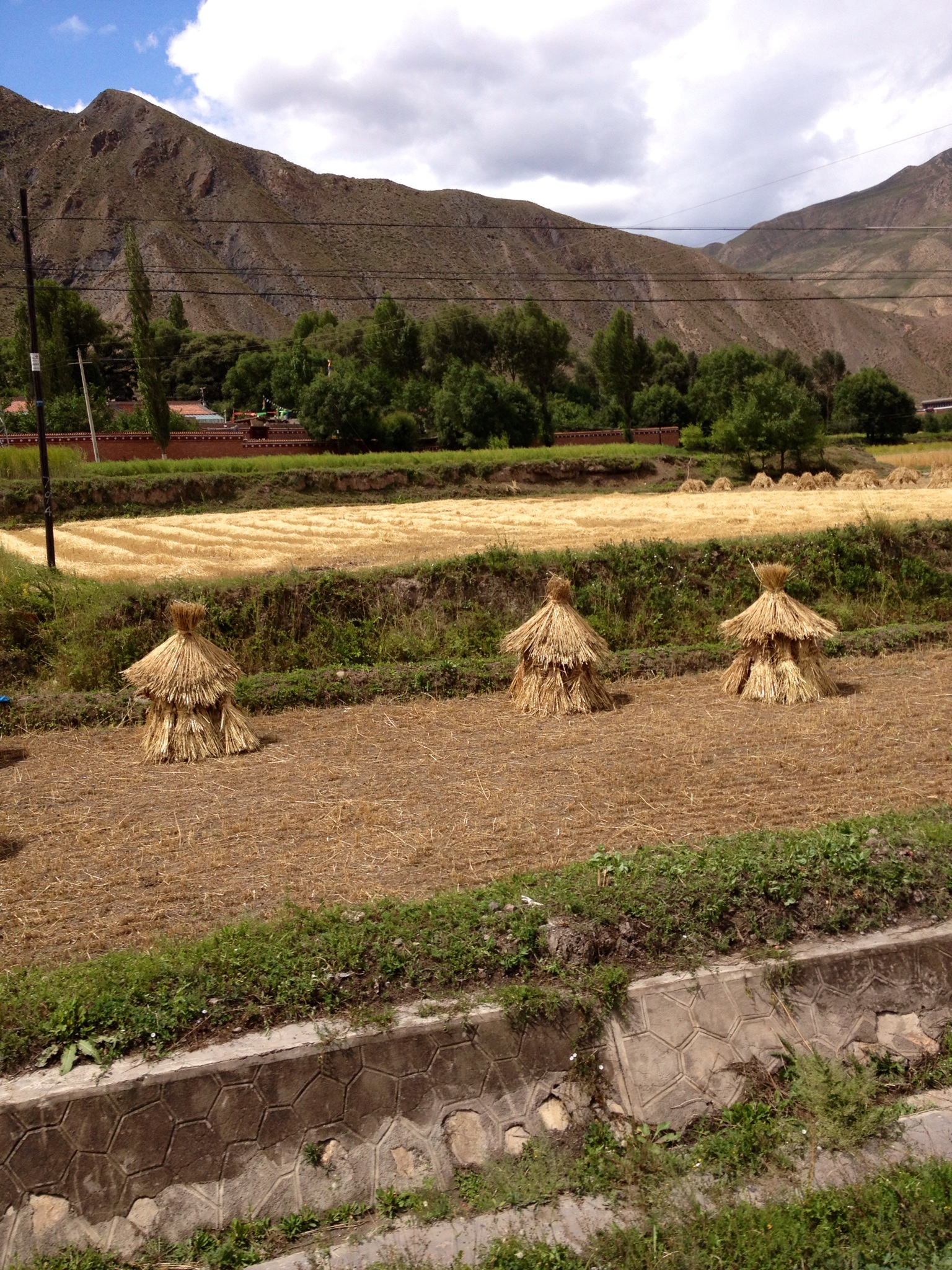
Leaving Linxia behind, the soft sandy hills stop and the valley steepens into stone. The river running along beside us has changed from its sandy mud colour to grey and we appear to be travelling up a corridor with mountains on either side. The road is pretty basic but there is evidence of a dual carriageway being introduced. Still the cultivation continues in the valley bed, sheep and goats are in evidence, there are several horses and then yaks. The minarets have ceased to make way for Buddhist stupas and monasteries. The fields are now yellow with ripening corn and the people are cutting it and putting into ‘stooks’ to dry. It looks an historic pastoral scene.

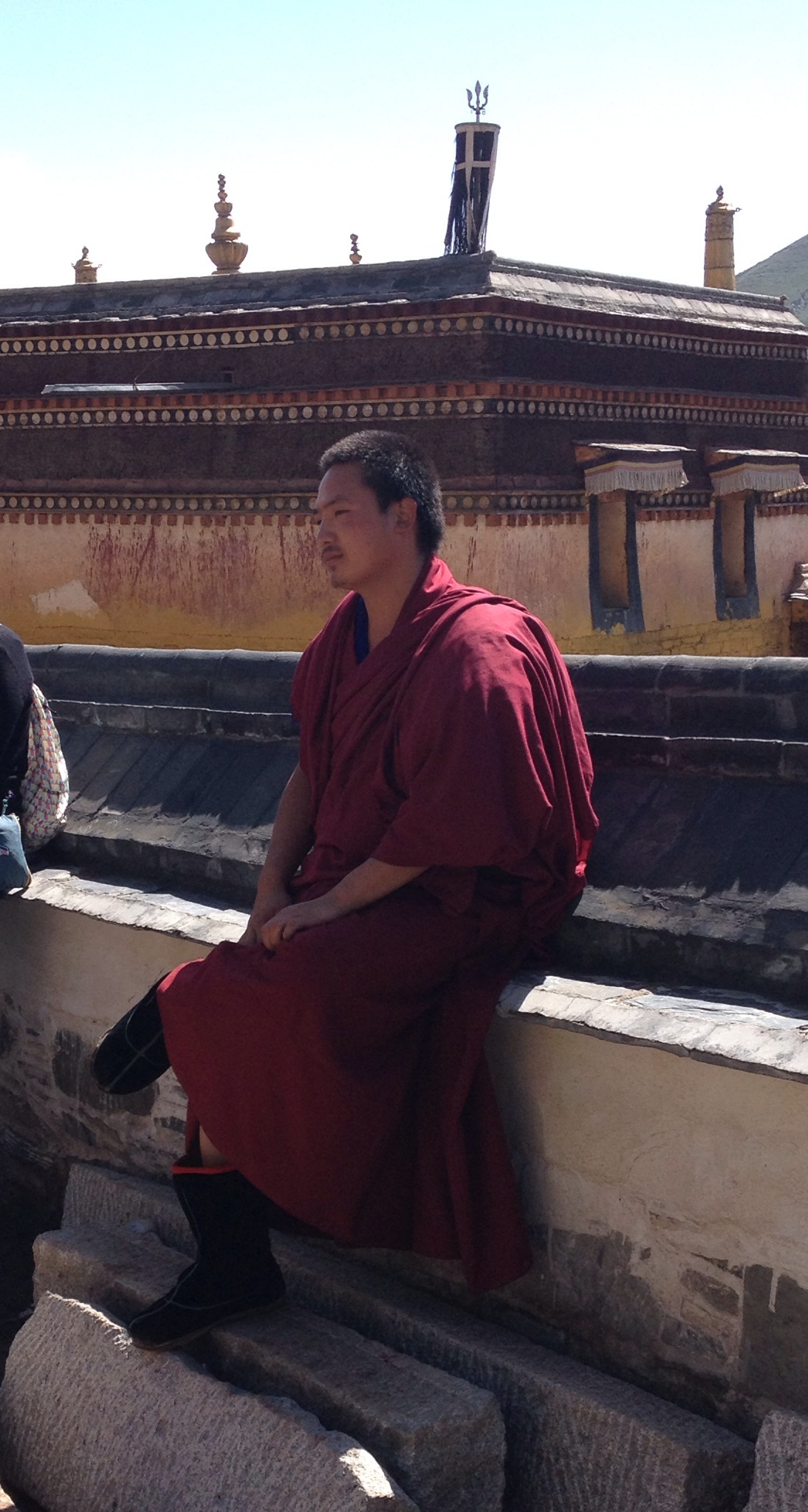
Eventually the buildings of modern Xianhe come into view. We are now 3,000 metres above sea level. It is obviously quite a tourist spot, but we are staying in the old town, very close to the Labrang Monastery itself. The people on the street display a real mix of clothing. First, of course, the deep maroon of the Buddhist monks with their rather odd orange head gear that look as if a poor attempt at a saffron paper aeroplane has been perched on their heads. I think these appendages are for the advanced monks. The young lads do not have them. Obviously origami is a later stage in the training!

Despite the rain, monks wander nonchalantly along the pavements or sit in cafe doorways watching the world go by. There are then older folk in much more traditional Tibetan attire – thick felted clothing. Long skirts for ladies but both men and women with the extremely long sleeves that I last saw in Mongolia. There are then younger people in western dress. It is a sort of kaleidoscope of style, colour and texture.

Eventually the rain stops and we meet up for supper. It is much colder here. Keith and I share a mutton dish cooked on hot stones which is lovely. I stick to beer but Keith goes for Yak butter tea with salt …… He said it was good.

Monday – the road to Lanzhou

It was a very early start for our 11 hour journey to Lanzhou. The truck was leaving at 7.00 am so we were breakfasting at 6.30. Taking advantage of the facilities, I knocked up Kraft cheese slice and onion sandwiches for lunch from the western breakfast table as a treat!

We settled into our journey for the long haul. One of the things you have to say about the Chinese is that they are engineers of some distinction. As we left Xian behind, the pattern of our progress commenced as our route took us west to Lanzhou. I lost count of the tunnels we past through when we got to 33. As we emerged from each tunnel the road continued on viaducts over the valleys. These vast bridges spindled across the landscape on tall cement columns. Invariably there were three parallel viaducts spanning each valley. A two lane roadway for each direction of traffic and another for the railway line to accommodate the long trains carrying coal that seem to accompany us very regularly. They are the longest trains I have ever seen!

Down in the valley bottom the usual neat rows of crops fill every nook and cranny. What is mysterious is that we never see anyone working the land or indeed working on anything else. All the towns we pass through bristle with high rise tenement blocks. A lot of them are window less and are obviously not finished, but others look complete but are obviously empty. Can there really be too many for the number of people to fill them or are they just too expensive? Apparently property investment is popular for those who can afford it, but it cannot be a good turn on investment for them to stand empty.

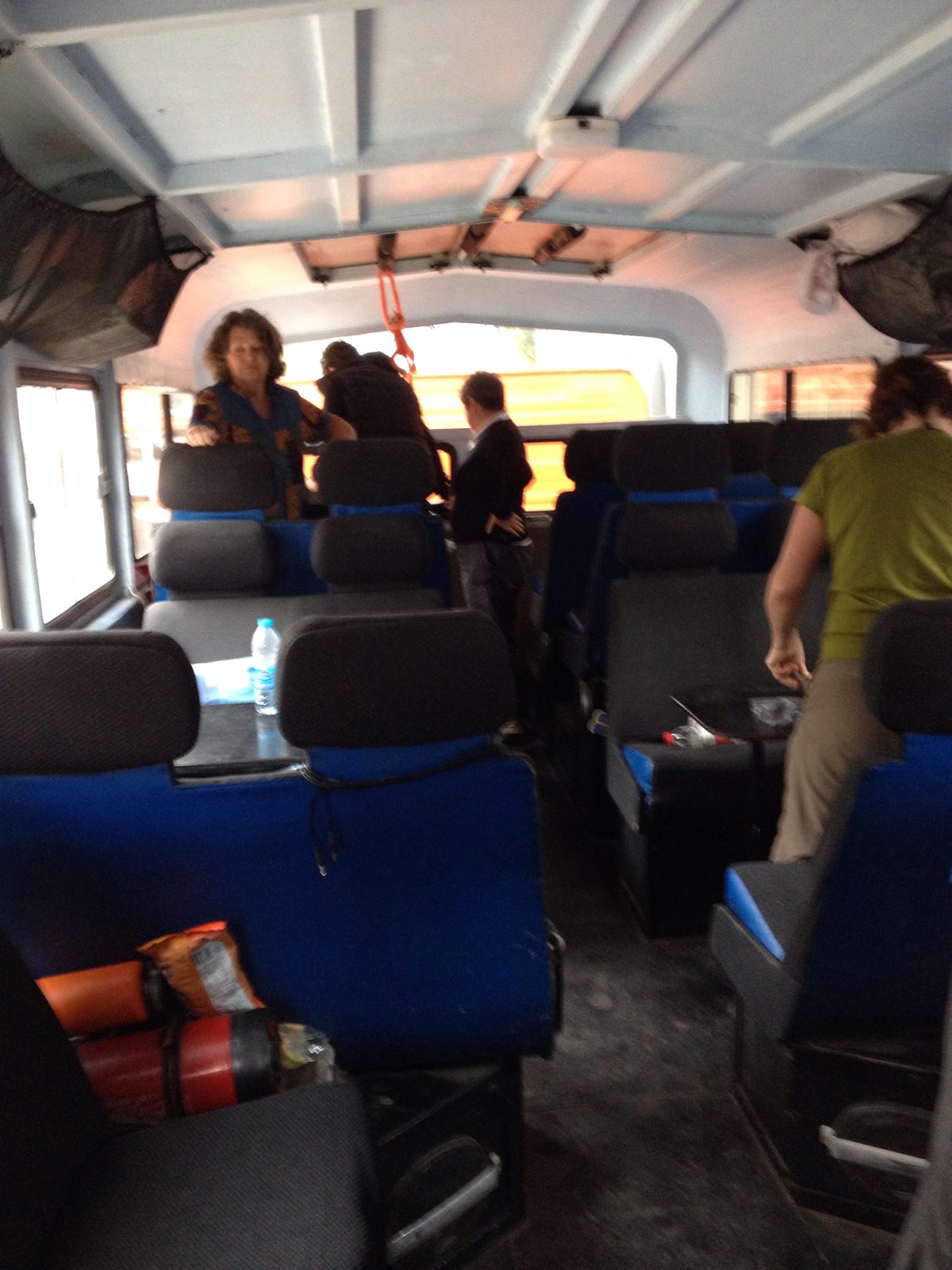
As it is a day of little action to report, time fora little commentary on life on the road. I have already mentioned that, while basically comfortable, we have no seat belts or air conditioning in the truck. . Our luggage is kept in two metal cupboards with mesh doors at the back of what is the travel accommodation section. The drivers cab is separate with communication limited to a ‘walkie talkie’ phone. There is a ‘fridge with drinks purchased by the drinks ‘monitors’. In addition, people buy their own drinks which they mark to indicate ownership. I have to admit, in my usual tum-te-tumming fashion, to have fallen foul of this particular rule and drank someone else’s coke. A cardinal sin. I was mortified!

Lunch stops are at the motorway service stations where the facilities leave a lot to be desired but the food options are varied and usually more palatable than service stations on our motorways. There is usually a full eat-as-much-as-you-like meal for a nominal charge of circa £3.50. Alternatively you can go for the big pot noodle option. For this you buy a jumbo sized pot of noodles in the shop and when paid for, you can pour on hot water provided by the cashier. I am told they are quite good. Final choice is the snacking option of nuts, seeds, sweets and very sweet buns and biscuits …… hence the cheese and onion sandwich when we had the opportunity. Nectar of the gods!

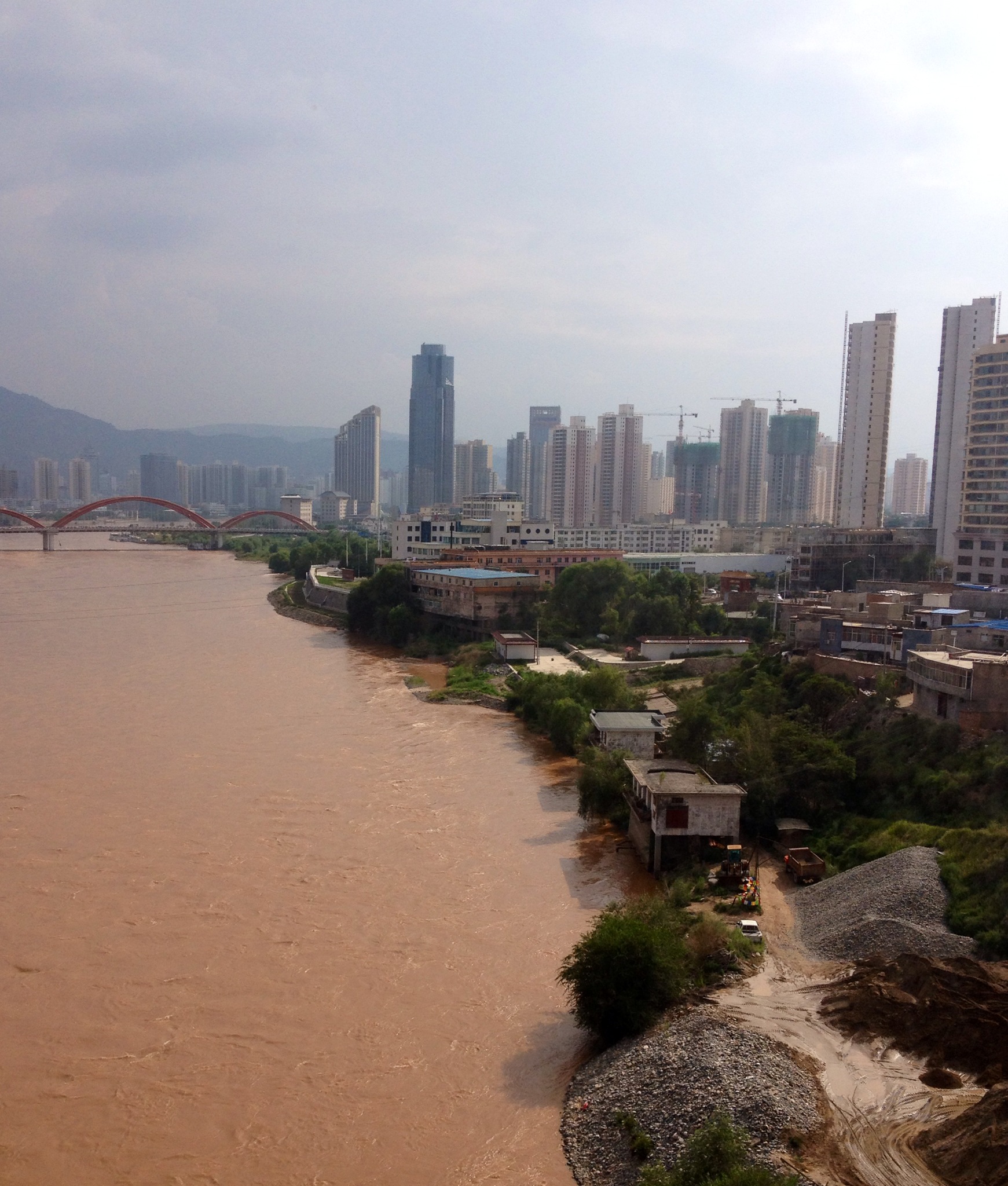
I was premature in my assessment that Xian was our last big city experience for some time. As we crossed the yellow river (something of a misnomer as it is a sludgy sandy brown) into Lanzhou we realised we were in a vast metropolis. The traffic was crazy but after a lot of hooting and jockeying for position we passed through the narrowest gap between buildings to emerge in the car park of our hotel. With more skilled manoeuvring by Simon our very able driver, we effected a three point turn and were settled. By this time the usual large crowd had gathered for a sighting of these weird looking people who materialise from the big orange box on wheels.

Lanzhou is very much a Muslim enclave of Hui Chinese (our experience to date has been mainly of Han Chinese) and it’s main claim to fame is its night market of street food. It does not open on one night a year for a thorough clean. This year they chose the night we were in town!

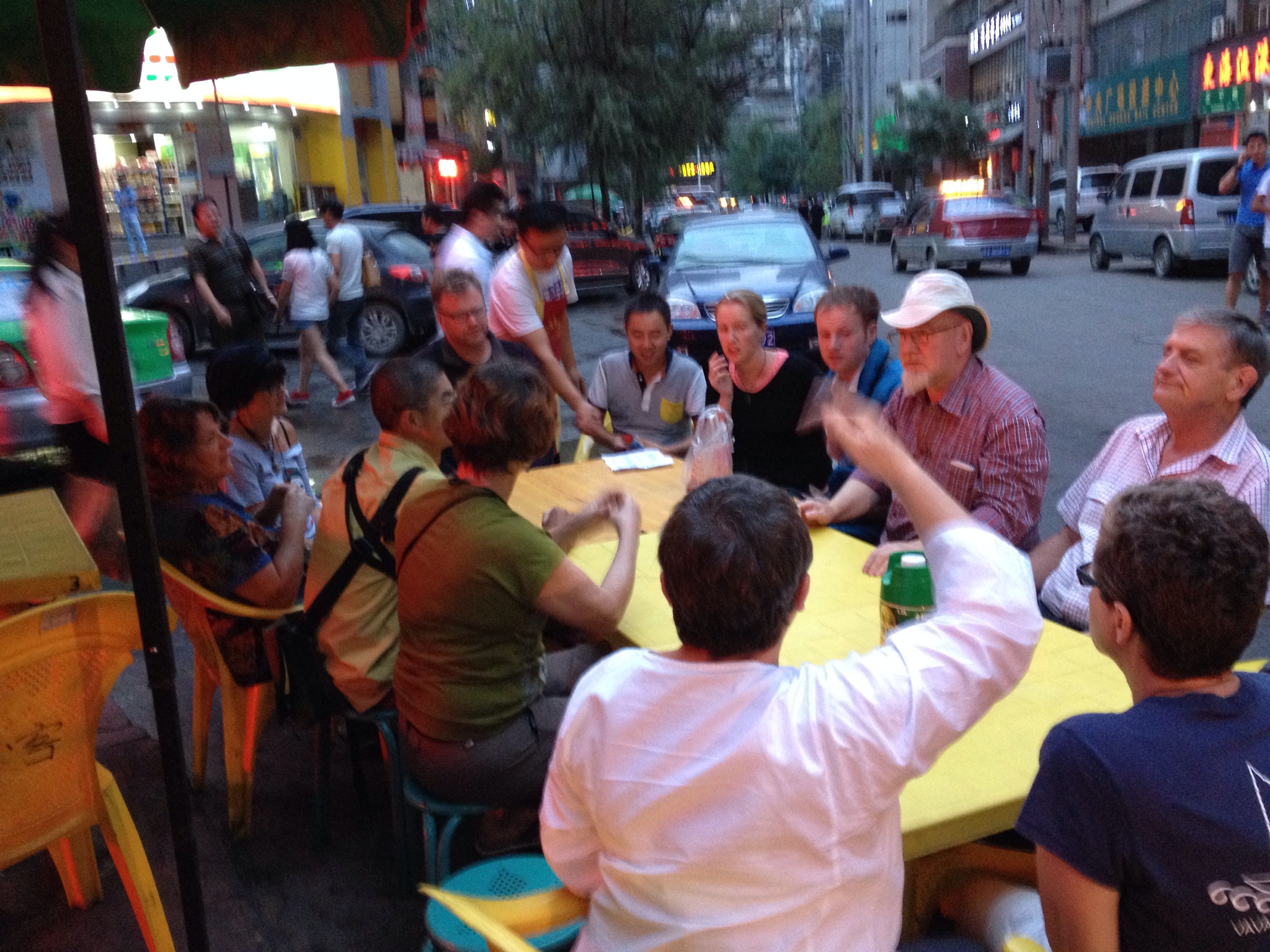
A little disappointed but not deterred we set off to find food and a beer – well deserved after 11 hours of sitting. Several kegs of beer later consumed at a table set up in the gutter on a corner outside a very enterprising cafe with traffic careering round us, we revived. We had just finished our meal when it started to rain. By the time the bill was settled it was pouring and we arrived back at the hotel very soggy. Luckily work had finished on the building site behind us so peace reigned.

Sunday (really!) Xian

After a bit of a board meeting about the danger of lack of exercise and over indulgence on the food front, we decided to walk around the wall of the old Xian City.

So, after a bacon sandwich (I like to live dangerously and this is probably the last hotel to do western food for some time!) we set off for the West Gate. Unexpectedly it was not raining and there was sun but also a cooling breeze on the wall.

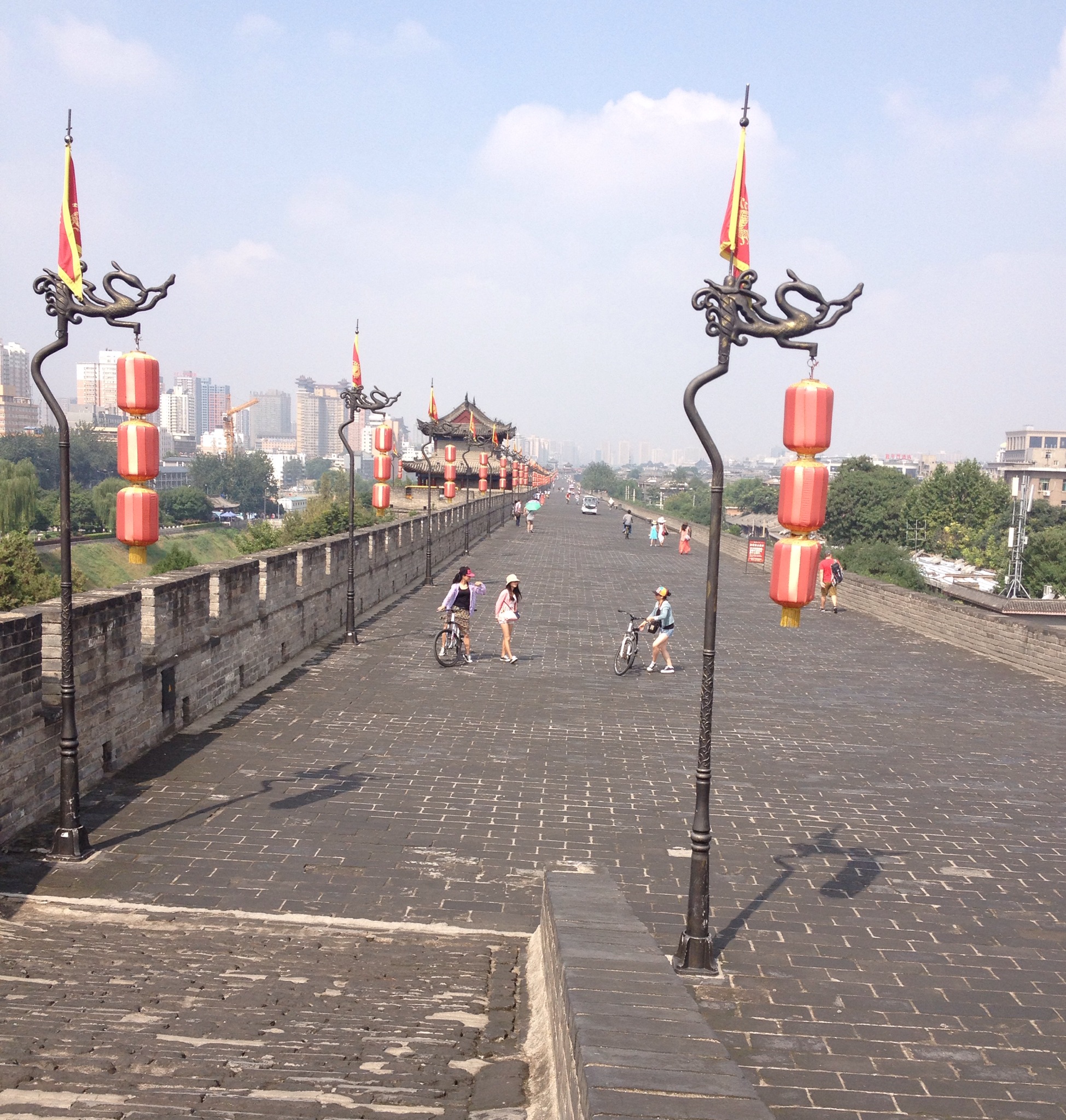
The Xi’an City Wall is said not only to be the most complete city wall that has survived in China, but it’s also one of the largest and most complete ancient military systems of defense in the world. The city walls here were actually built on the fortifications of the Tang Forbidden City which was apparently four times the size of the Forbidden a City in Beijing. The military defense facilities here in addition to the city wall, included a city moat, drawbridges, watchtowers and corner towers.

We walked the 14 kilometres of the wall in just under 4 hours which was not bad considering it got hotter as the morning wore on. It was a good way to see the ancient and modern side by side as, to a large extent, the really tall buildings of the current city are on the outside of the wall. Inside we looked down on a street market, a Taoist temple and a lot of residential buildings as well as hotels, shopping malls and office blocks. On the north to south axis we saw the bell tower in the distance which marks the centre of the city. All the time we were accompanied by mandolin type music playing softly through a loudspeaker system. The only hazards were the cyclists (single and tandem) and golf buggies carrying other tourists but this problem was mainly at the four gates, the crowds tended to spread out a bit after a hundred metres or so either side of the gate.

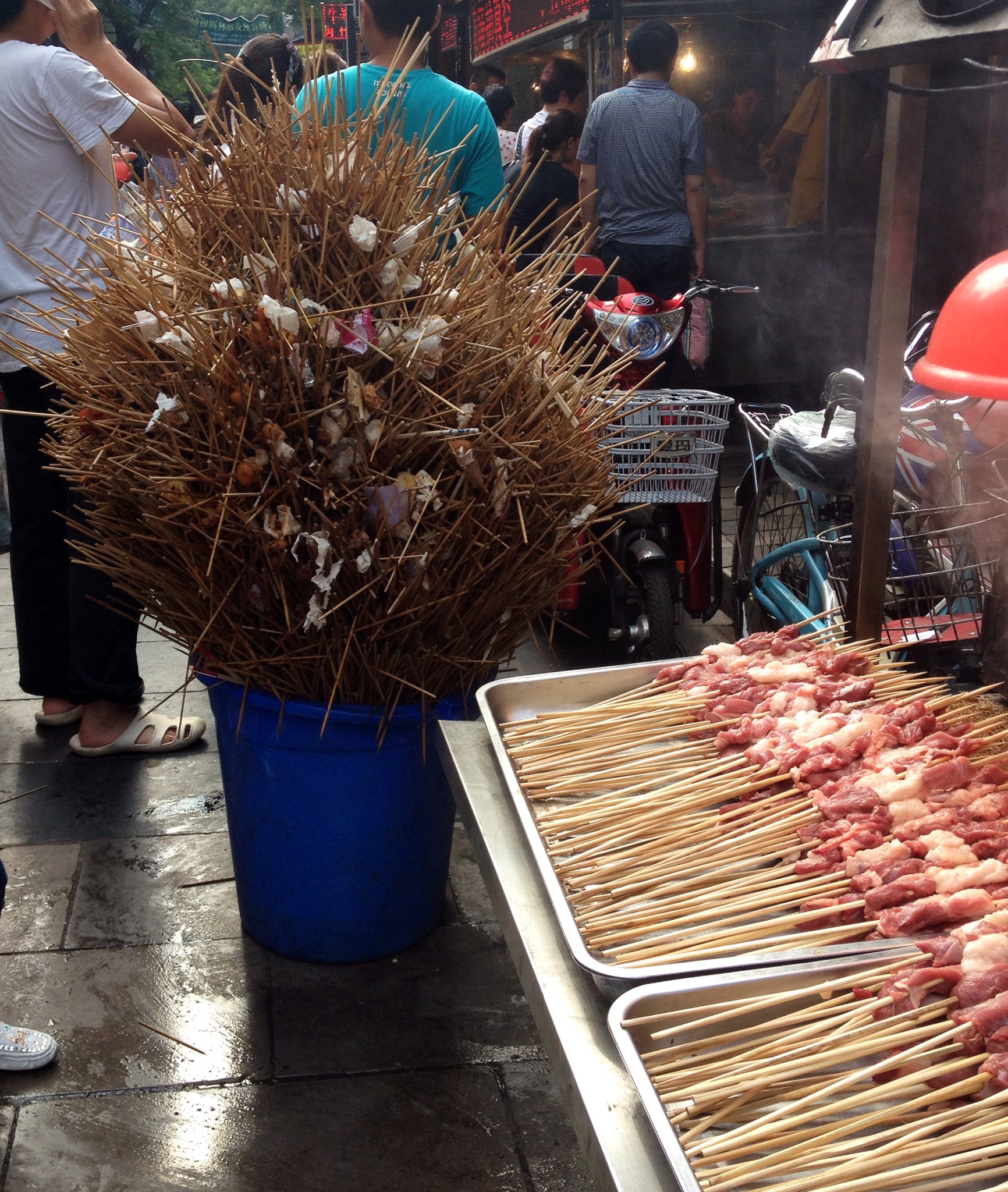
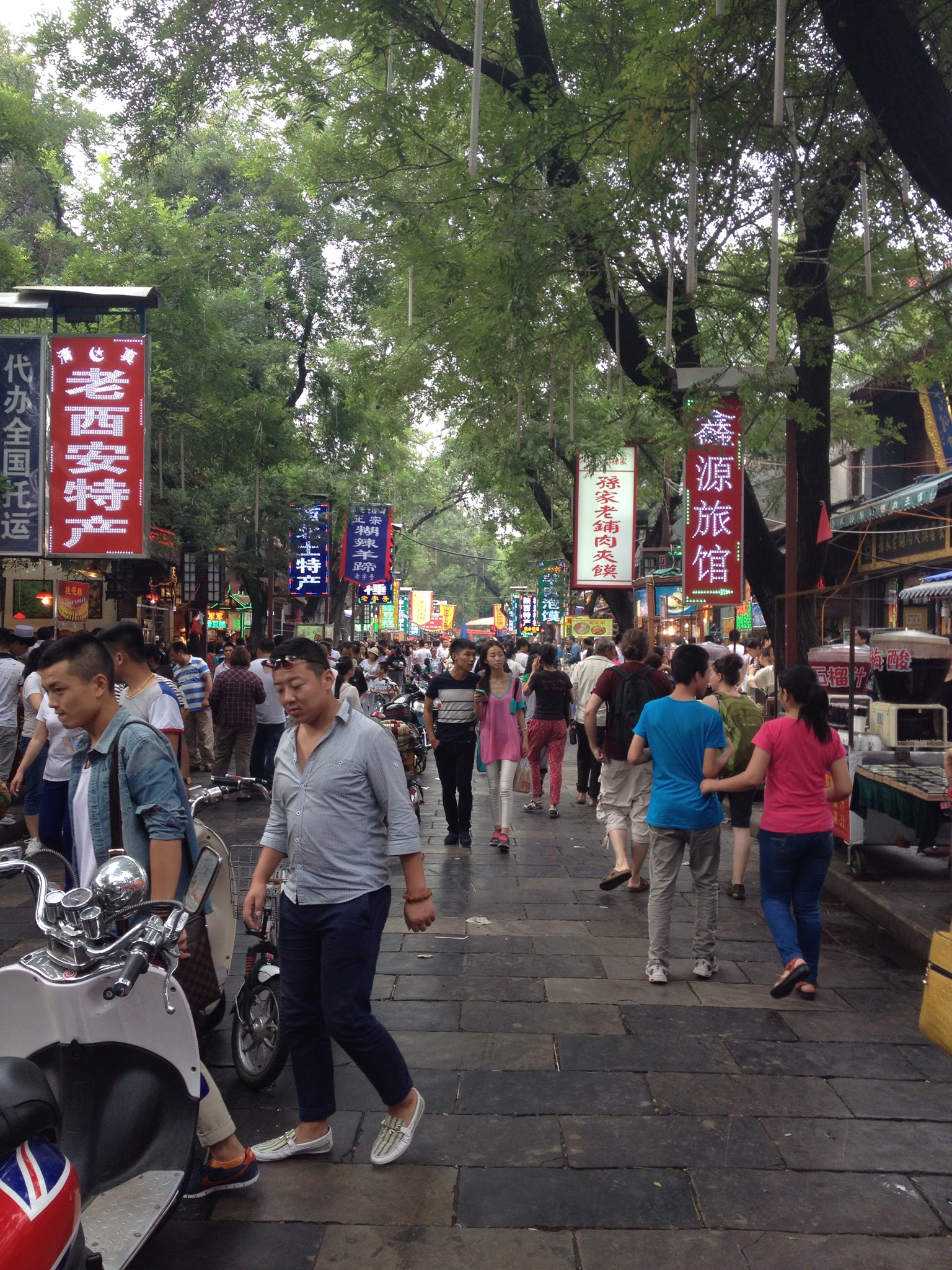
We arrived back at the West Gate at about 12.30 so went straight to the Muslim Quarter for a street food lunch and a drink. We then went back to the stall where we had seen a Mah Jong set with English instructions. Keith re-entered his negotiations with the stall holder and we came away with our game despite paying a price which was going to leave the family without food for a week or so it seemed from the heart wrenching scene played out by the salesman!

By now we were beginning to droop so we purchased some melon and walnuts foe supper and headed back to the air conditioned comfort of the hotel and a shower, very pleased with our morning’s enterprise.