Monday 3rd September

After a great nights sleep – it was much warmer – we packed up our room and then the camp. It was time to set off to Broome.

It was a lovely sunny day with a clear blue sky. We set off at a leisurely 8.30 and were soon back on the Great North Coastal Highway and crossing the Great Sandy Desert. Our first stop was 80 Mile Beach.
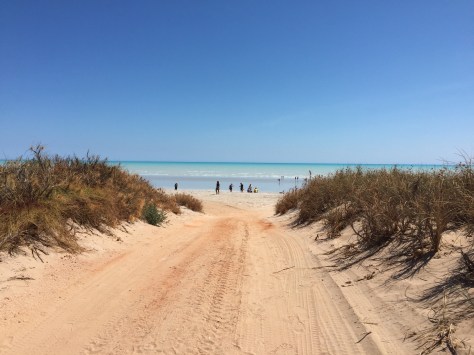
As you cut through the sand dunes, the ocean, particularly its colour, is an amazing sight. The tide was out and the colour tone moved from sandy white through to an amazing turquoise. Once on the beach itself, it was almost too big to contemplate. It just stretched as far as the eye could see in both directions. Occasionally cars could be seen driving just south of the dunes along the beach itself. The shells were translucent, many with a starfish motif etched on their upper side.

We eventually reached Broome just before 5.00. It had been a long drive.

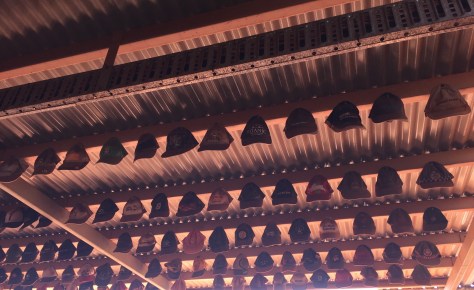
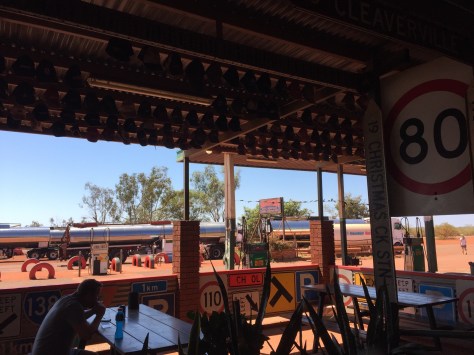
Along the way we had called at a truck stop, where the collection of caps suspended from the ceiling created something of an optical conundrum…..
Broome would seem to be a town of separate parts – an area around the beach (Cable Beach), a Chinatown and a suburban area of smart housing. Through the middle runs the airport. It was quite warm when we arrived at the Kimberley Travellers Lodge a busy backpackers paradise. Keith and had opted for an upgrade and wimpiishly relished the thought of a room to ourselves rather than spending the three nights here in a dormitory – as much as we have come to know and love our fellow travellers!!! It was to be our last supper with the enigmatic Brenton (apologies for misspelling his name thus far), our driver, guide and general factotum. I am not sure what I make of him, but he has certainly proved himself with the driving. We have travelled around 2,000 miles since we left Perth.

Broome was established in the 1860’s when the establishment of pearling brought an influx of people from all over the world. It still claims to be the supplier of the best pearls in the world. It is also an important and sacred Aboriginal site. In common with so many places we have visited, the Aboriginals we see (and there are remarkably few) seem aliens in their own land. I find it very difficult to reconcile.

After scrambling to do the washing (of clothes and my person) immediately after we arrived (absolutely everything is covered in red dust and I have not been so dirty for a long time) we gathered with the rest for our really last supper with the group as it was then configured. I bought some bubbles to share to celebrate kicking off my birthday celebrations and we had some surprisingly good pizzas brought in. A jolly time was had by all. I have to confess having to raid a shirt hidden in the recesses of my luggage for the bright lights of Sydney, which was rather nattily (I thought) teamed with the pyjama bottoms that I haven’t yet worn as literally everything else had gone into the gaping mouth of the washing machine!!

I adjourned early in my inimitable style and then had to resurrect myself as they had all signed a card to acknowledge my celebrations. I was very touched and also very thankful I had not reached the final stages of going to bed…….. they are very sweet
Sunday 2nd September

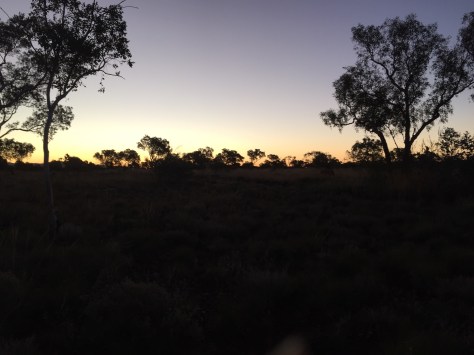
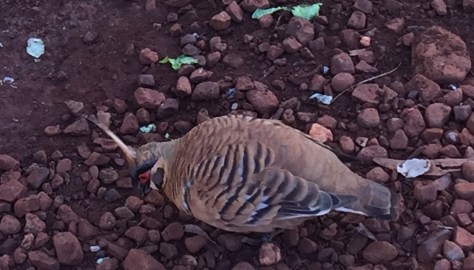
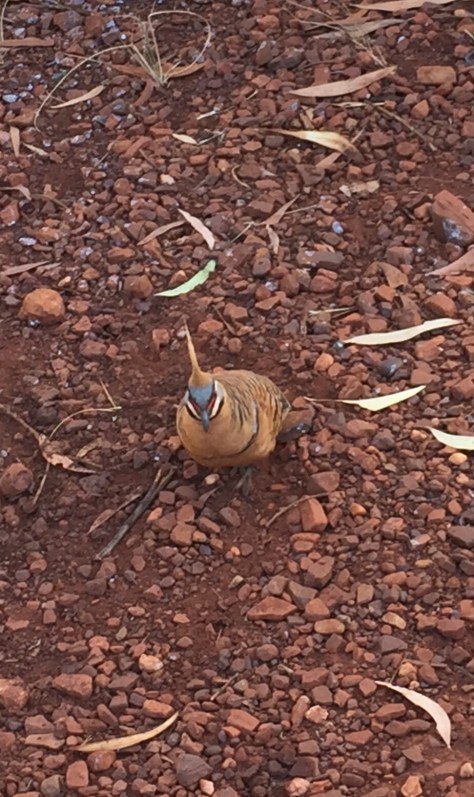
It was our last morning to wake up in the Karijini National Park. Despite the chilly nights and red dust it has been a magical place. We had our breakfast as the sun rose and the day began to warm up. The little Spiniflex pigeons that have been our regular breakfast companions during our stay pecked around us, moving with incredible speed whenever I tried to photograph them – hence my rather poor offerings by way of photographic evidence!

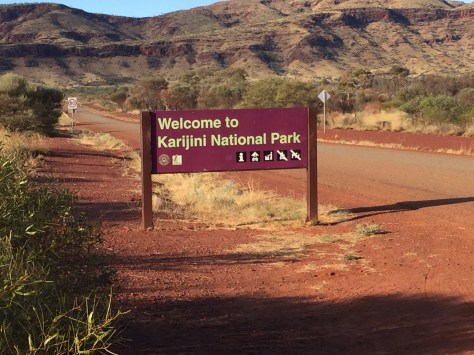
It was eventually time to go. We made our way out of the eco centre in the inevitable cloud of red dust. Passing the Welcome sign that had meant so little when we arrived.

Definitely a memorable place.

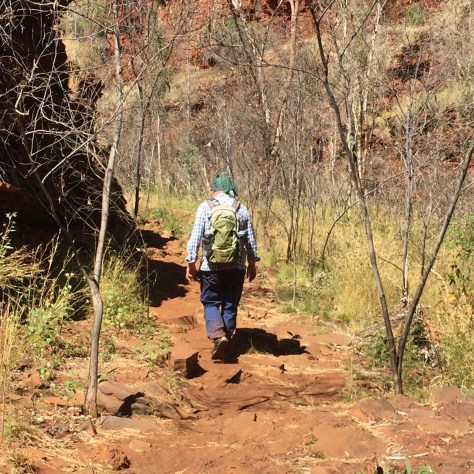
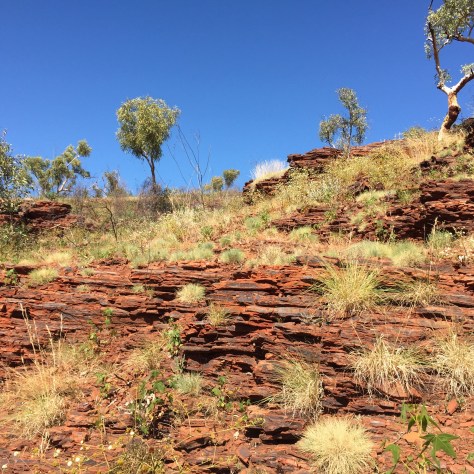
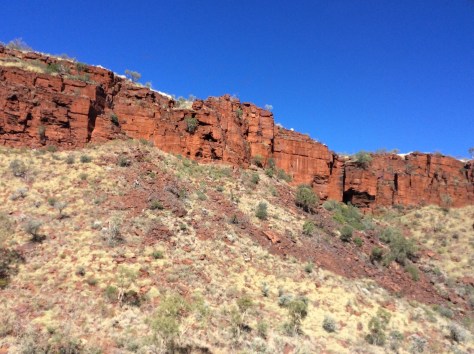
The drive through the Pilbara Range was stunning. Great red cliffs lining our route.

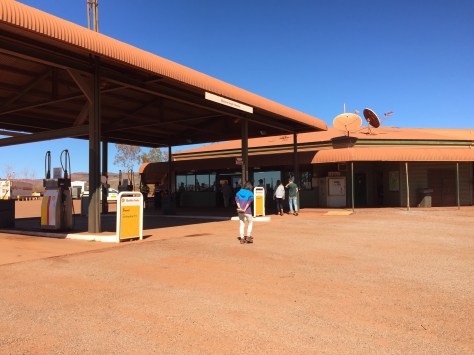
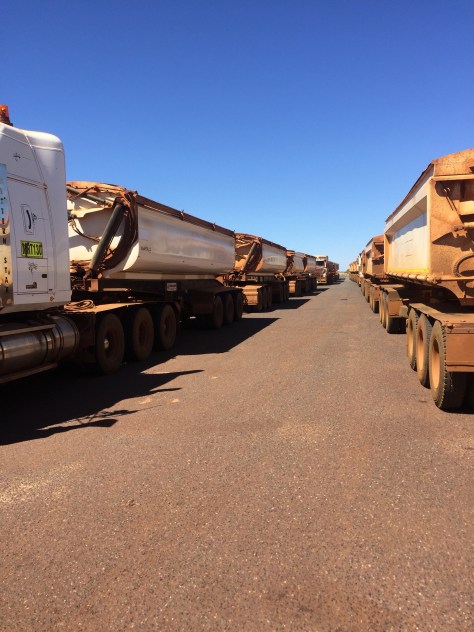
Once we hit the Great Northiam Highway there was more traffic. It is the main freight road north from Perth and forms part of the sealed road network around Australia that was not completed until 1979. The long road trains carrying the out turn of the mining activity constantly move along the road. We stopped for fuel sat the Munijina Road stop and there was w stream of them coming and going in clouds of red dust. The whole place had a red covering.

A driver past me as I was photographing his truck and I asked him how he controlled the five trucks trailing behind his cab. He said very nonchalantly (and a bit caverlierly I thought) ‘ Oh it just follows on behind’. Hmmm. As a person who can find a supermarket car park challenging in my Nissan Duke, I found this rather crushing. Mental note – I must do better!

Our route then took us past through the Manijina Range. Dark hills proudly flanking the Highway. The term ‘there is gold in them there hills’ definitely applied to the area through which we were travelling. Metaphorically if not literary. As well as the iron ore, lithium is currently really taking off and making a lot of money.

Eventually we lost our our hills and the landscape became very flat – true flatlands with little vegetation. We drove on for another three hours before we reached Port Hedland. We could see it in the distance as we approached it – the cranes, antennae and buildings silhouetted on the horizon. As we got up close the immediate area looked like wasteland but beyond it was the industrial architecture and detritus of the mega money making mining conglomerates.

To our left were huge tanker berths cranes, pipes and conveyor belts which skirted the docks – to our right an enormous scrap iron dump. A mountain of salt came into view.

If the town of Tom Price was the heart of the mining industry, Port Hedland is definitely the head!

What is interesting is that the individual mining companies do not share their infrastructure. Competition means that independence is king. This adds to the cluttering of the shoreline for what seemed like miles…….. we had lunch looking out over the entrance to the berths and watched as a large vessel closely escorted by tugs slunk swiftly and stealthily into the port – it looked like a sinister animal going in for the kill, low bodied and lethal. Minerals of all sorts are being mined in the area and more recently there is fracking for natural gas which is also in abundance. All make rich pickings for Australia but some of the activities are pretty contentious.

Lunch over, we packed up and headed out of the town, passing the race course and cricket pitch. A lot of the people working in anything associated with mining fly in and fly out, living elsewhere, but for some Port Hedland is home. I am glad it does not have to be mine.

We were heading for Pardoo Station. This is a 10 year project with the long term objective of rearing cattle to sell as wagyu beef. To do this access is required to the water beneath the ground. Hundreds of dollars are being invested in accessing the water and bringing in fertiliser to make the soil sufficiently rich to grow crops. At the moment they are growing oversized sweet corn and shipping it to the UAE.

The station is a farm on a grand scale. Driving in we saw large sheds and costly machinery. As another money making enterprise the station runs a caravan site and, for the likes of us, container like buildings converted into bedrooms. It was not exotic but after several days camping we had a twin bedded room with a pillow and duvet. Bliss!

The shower block was good and it felt great to lose some of the red sand we had accumulated. I fear some things will just have to be abandoned as ‘too fa r gone for pickling’ as my Mum would say…….

It was our last night on the road before reaching Broome where Brenton leaves us and another guide takes us. up to Darwin, so our meal took on something of “the last supper’. There was a lot of lively chat, although Keith was a bit disappointed to learn that the Wagyu beef was not yet available and we feasted on sausages

It was something of a games night for those who wanted to get involved, but I headed for bed, which was so comfortable that I did not want to go to sleep – I just wanted to enjoy the comfort!!

I adjourned to bed while Keith joined a raucous game of Cards Against Humanity…..

Saturday 1st September

Following a much more comfortable might, the group divided. More than half set off to go ‘canyoning’. I am not quite sure what this entails but understand it involves rock climbing, absailing, jumping in and out of pools, scaling waterfalls and other such joys that I would rather not contemplate.

Those of us with a rather less adventurous disposition (or with out the wish to spend $ 300 Australian on a higher than normal risk of injurious activity) set off on more walking excursions.

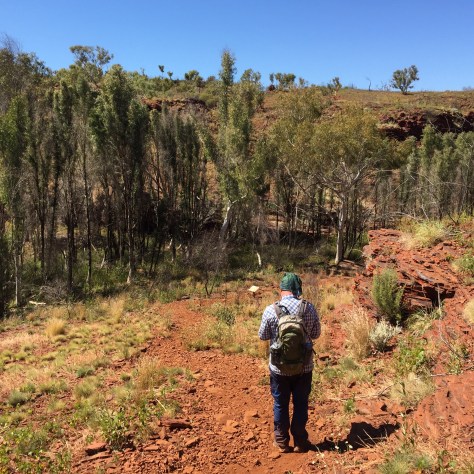
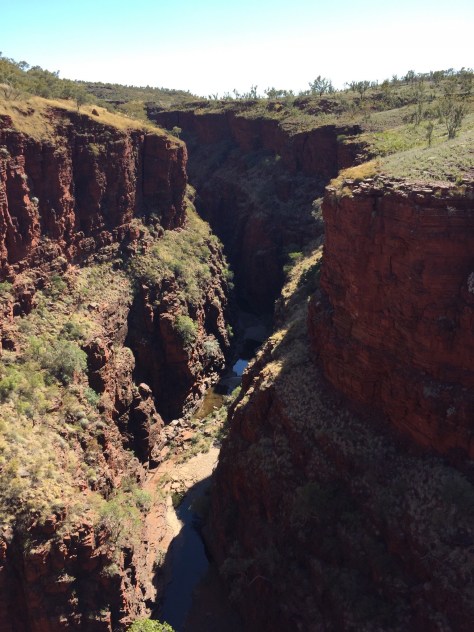
Our first walk was to Joffrey Gorge which could be reached on foot from our camp. We soon reached the lookout and could see the waterfall carving its way down the cliff ahead of us.

After posing for a team photo, subsequently lost due to camera failure (not mine) we started down the Gorge. Sadly it was not long before the grade 4 start of the walk evolved into a tricky level 5 scramble downwards, once again too challenging to my short pegs. Not too disheartened we climbed back to the surface and found our way back to the Resorts rather smart Centre. and restaurant – where normal people sip martinis, eat meals prepared for them and sleep in normal beds with no fear of frostbite. Here we sipped a cool drink. While waiting for the others to return. It was very pleasant. In fact it felt quite holiday like!

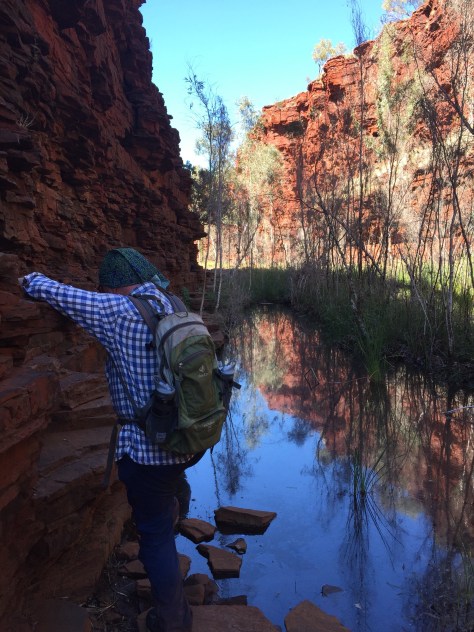
For our next walk we headed by truck to the Weano Gorge area. The others set off for the Level 5 walk while Keith and I took the Level 4 route to the Upper Weano Gorge. It was great. We walked along the Gorge floor navigating the rocky obstacles and shallow pools along the way.

The red rock walls of the Gorge reared up on either side, but our route was skirted by small trees and grasses where the rock allowed it to flourish. We had one area of scramble where the path became very narrow and the water almost blocked our path…….

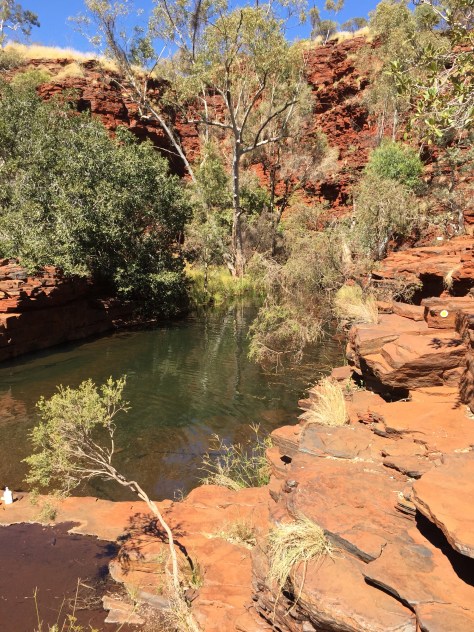
But we eventually came to a larger pool where a young couple sunbathed with their feet in the water

Shortly after this we came to a pool completely blocking the path. A number of people were gathered there. The only route forward was through waist high water. People were wading across and we could see our compatriots on the other side

Once again we decided we would not go further, but would instead climb the steep path to reach the surface. Having achieved car park level we sat on a bench soaking up the sun and admiring the flowers and silver barked trees around us.

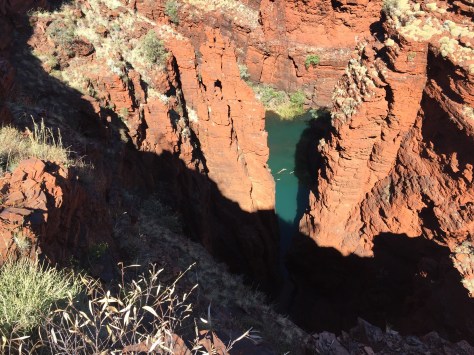
We lunched in the car park when said compatriots returned and then most of them (not all) took off for another challenging clime. We started this, the Hancock Gorge, but abandoned it to the more adventurous fairly shortly after the start. Instead we took the opportunity to wander to the Oxley lookout point to look down heart stopping drops to the rocks below where the various gorges carve their determined way through their rocky channels to meet. A truly awesome sight.

It was too hot to walk much further so we returned to a shady spot near the truck to join two others who had decided against the afternoon excursion, a young Dutch couple. Not long afterwards two more joined us, having found the extreme walk too strong for their taste too. We are not always alone in our wimpishness! I think perhaps fear with its associated caution does come with age.

It was then back to camp for our last night of in Karijini.

One of the best things about the Karijini camp site was the stars they were truly amazing and the sky was full of them. With no light pollution they could all be seen perfectly – the frontrunners clear and sparkling, the supporting cast showing as clouds behind. The Milky Way was a large smudge across the black world roof landscape. Truly very special.

Friday 31st August

It was a very cool group that met for breakfast. Everyone had tales of layering and sleeplessness. We nevertheless went to watch the sunrise over a landscape very reminiscent of Kenya.

After breakfast when pretty spinoflex pigeons dashed in and out of our camp

we set out on our first walk of the day to Knox Gorge. I think I should interrupt myself here to talk of the walk rating system in Australia. It basically runs from 1 – 6. Grade 6 is an accompanied walk with experienced guides over extreme terrain with climbing and scrambling and not lightly undertaken. Grade 5 is quite extreme with some climbing (for this read vertical cliffs!) and is described as for ‘very experienced Bush walkers’. A high level of fitness and agility is required. Grade 4 is described as for experienced Bush walkers. A good level of fitness is recommended. Grade 3 some bushwalking is recommended – suitable for most ages and fitness levels. Grade 2 no bushwalking experience is required. Suitable for families. Add to this – we are talking gorges here. Great cavernous drops. Magnificent but scary, particularly if you suffer from vertigo, as Keith does, or if you have little legs which (in case you haven’t noticed) I have. Knowing, but not really fully appreciating what was in store, we set off.

By now the day had warmed considerably. It was a short ride to the Knox Gorge car park and there were few people there. It was a beautiful morning. Duly sun-screened, be hatted and carrying water we set off on what was described as a Grade 5 walk. It was not long before we started to descend. The route twisted and turned as we scrambled downwards. Loose, small scree type rocks slid and tumbled ahead of us. Over everything was red dust. We had probably been descending for about 30 minutes when we came to a sharp right turn. A very sharp right turn. The path stopped ahead of us had disappeared and we were confronted with what looked like a very deep pool. The right turn ‘path’ involved clinging to the overhanging rock and finding footholds while hanging over the water. This was where Keith and I turned back. One step too far for us. The overhang was just a taste of things to come and it was not for us.

We worked our way back up the route by which we had just descended. I was quite pleased there were just the two of us, so my pathetic efforts at rock scrambling were not observed. The sun beat down. It was slow progress. When we reached the top we decided to take a walk up the unsurfaced road leading out of the car park. It was a lovely walk. We looked at the view, studied the amazing trees (Snappy GumsI think),

and discussed the situation in which we found ourselves. All in all we agreed that it was good to be here, even if some of the ‘walks’ were beyond us, and not to be disheartened. It was just such a privilege to have the opportunity to see what we could see.

We walked for about an hour and the others had returned to the truck by the time we got back to it. They had had a invigorating first experience of the Karijini Gorges. We had learnt that level five ‘walks’ were not for us.

Next stop was the Fortesque falls car park. From here we walked to the lookout to see the falls from above and then descended by metal steps to the bottom of the Gorge, to see the Fortesque Falls at close hand.

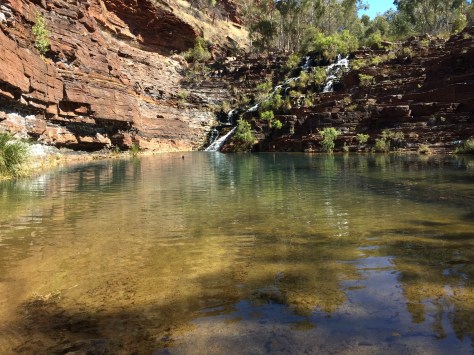
Walking on we eventually found Fern Pool where those who were that way inclined, took to the water to swim. The rest of just munched on our lunch. It was a pretty spot with a little jetty. It was easy to understand that it has considerable significance to the Aboriginal people.

Without the shouts and splashes of the people swimming and the sound of us munching our sandwich lunch, it would be a beautifully serene and special place.

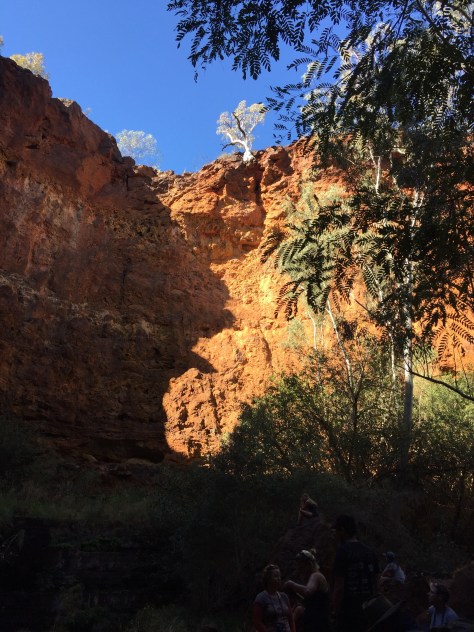
Lunch over, we left Fern Pool to return to its silent beauty and set off along the valley floor on a Grade 4 walk to Circular Pool. It was a lovely walk. You had to watch your step all the way as you hopped from large red boulder to boulder, occasionally using (often) wobbly stepping stones to cross shallow water. Although we covered little distance, it probably took over an hour to reach Circular Pool, a shaded oasis at the base of a tall cliff that almost encircled it.

Few took to the water and after a brief sit to take in the view and location, we took off back along the track to where a rocky path climbed up the cliff face. It was quite a pull up the windy path, edging ever closer to the top. The final twists and turns delivered us to ‘ground level’ an odd concept when it is above you! From here we set out to take the cliff top stroll back to the truck. We had achieved our first level 4 walk which I think is probably our maximum level if we are to stay hale and hearty.

Back at our base it was chopping and chipping for our supper and then a great shower in the corrugated shower block to relieve ourselves of the accumulated red dust. Fat chance!

A good day! However another cold night was in prospect and strong measures were required if I wasn’t going to freeze through another night. Two jumpers, two pairs of socks and encasing my sleeping bag in the ‘swag’ lying on top of the camp bed which I had rather scornfully ignored the night before. These measures saw me much better placed to face the rigours of the night!

Thursday 30th August

We had breakfast before dawn. Our route took us initially over flat scrubland. Eventually we turned again on to the North West Highway. There was more traffic on the road and some of it showed evidence of the nomadic life of some of the travellers. The signboard showed the vast distances between our location and the rest of the world……

We came across another Overland group in real trouble. Apparently the truck company’s fuel card had been refused at the previous stop and the passengers had clubbed together to cover the cost of the fuel with the promise from the company that money would be put on the said card before they needed more fuel. They had just stopped for that refuelling and the card was still not operational and the passengers (understandably) were refusing to fund the company again for fear and of not getting their money back. We subsequently learned that they were there for three hours before the situation was resolved. When they reached the National Park the rangers went on to the truck, found it wanting in many ways and this, added to the fact that the company had not paid the Park accommodation fees for over 6 month’s, led to the Overland Company being closed down. The poor backpackers were to be taken to Broome, the next major town,where their tour would end. The moral of the story I guess is to check the viability of your tour company….

Back to our trip. We drove on through the day, eating the lunch sandwiches made at breakfast on the way.

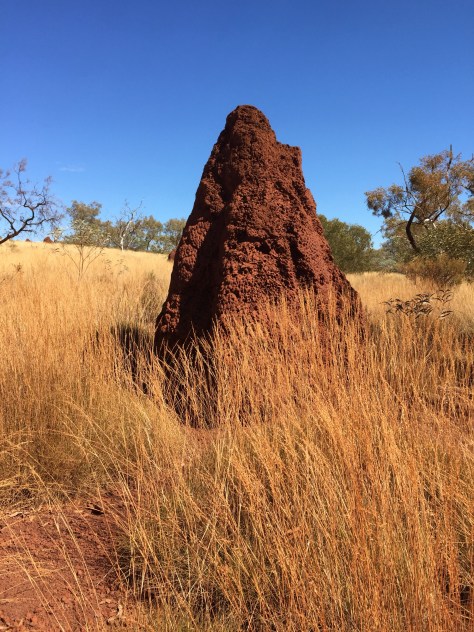
Our next stop was in iron ore mining country. By now the hills had turned deep red and showed the scars of mining. The ant hills were markedly darker. Our road had passed over a long conveyor belt that disappeared over the horizon on both sides of us. This apparently is the means of getting the spoils from the mines to distributing junctions. The town built to support this mining activity is called Tom Price. We reached the Tom Price mid afternoon. After a visit to the supermarket (and bottleshop) for supplies we rode the final comparatively few kilometres to Karijini National Park which was to be our base for the next three days. At Karijini we stayed at an Eco Retreat run by the Gumala Aboriginal Corporation.
We were camping again, but once again the tents were already erected. The first thing you become aware of is the red dust. The earth is red. The terrain I felt was very similar to the African savannah. We watched the sun go down soon after we arrived but weren’t really to appreciate the magic that is Karijini until the following day.

After a good meal it was time bed. As I have said, I had known I was in trouble when I opened up my sleeping bag and read the ‘tropical’ label. In my effort to ensure the smallest pack, I had gone for the lightest – not at all good this night when, as happened, the temperature dropped to 3 degrees overnight. I was cold. I had added the fleece and socks to my usual Overland night attire (a silk shalwar chemise built for me in India). All very exotic but not very warm. Even again adding Keith’s travel towel (I have lost mine and now have a Postage Stamp piece of towelling in penance) I was no warmer. I swear I was shivering so hard the tent was shaking at one stage!

Tuesday 28th August

There was a lot of early morning activity as the young people left to swim with manterays and whales or snorkel around the coral reef. Lacking the swimming skills to take advantage of these activities, we had a restful morning as our only committed activity was to take the rather pedestrian glass bottomed boat out to see the coral, which can be found only meters from the shore. After taking advantage of the resort bakery to have breakfast we did our laundry and hung it to dry with a colourful array of other people’s washing…….

Having nothing more pressing to do, we decided to use the morning well by walking to the next bay along, Skeleton Bay. This is what you might call a shark nursery, where shark Mums bring their young. Sort of an early learning centre for sharks I guess…… the most notable in these parts are the whale sharks, the largest known fish. The tide was up, so there was just a small strip of sand between the water and the spiky vegetation that sparsely covers the sand dunes that rise up behind the shore line.

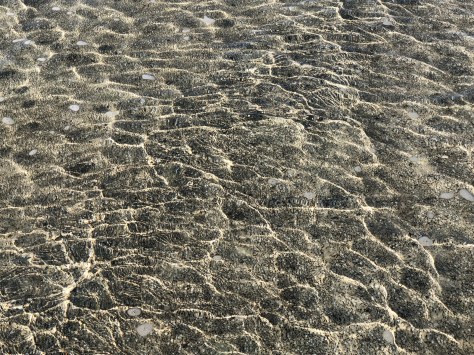
We picked our way along the sea short, initially along the sand and then the flat rocks that straddled the way. The water was totally clear, bar the ripples caused by the tide and breeze. Further out the water was blue before changing to indigo and then there was the white surf breaking over the reef. We wandered along, walking in and out of the shallows.

We met few people but watched the water keenly for shark life. With our usual inimitable timing we were of (of course!) a few days out of time to really expect any sightings – sharks use the area from September to March. No surprise then that we did not see any! We did see a couple of dark shapes moving through the water which we were led to believe were sting rays. We also saw an eel like creature dart away from the shore as we approached and a couple of leaping fish. Despite our lack of shark like sightings, it was a very pleasant stroll and we only turned back when dark clouds gathered over head.

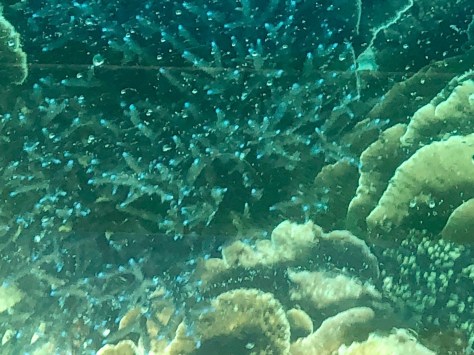
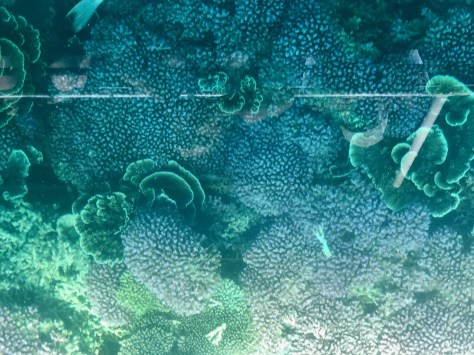
After a fish and salad lunch we set off to learn a bit about coral. There were only a few us on our glass bottomed boat, but we spent a very interesting hour in the shallow water looking at the amazing coral beneath us.

It was fascinating! The Ningaloo Reef stretches from south of Coral Bay up to Exmouth, the most westerly point of Western Australia. There are thought to be over 200 species of Coral in the Ningaloo Reef area. They were all sorts of shapes and surfaces – some like oversized cauliflowers and others had spiky fingers with blue tips. The whole seabed was covered with coral. Most of the coral here is described as ‘hard coral’ and relies on sunlight to survive. Some of the coral started life 35,000 years ago. Occasionally large fish appeared briefly – but there was a constant display of small, colourful fish darting in and out of the coral of the sort found in tropical aquarium shops at home.

The excitements of glass bottomed boats over, it was back to base to pack up our kit on to the bus and a shortish drive to our next destination, Exmouth (pronounced Ex Mouth here!). The terrain was low vegetation with frequent large anthills.

It was becoming dusk as we reached Exmouth. A military town, it is now primarily an Airforce base. We did not in fact stop in Exmouth, but continued on to a campsite at Yardie. We had reached the North West Cape. Here our tented accommodation was already erected (bliss for us seasoned tent putter-uppers!). The tents were also quite tall so you could stand up in them, another appreciated feature after our sometimes tortured experiences of the Peninsula on the Silk Road. They had other useful additions – a 2 inch thick sleeping mat (luxury) and for some a low camp bed ( the height of luxury!). On returning to our tent I was accosted by an Australia bustard (I am reliably informed) that was determined to get into our tent at all costs. I spent some time trying to dissuade it from this course of action and in the end had to abandon my tent visit until it had evacuated the area!

Camp life centred around a central catering hub, very well equipped with barbecue space and tables and chairs and a fire pit. As the evening wore on the wind gathered momentum and it was an extremely turbulent night. All night long the wind whipped around the tent and everything that could, flapped. Not the most restful of sojourns!!

I also discovered with some dismay that my sleeping bag, opened up for the first time and chosen from an array at home on account of its size was ‘for tropical use’. Great when you are in a desert that gets very cold at night. By morning I was found to have socks on, a fleece and Keith’s towel. It was still cold!

Please note the red dust which was to become a long term feature and constant companion of the trip and caused the demise of some favourite items of clothing…….

Monday 27th

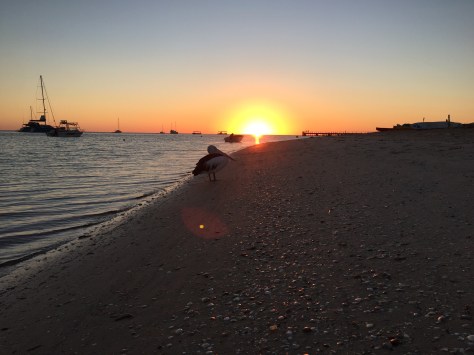
Somehow we got our timings wrong for getting up.  The benefit of our mistake was that we saw the sun rise over Shark Bay, us and a single pelican that had arrived early for the dolphin feeding which was to take place further along the beach a little later.
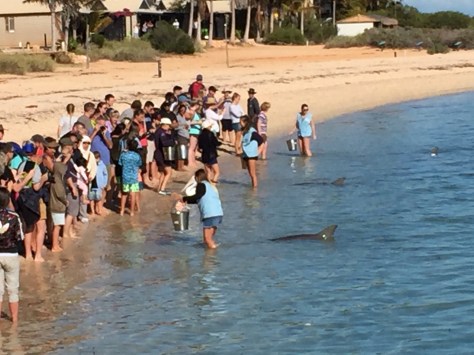
We attended this daily spectacle a little late when, true to form, four dolphins appeared within inches of the edge of the water waiting for their breakfast.   Members of the watching audience were invited to assist in their feeding.  The dolphins were not huge and the whole event was interesting, but I felt, not over exciting.  It was made more so by a pelican (several had materialised, like the dolphins, from nowhere) determined to come between the fish pail and the dolphin being fed.
Disappointingly for some of our party, none of our group were invited to be dolphin feeders. That excitement over we set off for the long ride to north to Coral Bay.  Back we went down the peninsula and once again took the North Western Highway as it snaked it’s way northward.
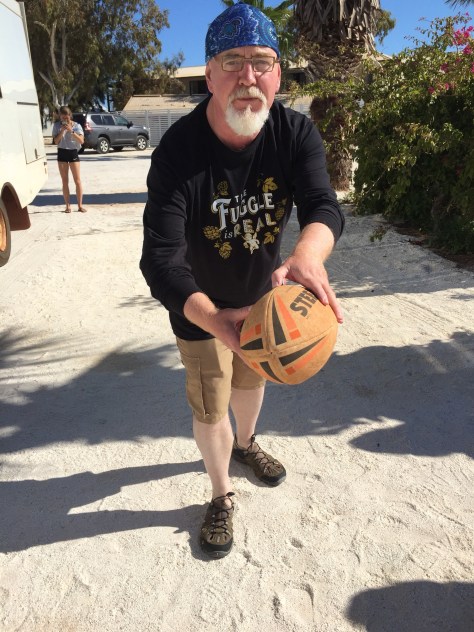
It was to be a long days drive.  There was a bit of exercise before we left,
(Keith exercising!)
but the rest of the day, apart from a couple of stops was spent on the road. Even our lunch was eaten on the move – the lunch sandwiches having been made at breakfast.
Shark Bay covers a large area and was the nautical graveyard of many ships such as the Batavia which we discovered in the Shipwreck Museum in Fremantle.  It was also the place to make a name for  privateers (or pirates) such as the famous William Dampier. In his quest for the silver booty found on the Spanish ships roving the seas, he predated Drake and Cook in his discoveries.  He sailed into Shark Bay and was to make a study of the Aboriginal people, although he described them as a ‘wretched people’ a description that sadly remained of them for several hundred years.
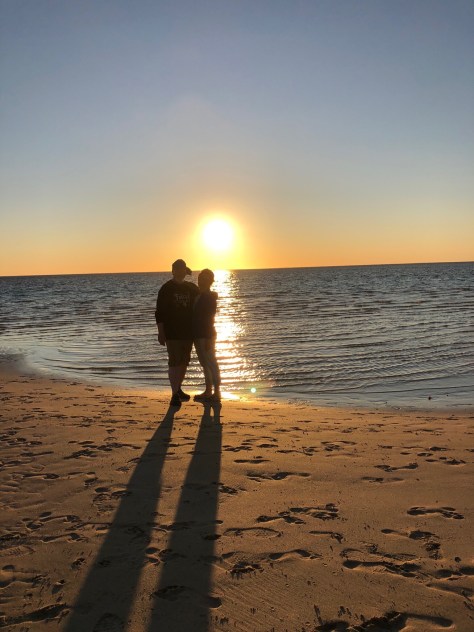
We arrived at the resort of Coral Bay in time to see the sunset from the beach.
It was quite cool but beautiful.  The red rocks behind us bore the pockmarks of the creatures that had been fossilised in the rock over millennia and exposed over time by the wind  and sea.   The water was calm and it was our first sighting of the reef that was to remain with us for several days.
The sun sank gradually and then was suddenly gone, leaving behind a red hot sky that was to turn even more red over the next hour.  Our supper was an excellent hamburger served at the backpackers centre where we were staying.
Our dormitory held 10 people and ours (considered to be the quiet Room) was over subscribed.

Sunday, 26th August

Kalbarri National Park was beautiful in the bright morning sunlight that emerged once the sun had risen (we left the hostel at 6.15).
As we drove into the park, red brown sandstone rocks came into view and gradually we began to see the spring flowers as the light came into the day.  We took the rocky path down to the cliff, formed over time by the winter rain water flowing off the land out to the sea.
We wandered down towards the Murchison River. Having clambered over the boulders in our path, we eventually came to a point when the decision had to be made – to absail or not to absail.   In the event I decided to do it and Keith, probably wisely, decided not to.  All the other chaps and a number of the girls were keen to go.  I wasn’t exactly keen but felt it ought to be done. A great chap called Phil – the absail guru and a man very obviously skilled in the art of getting people ‘over the top’ – briefed us on equipment, health and safety (😳) and approach. Then, before I knew it, I was dangling over the cliff, talking nonsense to Phil and swinging on the end of a rope.
It was not a skilled or graceful demonstration of the art – but I did it!  Having said this, I decided not to take advantage of the opportunity to do it again!  I was not sure my jelly legs would get me to the jumping up point again!  I cringingly watched the finesse of the others…….
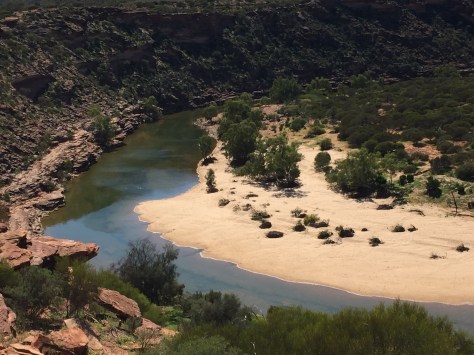
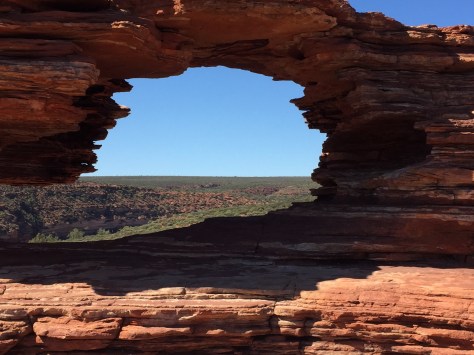
We watched as everyone took their turn and then (leg wobbling having calmed down!) went down to the waters edge.  Currently a very tame trickle of what must be a roaring torrent when it is in full spate, the water twinkled in the light. After a bit of sitting around, desultory conversation and cairn building,  it was time to clamber back up to the top of the cliffs from whence we came and to drive to our next stop – rather sensationally called Natures Window.  This was an amazing rock formation, much higher above the same river. The walk down to the viewing point once again gave a great opportunity to look down on the river as it meandered through the valley it had carved out for itself below us.
It was a busy spot.  There were a number of people making the journey down and not everyone had the opportunity to have the photo of a life time that gave the spot its name – a rather natty hole in the rock providing the perfect frame for the perfect holiday photo.
Having had a quick peek at the view through the ‘window’ I did not dally too long  but left others to pose gracefully and returned to the truck and Keith (the dizzying drop was too strong for  his taste).  Our second truck lunch followed, watched rather disparagingly by other sightseers who I feared rather resented our space……..
The days tend to warm up quite dramatically and by the time we left the area the truck was quite hot. Small flies have also made themselves felt….. irritatingly.
Fed and watered, it was time to ‘cover some K’s’ as Brenten (he did eventually introduce himself!) calls it and we settled down to several hours of driving. Leaving the Murchison river area saw us move out of the ‘wheat belt’ and into Gascoigne Country and effectively enter the true desert of Western Australia. This covers the area from Halls Creek, to Alice Springs and Perth*. The move away from the river also marks the move away from the animal control zone which incorporates the National Park. This means that things like the goat population increases. Farming has more or less ceased here but for us the wild flowers have quite noticeable increased, with carpets of white flowers right up to the road.
 This is a land of no fences and roaming cattle herds.  The history of raising cattle here seems to have had a chequered experience of success and failure as the price of beef has fluctuated.  At the moment there is a call for not only beef but also goat meat as trade agreements with Korea, Japan and China have created new markets. For some the beef of Western Australia is the best in the world.  It is supposedly tougher but more flavoursome….. I think we should be the judge of that!
Our next and final stop was the Billabong Roadhouse.  in the middle of nowhere, these oases of life provide the fuel for both vehicles and passengers on the long drive north to south.
We were heading for the Shark Bay Wild Heritage Centre, another World Heritage Site
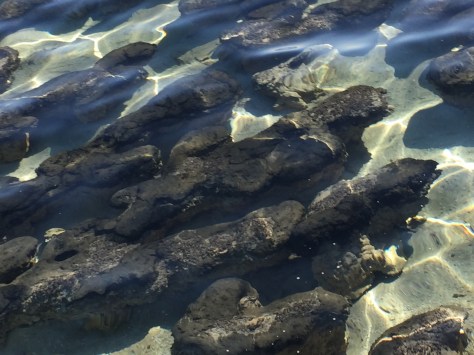
First stop was the Hemmelin Pool where a combination of shallow water caused by a sand bar and the doubly salty water created makes it home to only seagrass and cockles.  However it has also created the ideal conditions for the microbial mats and stromatolites found here.  (Please note my new marine knowledge!) This marine eco system is similar to that which formed the basis of evolution 3 million years ago.
I found it and its history both fascinating and awesome. The place had a strangely peaceful quality as the water lapped over the rocky outcrops underneath totally clear water as it had done for millennia. Biologists only identified the importance of the site (it is one of only 4 places in the world that it exists) in the 1960’s.  Before that it was being used as a boat ramp by the locals!
Beyond the sandbar Dugong graze (they weren’t evident but I found a sketch for you)
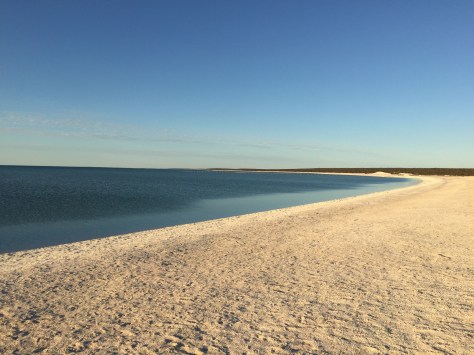
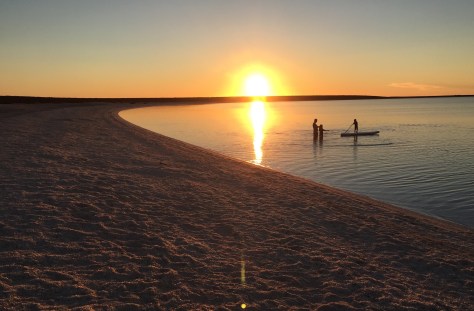
and dolphins and whales use the area as a nursery before travelling both north and south. Leaving this ancient waters behind, we travelled north onto the peninsula with water appearing on either side of us.  All of the Beaches in Shark Bay are formed totally of cockle shells.  Nearing the Monkey Mia resort where we were to spend the night, we stopped at a beach to watch another sun set. We crunched over the shells to the edge of the shallow water of the bay.  It was absolutely beautiful.
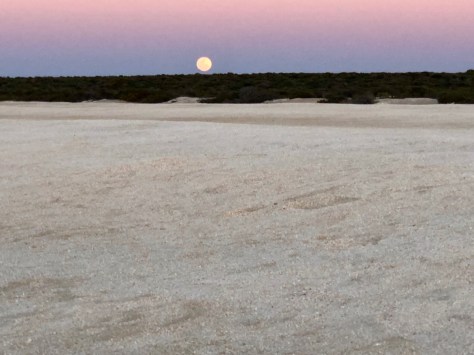
We stayed for an hour watching the sun slip out of the sky and disappear over the watery horizon while behind us the moon came up – amazingly quickly I thought.  I could not help thinking that sunsets, like funerals, always make you think of those you have experienced in other places.  The favourites that I thought of were the sunset watched from a huge rock in the Wadi Rum in Jordon, returning from whale watching in Argentina, watching it from our boat on the Nile, the fast sunsets of Kenya and Tanzania ….. and of course. there are the pretty cool sunsets over the orchards of Peckham Bush!

Saturday 25th August

It was not a good night. Fear about not waking up together with angst regarding the trip itself rendered us both restless and wakeful. At well before 5.00 we were both awake but somewhat reluctant to be off. Would we be rejected for being too old, too unfit or maybe just not being ‘backpackers’?

We had to admit to a fair degree of trepidation as we set off into the dark pre dawn street. There were no people about. A lone car passed by. As we approached the Britannia we saw a tiny figure waiting outside with an enormous rucksack on her back. It turned out to be Maya, a soon to be fellow traveller, from Japan. I think we were all pleased to see each other as an acknowledgement that we were in the right place.

As the day began to get light there was the roar of a truck. The vehicle to be our roving home for the next three weeks had arrived. Our driver/guide/cook/mechanic got out, read our names from a list, let down a short ladder from the back of the truck to take our luggage on board and told us to get in. He made no further comment. We guessed we had been accepted! Next stop Perth youth hostel….. here the balance of the party climbed on board. In our estimation all were under 35: the majority under 30 and the majority of these were under 25. We could have been the grandparents of all of them!

I am sure our assessment of the situation was as quickly assessed by them…. their faces on seeing us was a picture!

All aboard (the bus was full), we took off.

9077D53B-79FC-41E3-B543-AC677F42A97A

The route!

It did not take long to leave Perth and we were soon out on the Indian Ocean Highway. In ancient times this area was a vast sea, giving rise to the salty limestone sand of the area. We were travelling at sea level. It was what we have come to experience as bush country. The ‘Black Boy’ grasses we had seen on previous visits were very much in evidence. Very little of the land had been cleared for farming. There were few crops. When they did occur, vast sprinkler systems could be seen.

There was very little traffic. The ubiquitous telephone wires ran parallel to the road. There were very occasional buildings. Our first stop was a town called Lancelin. Originally a whaling town (whales were hunted for oil), conservation has seen an end to this industry and it has become an area based on fishing, mainly lobster. Most of the large villas dotted around the town are the holiday homes of high earners from the mining industry east of Perth. It had all the trappings of a sleepy village by the sea. The deep blue ocean ran up as white foam onto the beach. We headed to the bakery which was doing a great trade in breakfast pies and sausage rolls……. we sat outside the bakery making the small talk of a newly gathered group of people – all secretly weighing up each other, and all wondering what these two elderly people were doing there, including us!

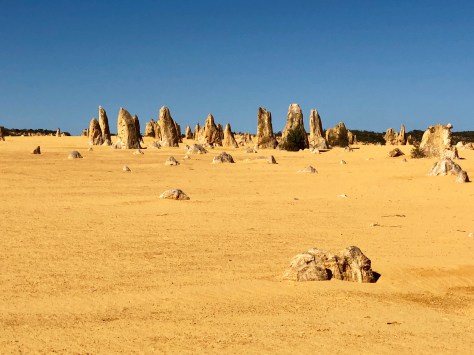
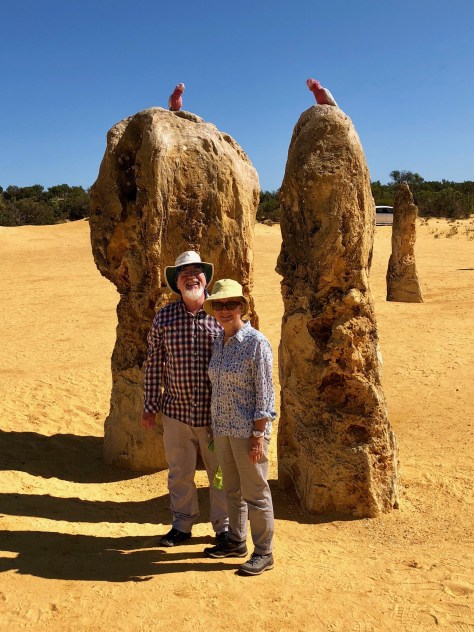
As we left Lancelin behind, the trees stopped and we were looking east over a flat fertile plain and soon came to our next stop, the Pinnacles. These were stone pillars bristling out of bright yellow sand.

It was a remarkable sight. Initially we were reminded of the rocks of Cappodocia in Turkey, but on closer inspection they had a very different form. The limestone columns were around a maximum of three meters high. There are various theories about their formation, but there seemed to be no clear front runner. Several theorists describe them as the solidified tree roots exposed over time by winds. Who knows – but they made an interesting interlude of walking and pondering in bright but breezy sunshine.

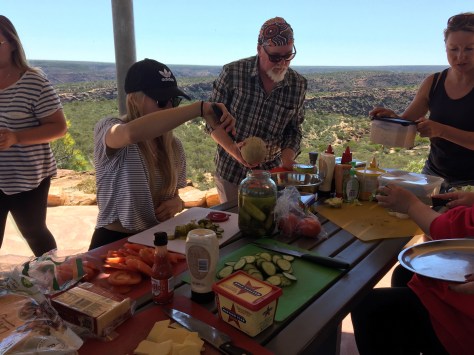
We drove on and eventually stopped for lunch at Jurien Bay. Another whaling town now reduced to fishing village. We stopped on the coast road and had our first truck lunch of the trip. It went very well (from our experience!). The truck larder was well stocked with goodies and people in the main turned to to lend a hand.

Shortly after lunch we stopped at the Sandy Cape National Park where sand boarding took place for those who wanted to partake of the activity. Keith and I watched with others as they hurled themselves down the dunes on candle waxed boards. Interesting ……

Back on the truck it was, apart from a brief stop for petrol, and a later stop off at a bottle shop to take on alcoholic ‘vittels’ for the long haul to Kalbarri, our stop for the night. Although only 7.30, it had been dark for some time when we arrived and we had driven for well over an hour in the red after glow of an amazing sunset. By Kalbarri we were in total darkness save the light of a nearly full moon.

We unloaded our bags and decamped into our dormitory accommodation. It was communal but clean and the shower was good. We had a good supper during which the vexed question of who wanted to do some abseiling on the morrow was raised. I think I might……..