Monday, 16th February. Arica, Chile 22 degrees
No walking this morning as we are off on an outing, but as we came out on the promenade deck, Keith went back to get his binoculars as there were so many birds in the harbour. A pelican, two Peruvian Boobies, three Inca Terns and a whole host of Franklin’s Gulls flew past. As they do on a Monday! In Chile.
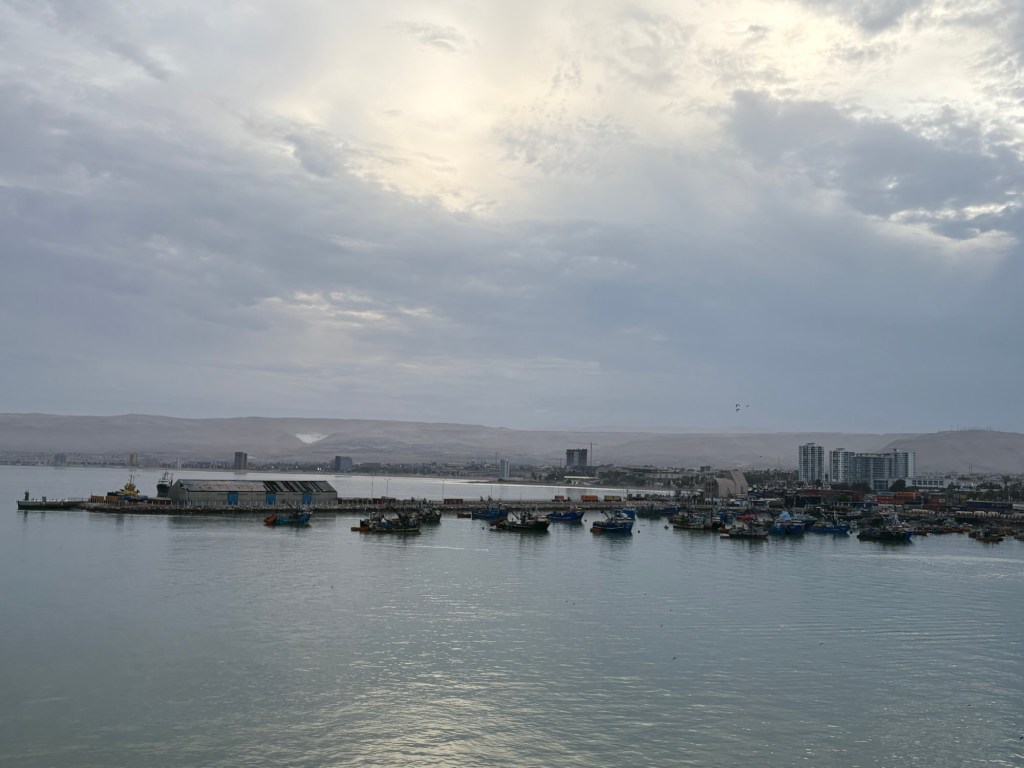
Arica is another container port, but obviously there is a lot of fishing going on too, given the number of fishing boats at anchor and sea birds hanging around.
Arica is the northernmost City in Chile and lies approximately 18 Kilometres from the Peruvian border by road. But, of course, we aren’t going there by road! We have to get around the bulge that sticks out of the west coast of South America by sea. Arica used to be part of Peru and various wars have been fought over it. It now provides the main port for goods to and from landlocked Bolivia. It lies at the confluence of the Azapa and Lluta valleys which effectively provide an agricultural oasis within the Atacama desert. Arica has been designated as the driest inhabited place on earth with an average rainfall of 0.03 inches. Despite this it is known as the City of Eternal Spring because the average temperature is between 18 and 22 degrees.
Although we did not get to see them, the Chinchorro people who have inhabited the area for over 10,000 years, practiced the world’s oldest mummification, predating Egyptian mummies by 2,000 years. Our friends Matt and Maria, our Bridge partners, did go to see them and said they were very small people. Did they start off that way or did they shrink after the mummification process I ask myself. I will never know. (Maybe a bit of both? Who knows? Ed)
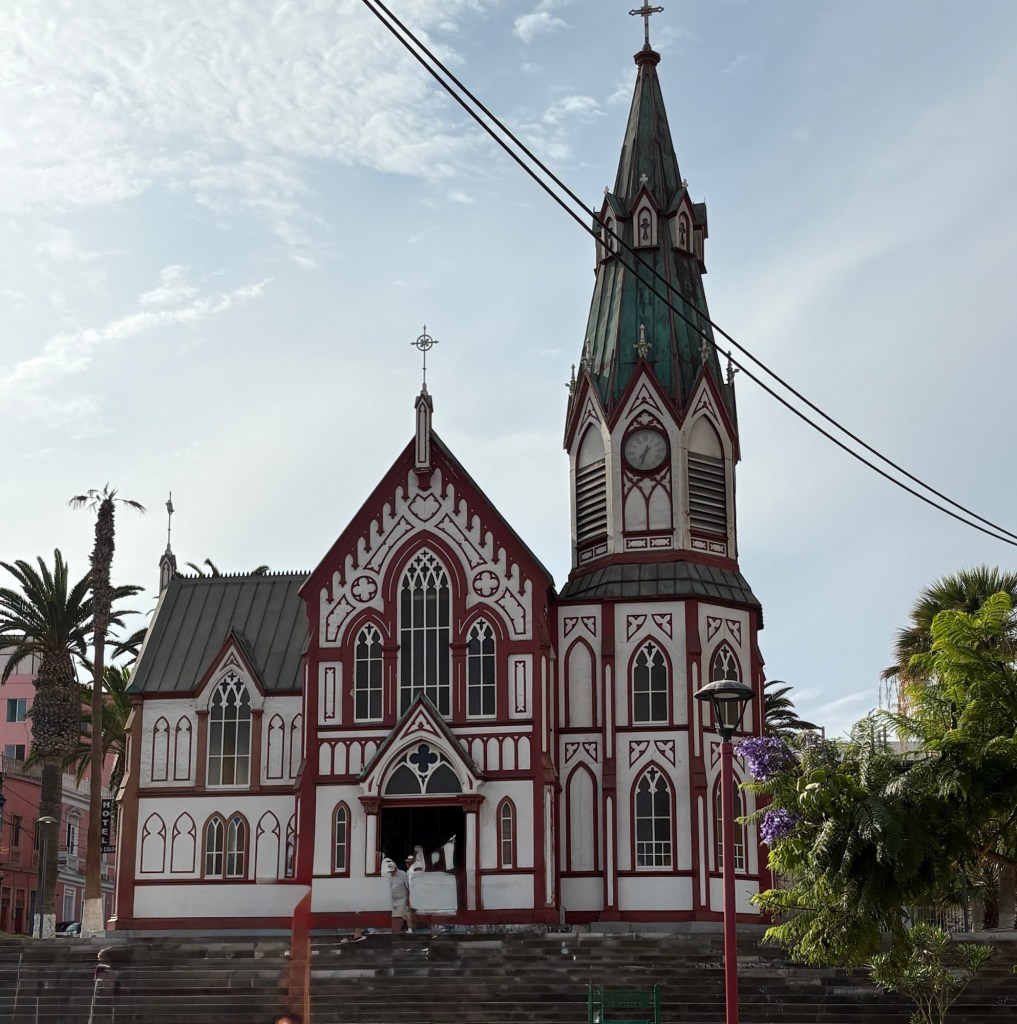
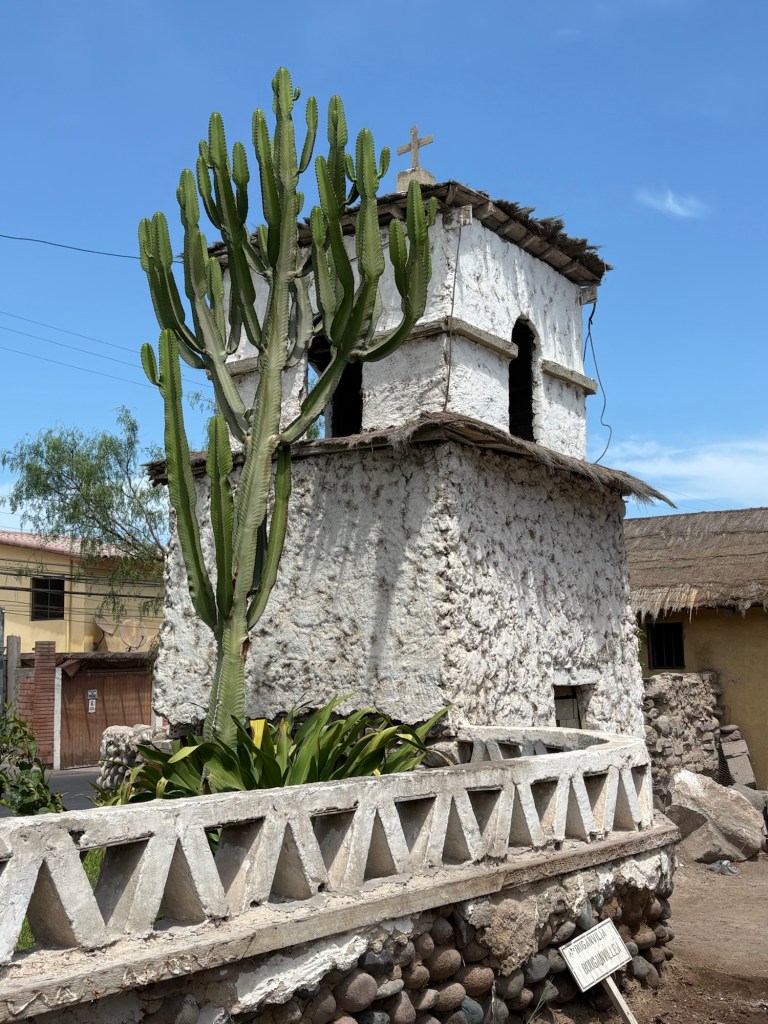
We took a somewhat different route and went off into the desert again. We stopped off first at the Arica town square. This housed the Cathedral which was built by Mr. Eiffel (of the Paris Tower fame). Having said this, he built the original but it has been rebuilt frequently as earthquakes keep knocking it down. The first earthquake occurring only a few years after it was built – built in 1856 and first earthquake 1868. Mysteriously it lost its bell in the first earthquake to demolish it. The said bell was found buried in someone’s garden in 2006! Amazing – particularly as it isn’t exactly a bijou bell.
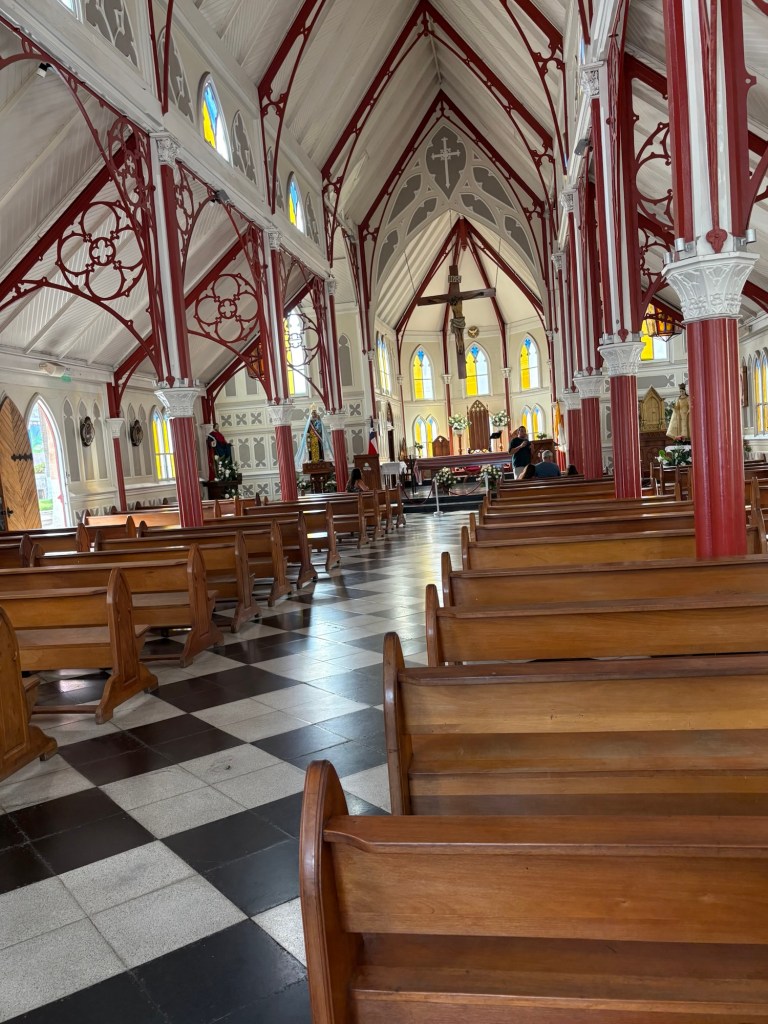
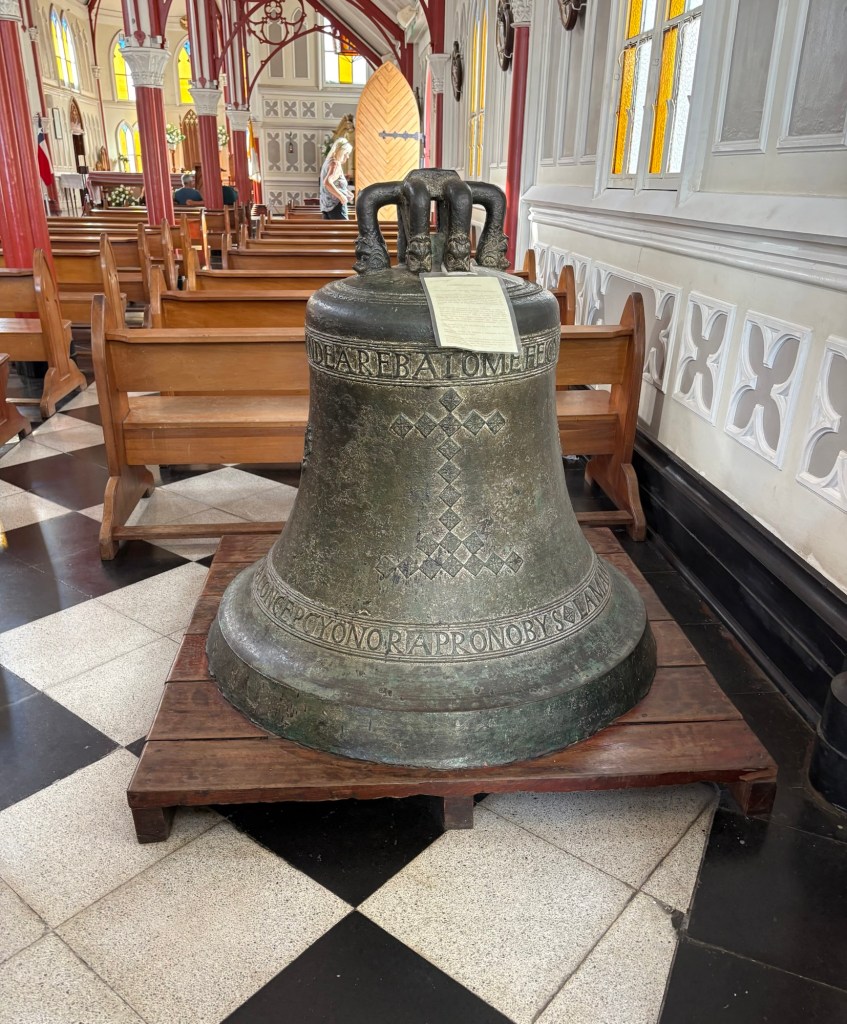
The interior and the dreaded bell.
It was a very attractive little square. There was a drone hovering overhead giving out tourist information. Keith was fascinated and went over to speak to the young men operating it. They spoke no English and waved over their colleague – a charming young woman who turned out to be ‘the voice’ of the drone(!?!).
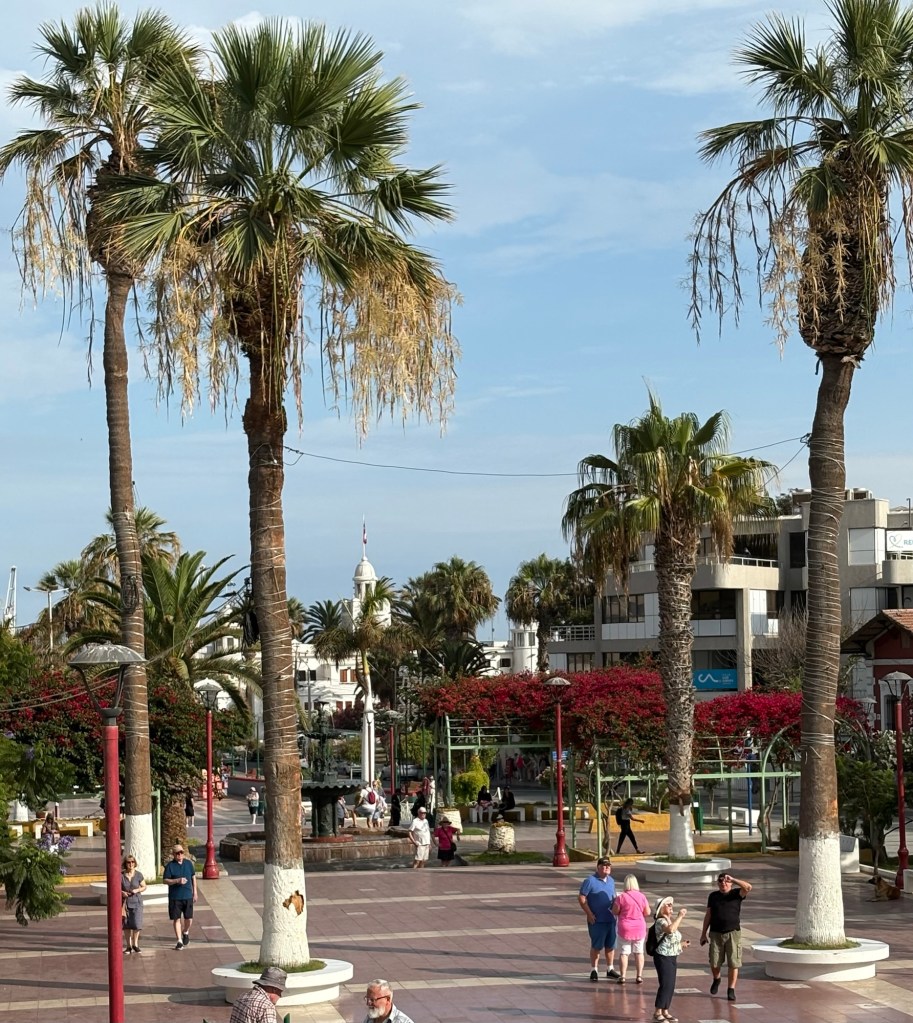
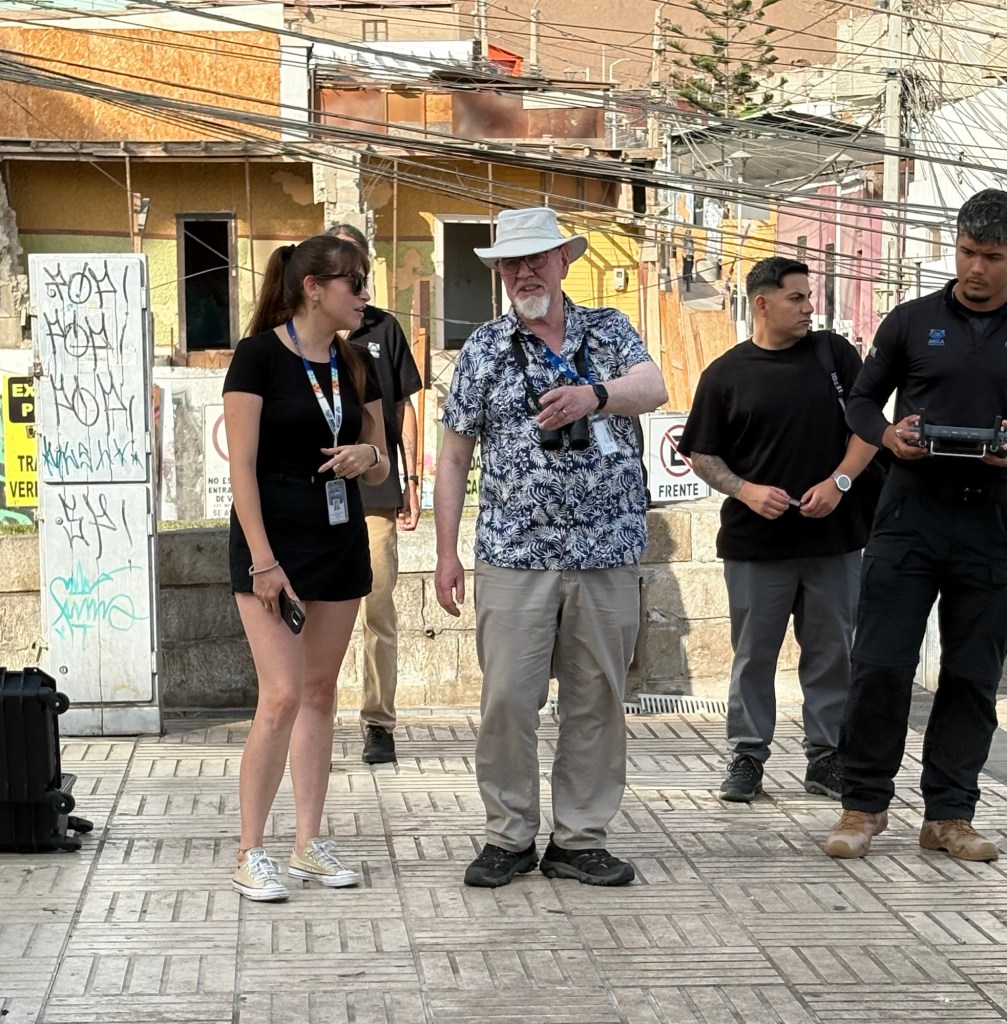
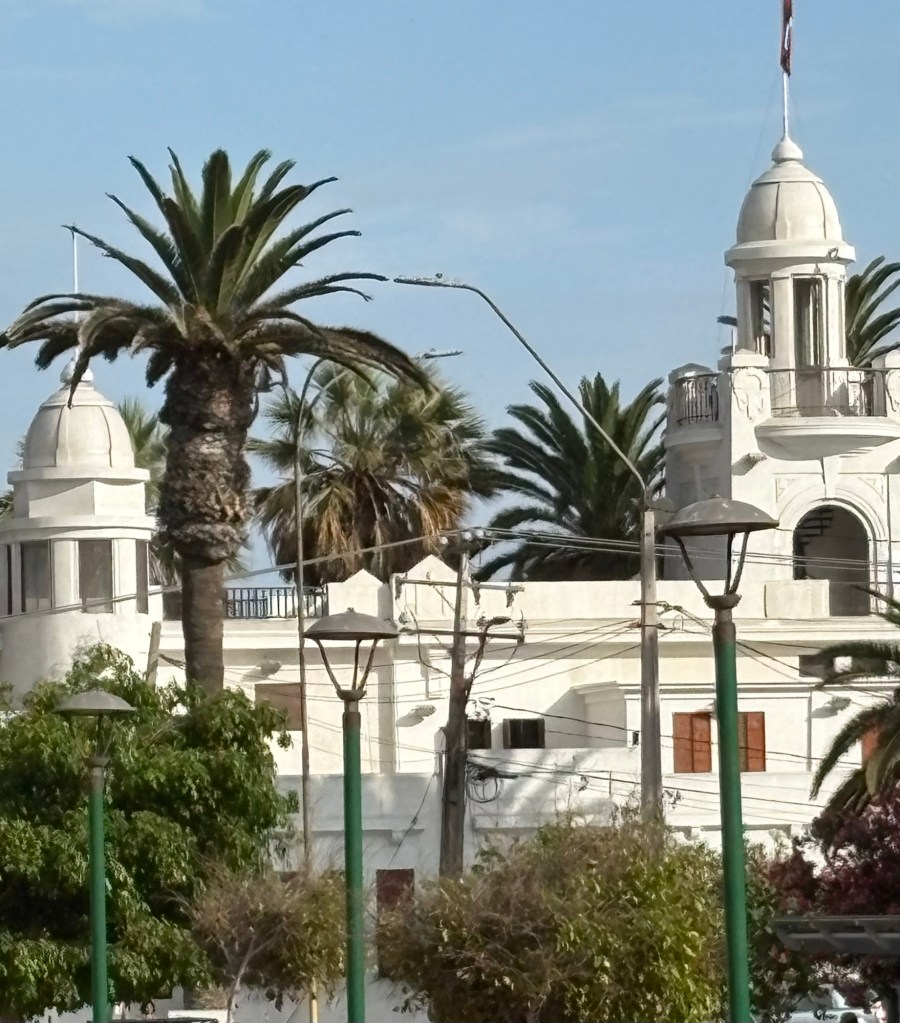
We then drove out of town and found ourselves once again driving up a very fertile valley with sandy mountains beyond it.
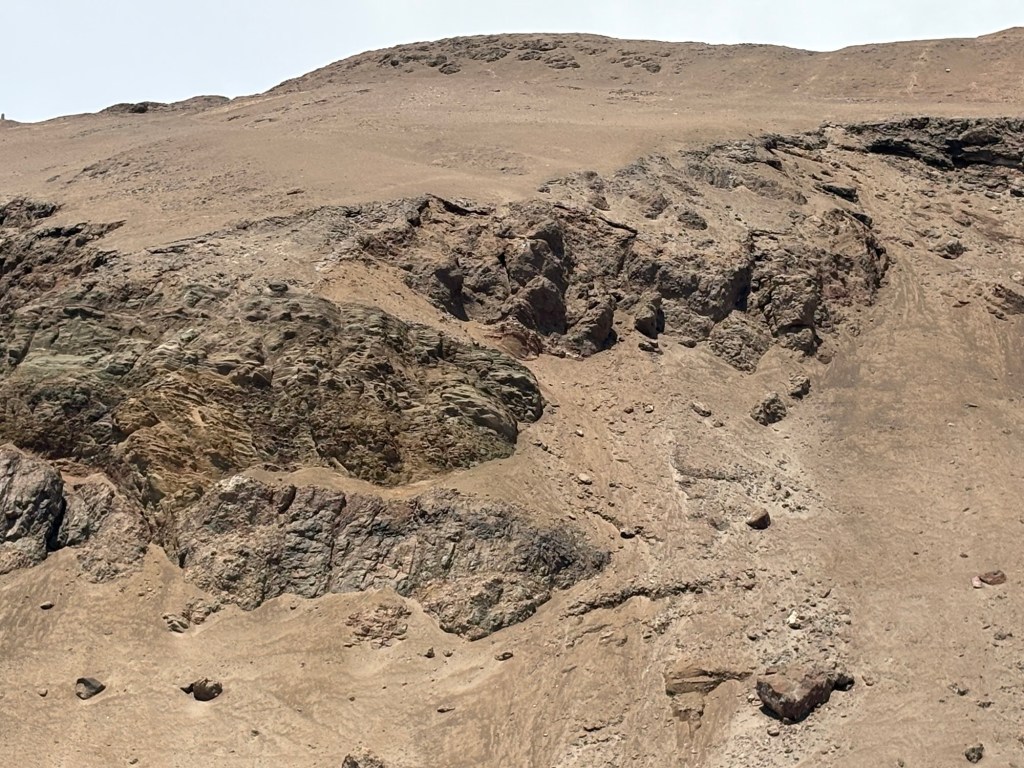
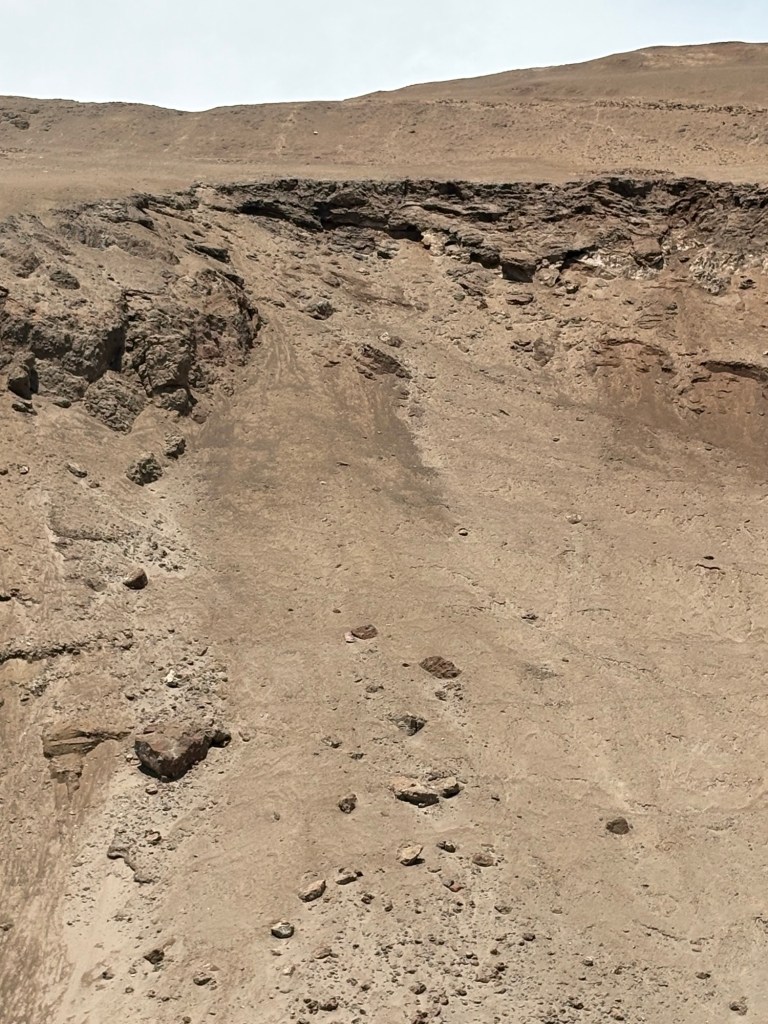
There are no photographs of our route through as the bus window was too dirty.
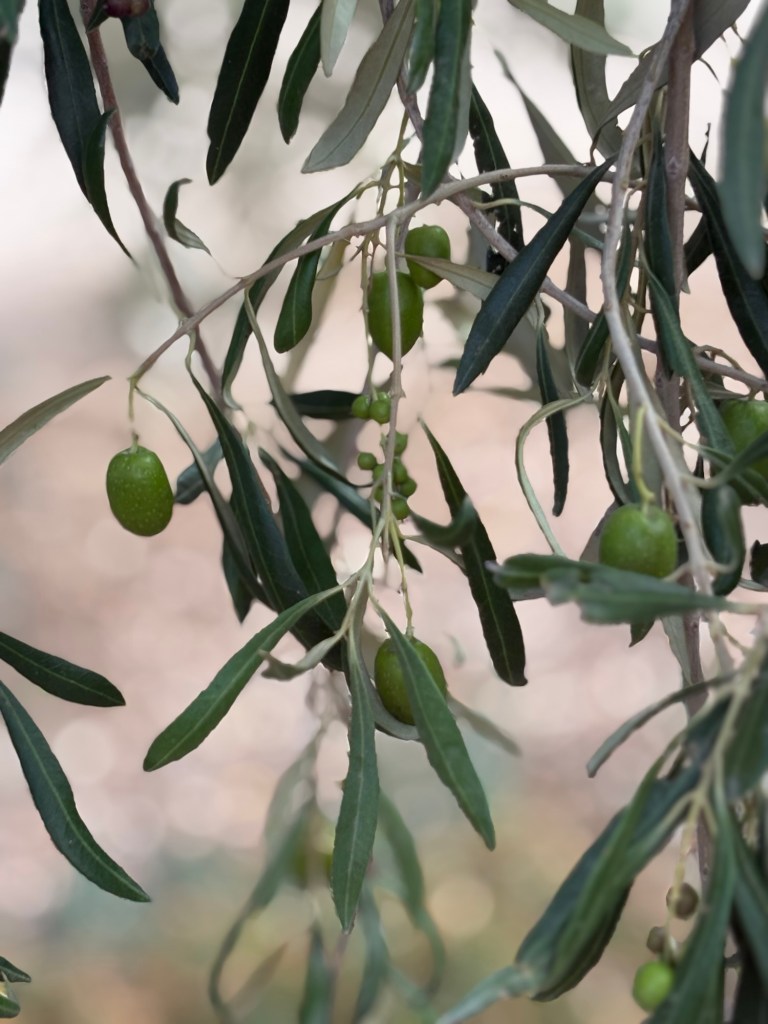
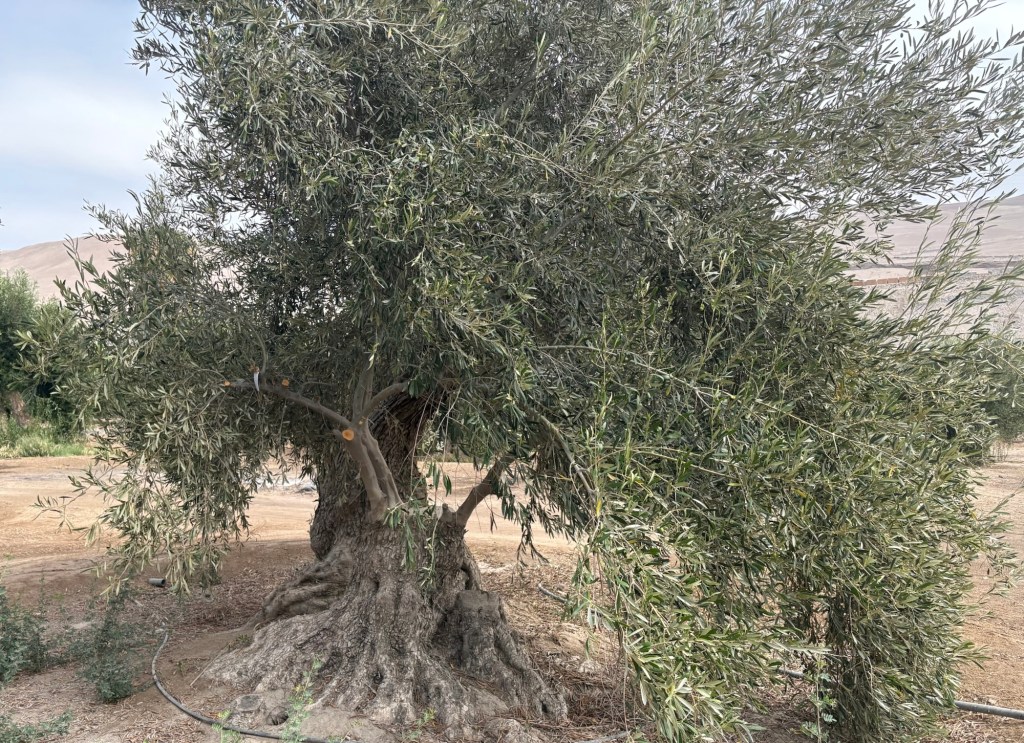
This was the Azapa Valley. Here they grow all manner of citrus, passion fruit, mangos etc. The Spanish brought olives to the country, which have adapted to the local conditions and our next stop was an olive farm. Although it doesn’t rain here the olive groves are sustained by underground wells fed by the Andean winter rains from the high mountains.
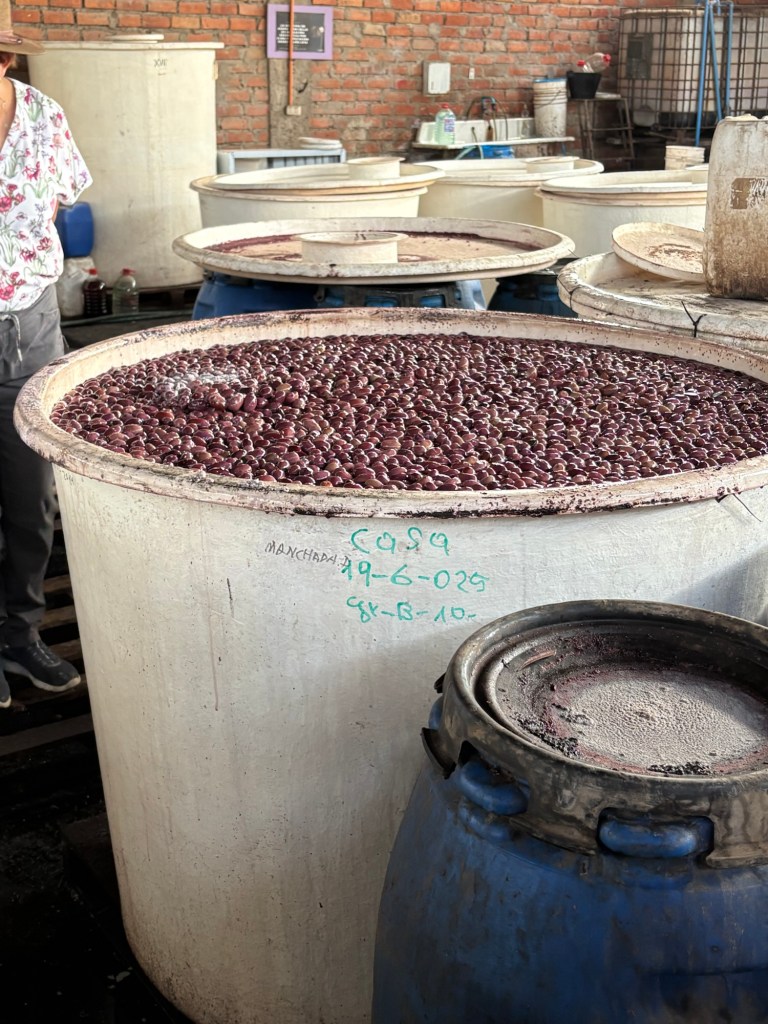
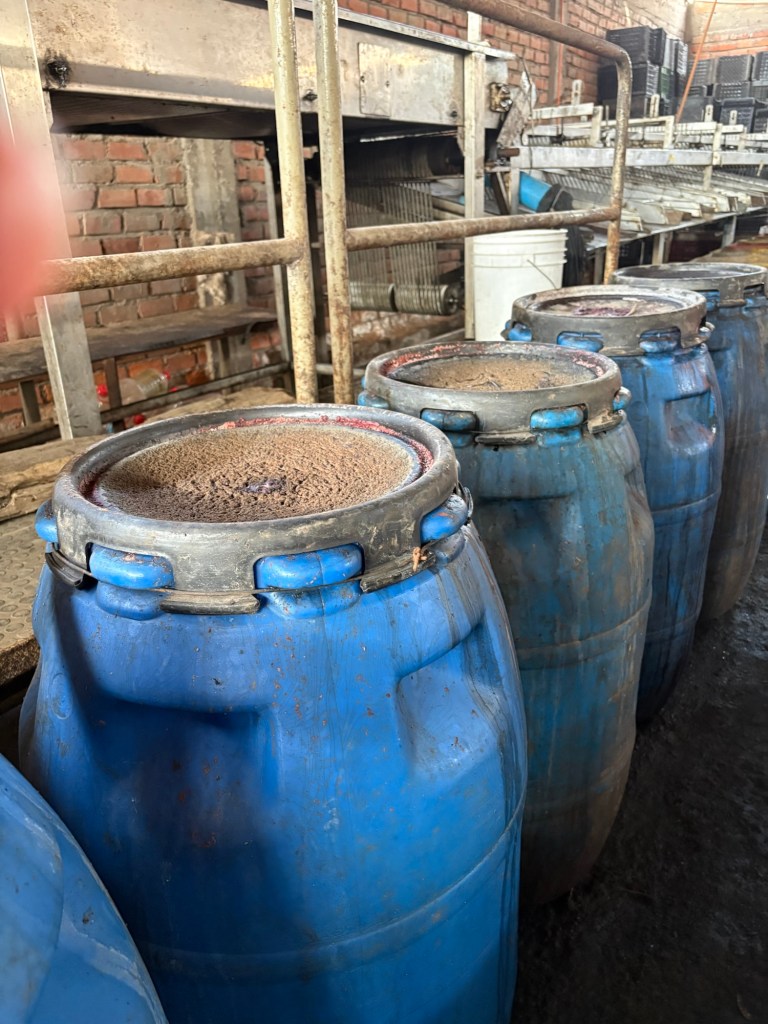
Here they grow three types of olive and they are sold all over the world, some as just olives, some as tapenade and some as olive oil. Perhaps a good thing that the bucket issue is not widely known …
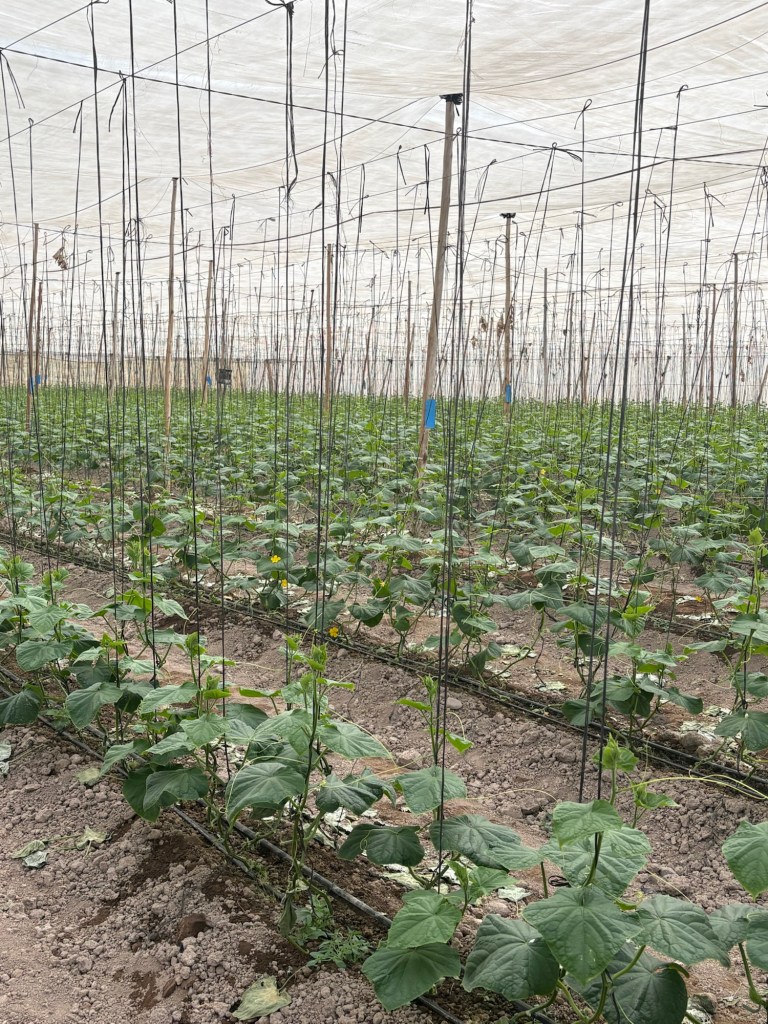
They also grow cucumbers in vast green houses – they planted these two weeks ago and they will allow them to grow for three more weeks and then harvest them. This green house was planted with 10,000 plants and they get 16 cucumbers per plant and each plant provides two crops. This is just for the Chilean market. All I can say is I hope they like cucumbers!!
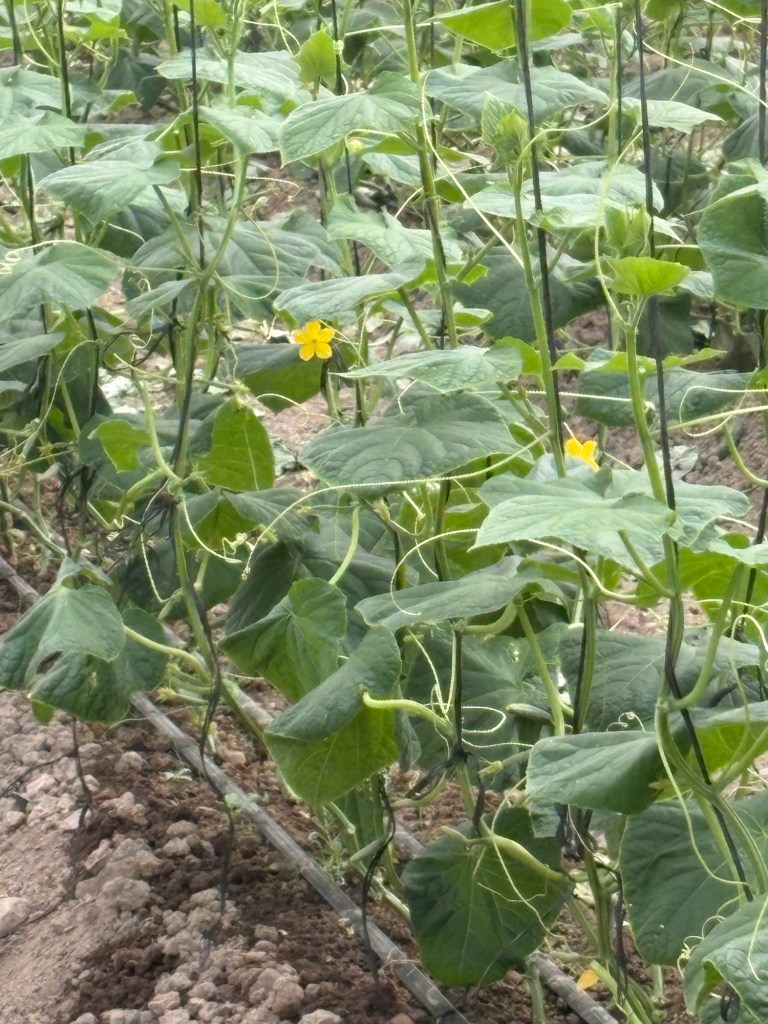
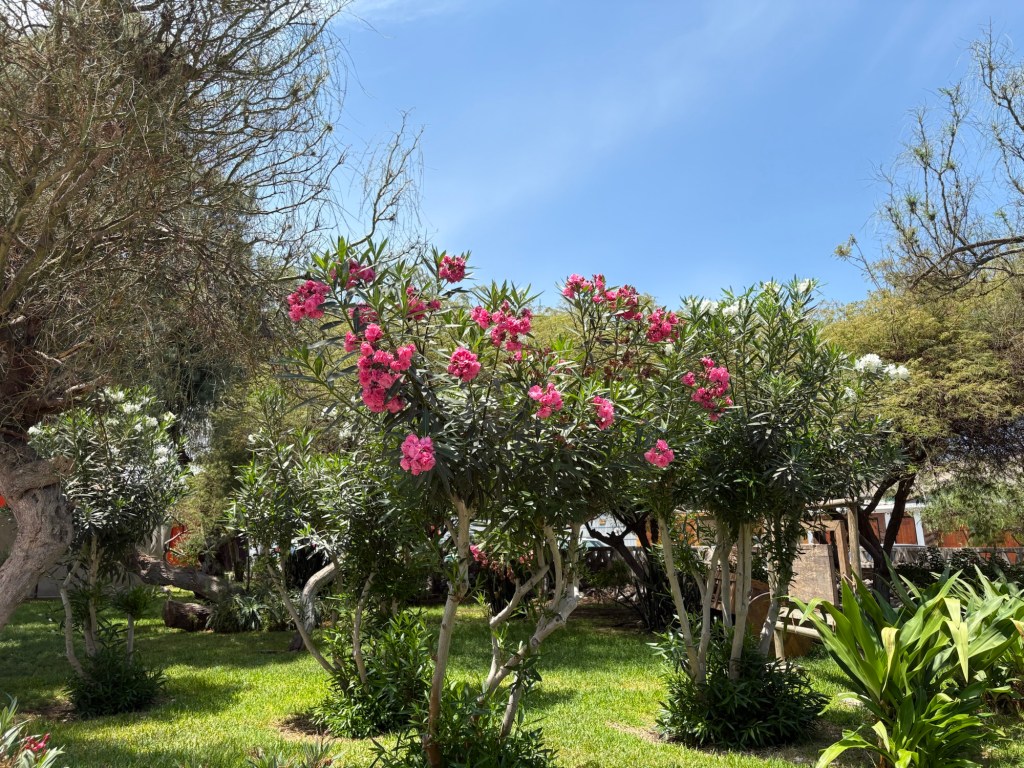
A couple of nice pictures taken at the olive farm –
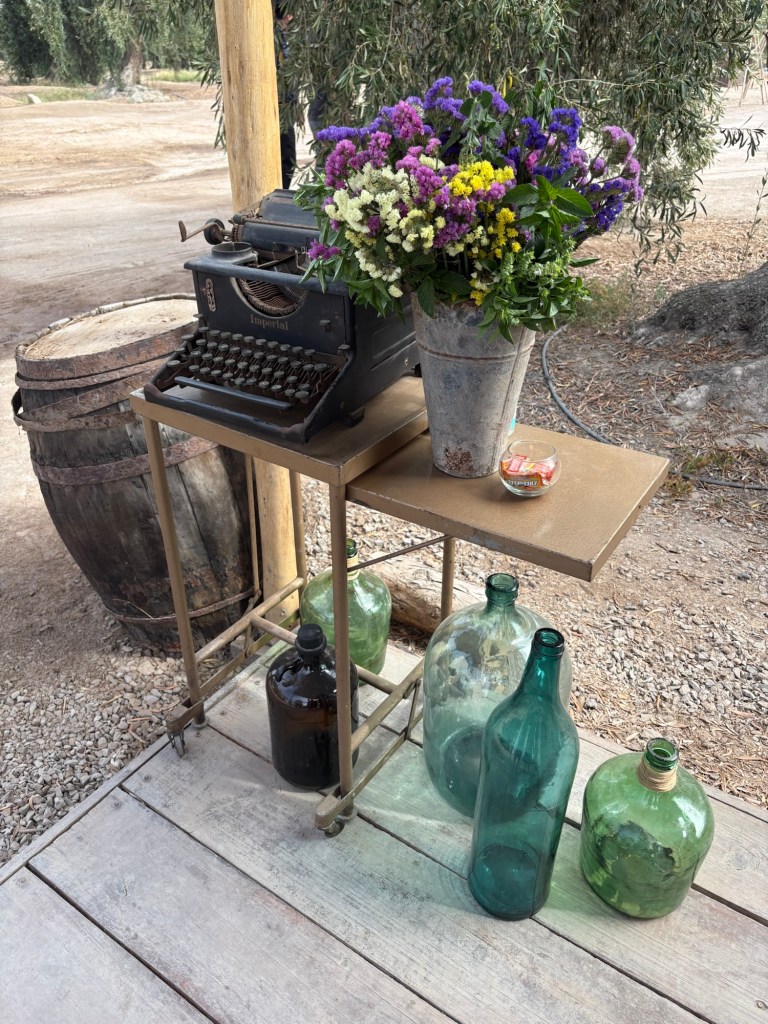
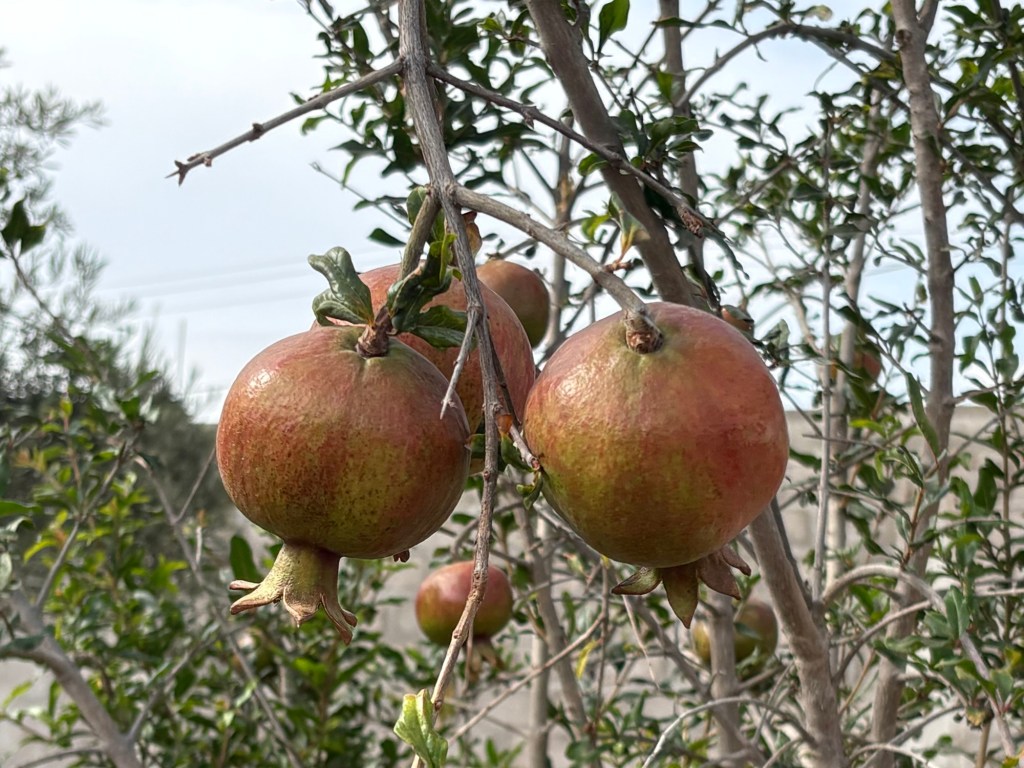
A ‘still life’ and some pomegranates.
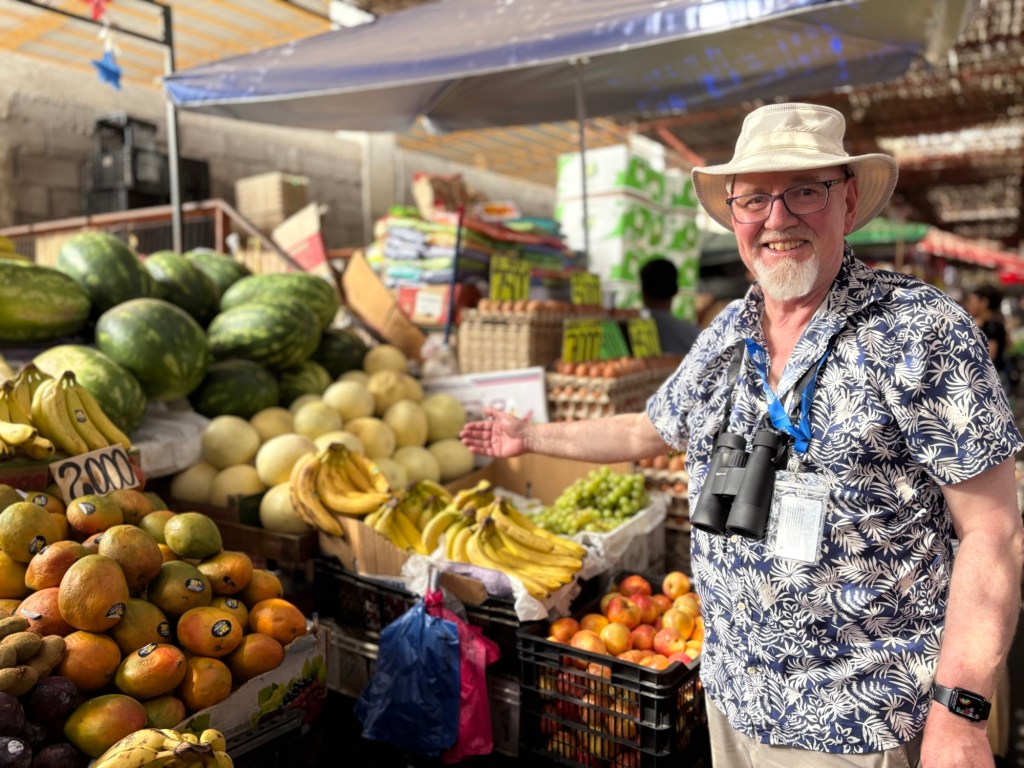
Our final stop was at a very colourful food market which had an incredible array of fruit, vegetables and flowers. It was just so colourful!
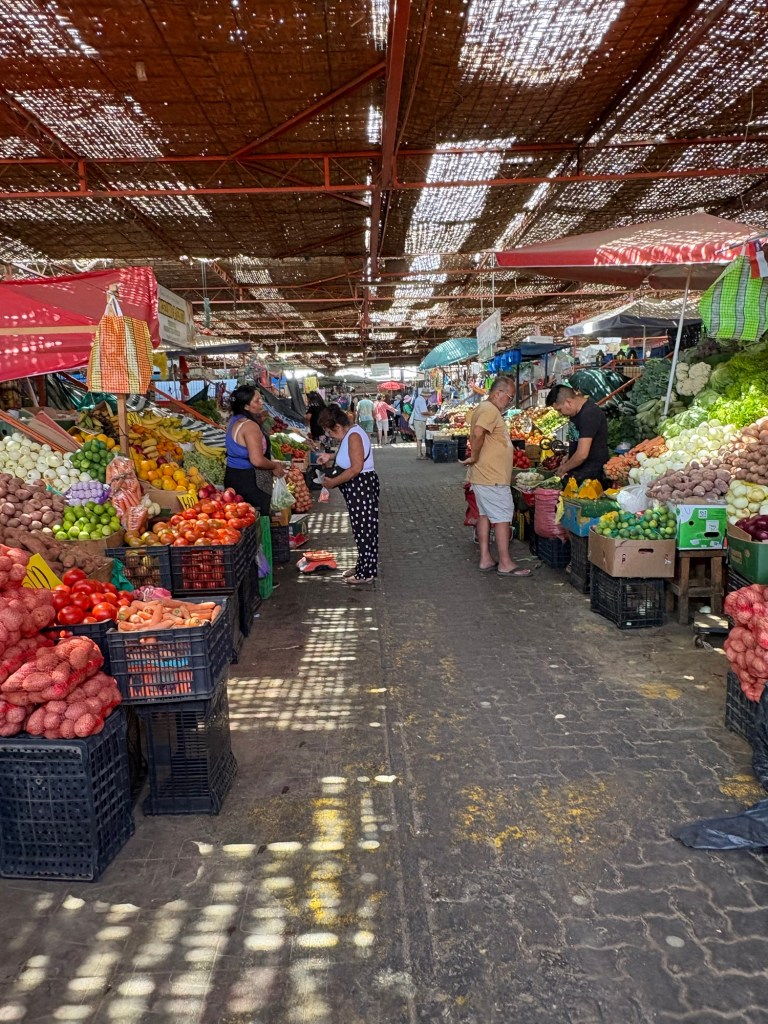
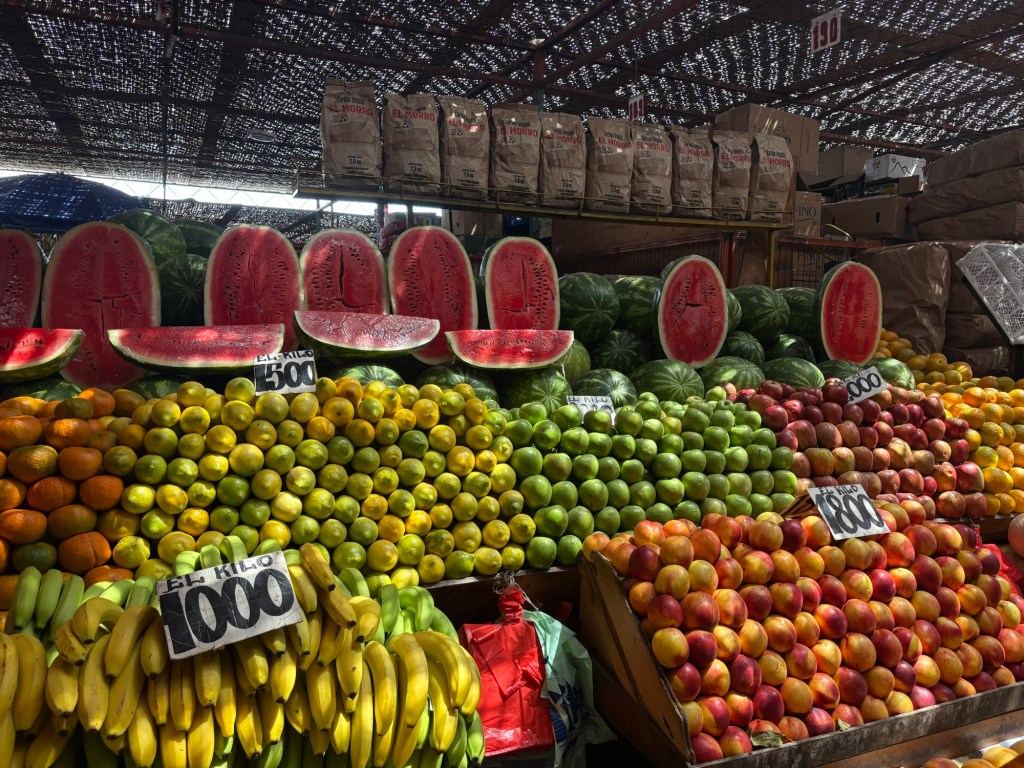
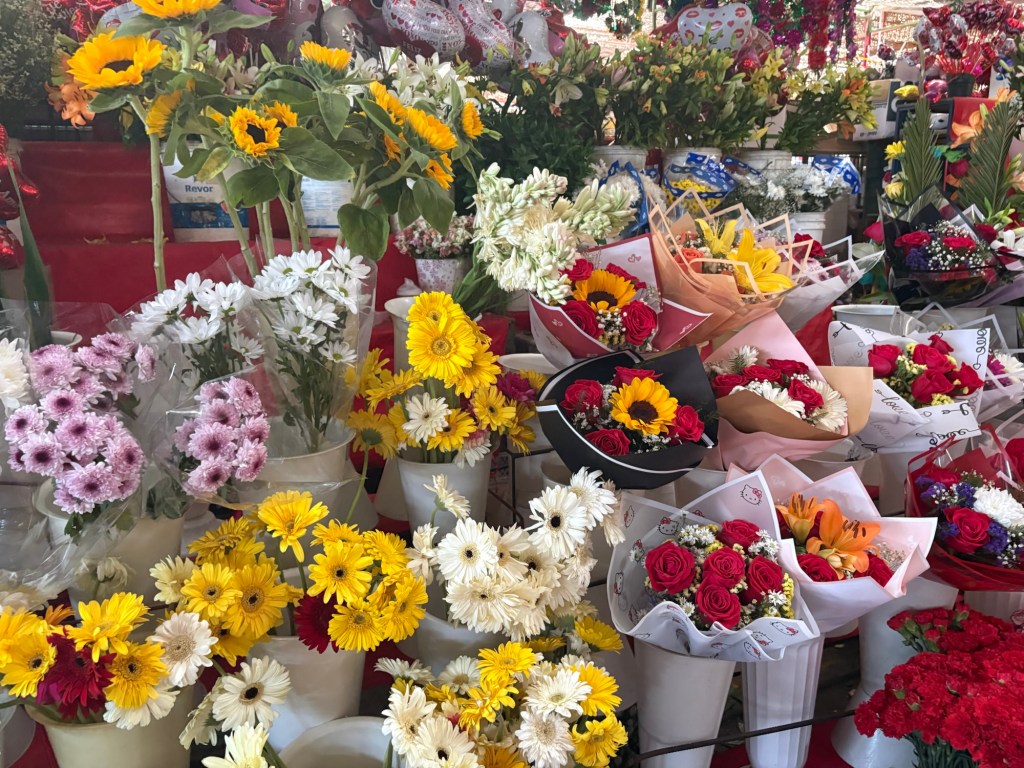
Keith would have had a field day in there!
It was then time to turn back to Arica. Keith had identified a restaurant he wanted to try which was right by the sea and our route back to the City happened to pass it! Without more ado we stopped the bus – much to the amazement of the other passengers and the concern of the guide who was not used to ad hoc request stops – and we got off. Imagine our humiliation when the driver of the bus then got out of his cab to see us across the road!! Embarrassing or what!?! (We’re obviously not to be trusted. Ed)
We thanked him profusely, trying not to notice the look of resentment of those looking out of the windows of the bus and who wanted to get back to their lunch on the ship. Within minutes were sitting at a table with a wonderful sea view!
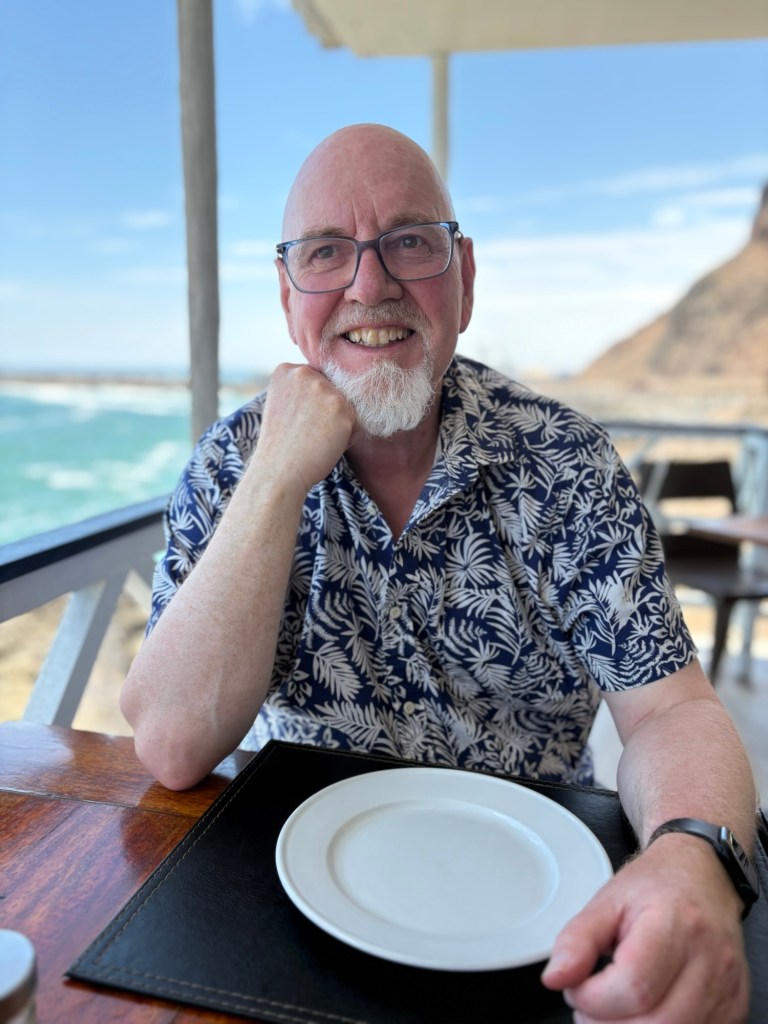
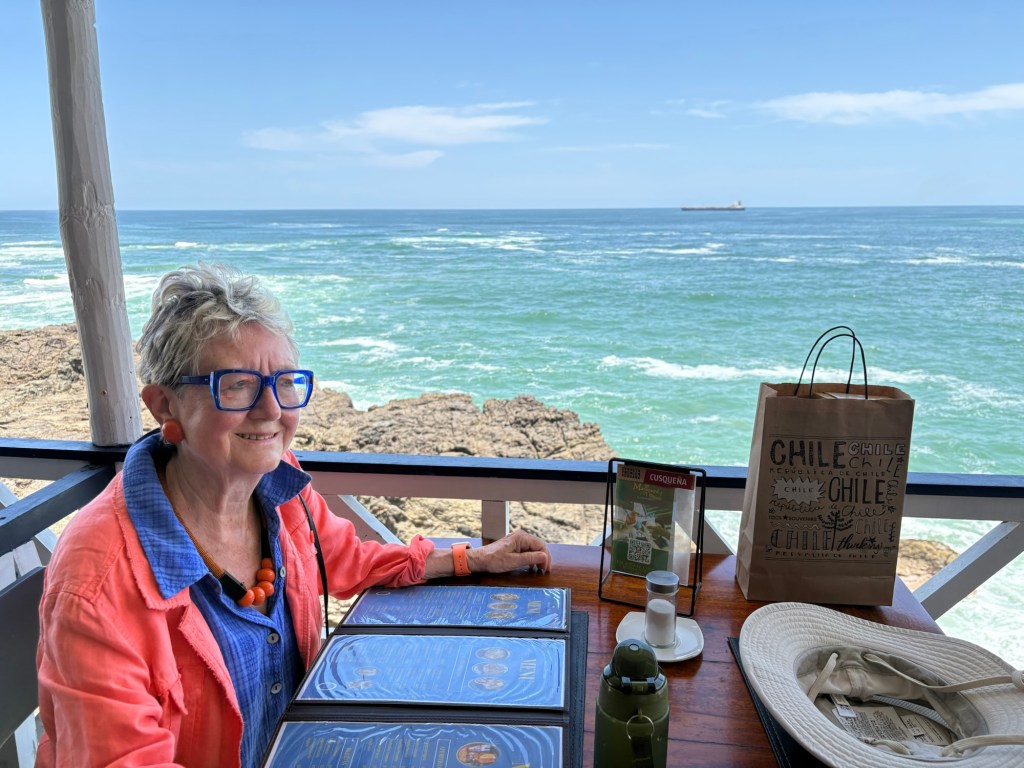
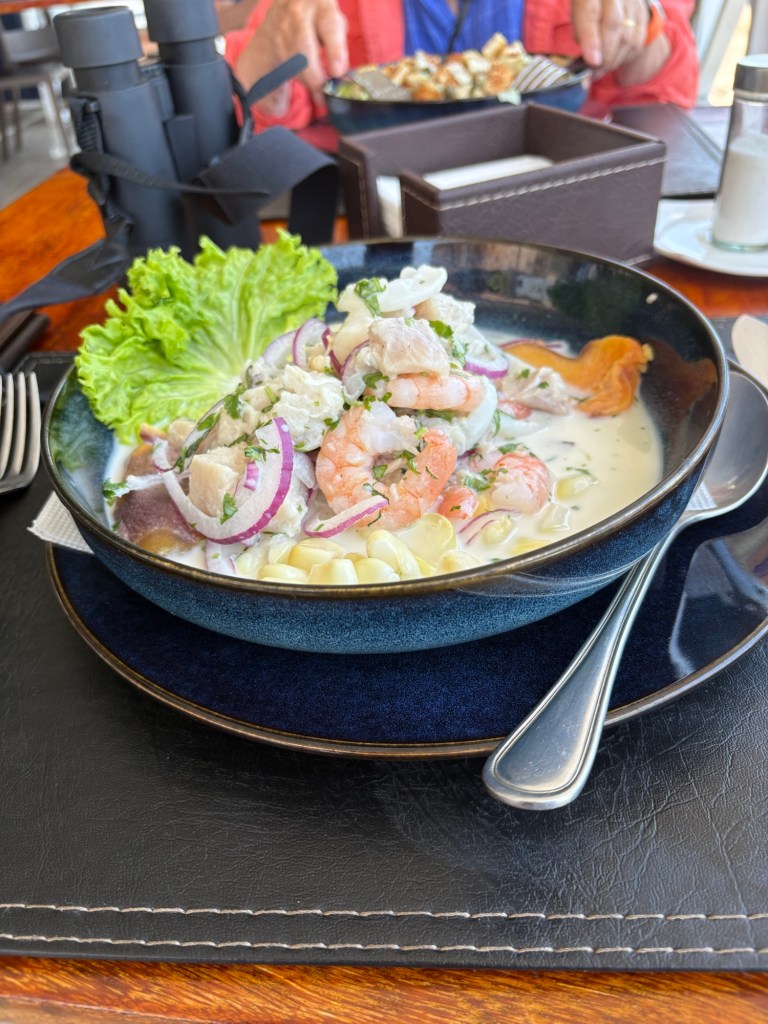
We had an enormous Pisco sour each and a bottle of water and a lovely lunch. Result!
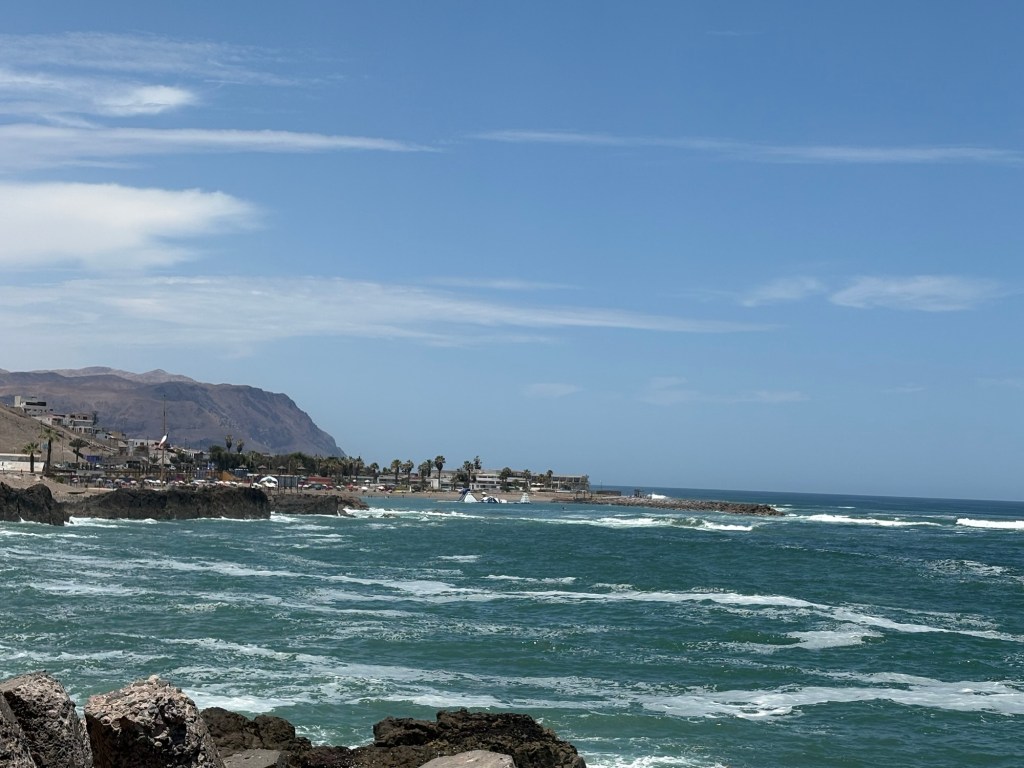
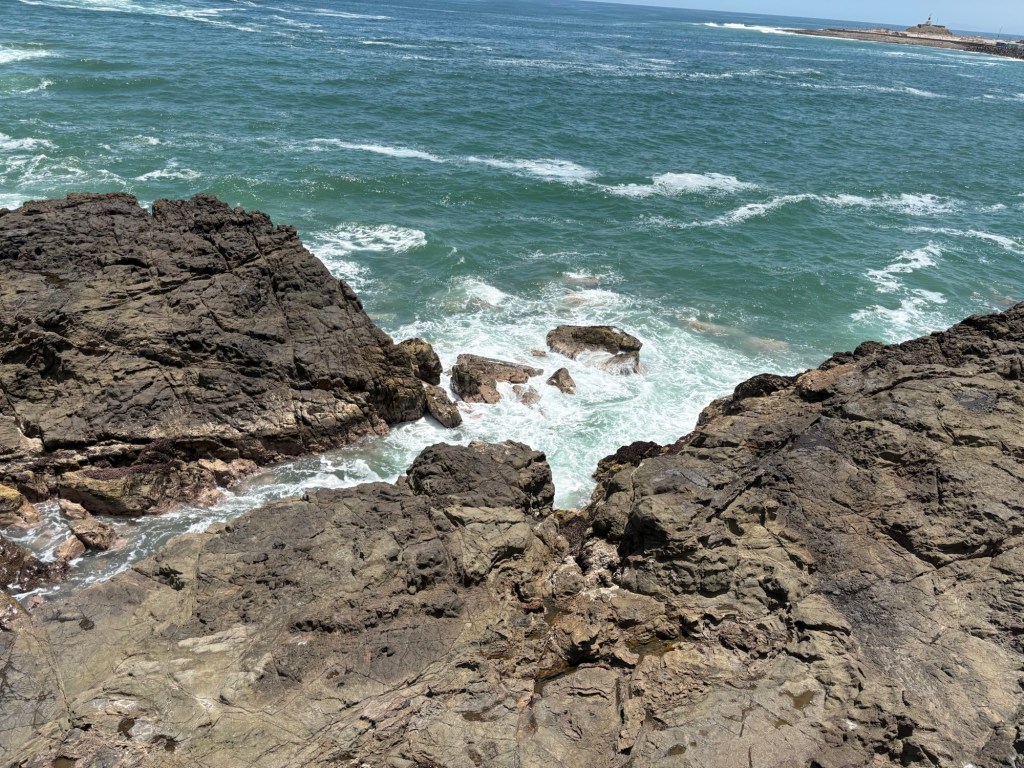
We walked back to the ship very happy bunnies.
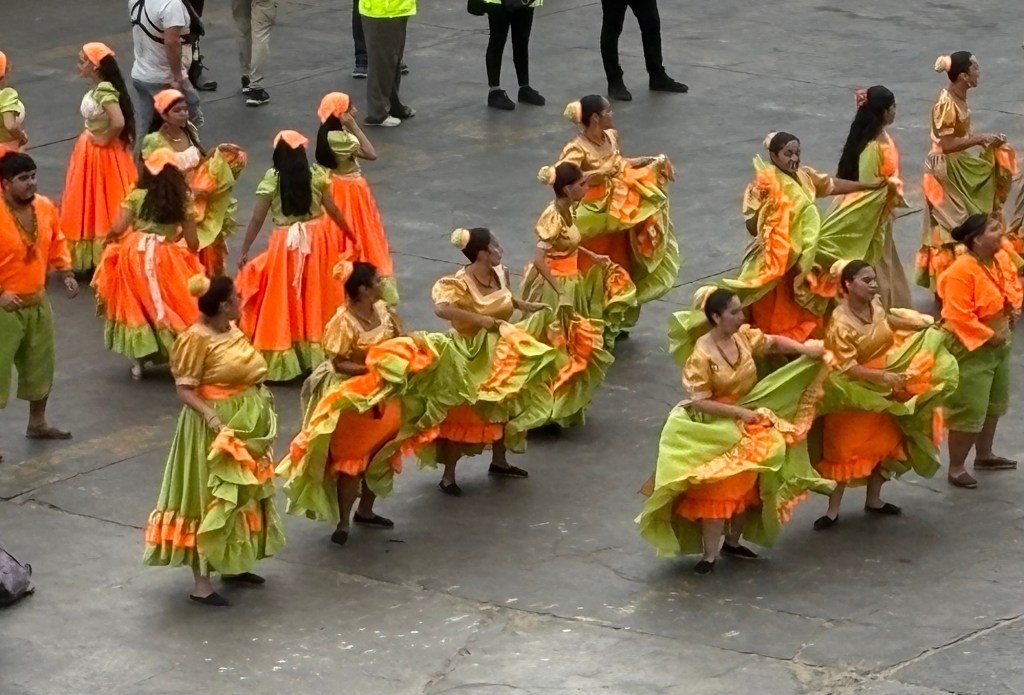
As the ship departed we had a wonderful send off by some Arican dancers which was great fun.
And so ended another great day. We did not go to dinner after our lovely meal, so just completed our walking today and adjourned to our writing.
Our clocks have to go back an hour tonight as we move to yet another time zone. We will be 4 hours behind the UK. Tomorrow is a day at sea.
 pollytheperil