Saturday 31st January, Port Stanley, Falkland Islands. 12 degrees
I woke to the sound of the anchor being dropped at about 5.00 a.m. Peering out of our window it was very misty but there was definitely land out there. We went out on deck at about 6.00 and the mist had lifted and a watery sun was peaking out between the clouds and gradually Port Stanley and other islands have emerged.
I am absolutely amazed that I am here. As Keith says, the Falklands have almost had a mystical place in our lives and were brought into focus by the 1982 war when the Argentine forces invaded and there were 74 days of conflict.
My homework tells me that the Falklands are 300 miles east of the /South American coast and 752 miles from the tip of the Antarctic Peninsula and comprise of two main islands – East and West Falklands – and 776 smaller islands. The Falklands in total are the size of Wales. Incredible. I am just ignorant.
As I said yesterday, seeing it through the mist was I guess how I had always seen it in my head. This morning it came alive!!
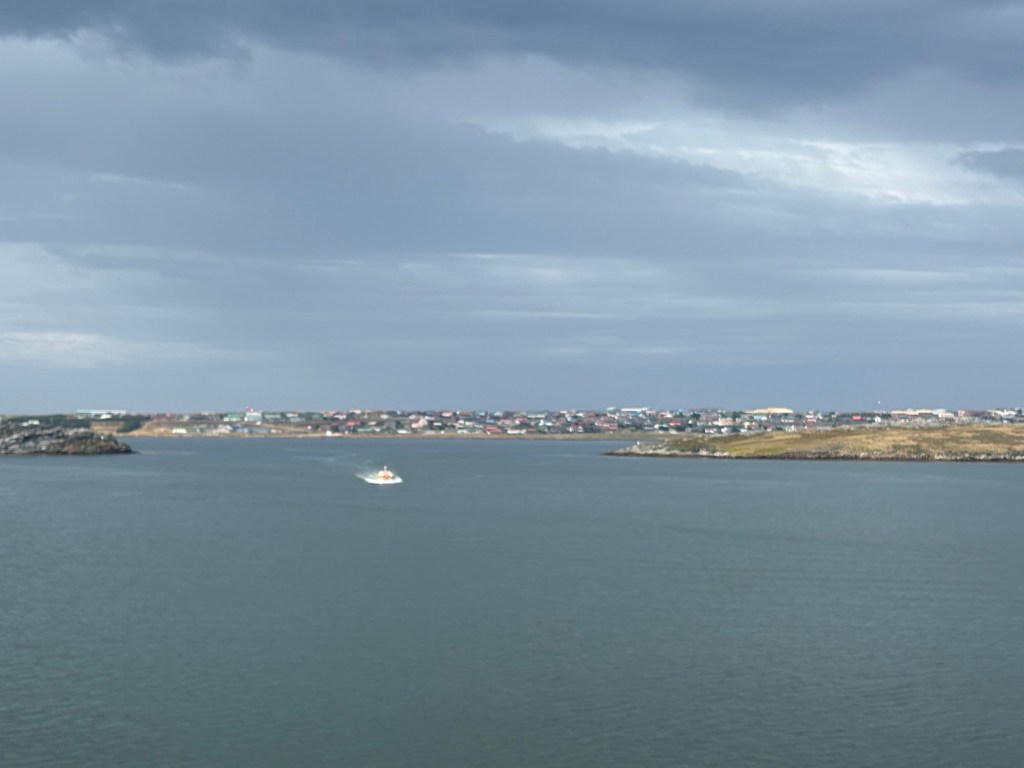
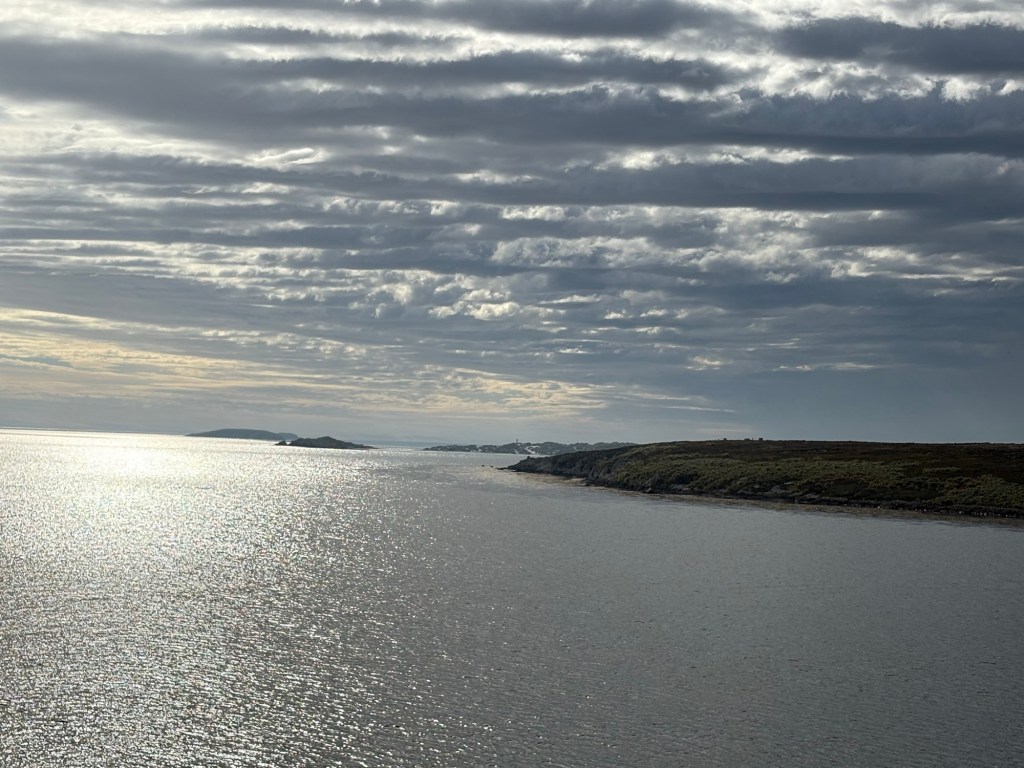
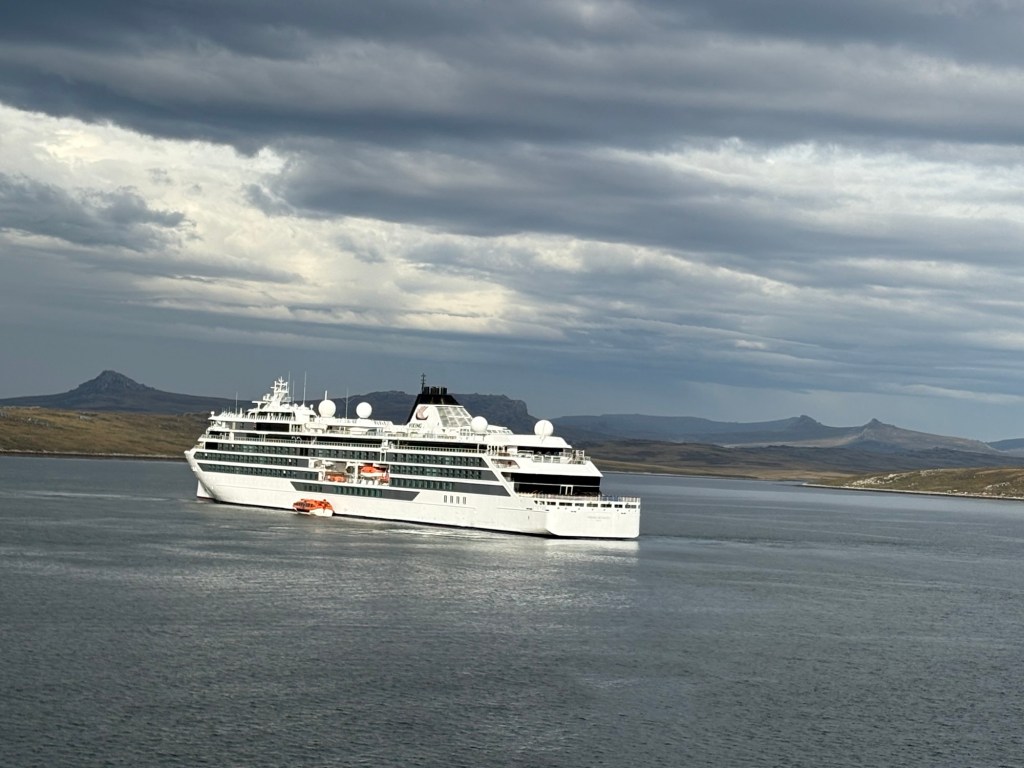
Aurora is too large to get into the bay so we are sitting outside and have to wait for a tender to take us in. We have actually got two trips booked for the day and what a day it has the potential to be.
First the ‘tender’ excitement. I think I mentioned the last time we went through this process that before you are allowed to leave the ship you have to stride over an 18 inch gap to prove that you can manage to get on and off the ship. Well. All I can say is that I would like to see some of the people who got off the ship do it……. Anyway, luckily for us we are not at the moment challenged by such a test.
Our first tour was in and around Port Stanley, but first a few more facts about the Falklands….. they are a self governing overseas territory. This means that they have their own laws, with the Uk only responsible for foreign affairs and defence. The British Monarch is the Head of State, represented on the island by a Governor.
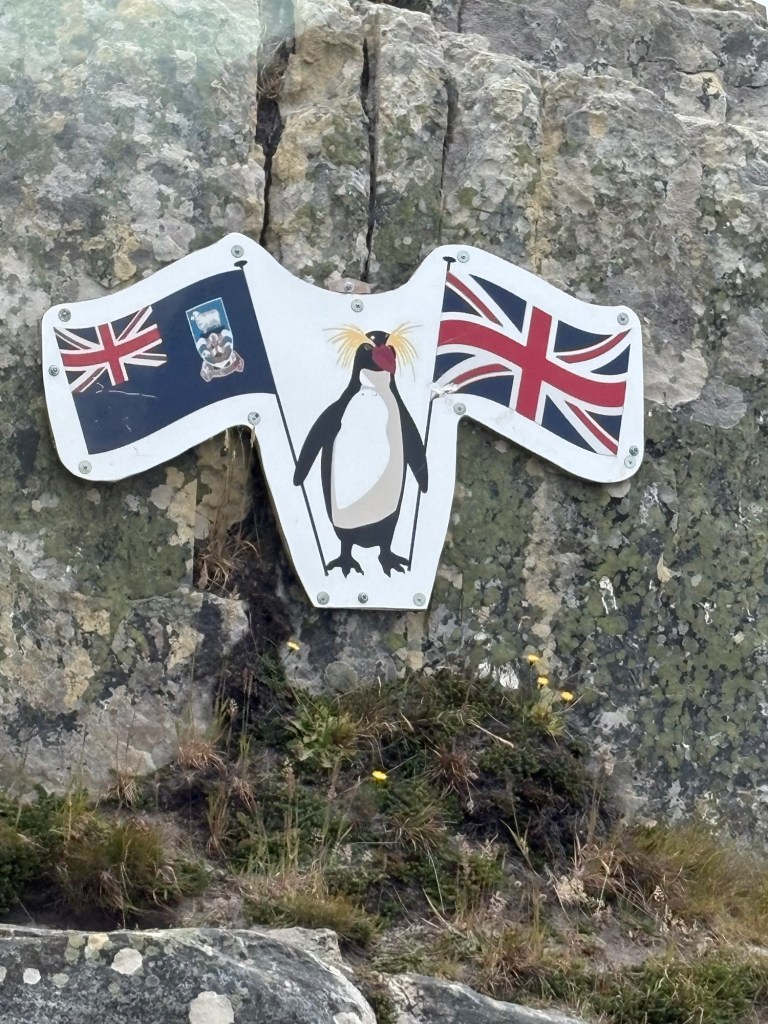
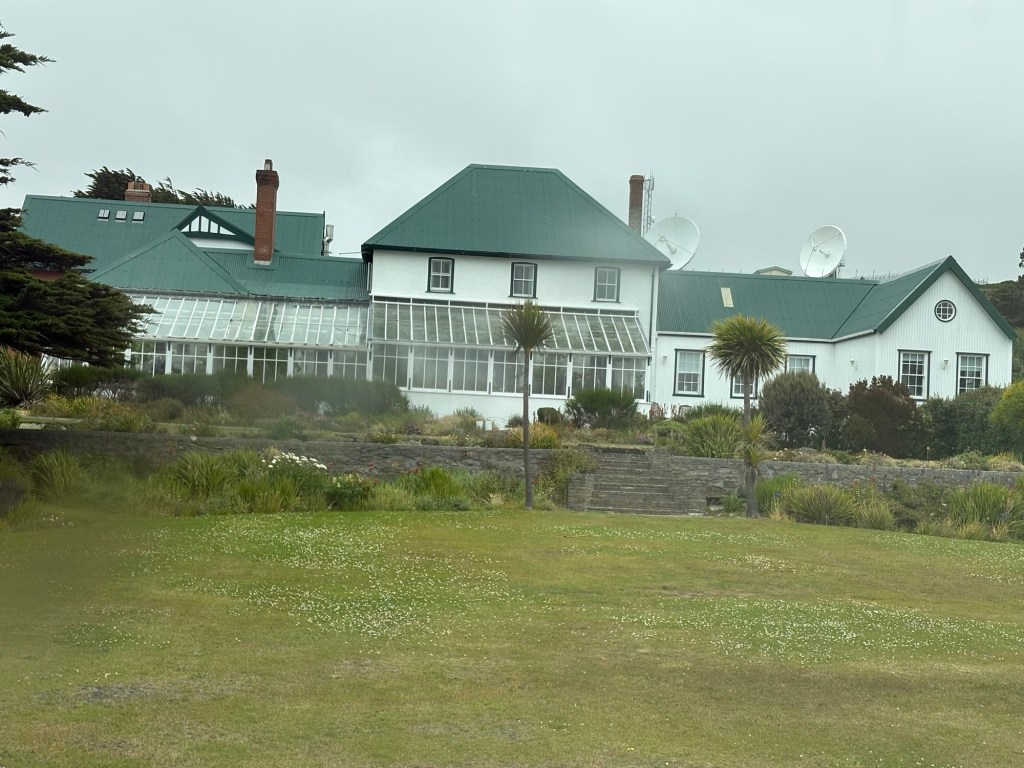
The local government is led by a Chief Executive and an eight member Assembly. There are no political parties but the assembly members are elected every four years. They have their own currency. All healthcare and education is free including funding university education in England.
Everything has to be imported. Currently the monthly supply boat is in dry dock so no supplies will arrive until the end of February and things are running out…… very soon milk will run out, currently no yoghurt or fresh vegetables although most people do grow their own. The main industries are fishing (most of the squid in Europe comes from the Falklands and there were Korean fishing boats lying offshore that we saw as we were coming across in the tender. To get a licence to fish people have to have a connection with a Falklands company), sheep (both meat but mainly wool) and tourism. There were 70,000 tourists to the Falklands last year. And there 450,000 sheep.
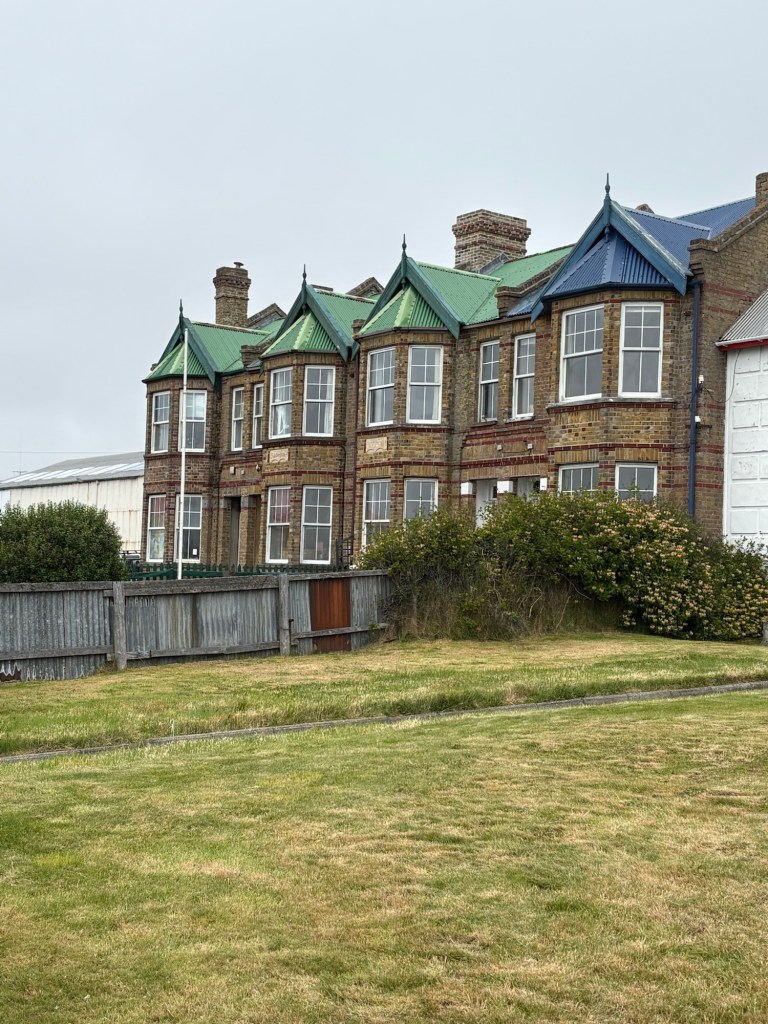
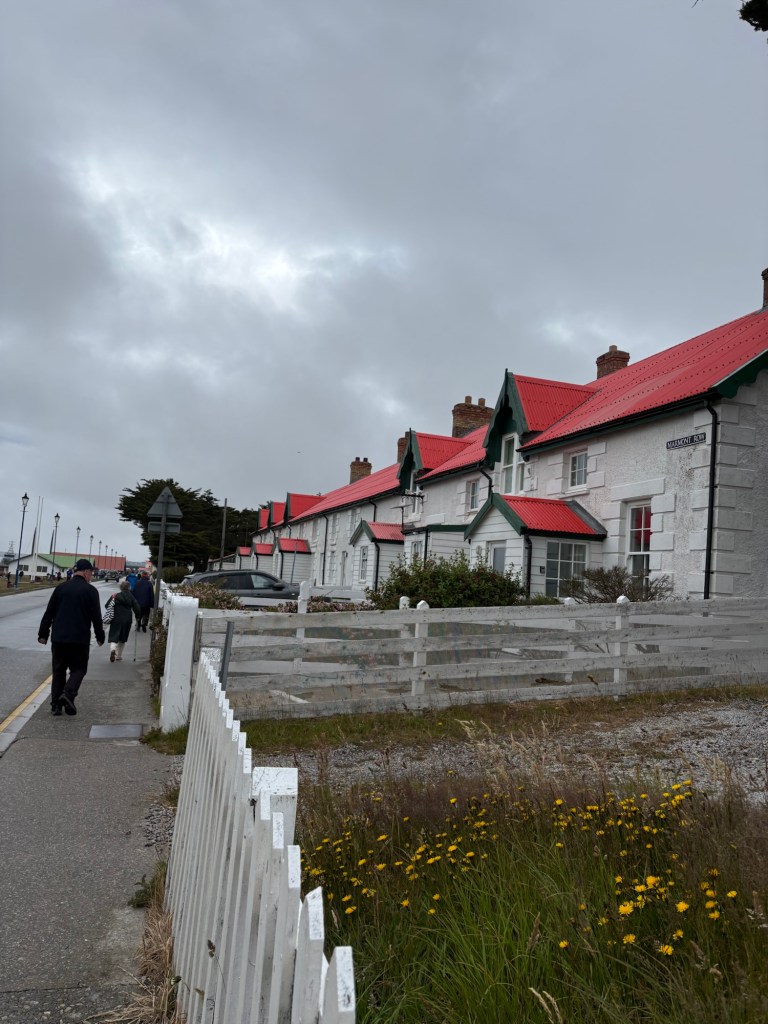
We visited various notable sights. The housing stock is mainly made of wood although there are some made in stone. There is a wonderful row of Victorian houses…but because slate cannot be sent all the way to the Falklands all roofs are made of what they call wriggly tin.
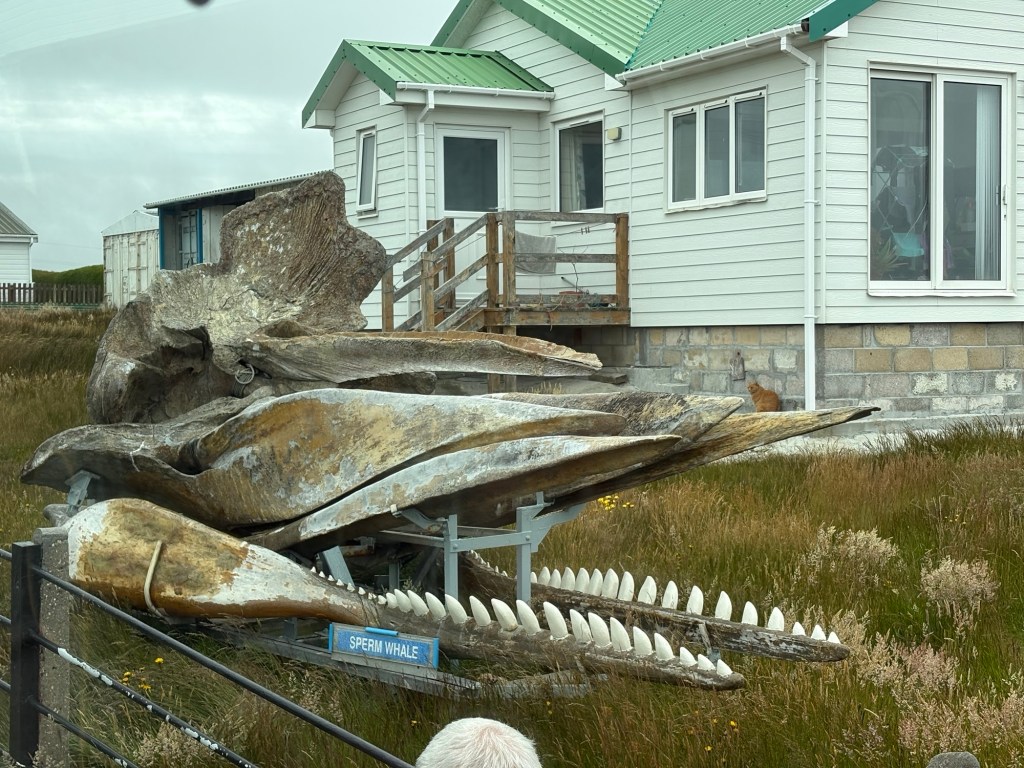
There is a whale bone monument
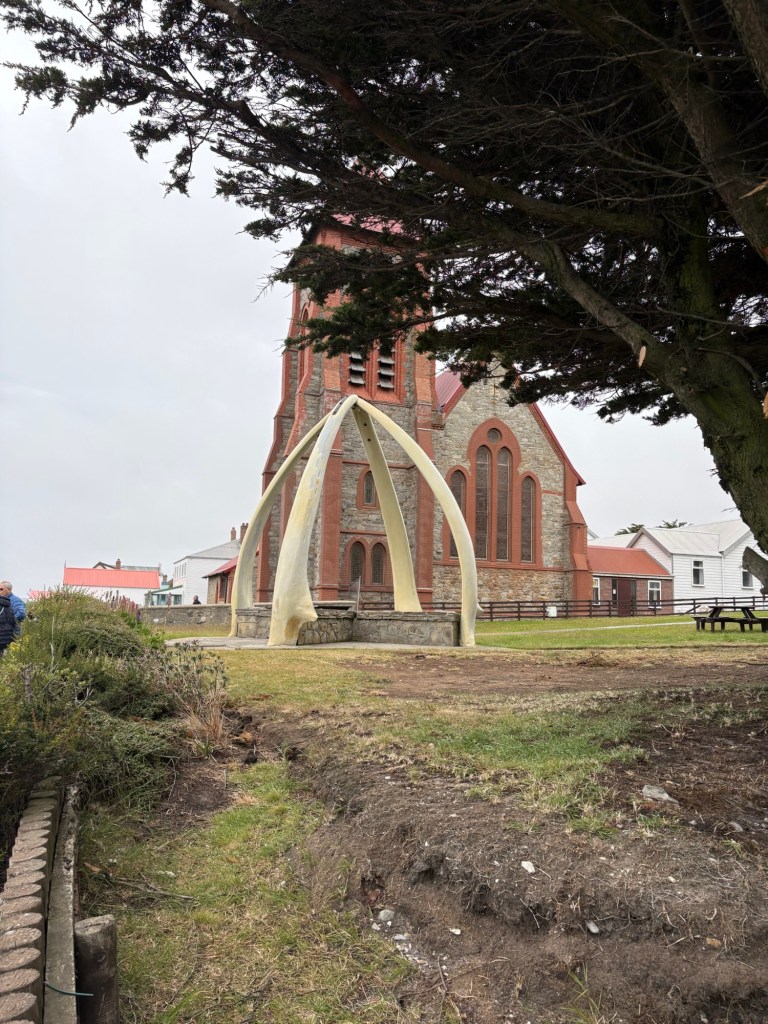
And walebone relics
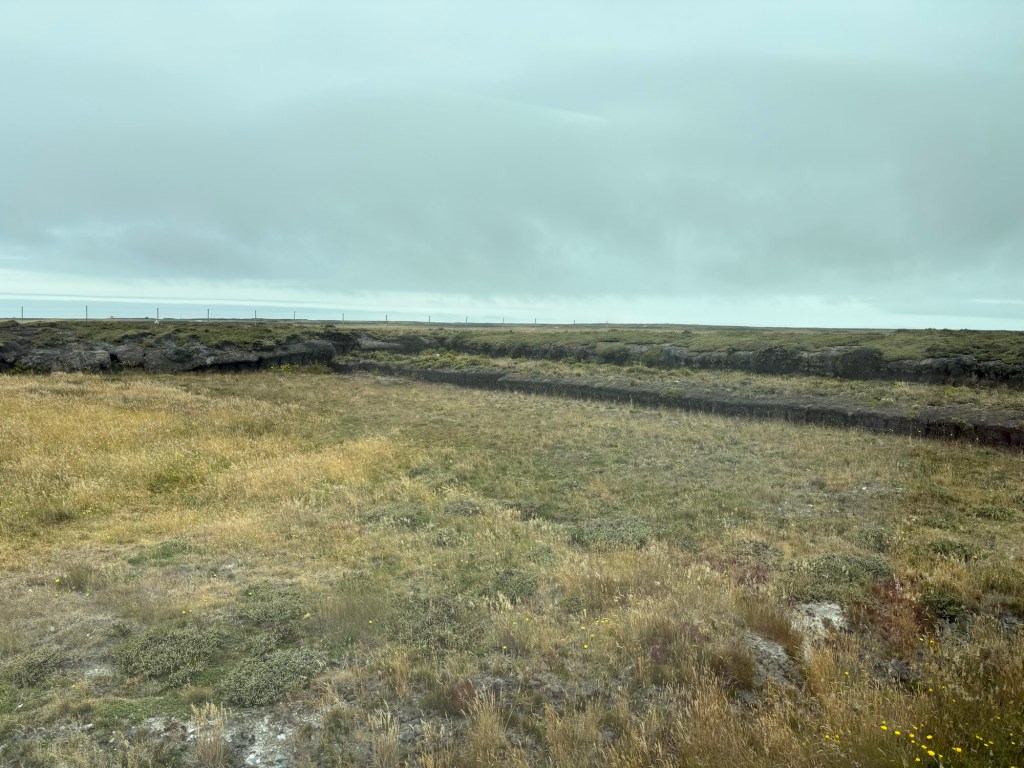
Peat used to be the main form of heating and every family was allowed 120 yards of peat from a peat bank every year. This had to be dug out and dried to make it useable and it had to last a whole year,
There is one hospital which not only works for the community but also provides care to the large number of fisherman who work around the Falklands. They have 5 doctors, a surgeon, an anaesthetist, dentists and specialists on a rota.
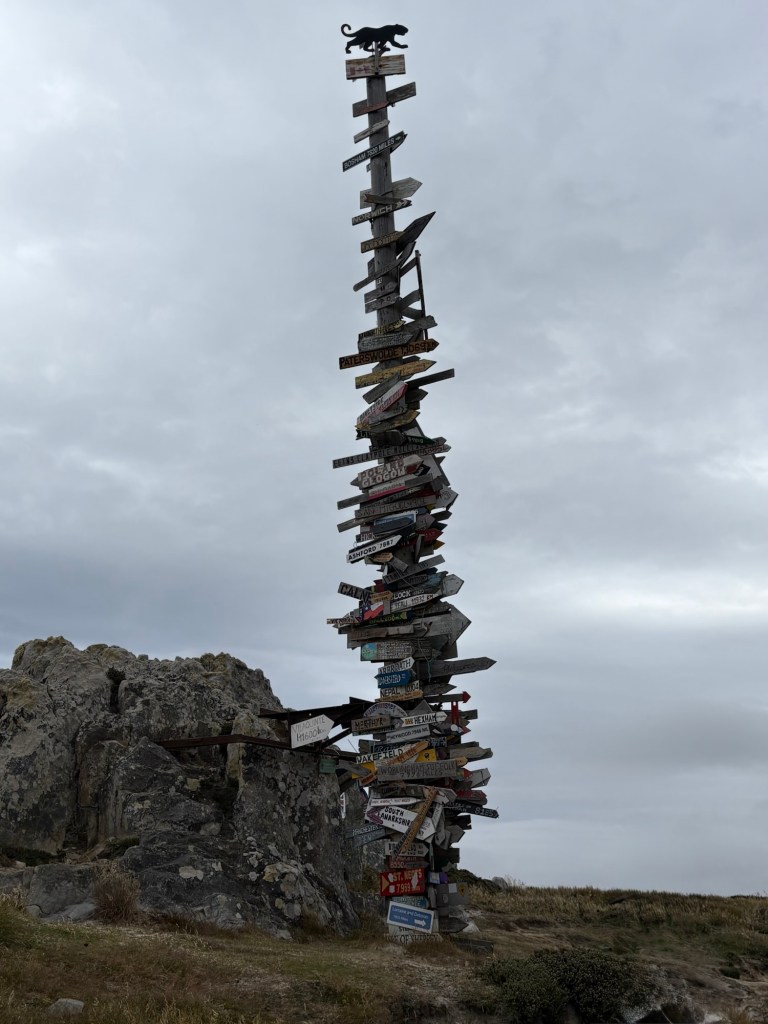
There is a totem pole where people have put how far away they have come from …
There are obviously a number of graveyards and monuments dedicated to those who lost their lives in not only the 1982 war but previous wars. The International Airport is accommodated at the RAF station but there is also a local airport which runs almost a taxi service to nearby destinations. To get to the UK you have to first fly to Punto Arenas in Chile and then fly on from there to Santiago and then to London but you have to get permission fly over Chile. It takes about 18 hours to get from Falklands to London, if luck, and a following wind are on your side.
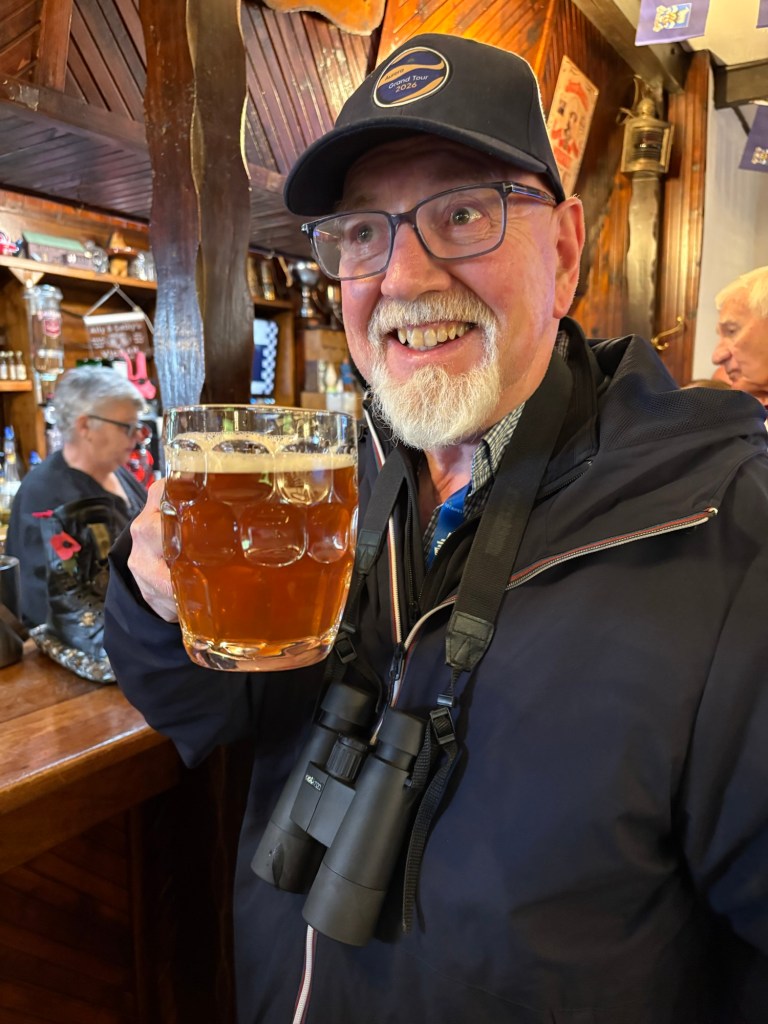
We had a quick turn around after our first tour but managed to fit in a beer and packet of crisps at the local pub, the Victory. It was buzzing…. you could have been in your local Weatherspoons!
From the pub it was a quick dash to the harbour to pick up our next venture which was a walking tour of the flora and fauna of the island and, wow, it was excellent. After a short bus ride we were taken by Wendy and her chum Carol over some fairly rocky terrain along the water side and saw some wonderful things. The weather was mixed and we walked nearly six miles but I think it is a memory that will last forever. It was magical.
We first passed the graveyard of an old ship called The Lady Elizabeth. We had passed this way on our earlier tour. Poor Lady Elizabeth had suffered a number of traumas over her existence and now lies rusting in shallow waters….
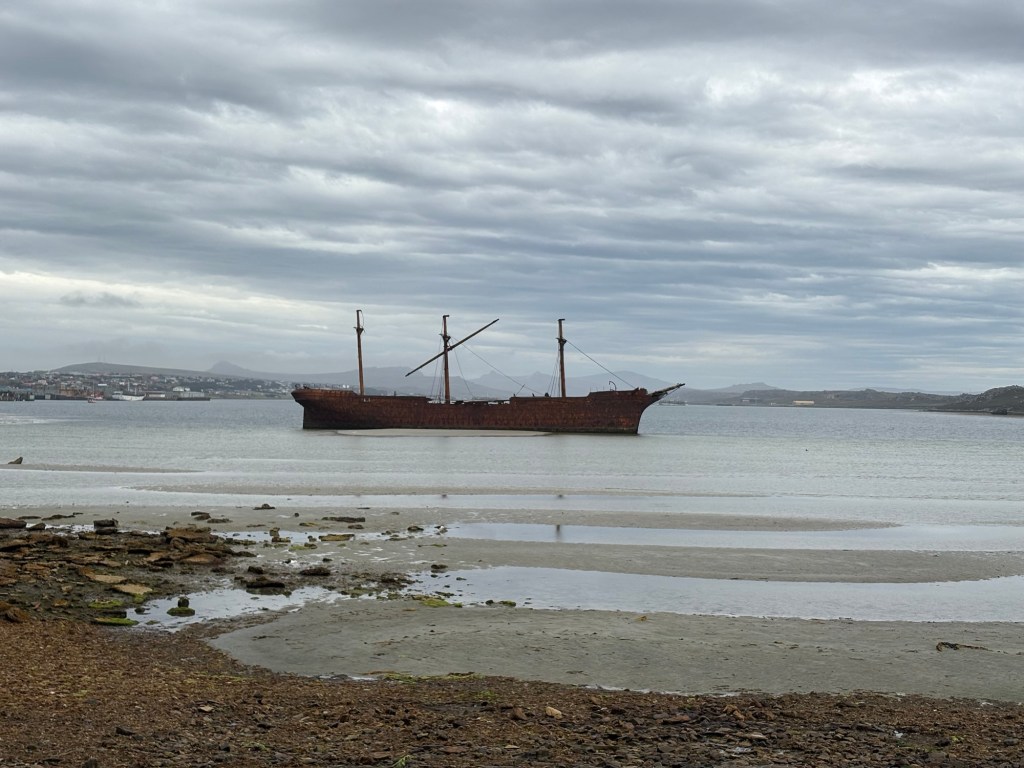
This morning she was a rusting hulk, but this afternoon she was the home of a blackish oyster catcher.
We saw birds that were expert at camouflage and this little chap just sat there until we had got our eye in
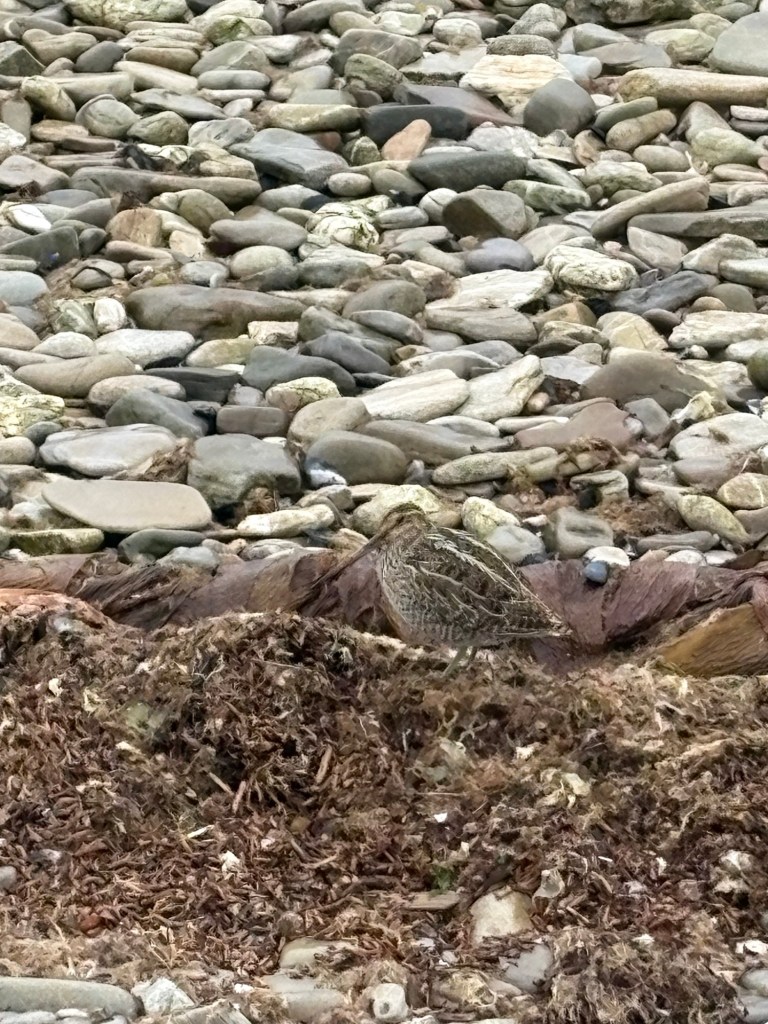
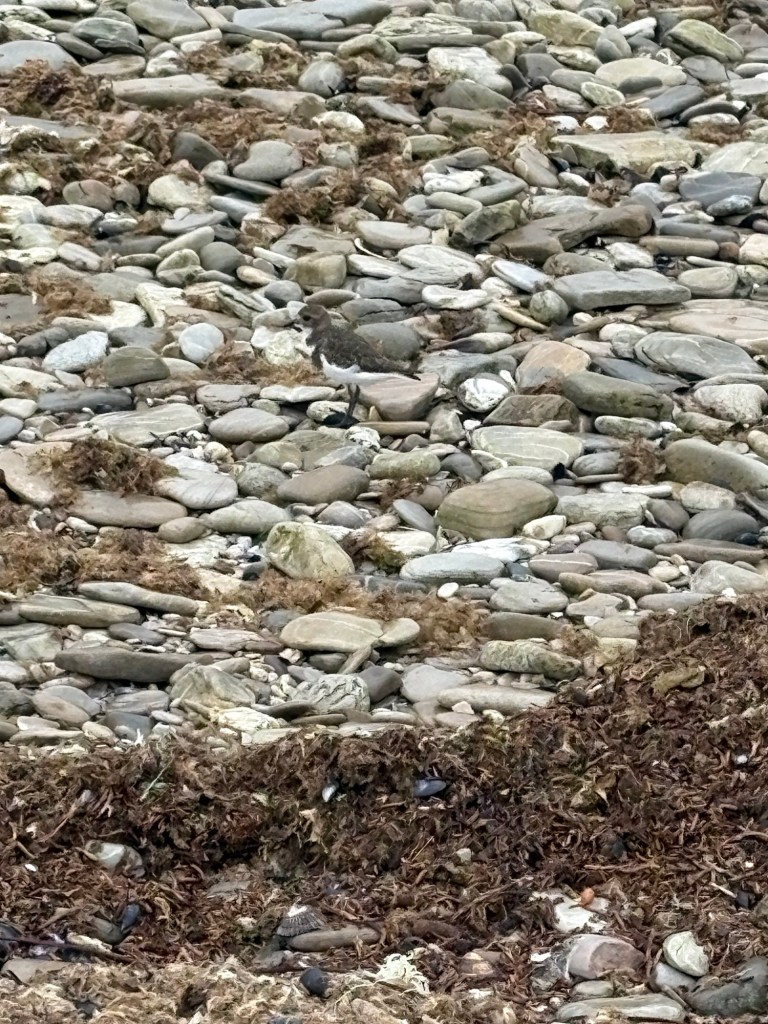
This one is even more difficult to see……
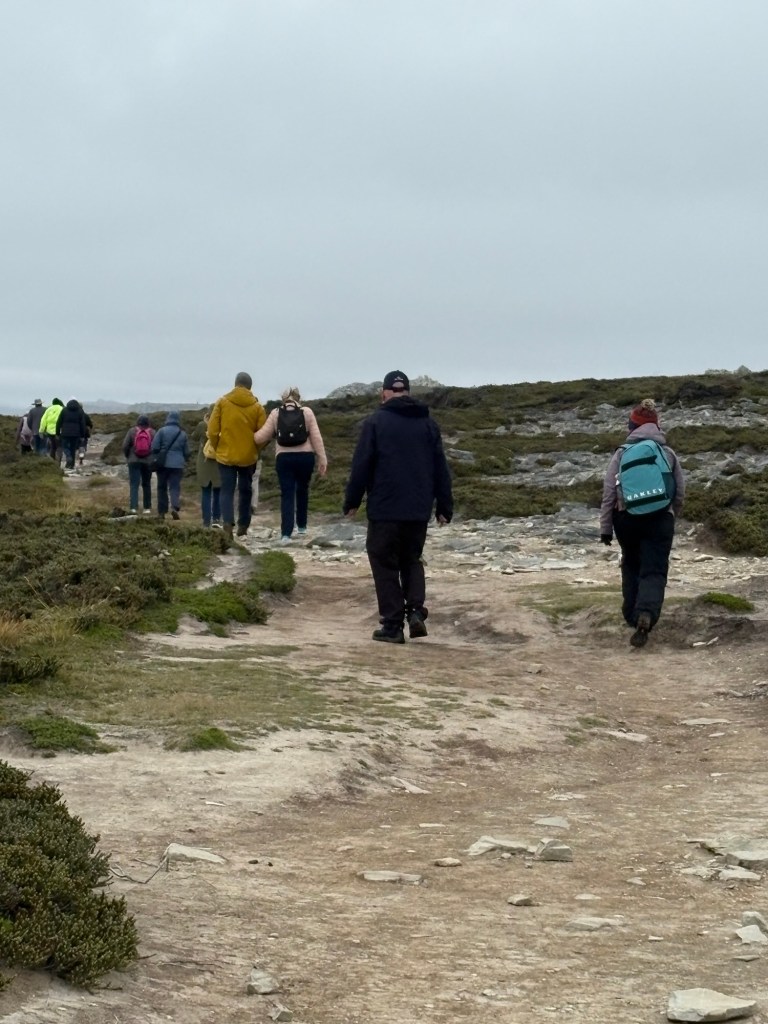
There were about 16 of us in the group meandering along as Wendy and Carol pointed out things and explained what we were seeing.
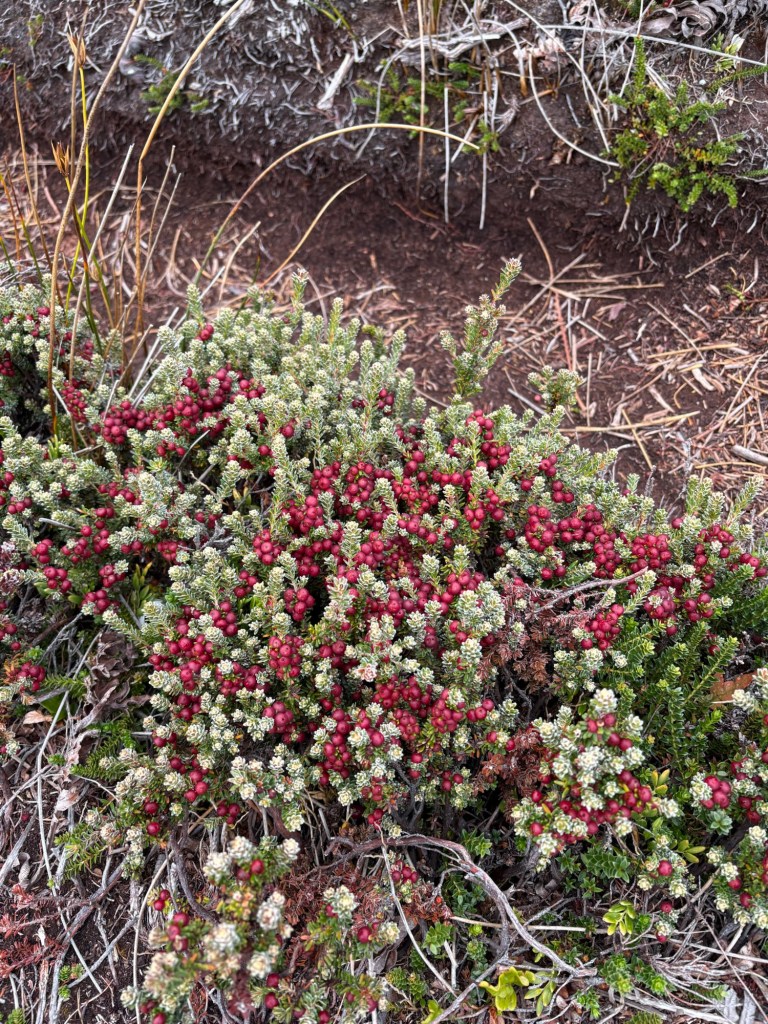
We saw Diddle Dee which is used for making a jam to have with meat
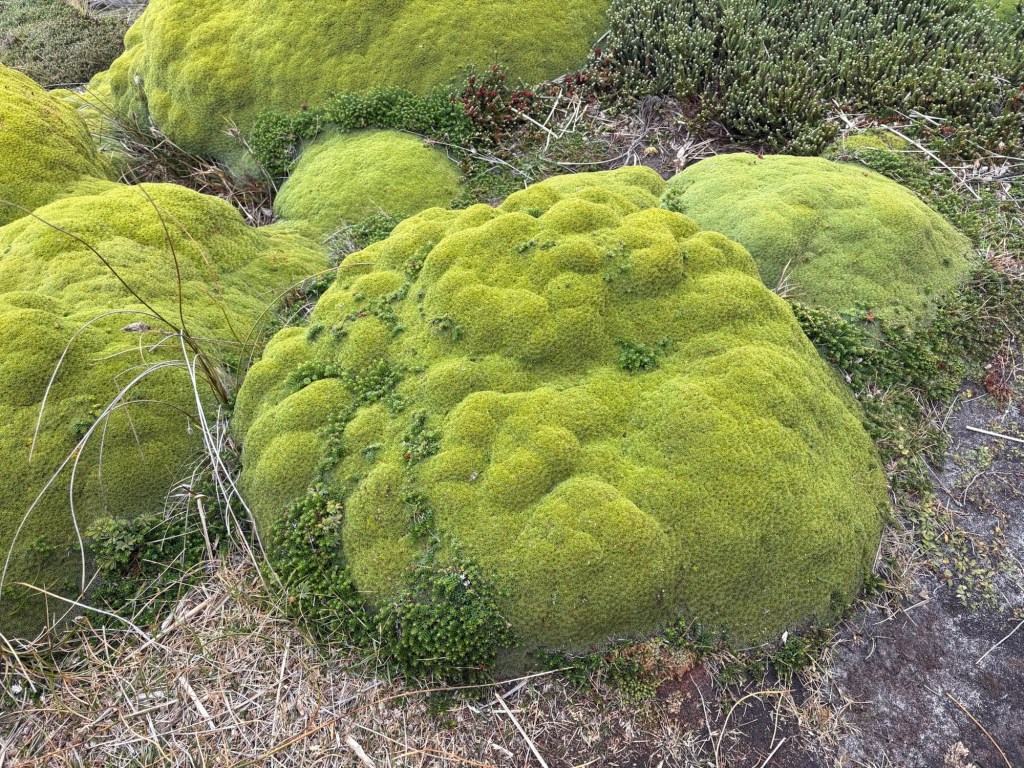
And an amazing vibrant green plant
Our walk ended with penguins. First at Gypsy Cove, a small cove with a crescent of white sand. Before we reached the Cove itself there was an area with lots of tussock grass. Here we found Megallanic Penguins in their burrows which don’t go down but along underneath the grasses.
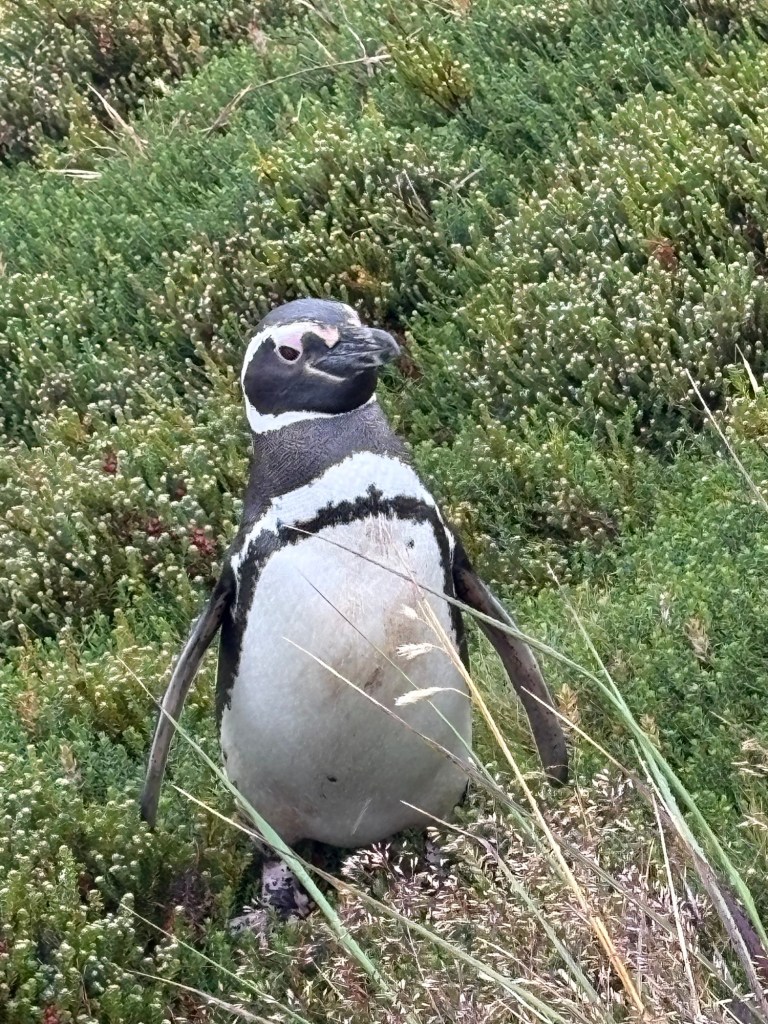
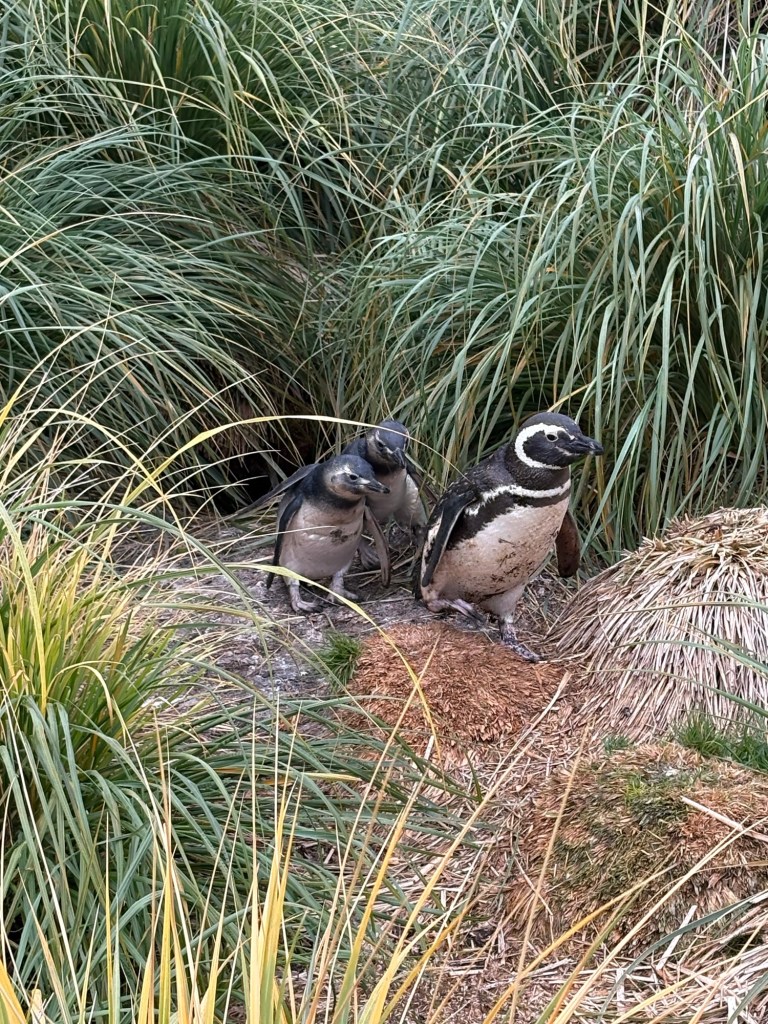
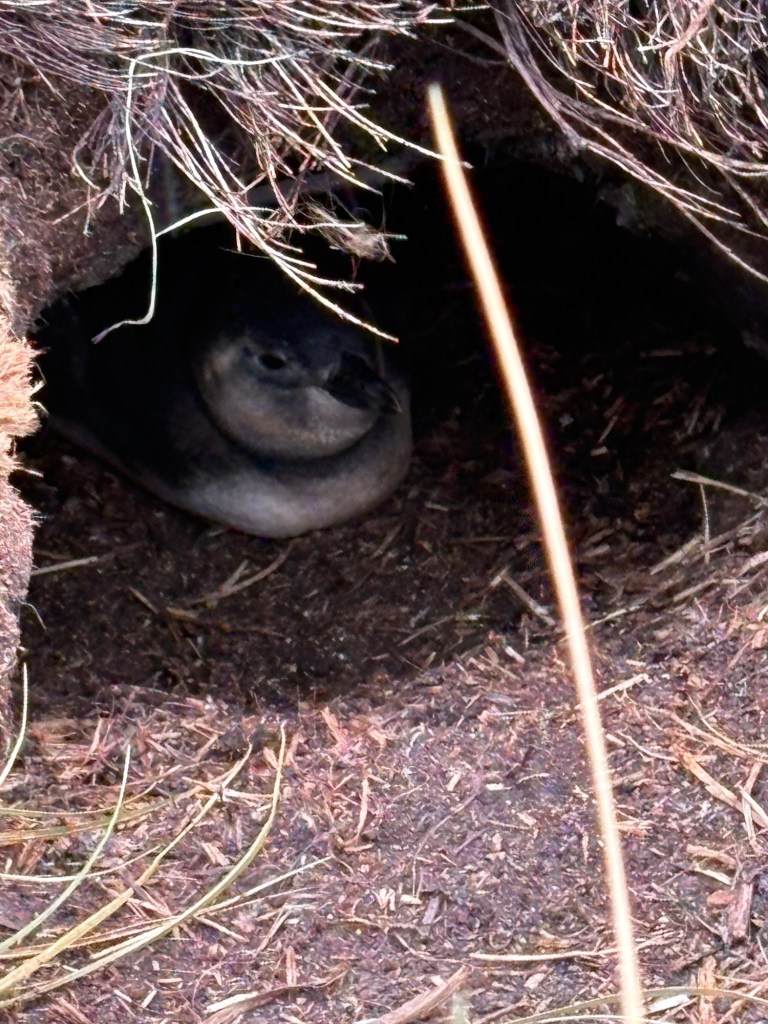
The Megallanic Penguins arrive in November and return to their established burrows and leave again in February when their young have lost their baby feathers and are ready to take to the sea.
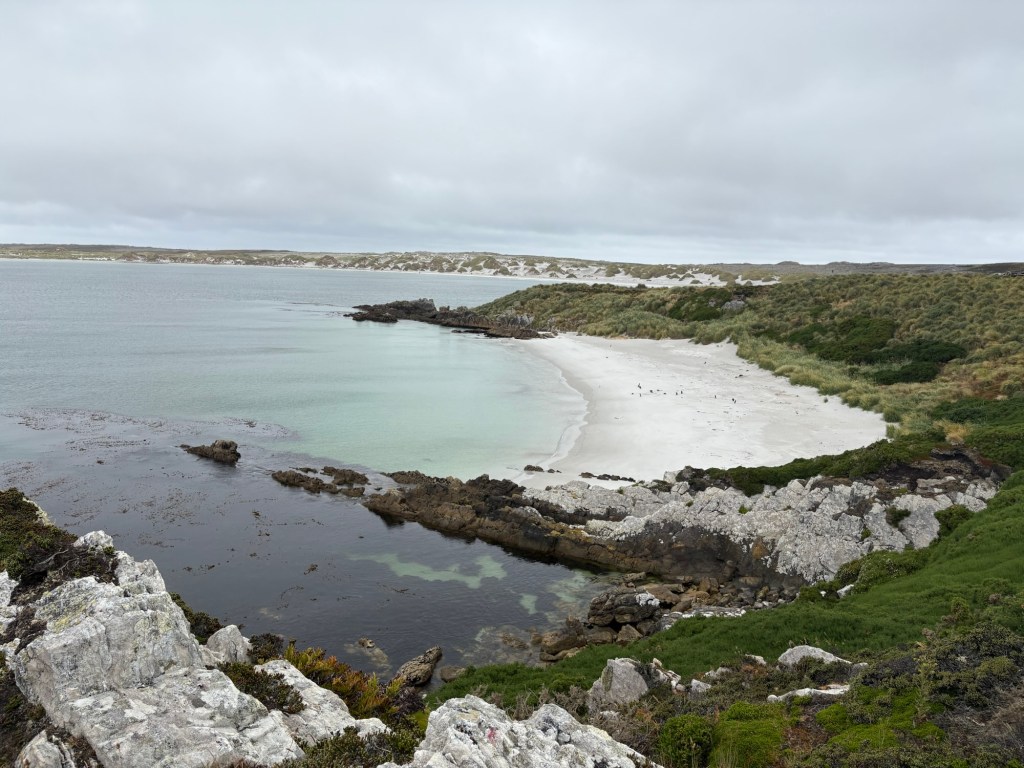
Gypsy Cove is not open to the public and is home to a few hundred breeding pairs of Megallanic Penguins.
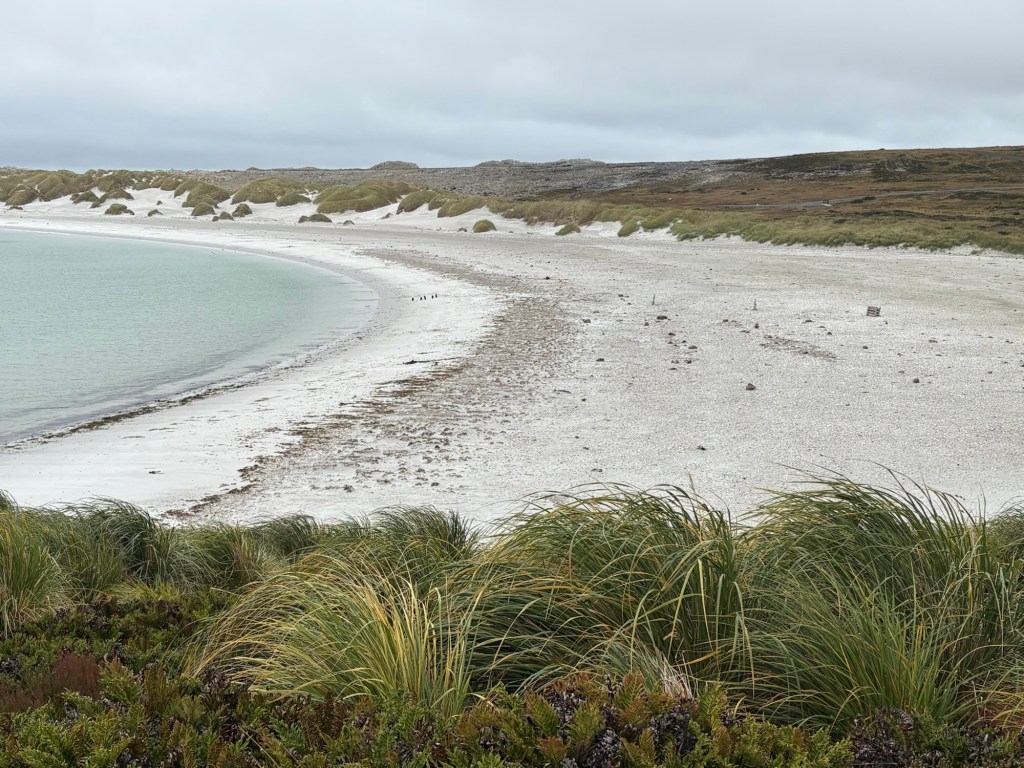
The final sighting was of Yorke Cove a much longer beach which is now open to the public having been cleared of land mines in 2020.
And so ended a wonderful day. The forecast rain didn’t materialise until the very end of a most amazing day….
For those interested in the ornithology (hi James and Julie!) here’s a list of all the confirmed bird sightings from the Falklands. I will never ever forget the sight of a Giant Petrel swooping down towards us. It must have been only 5 metres away from us at its closest. Truly magical! Ed
Blackish oystercatcher
Kelp Gull
Rock Cormorant
Upland geese
Flying Steamer ducks
Flightless Steamer duck
Two banded plovers
White rumped Sandpiper (almost a murmuration)
Imperial Shag
Antarctic Tern (the most beautiful, delicate, little tern)
Long tailed Meadowlark
South American Snipe
Night heron
Falklands thrush
Giant Petrel (swoon)
Siskin
Turkey vulture
Grassland yellow finch
Brown hooded gull
Kelp Goose
Magellanic Penguin
Some of the names are fabulous, aren’t they? Ed
 pollytheperil