
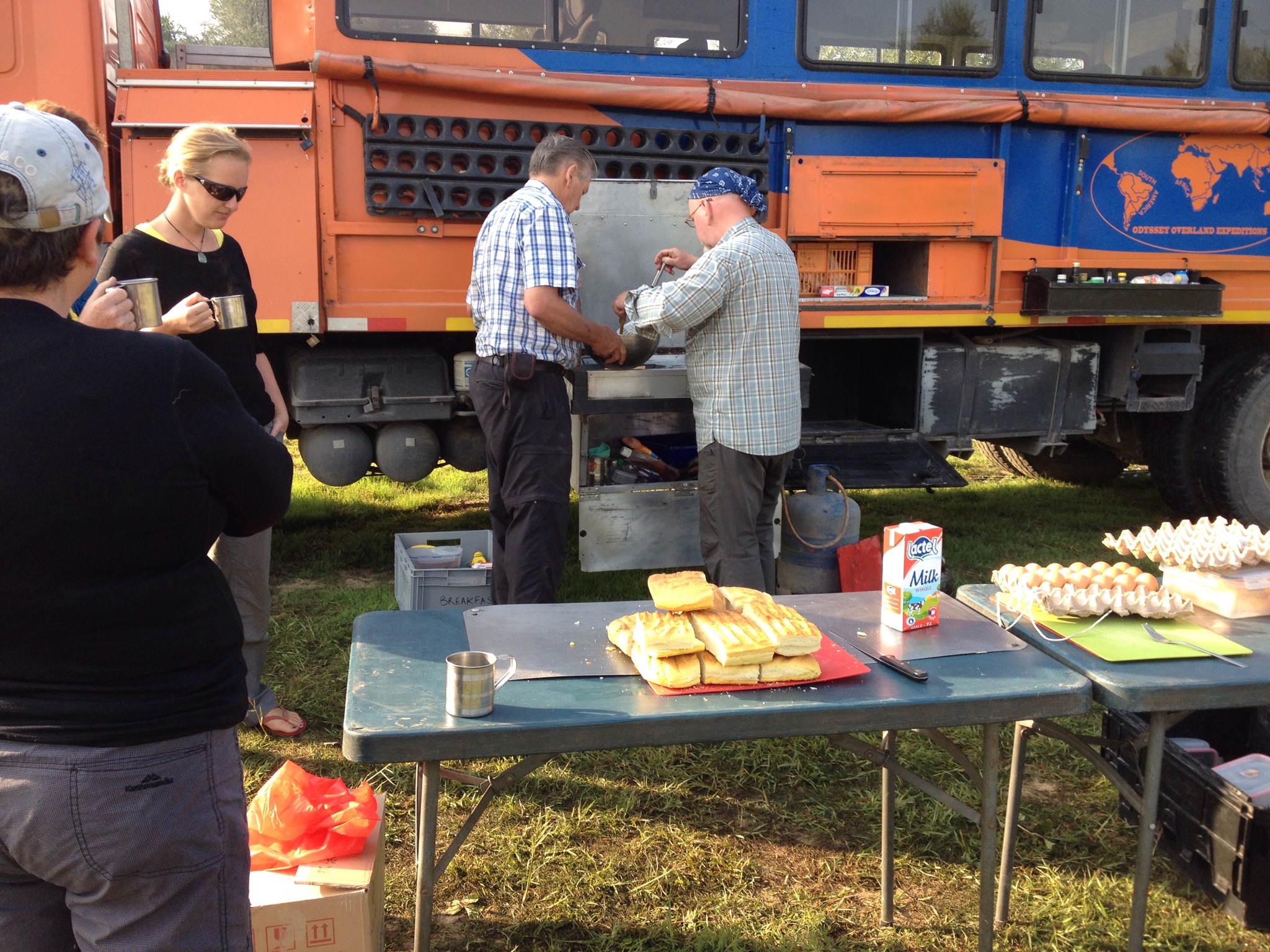
Up at 6.00 we scrambled to get our bags tamed and get The Ritz stowed away into its bag, thanking our lucky stars that we weren’t on breakfast duty. Eventually (and in our case miraculously) everything was stowed away and we set off.
Our route initially took us around the enormous lake that is the reservoir and eventually over a bridge spanning a narrow gorge with the flooded area shining blue underneath us. The reservoir seemed to go on and on! Leaving it behind, we reached Lanzhou and Yellow River again where we had turned off the main route several days earlier, this time turning left to continue west.
Lanzhou, capital of the Gansu region is very much an industrial city. We saw huge petro chemical plants on both sides of the road and again vast civil engineering projects as they rearrange the landscape to accommodate new roads and railway tracks.
Despite this, Gansu is reckoned to be one of the poorest provinces in China. The road took us along a sort of corridor, with mountains in the distance on either side. These were initially green but as the day wore on became sandy coloured rock. On the valley floor we first saw evidence of different crops – cabbages were a new departure – but still the strip farming we have seen previously. Further along the road there were basic greenhouses with ribs covered by plastic sheeting rather than glass and then a vast solar panel farm (this ran for several kilometres either side of the road). The land was by now belong far more scrubby and desert like, but where it was cultivated the fields were bigger and we saw several small combine harvesters taking over some of the backbreaking scything that had been in evidence. . Next came a wind farm making the most of the breeze that swirls the dust.
Our next excitement was a sighting of the Great Wall again. At first it could just be seen at the base of the mountain range we had been following and then as the plain broadened it followed the lie of the land appearing and disappearing. It no longer looks the high imposing route that it was in Beijing but we are now over 2,000 kilometres from where we walked on it. I think enthusiasm had waned by the time they got to here. I know in the Qing dynasty this was an area officials and their families were sent to when they fell from favour. It must have.been something of a daunting prospect.
The highway eventually breached the wall and we were told we were technically in Inner Monglia. However this did not prove to be he case as we were still in Gansu but it added a frisson of excitement into what has been a long drive.
The guidebook describes Zhangye as a ‘pleasant but slightly bland town’. This seemed a little harsh but it remains to be seen. For us it is really just a stopover en route to our next camp.
Supper was not a great success, but we have hopes of the reclining Buddha
tomorrow……
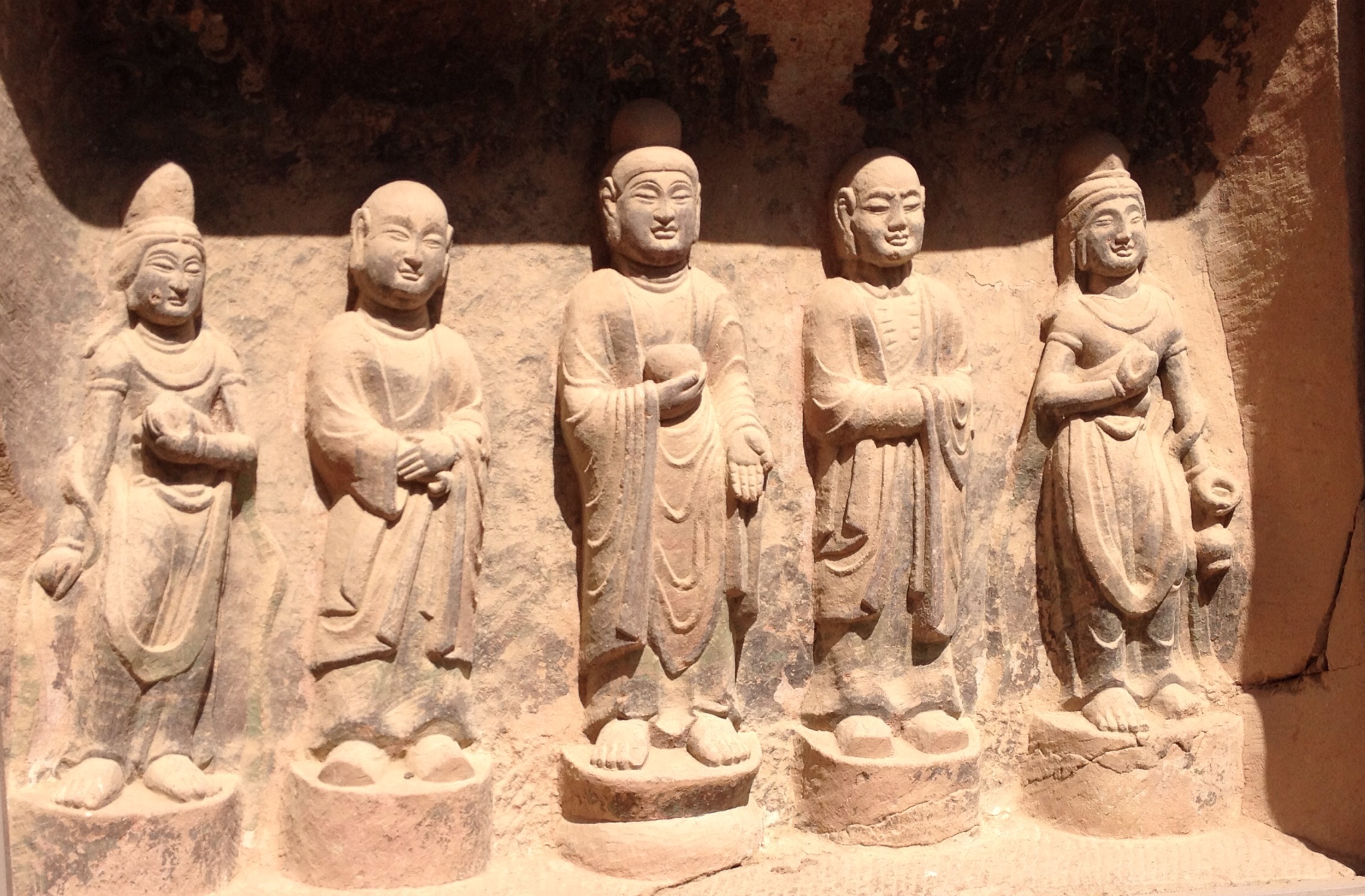

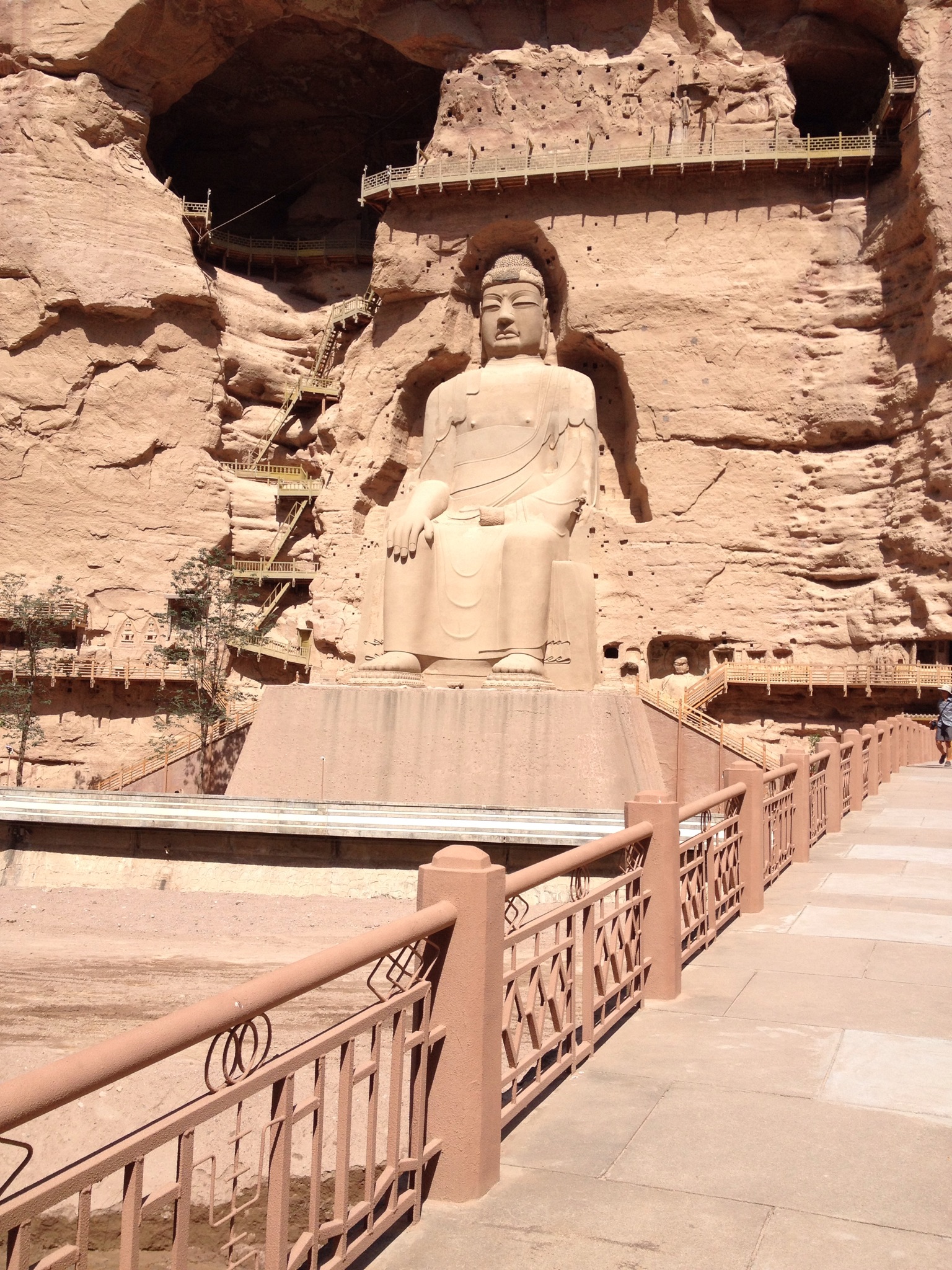
After our first camp breakfast of eggy bread (breakfast cereal is apparently like gold dust in China) we wandered down to the waterside to board the boat that was going to take us to the Temple. It is always a source of amazement to me as to how these local arrangements are made and commitments kept in what seems the middle of nowhere.
Anyway we boarded a little speedboat and took off over the reservoir. When I say reservoir, think small inland sea. The brownish water stretches as far as the eye can see to both left and right. Sadly the rubbish that was scattered over our camping area when we arrived (which we cleared) is duplicated on the reservoir and we passed plastic bottles and styrofoam packaging as we crossed towards the rocky ridge on the opposite shore and then veered left down a channel with high craggy rocks either side. Eventually a landing area came into view and the boat scraped on the shallow rocky waters edge. We had arrived.
There were a number of stalls set out and we ran the gauntlet of the vendors who jostled with us but then moved off good heartedly and left us to walk the willow edged path to the Temple.
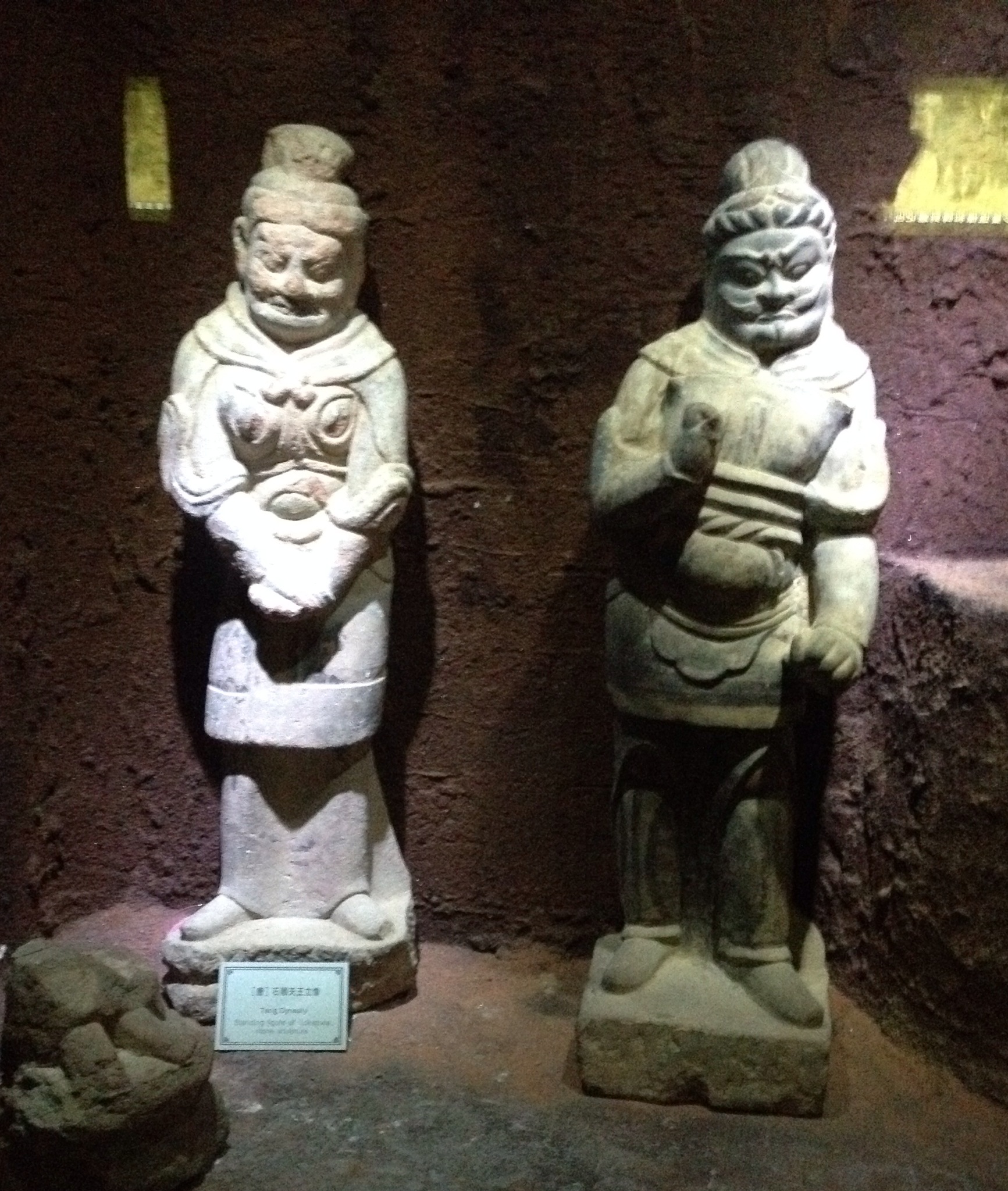
The Bing ling Cave Temple is about 35 kilometres southwest of the town of Yongjing. The first caves were cut into the rock in 420 AD and further cutting and carving took place for another 1,000 years. There are apparently 216 cave niches on three levels and more than 800 images and mural paintings. Some of the carved figures have been placed in a very well presented museum that forms part of the site. It was interesting to see how the sculptured seem to mix Buddhist and Indian characteristics. The explanatory material we found put this down to the area being a key location on the Silk Road. This seemed difficult to comprehend as the Temple was built into the mountains on one side and had reservoir water lapping at its front. However, it appears that prior to the area being flooded to make the reservoir 30 years ago, the site had been on a major highway.
It is always pleasing to find we are on track and reference being made to the Silk Road, even though the spur up to Xianhe and our camp site represented a detour off the main east/ west route towards the border.
Having enjoyed our morning amongst the carvings, we headed back to our camp. After lunch we settled down to an afternoon of free time. It seemed that within minutes another two brides turned up with the photographic team of the previous day. I am aware of the practice of Chinese couples having the wedding photographs taken on a separate occasion to the wedding ceremony, but seeing two new brides wearing the same outfits being put through the same paces as those previously took some of the edge from the ‘special’ occasion. What was amusing was that obviously our Odyssey camp had been set up on their favourite wedding photograph site but that did not let it deter them. Their vehicle drew up in a cloud of dust between Penelope and the tents and the brides sat unabashed in the middle of us happy campers, being made up and coiffed and at one stage changing their clothes. Couples often choose several different outfits for the photographs – one couple on this occasion had obviously chosen a bohemian theme for their second ‘ensemble’…….
Although we continued to have ‘visitors’ to view us throughout the afternoon, the most outrageous situation arose when a whole family set up camp a little behind us. It had been decided to make a slow cooked stew for the evening meal, so the cooking detail spent time chopping and chipping and Richard started to get a fire going with the idea of letting it get hot and then placing the cooking pot over it on a trivet when the initial flames had died down. To our amazement before the pot was strategically placed, along came about six children with corn cobs on sticks and gaily raked over the fire to accommodate their sweet corn. What fun! Some of our party got a bit waspish with this development but I thought it was hilarious! Eventually the raiding party skipped back to their picnic area chewing on what looked like rather charred corn – but they seemed happy enough. The fire was put back together again and our stew took pride of place over the fire where it was to remain until early evening. It proved to be a very good stew, although no-one seemed able to determine whether it was beef or yak..
An early night was on everyone’s agenda when it was announced that breakfast was to be at 7.00 am and that the truck would leave at 8.00. I think we all had it at the back our minds that before then bags had to be re packed and tents dismantled and the truck reloaded ready for the day ahead in an hour with us still on the nursery slopes of overland travel.
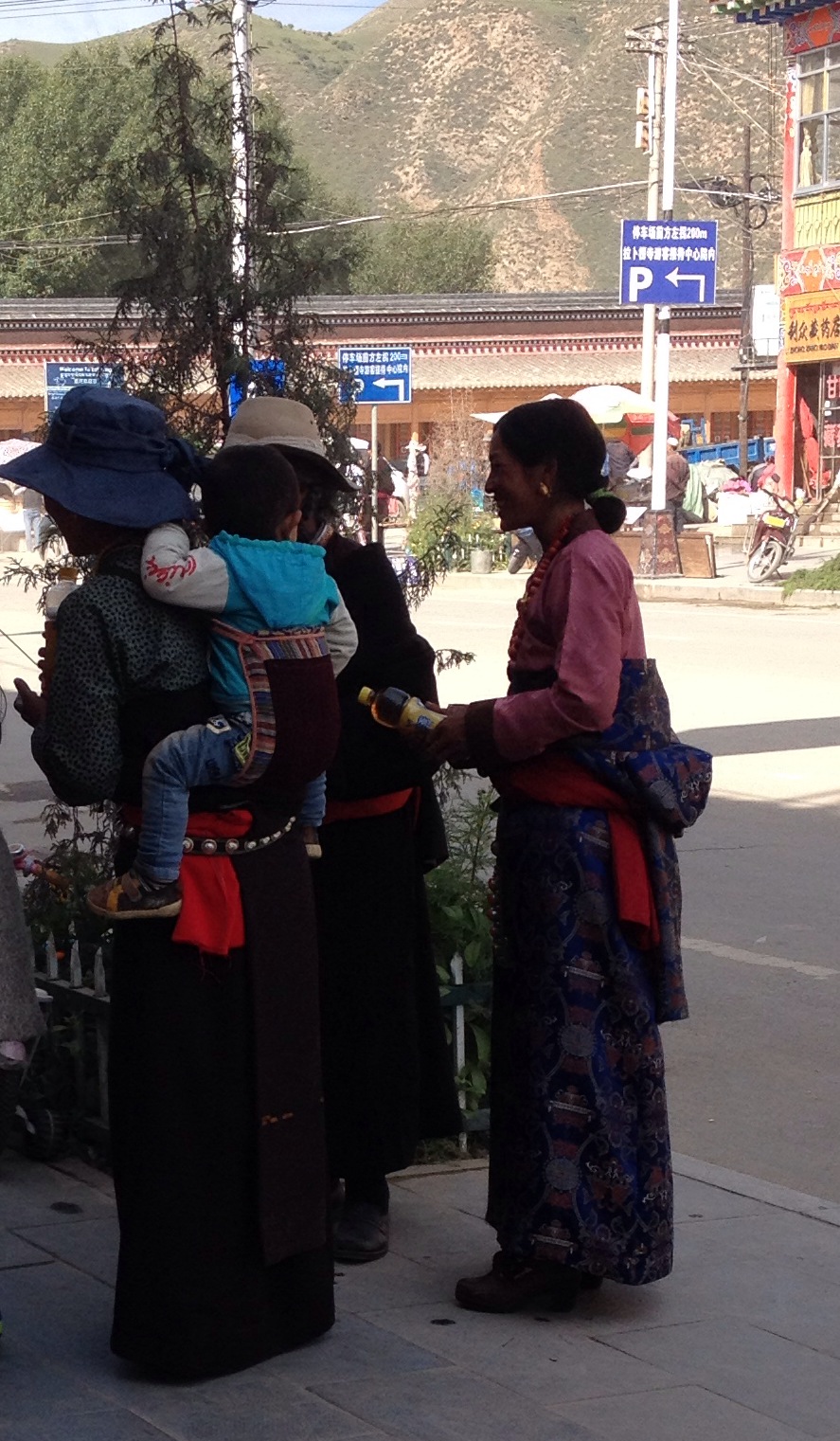
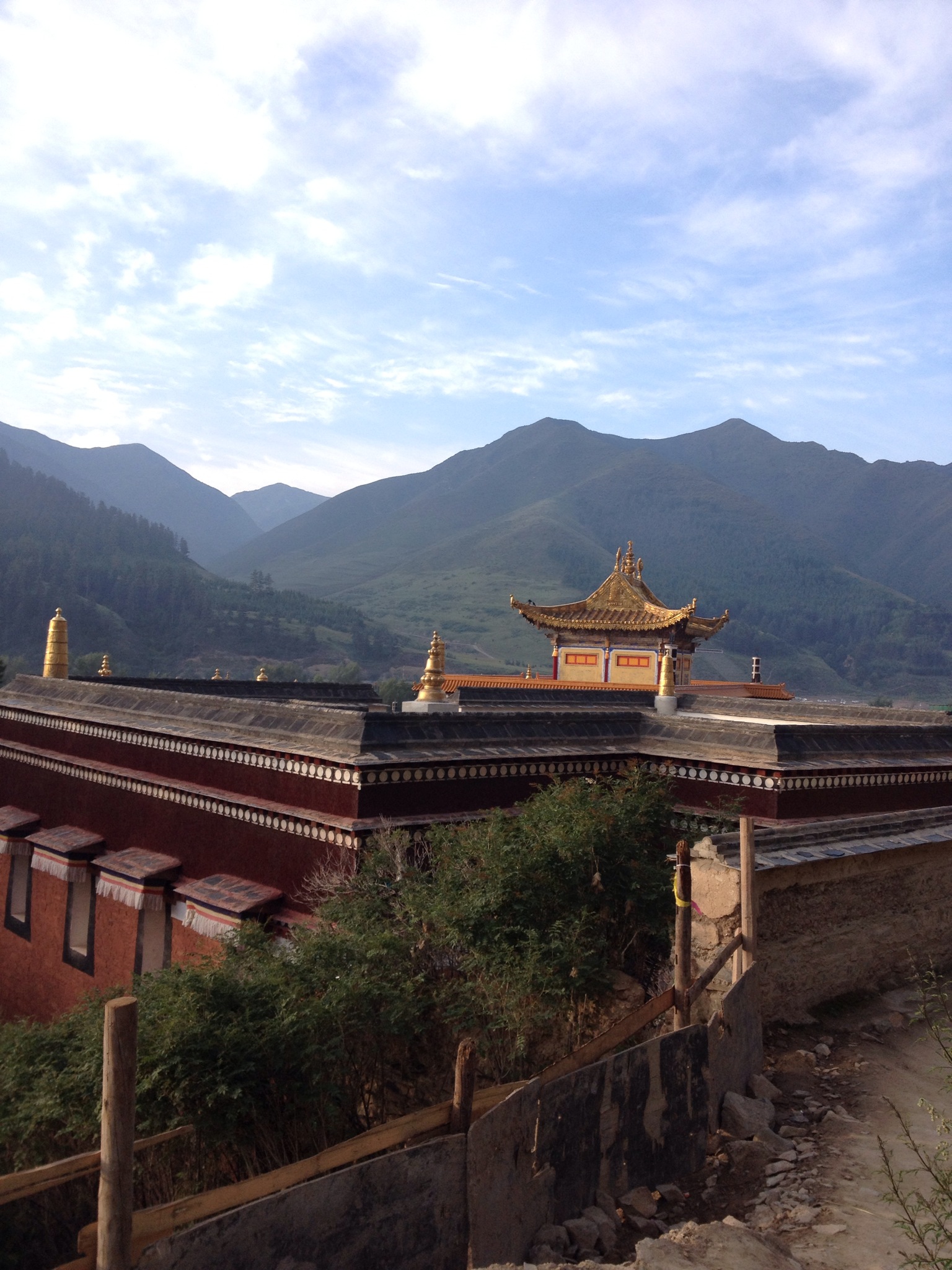
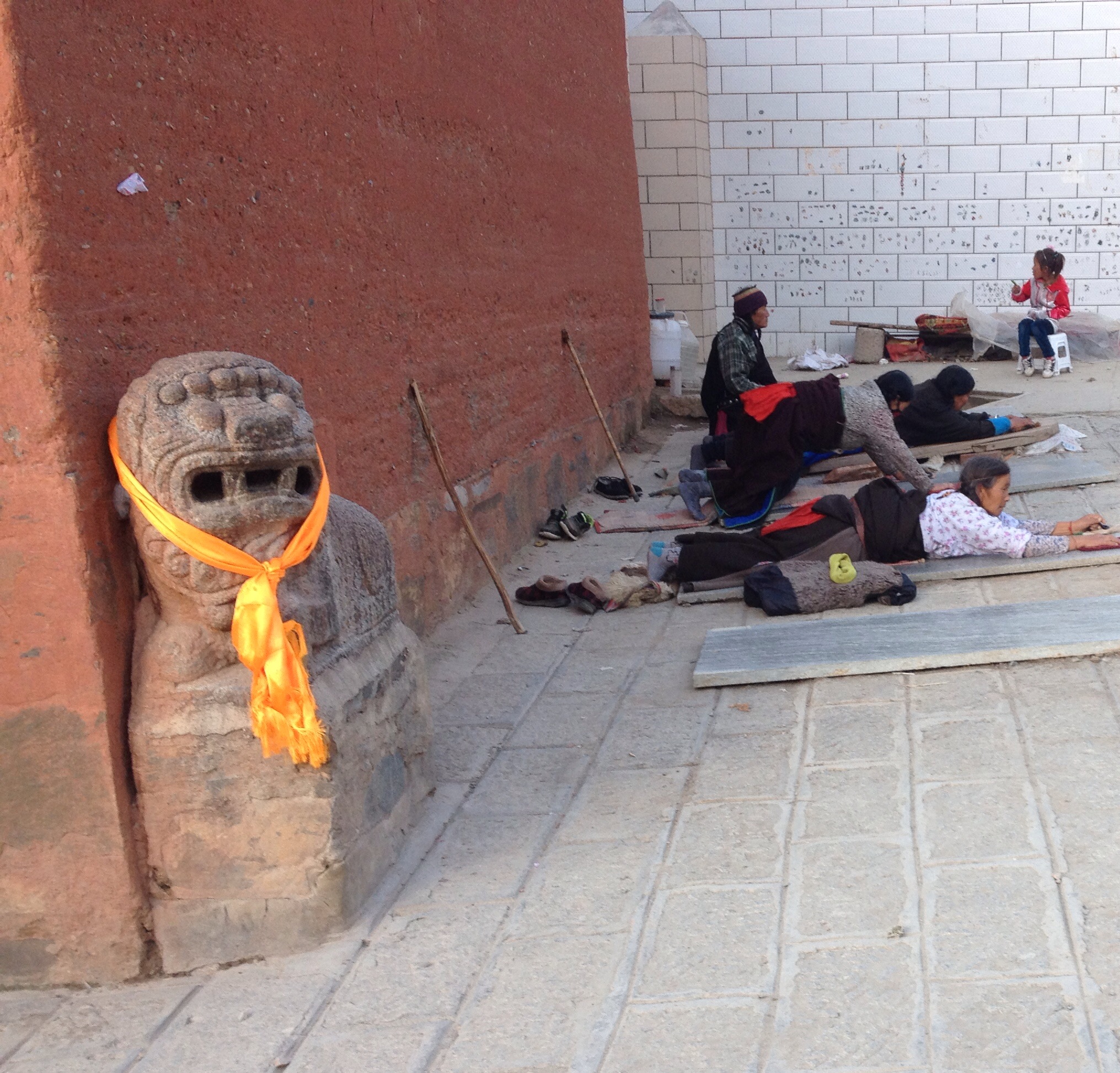

We woke to sunshine. A propitious start to our first days camping!
We decided to do our last walk of the Kora. We have now started to recognise some of our fellow early morning walkers. Perhaps because of this we found ourselves feeling outraged by a large group of Japanese tourists stretching out behind a flag waving guide. It felt as if our peaceful ritual was being violated. Probably how the locals feel about us intruding….
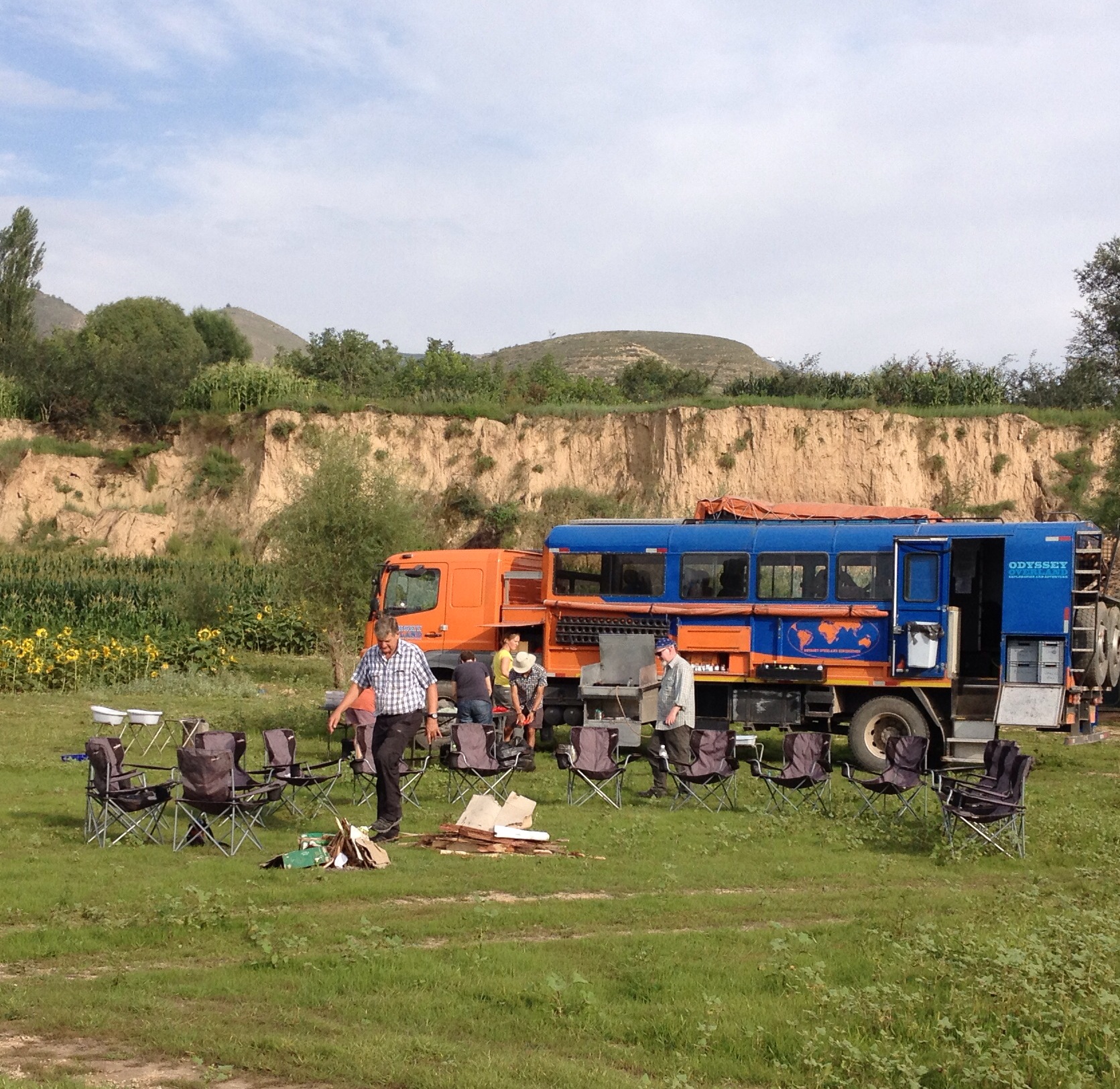
Back at the hotel we finalised our packing – why do the same things never seem to go into the bag the same way? – ready for a late morning departure. Our route took us back out of the valley and past Linxia where we had stopped for lunch on our way to Xienhe. A little way past Linxia we pulled off the road to have our first group lunch catered for by the first cooking detail and to be introduced to the catering facilities available on the truck. Much to the amazement of the passers by, a table was produced from one locker, chopping boards and bowls from another, washing up bowls and cutler appeared. A very acceptable lunch was produced as we learnt the various systems and processes that effectively provided efficient, wholesome and germ free food.
It was then back on the road and some Mah Jong training while we covered the remaining kilometres to our first camp site by the side of a large reservoir with mountains behind it. After a lesson on tent erection, somewhat interrupted by a group of motor cyclists who drove up to see what was going on, we collected our tent from its cubby hole. The tents are all named and you retain the same tent for the whole trip. Wait for it – our tent is called The Ritz. I thought it set just the right tone!
Anything less like the Ritz I have not seen! Although it was not exactly up with a flick of the wrist, in a reasonable amount of time we had a respectable looking shelter and were just about to start putting our things inside when a people carrier drove up. With not so much as a by-your-leave it parked between Penelope and the tents! We have noticed the Chinese have no space sensitivity, but this was something else!
We were even more amazed when out stepped a full photographic crew and then, unbelievably, two brides with their respective bridegrooms in full regalia!!! With typical Western sang froid, after the initial pause to see who was going to emerge from the vehicle, we all continued setting up our tents. Around us lighting crews went about their work, make up artists patted away shine from the brides’ noses and a very energetic photographer threw himself down on the grass and took photographs in the most dramatic poses (his not the brides). During the time they were there, each bride had at least two changes of gown. It was hysterical. What added to the whole scene was that while it was an attractive spot, there was a considerable amount of rubbish about which they made no effort to remove!!
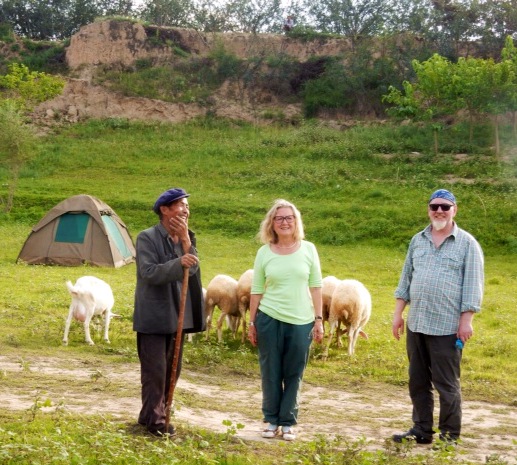
Eventually they moved off and as the afternoon wore on we were visited by any number of people – families who drove up, tipped their children out and then arranged themselves around us and took photographs, a group of very stylish young Chinese chaps, an elderly shepherd and his flock of sheep and three chickens(?). It was really funny. It was like being in a zoo!
Dinner was great! A vegetarian Thai curry. We had collected some wood on the way so we had a camp fire and someone produced some music. And so ended another day on the road…..,,
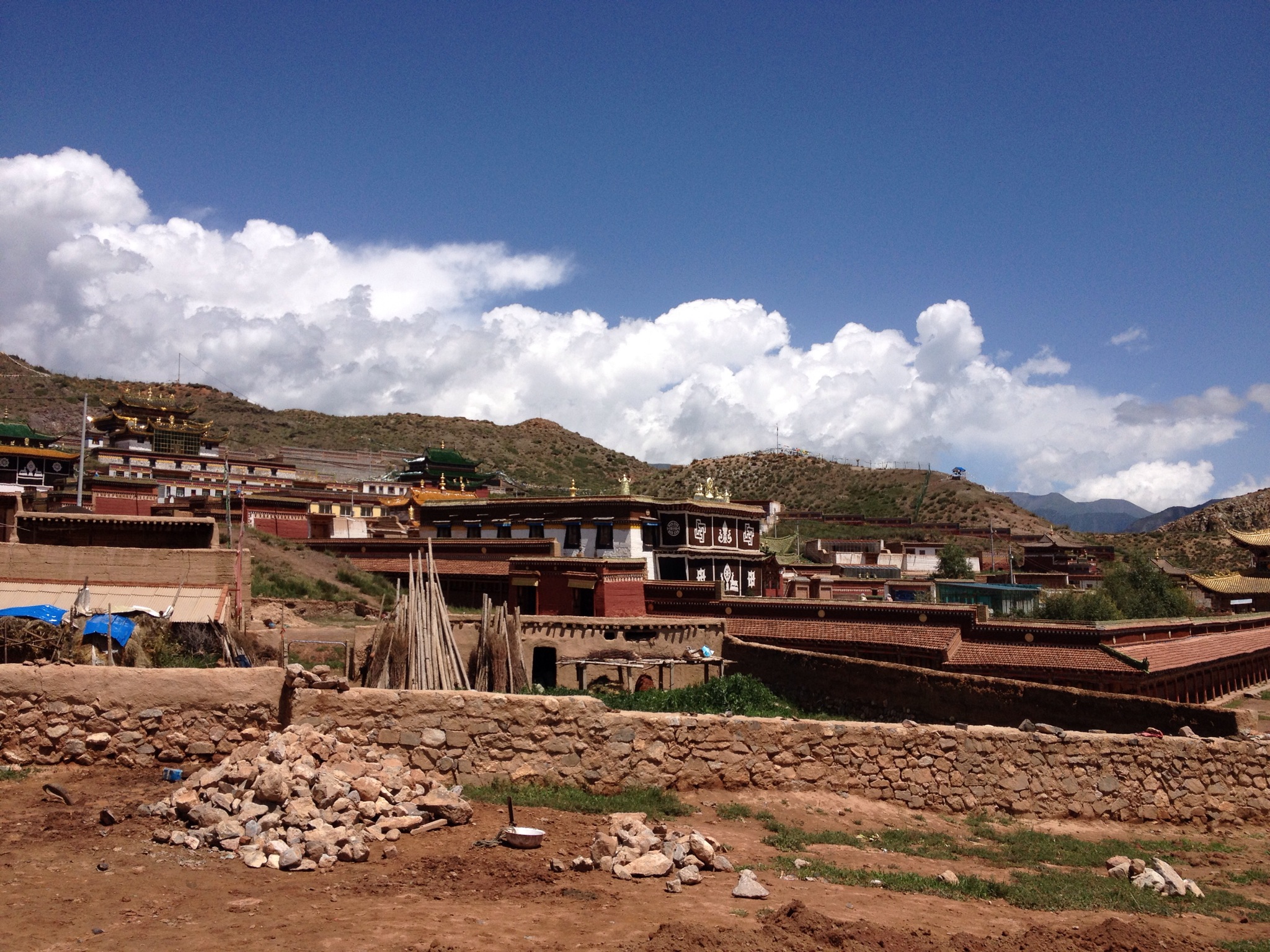

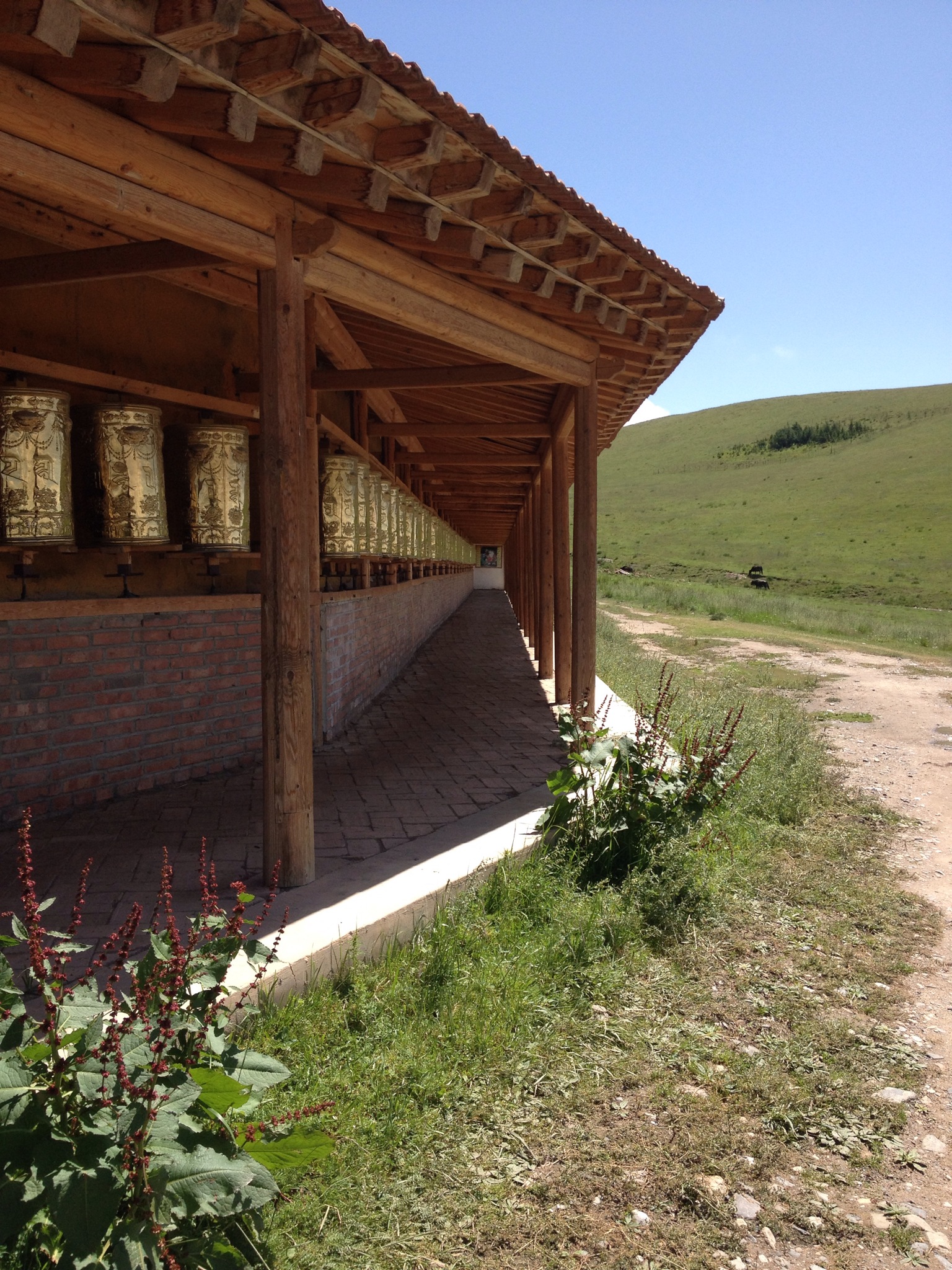
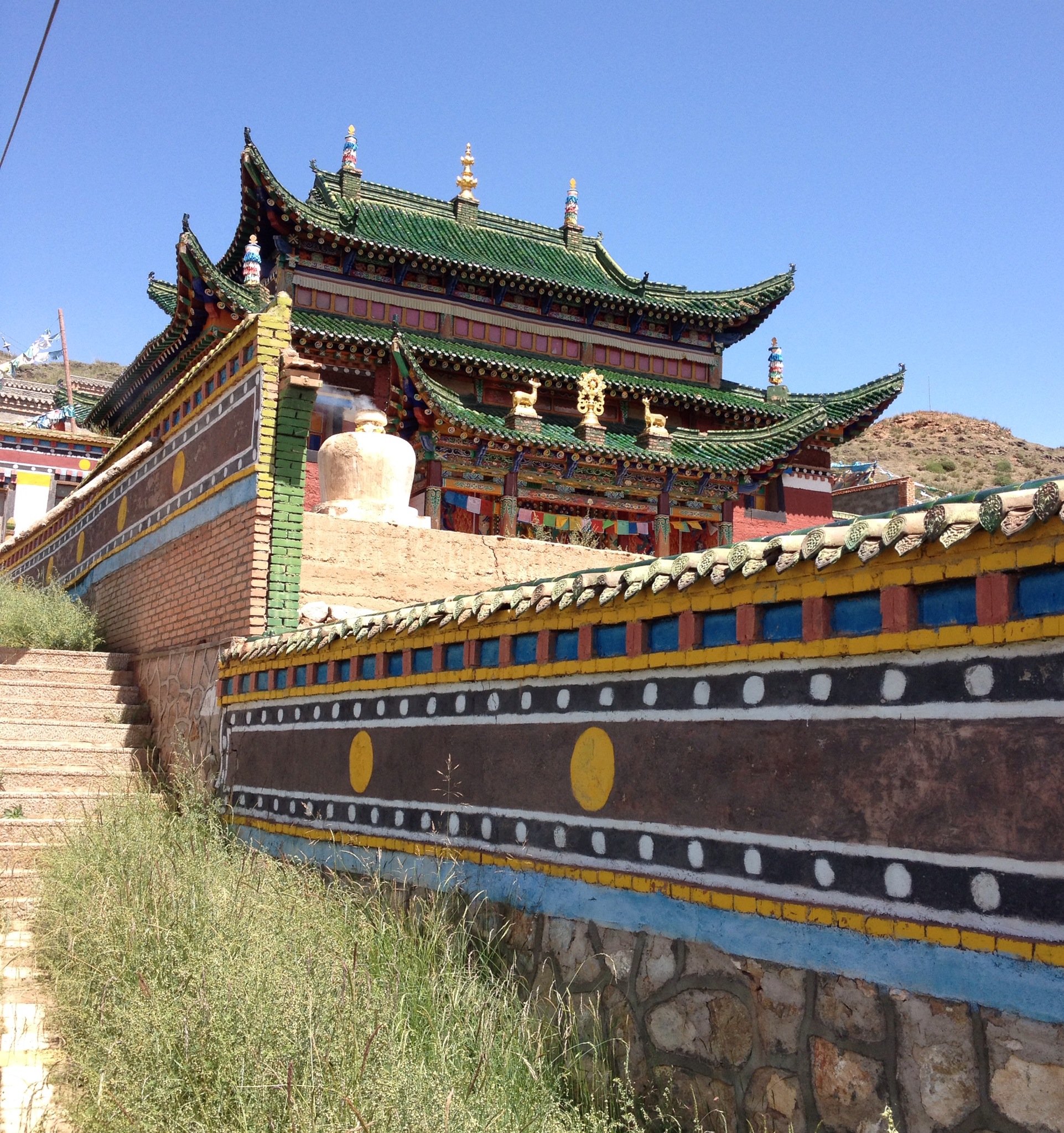
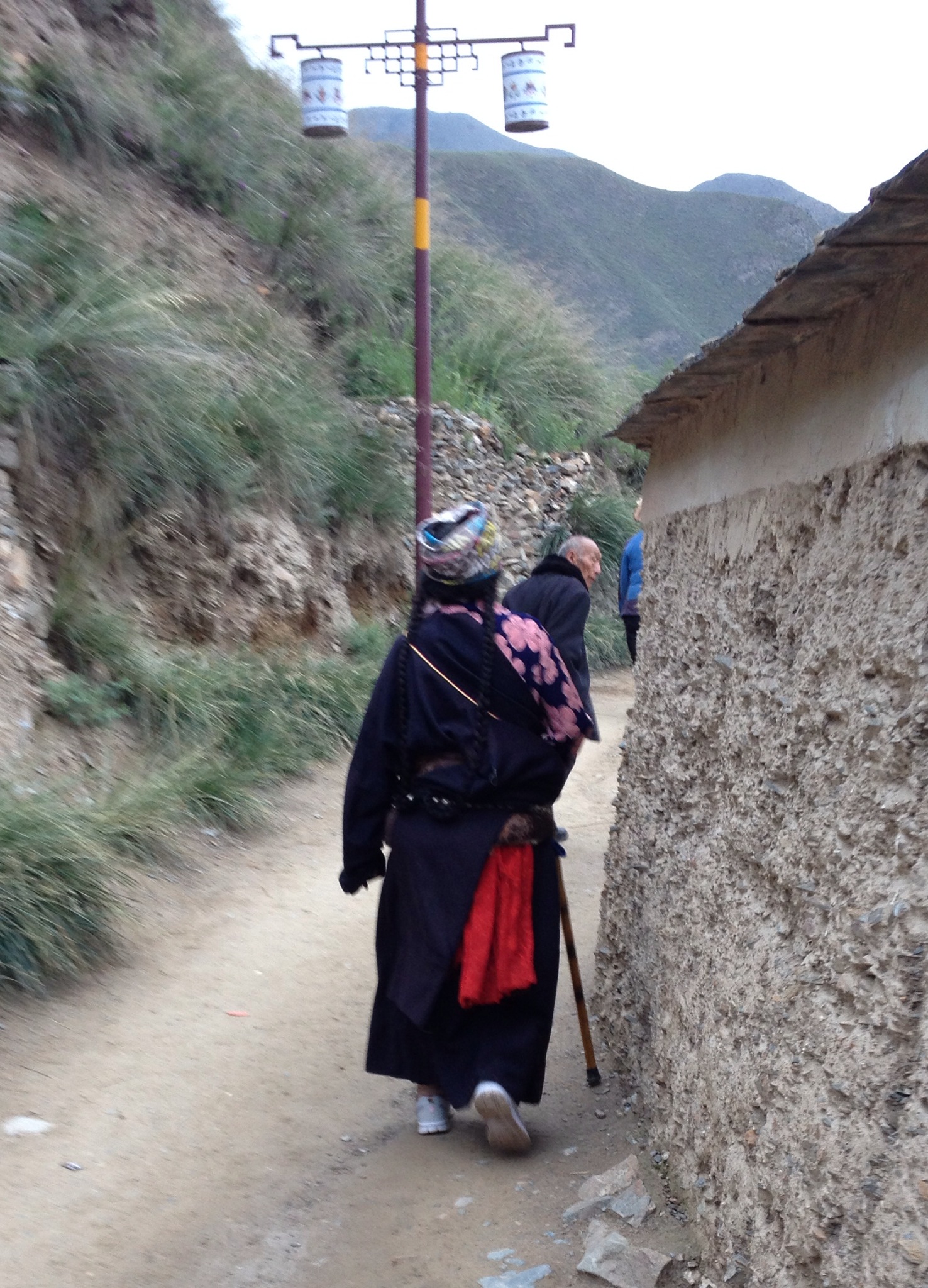
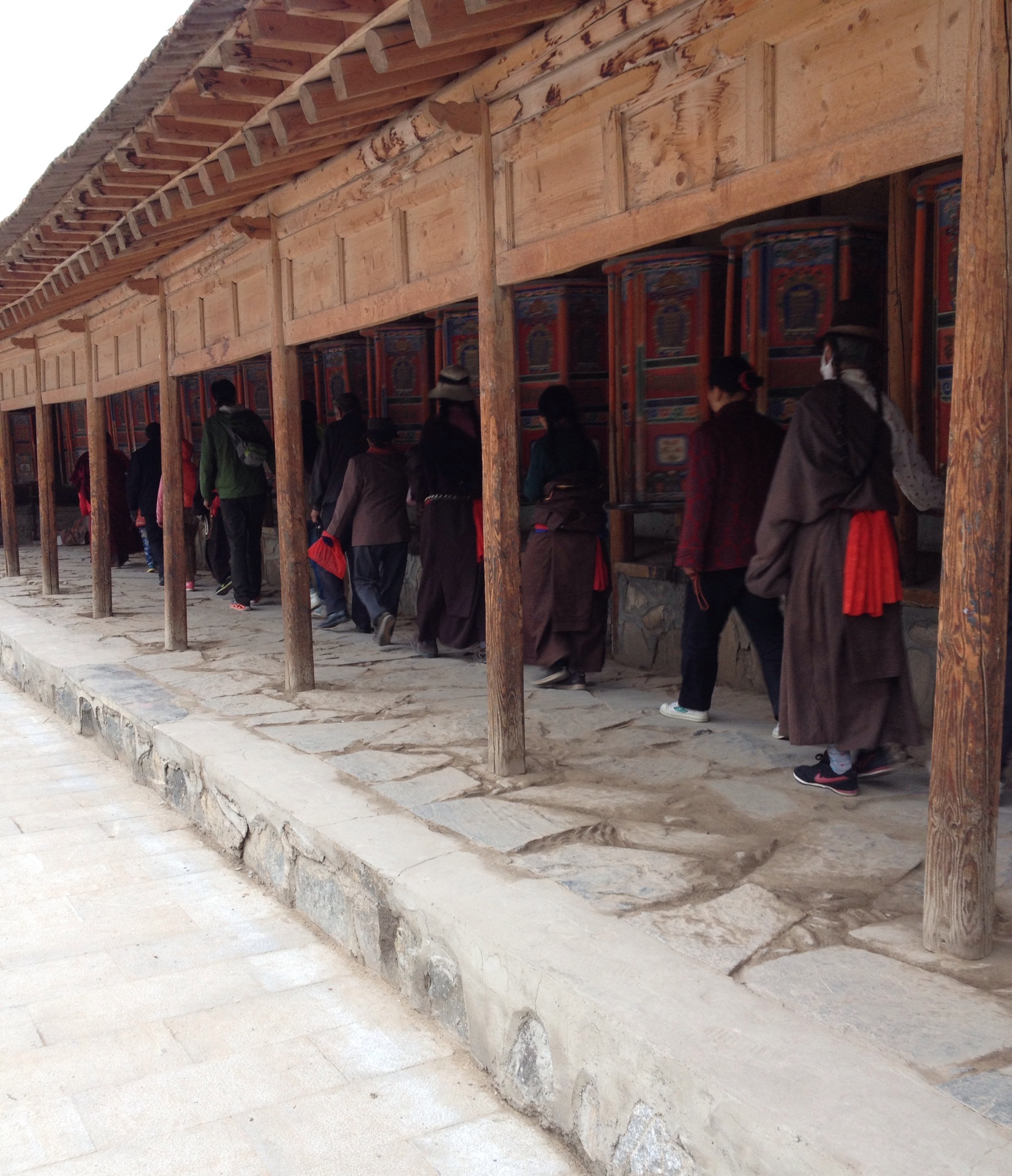

We woke early and completed what seems to have become our ‘constitution al’ – an early morning walk with the faithful around the Labrand Temple. It was dull and and there was a thick mist on the hill tops.
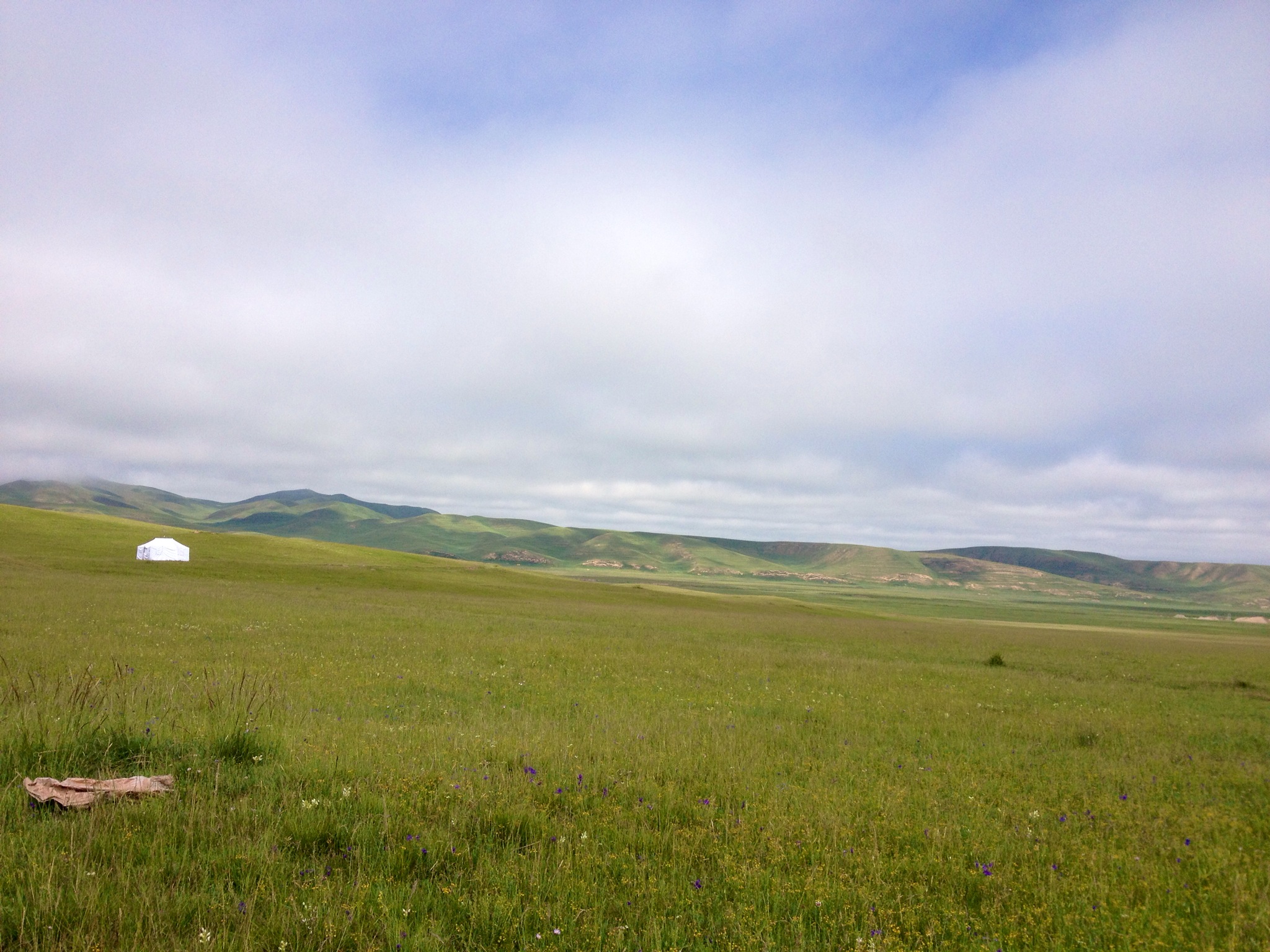
There had been talk over several days of ‘The Grasslands’ an area north and higher than Xianhe where we would stay overnight in a ‘home stay’ with local people. The big issue was whether the truck would get up there given what was described as a difficult road made worse by rain. The last trip had been unable to make it and there was serious doubt as to whether it would be possible for us. Emma and Simon (the crew) had undertaken a reconnaissance mission and decided it was ‘no go ‘ for Penelope, but they thought that it would be possible to get there independently by taxi for a return trip in a day. A final, final decision could only be made on the day, taking weather into account. Of course, we wanted to go. Once again we were not sure what would be involved, but like most condemned men, we ate a heart breakfast and waited for a verdict on the weather.
Despite rain being forecast, it was thought we could make it, so Jason the Chinese guide was despatch to find two taxis. Seven of us had decided on the excursion and we decided to take Jason along to educate him,as he had never been before, and for translation purposes.
So we piled in. Girls in one car with Jason and boys in the other, having taken the precaution of purchasing water. bread and tomatoes in case we got hungry. The cars were small people carriers and quite modern, but not four wheel drive, and we got very skippy when found seat belts. Our thoughts of safety with these were quickly dashed as we found that the natty black covers with red spots were aesthetically pleasing but successfully covered all the seatbelt anchor points. So much for that…….
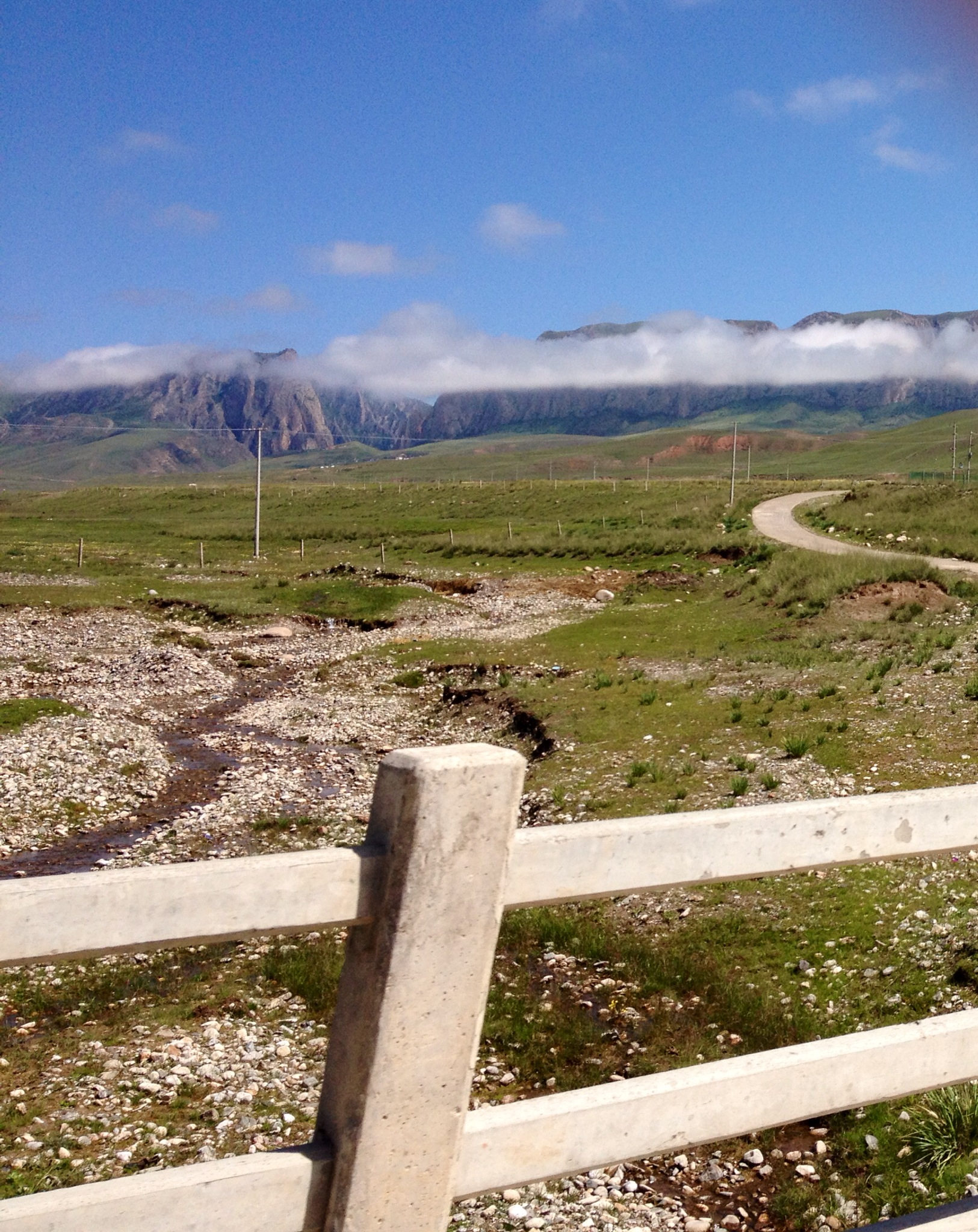
So we set off. We had not got more than 2 kilometres out of town before we had run out of ‘tarmaced’ road and were bouncing around as the car swerved around potholes. It became apparent that the road was in the early stages of construction and that there was a considerable civil engineering project in progress. Initially there were large cement blocks or a low wall to ensure that the joggling vehicles did not fall over the edge, but these soon ran out. At this early stage the sky was still overcast which added drama to the situation when two large lorries (there were plenty of these in evidence and were probably the cause of the major mud churning that had taken place) had approached the same spot from different directions and it seemed had got locked together. It looked like two dinosaurs fighting! Add to this the fact that each lorry headed a phalanx of cars and motorcycles that had attached themselves behind them to charge their way through and dominate the right of way and it was a real mess. It took a considerable time and much hooting to sort it all out.
Eventually things got freed up again and we were moving forward. We passed major earthworks and big craters in what is obviously going to be fantastic when it’s finished. There was also lots of concrete involved and major stone shifting. All the time traffic weaved around it. We even occasionally saw a surveyor looking very important and completely impervious to the chaos going on around them. Just when we thought things could not get more busy, a herd of yaks appeared in front of us and sauntered across the road prior to mounting the steep hill on the other side of the road. Marvellous!
While the road continued to prove challenging, the scenery had begun to change dramatically. On either side a vast plateau was developing with hills in the far distance. There was not a tree to be seen but green grassland, as advertised. Some areas were being cultivated near to the road but only for a kilometre or so and then it was just meadowland as far as the eye could see with no fences or walls to break it up. Near the road we saw people working with scythes cutting their barley and gathering it up to dry. Occasionally there were houses. Single storey, with a walled compound around them. They often appeared in clusters as though they huddled together for comfort. What was pleasing was evidence of very efficient electricity wires running parallel to the road – much more promising than ours at home which have been known to fail on more than one occasion!
Another feature was bee hives. We saw a number of these often where there was a collection of buildings.
By now the sun had come out and we were thoroughly enjoying the scenery. We stopped the car frequently to take in the view. The uncultivated meadowland had lots of flowers and the whole area had an alpine feel. Whenever we stopped we saw the heads of marmots peering at us from the safety of a good distance away and birds soared overhead.
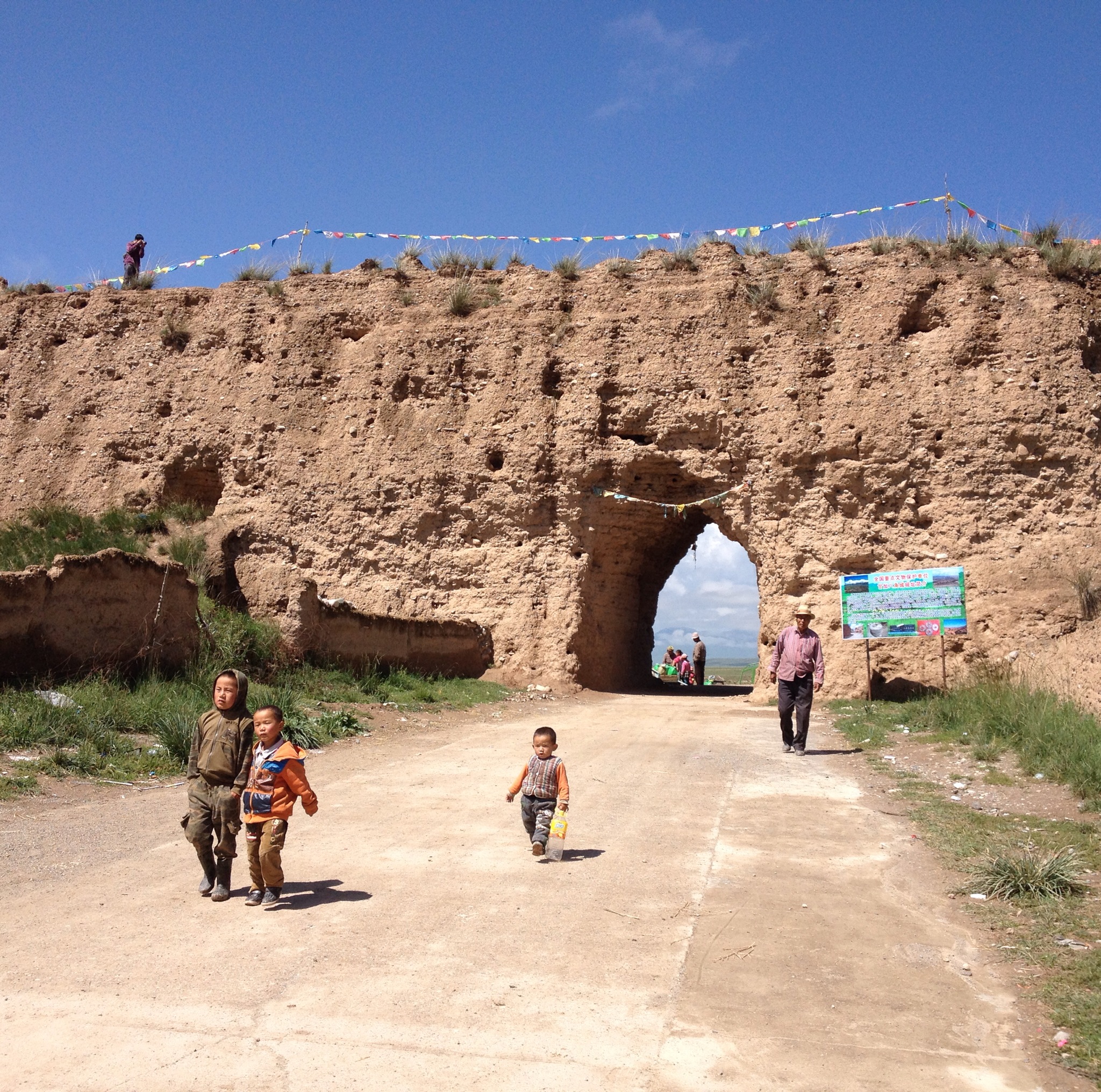
After about 30 Kilometres a high mud wall came into view. By now the road had dramatically improved and we rounded a corner to enter quite a sizeable village. There were shops and young children wandering about and the wall, though seriously damaged in places, had obviously once encircled the area and still stood proudly protecting its people. At what was obviously once one of the entrances to the town we stopped and got out. From nowhere a man arrived with very official tickets inviting us to climb onto the wall. The ticket usefully informed us we were in Gan jia Bajiiano City. It was built 2,000 years ago, originally with two outer walls and a moat around it to protect the people who lived there from their enemies. From the top of the wall you could look down into the village where the people were living almost medieval lives. Their mud brick, low dwellings had flat roofs and walls divided what looked to be family enclosures. There were low haystacks drying hay and we saw carts carrying water drawn from a communal well being pulled along by a young lad. The village yak was tied up close by. Outside of the wall the hills beyond the plain had become quite mountainous.
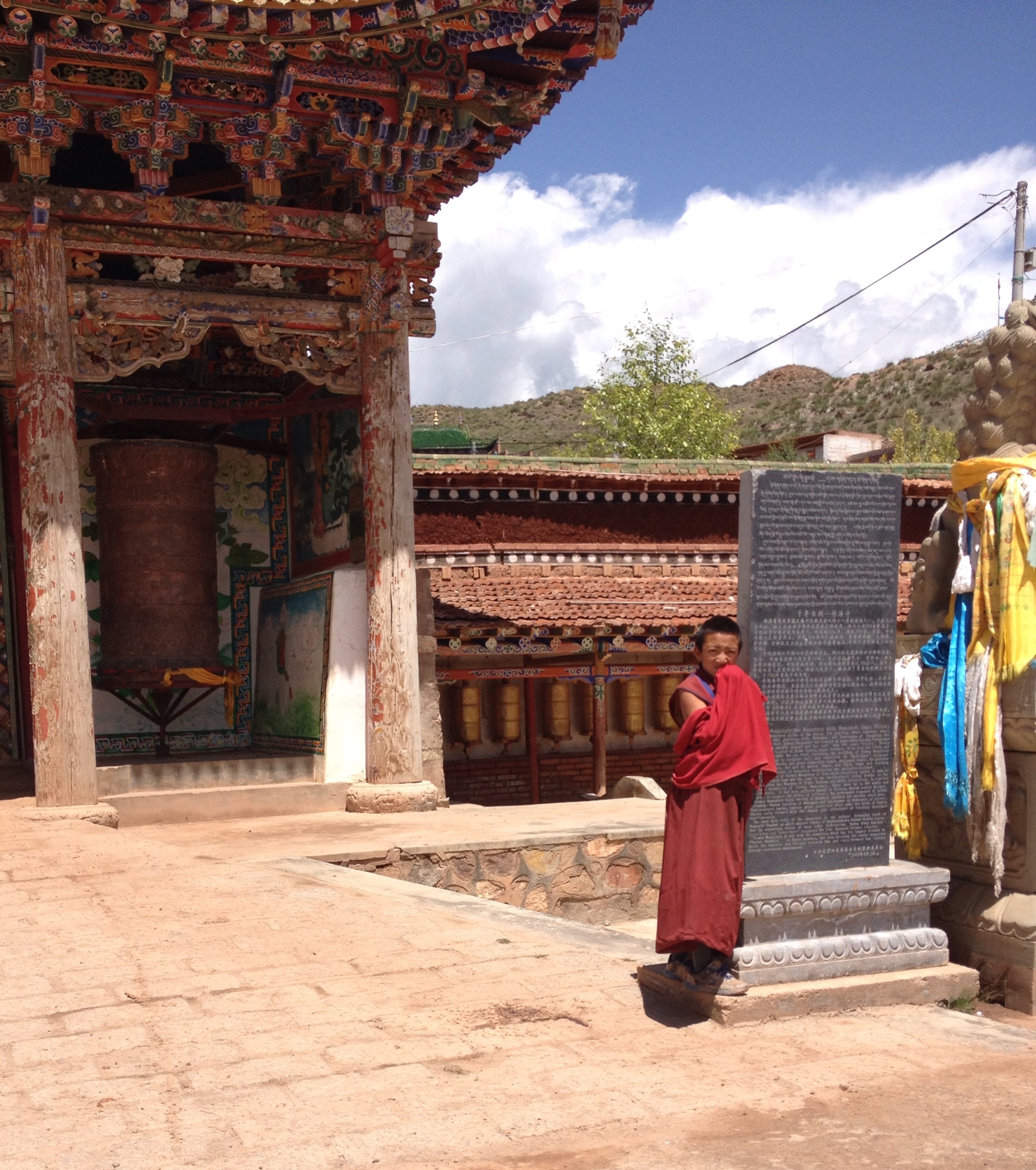
We continued along the road for a couple of kilometres and at the base of a craggy mountain pass found a small, but obviously at one time important, Buddhist Temple. We were told it was closed for a retreat but the notice outside informed us it was the Braker Monastery. Built in 1634 it had once housed ‘thousands’ of monks. Today it stands fairly isolated. We saw a couple of monks outside but little evidence of life within its walls. Retreating is obviously a fairly private business. A sign close to the entrance gate indicated the monastery hospital. Along the exterior walls the ubiquitous prayer wheels stood silent. They were without the patterning of the Labrang Monastery wheels but were gold coloured. The roof of the main buildings were also gold and they all twinkled in the sunlight. It would have been great to know more.
There was news of another monastery site close by, so the decision was made to head there and make it our picnic stop. Our route again provided amazing views and then we came to a small group of houses and a tent that was operating as the local shop. Shortly beyond that the monastery came into view. Three elderly men sat outside in the dust talking. There was no-one else around.
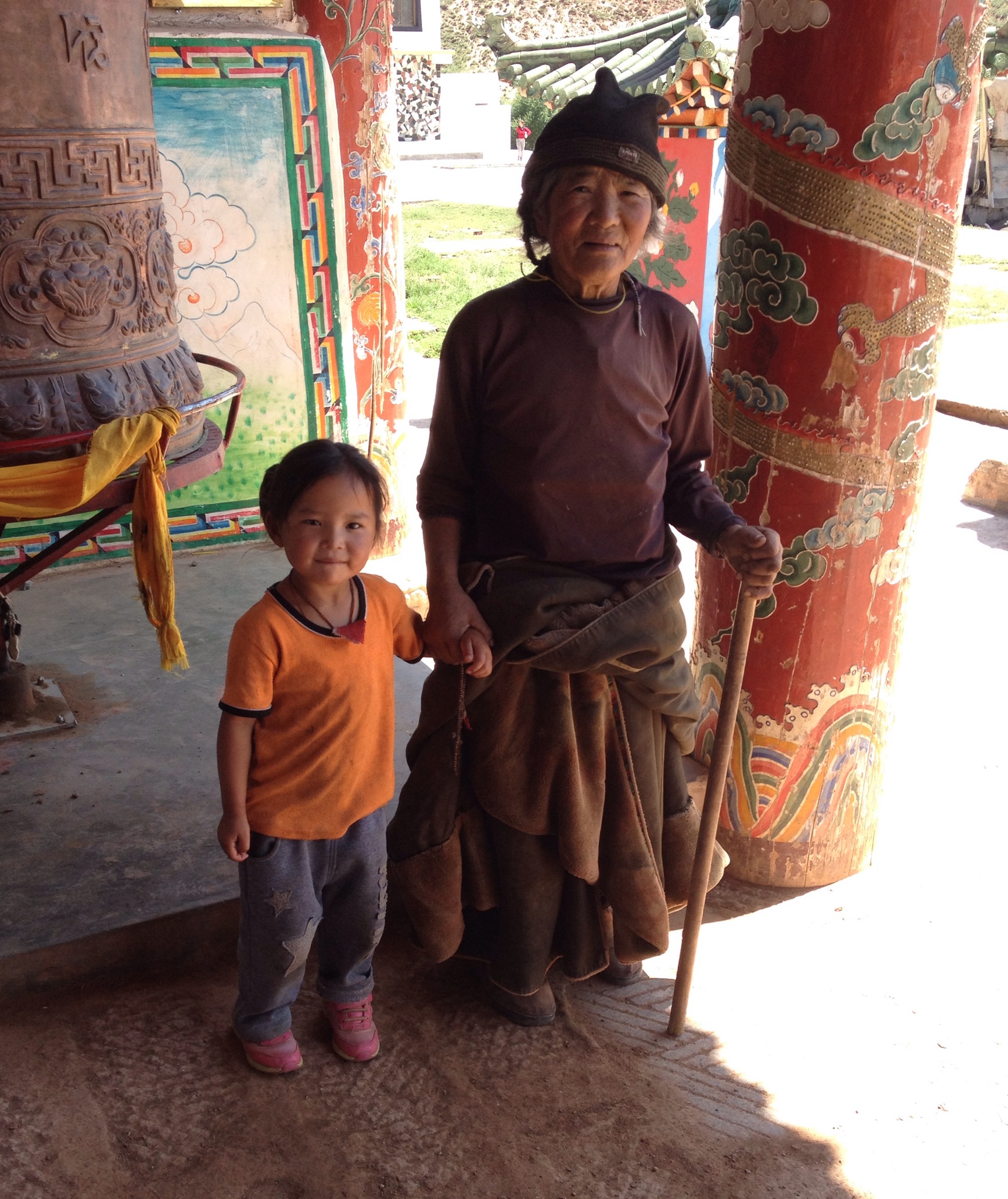
The Tsewey Monastery was very impressive, but there was not a person to be seen. A notice told us it was 900 years old and dedicated to the Yungdrung Bon religion which is the oldest in Tibet. Apparently there were thousands of Bon temples in its heyday and there are still 350 in Tibet. We wandered around the buildings which were very colourful and saw a couple of young monks but no-one else. A highlight occurred when an elderly lady and little girl appeared demonstrating what we had learnt – that here they walk in an anti-clockwise direction when they spin their prayer wheels. The opposite to every temple we have visited thus far!!
The monastery was the final stage of our trip and we headed back to Xianhe very pleased with our day.
The mud on the road had turned to dust for our return journey so we arrived back dusty but happy. A final meal in the Nomad and home, tomorrow we head off for our first night of camping.
What a day!
 pollytheperil