Monday Tevali, a special monastery and another rainy bushcamp

The home stay, although a bit chilly, was something of an experience. From the outside it could be mistaken for a 1950’s council house in the UK. The inside was very different. As you entered the front door you were confronted with a sweeping wooden staircase up to the first floor. The wood in the house – and there was a lot of it – was highly polished and inlaid with dark and light shades. Downstairs the walls were all elaborate wooden panelling. Upstairs the walls were papered but the ceiling had ornate plasterwork and a large chandelier. Silk rugs hung over the banisters.

The long table where we had a feast for supper, was equally heavily laden for breakfast and steaming cheese dumplings were added to the dishes already in place when we sat down. The home made yoghurt was great.

After this substantial repast we set off for the town of Tevali to get supplies. The great news of the day is that Wendy and Sarah who had been ill, were to join us on route. It was fantastic news. Tevali was a fairly typical small Georgian town. Most people seem to buy their vegetables in the markets on a daily basis – we have seen no signs of supermarkets or out of town shopping for literally months!

While Emma and Simon went off to do the catering for the day, we had a scamper round the market ourselves. Despite having just eaten an excellent breakfast we succumbed to a wonderful cheese in flaky pastry turnover which seems one of the specialties and very yummy it is too!

I will draw a delicate veil over Keith and Helen’s hilarious purchase of new undies from two ladies in the market……the ladies were tickled pink and overcharged them mercilessly, but it was worth it for the entertainment value!

After all this excitement it was back in the truck to get some substantial miles under our belt to position us near to the border by nightfall so that we can cross into Armenia early on Tuesday. Our route initially took us across wooded hills magnificent in their Autumn colours. There were houses dotted amongst the trees. The road began to climb until we had reached 16,000 metres above sea level. While we are doing some metrics, we have now travelled 12,700 miles since we left Beijing, not counting the Caspian Sea crossing.

We travelled on, descending once more into a valley and eventually travelling through a sort of grassy desert landscape. There was no sign of cattle or sheep grazing and no trees or shrubs. Just short grass. During Russian times it was apparently used as an army training area. It was vast and very unfriendly looking.

Occasionally we saw abandoned watch towers on the horizon. It was a very remote area and very close to the border with Armenia. Just before lunch we arrived at the site where at one time there were 15 different monasteries dating back to the 6th century. Most have been abandoned and all were either destroyed or vandalised during the Russian military occupation of the area.

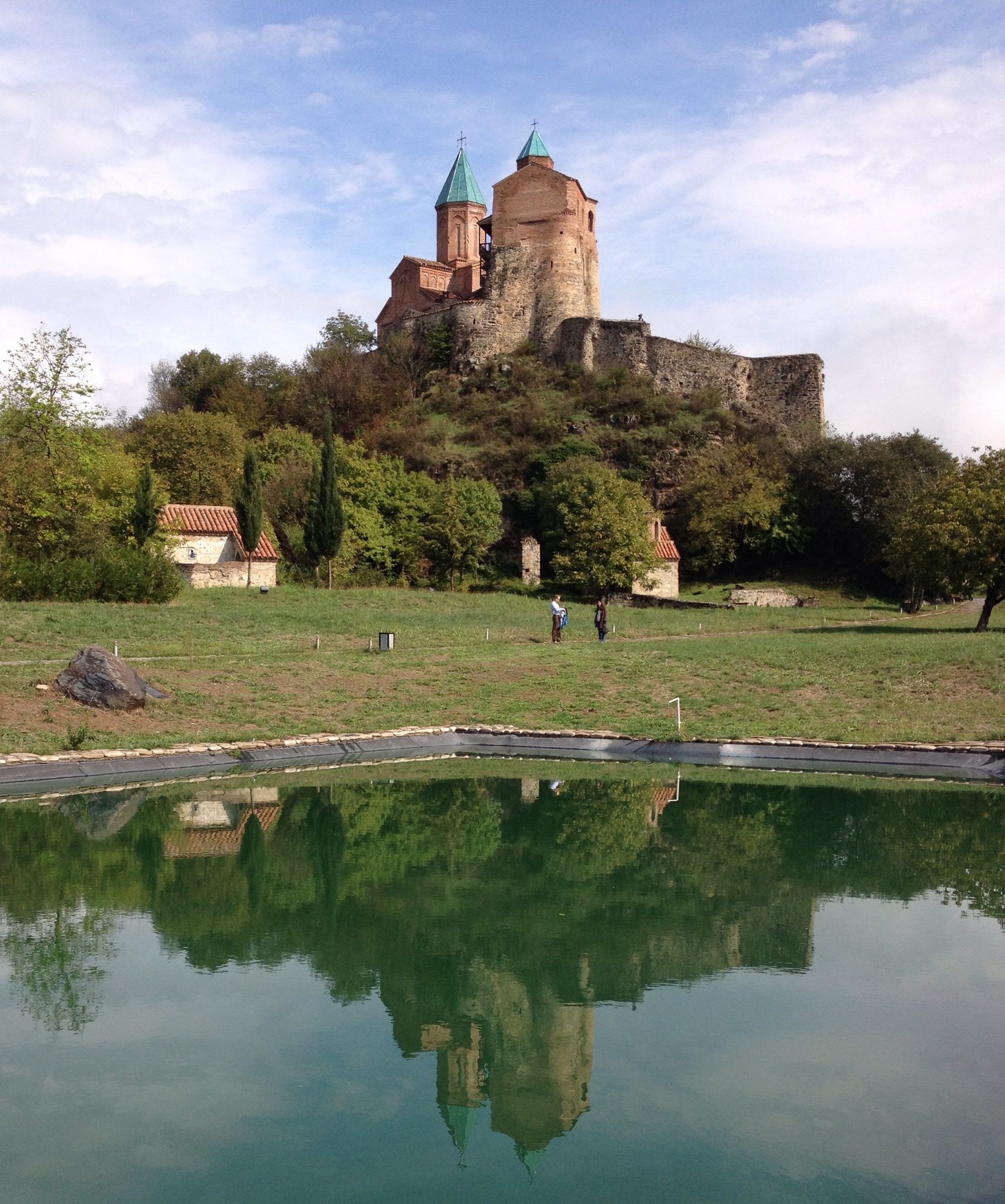
The one that we visited was the Davidgareja Monastery and was built into the hill – an almost troglodyte establishment. It was reconsecrated in 1989 and has close associations with Zaza (I understand this is the correct spelling of his name, although I think my approach was much more fun!) our guide. His brother had been a monk there, Zaza got married in the church (called the Church of the Transfiguration) and his children were baptised there. It is a place of such consequence to the Georgian’s that 3 visits are said to be equivalent to one trip to Jerusalem! The actual church was half built into the hill and half outside. It was beautiful in its simplicity. The site has still got archeological significance and Zaza is due to do a dig there in November.

Shortly after Davidgareja we were held up by a soldier in a camouflage outfit. After about ten minutes we were allowed to move on. We were so close to the border and its military accompaniment that we could hear the soldiers and their rifle practice. It was a bit sinister.

We pulled away from the border and over the brow of the hill came to the first settlement we had seen for many miles. The only buildings we had seen in the ‘no mans land’ we had passed through was an abandoned isolated Russian farm. We had been following a road that was little more than a dirt track for some miles, but this suddenly became a proper road as we neared the town. Trees appeared that had missing for hours in the near desert. Fences started to enclose land and surround houses. The Russian concrete, now deteriorating badly, was back in evidence. Emerging out of the other side of the town, there was a big power station and a rather bleak looking prison.

The weather had also been bleak for most of the day but the sun came out as we passed through another town, this time with high rise apartment blocks with brightly coloured washing waving like flags along the face of the buildings, relieving the drabness of the grey cement walls. Every time we pass through one of these places I think how lucky we are to live where we do.

A highway sped us on out into pastureland again with mountains in the distance. The odd monastery was sighted on the horizon and we turned off the road to set up our bushcamp at about 6.00 pm. After supper we had a drink to the girls return and adjourned to our tent, just as it started to rain. It rained on and off all night…..

Sunday – a busy day in Georgia

After an interesting breakfast involving salty cheese, rich home made yoghurt, a fried egg, salad and a pasta based rice type pudding at Nana’s we were off for what proved to be one of the busiest days of the trip.

It was the first day that the truck was really cold to get into. A definite wintry feel. As we left the town the outline of the Caucusus mountains could just be seen in the distance under the cloud which hovered below us over the valley below. First stop? The Convent we visited yesterday when looking for the monastery. It is the monastery. Considering that it is surrounded by Moslem countries, christianity goes back a long way in Georgia. Disciples are said to have visited including Simon and Matthew and by the 4th century christianity was the state religion. It’s had a number of setbacks (to say the least!) and for some time martyrdom seems to have been the name of the game, but Niño the Nun arrived and subsequently died at the Convent thus making it a revered spot for Georgian Catholics. Unfortunately, it being Sunday there was a mass on so we could not get in – I said I was happy to pass around my photos taken the day before……

We set off again. En route the slender pipes that are evident everywhere became a source of interest. The Georgians are quite creative with them. The pipes are usually painted red or yellow and travel along – say – 8 ft above ground level, they go up and over gateways, like picture frames. They apparently carry the natural gas which is piped into every home and it is certainly a novel way of making it available! The poverty of the country continues to be evident as we travel along. Towns have crumbling buildings, fences are falling down or have disappeared completely, graveyards were overgrown, their rusting railings enclosing dead stinging nettles.

The early morning had given way to cloud and then rain, but the sun emerged again as we stopped to visit Gremi an ancient township where excavations have revealed evidence of people living there in the 7th century BC. Gremi was a political and cultural centre and an important trading spot on the Silk Road. It had its heyday in the 16th century when it flourished for about 150 years prior to being demolished by the Persians. We received all this information in a nice museum at the site, delivered by a very helpful man whose English was heavily accented and was inclined to mumble under his beard (a failing of ZsaZsa’s too – it must be a Georgian thing!) so I cannot vouch for the total veracity of my facts here.

Back to the story. There is evidence of the area being divided into three sections – the market area, the church and tower palace sitting above things on a steep hill and the defense buildings. The market area had a large Caravanserai and evidence has been found of merchants trading gold, furs, precious stones as well as wine, horses and sheep. The area had its own churches and bathhouse. Up on the hill is the small Church of the Archangels built in 1565, still with many of its frescoes in place. It was busy with little girls in their sunday best dresses and patent shoes with gaily coloured headscarves and their Mums in their long brightly coloured clothes. The men wore dark suits. Candles flickered in the draught as the door of the church constantly opened and closed as people came and went.

Just a step away was the palace tower. The first floor had tall paintings in a slightly elongated figure style depicting the royal family of the time when Gremi was attacked by the Persians and relics of their life and times. They all looked slightly odd with small heads and long bodies.

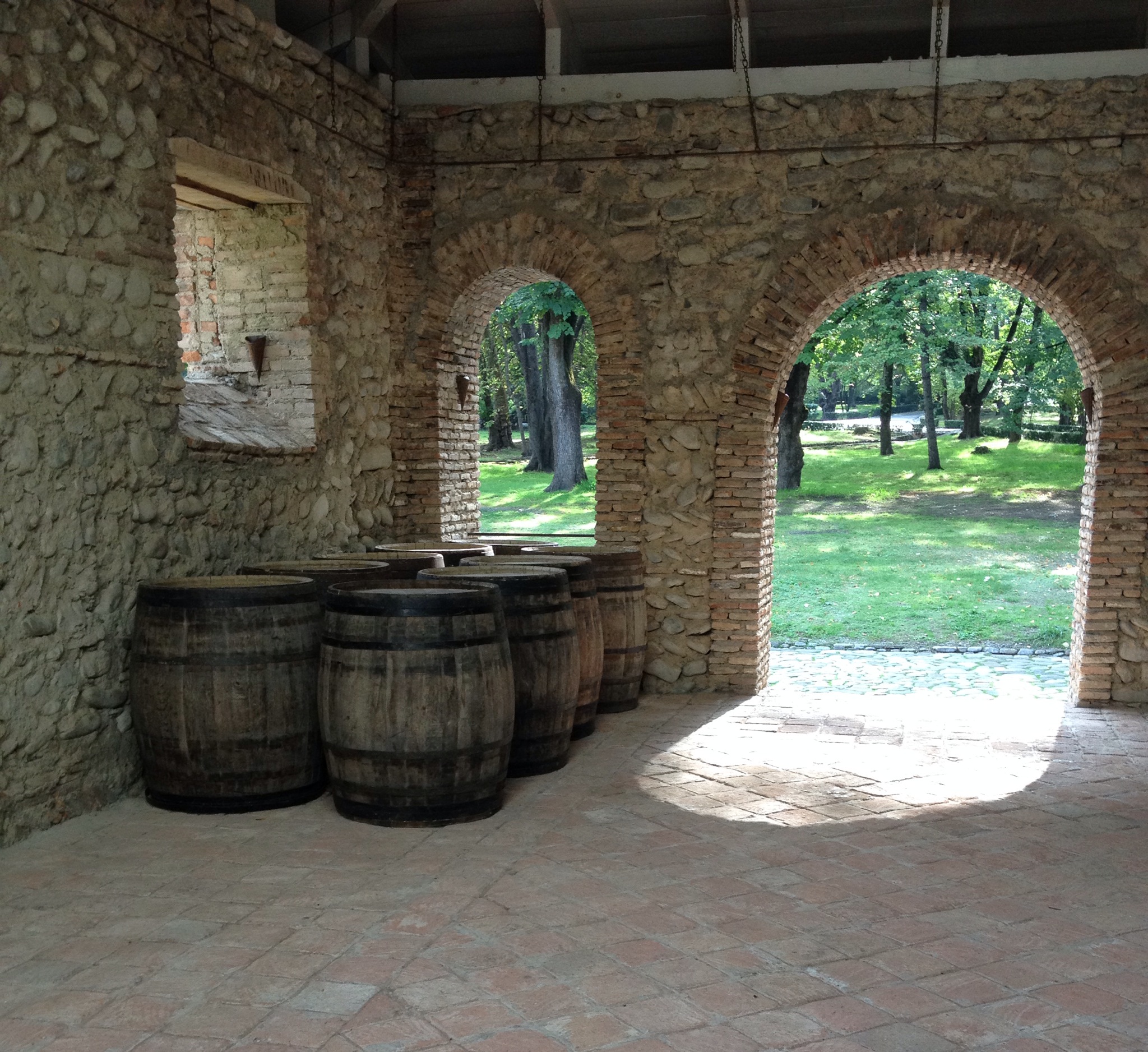
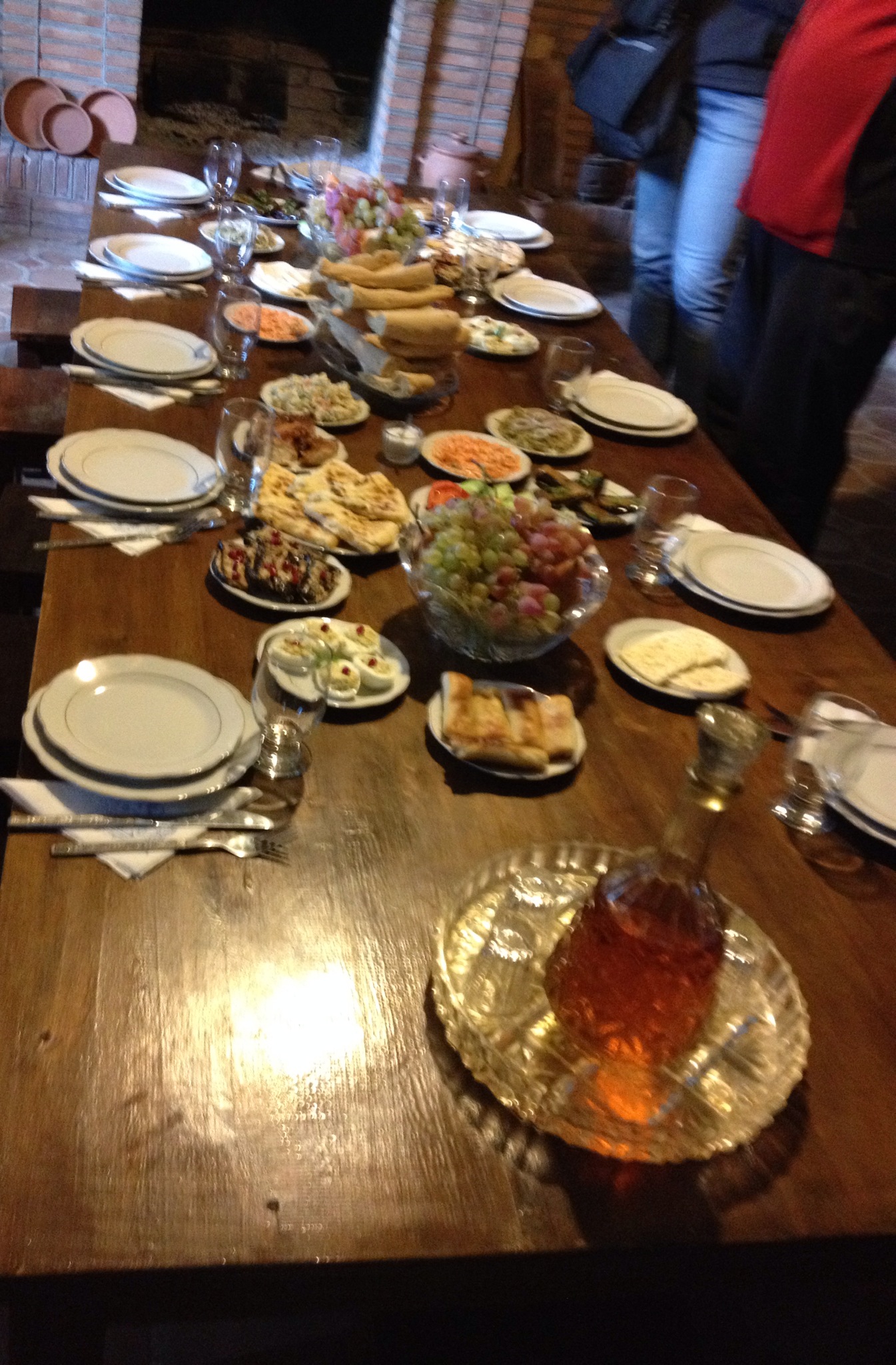
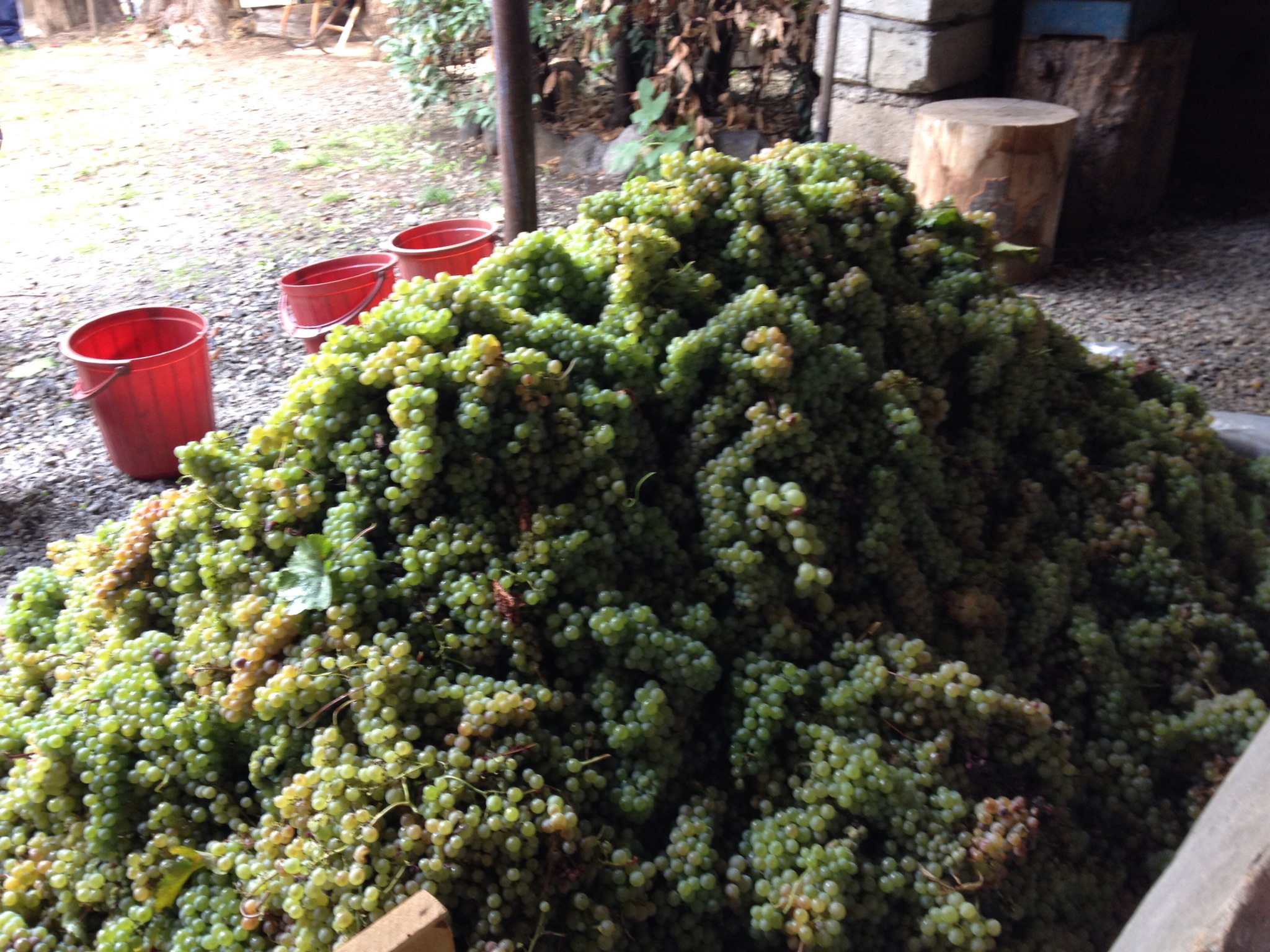
We left Gremi in the rain again and went off to have a wine tasting and fascinating demonstration of the Georgian wine making technique of burying the grapes in vast terracotta vats dug into the ground. These they seal with a sort of natural wax, place a large stone on the top and cover the whole thing with earth. The wine is definitely different to that that we are used to, but is very drinkable. They also had a still making their own vodka. After seeing the various processes we sat down to a veritable Georgian feast for lunch accompanied by the family’s wines and firewater. It was a very jolly meal with lots of toasts to country, family and absent friends.

The local wine museum, housed in an old stately home, was just along the road, so we opted to walk to (sober up?!) prepare ourselves for yet another imbibing opportunity.

The house had been the home of Prince Alexander Chavchavadze a poet and anti tsarist who was a godson of Catherine the Great. Half of the building had been destroyed by Lezgin tribesman who had taken members of his family hostage. Paying off the ransom to get them back had effectively destroyed the family fortunes. The house that remains is a sophisticated aristocratic home with three grand pianos (one a Steinway) and Limoges chinaware laid out on the dining table. Family portraits adorned the walls. The beds were Victorian cast iron like ours at home. The most amazing thing was the fact that there are still 16,000 bottles of wine
from 1841 in the Prince’s wine cellar. We tasted wine from what is now called the Tsinandali Estate using western wine making techniques and it was delicious, so much so that we bought several bottles for my birthday celebration later in the month. We wondered back to the truck through the English garden (designed by a Frenchman we learnt to our disgust!) very happy with ourselves.

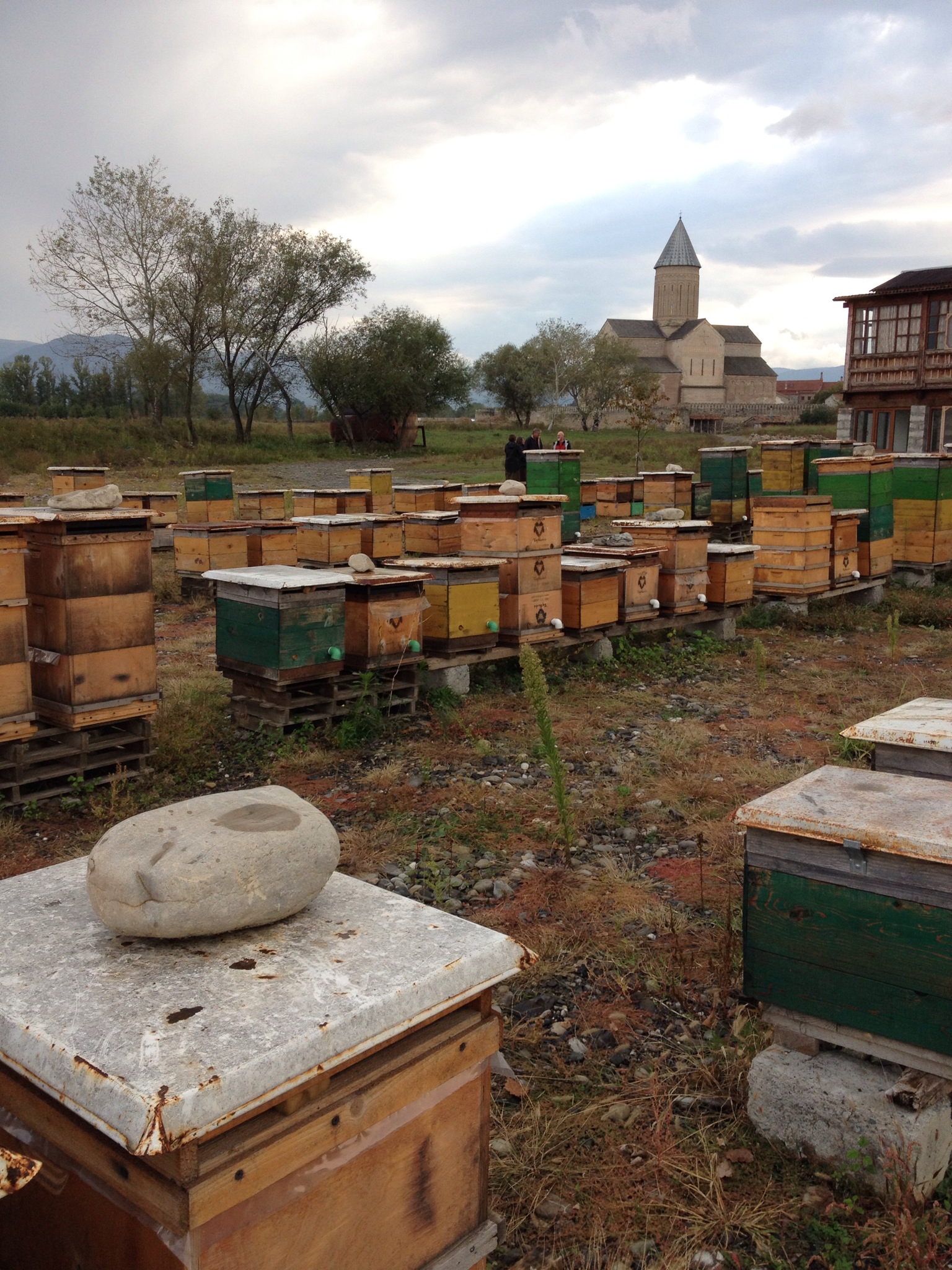
However, the day was not yet over. There was yet one more monastery. The Alaverdi Monastery. ZsaZsa our guide had actually worked on the archeological dig that has now been abandoned on the site. It is still a working monastery with bearded monks in long black robes, where wine and honey is made. They have been making wine here since the 8th century. The huge church towers above the landscape, the highest church of its kind when it was built. The dark of the cavernous interior was broken only by the flames of the candles placed there by the faithful. Above the door was a fresco of George and the Dragon – a seemingly universal Christian motif.

Because of ZsaZsa’s connections we were allowed to go behind the scenes to the apiary and meet the monk in charge of honey making. Honey is produced on an almost industrial scale with smart stainless steel equipment for processing wax and honey. We tasted the final produce, including yet another spirit of throat clenching proportions.

You will not be surprised to learn that it was by now after 6.00 pm and the sun was sinking behind the huge snow tipped mountains in front of us rearing up purple in the fading light.

We set off to our home stay in Telavi tired but having had a truly terrific day.

Saturday – Lagodekhi to Sighnaghi

After a wet night and waking up to a slightly damp sleeping bag, it had actually stopped raining when we got up. However it was still very wet underfoot and rolling up a wet tent was not much fun, but all got done and we left the Nature Reserve around 9.30 am. The local people had been in the forest mushrooming since early morning.

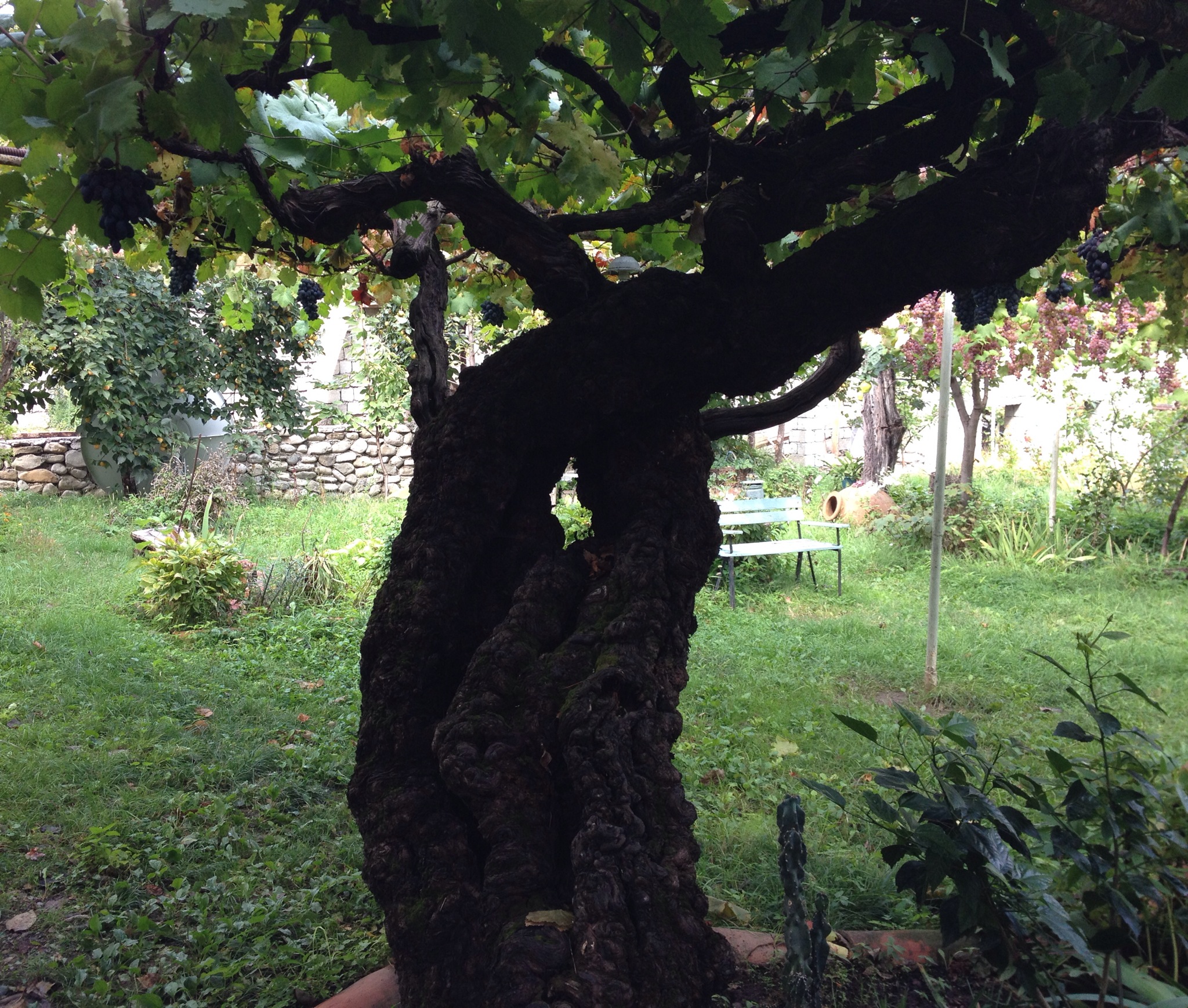
Our route took us out through the town of Lagodekhi. Many of the houses, although somewhat dilapidated, have courtyards with an overhead vine held up by a trellis arrangement. Once out of the small town, there was every indication of a poor rural economy. Many of the houses looked like small holdings with ducks, chickens, pigs (we are now in Christian territory) and often a house cow in evidence, but everything looked fairly run down. The countryside was heavily wooded.

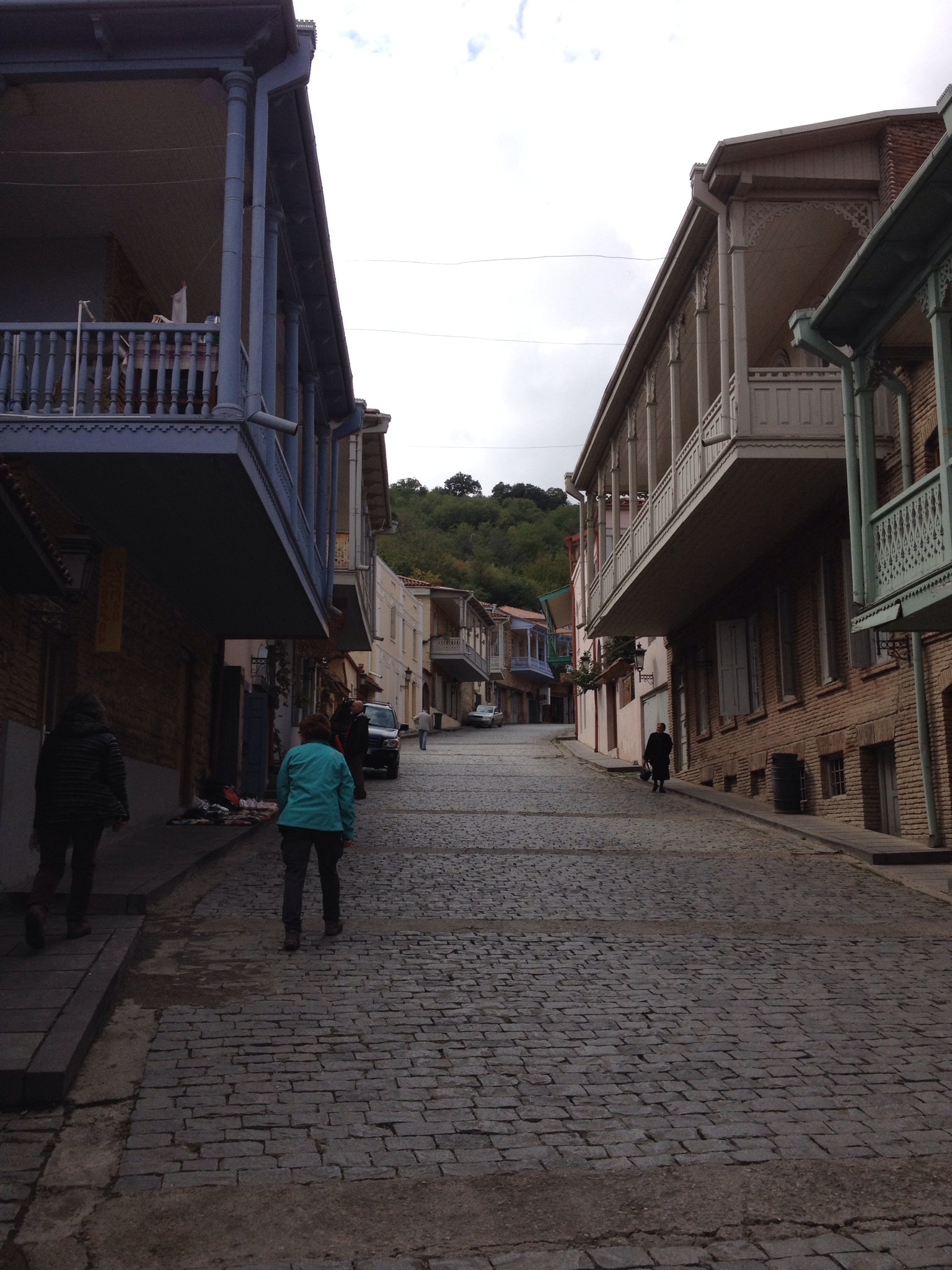
After only a couple of hours the town of Sighnaghi came into view across the valley. The town from a distance has definite Italian architectural overtones, complete with the terracotta coloured buildings and tall cypress trees. We were unable to find the source of the Italian connection and close to it was less Italian than at a distance, but it was certainly an attractive place, perched on a hill with cobbled streets and the large overhanging balconies that continue to be popular.

We were staying at a home stay called ‘Nana’s’. The rooms were fine but it was a bit short on bathrooms, having only two for 10 of us and the family.

We had heard that there was an organic vineyard in town called The Pheasants Tears that did wine tasting together with a good lunch, so in no time six of us were off to try it out. What a good move that turned out to be! After a tricky start, a table for six was found and we were served by an American from Boston working there to learn the language. So we sat down to an excellent lunch, all chosen by the restaurant and those of us who wanted to tasted four wines. The method of wine making in Georgia is quite different in the use of the whole grapes and the fact that is made by burying it in earthenware pots underground. The wines certainly have a different taste and are referred to as white and black wine. I preferred the red – or black as they call it. After our meal we had a tasting of the local fire water – grappa which certainly had a kick.

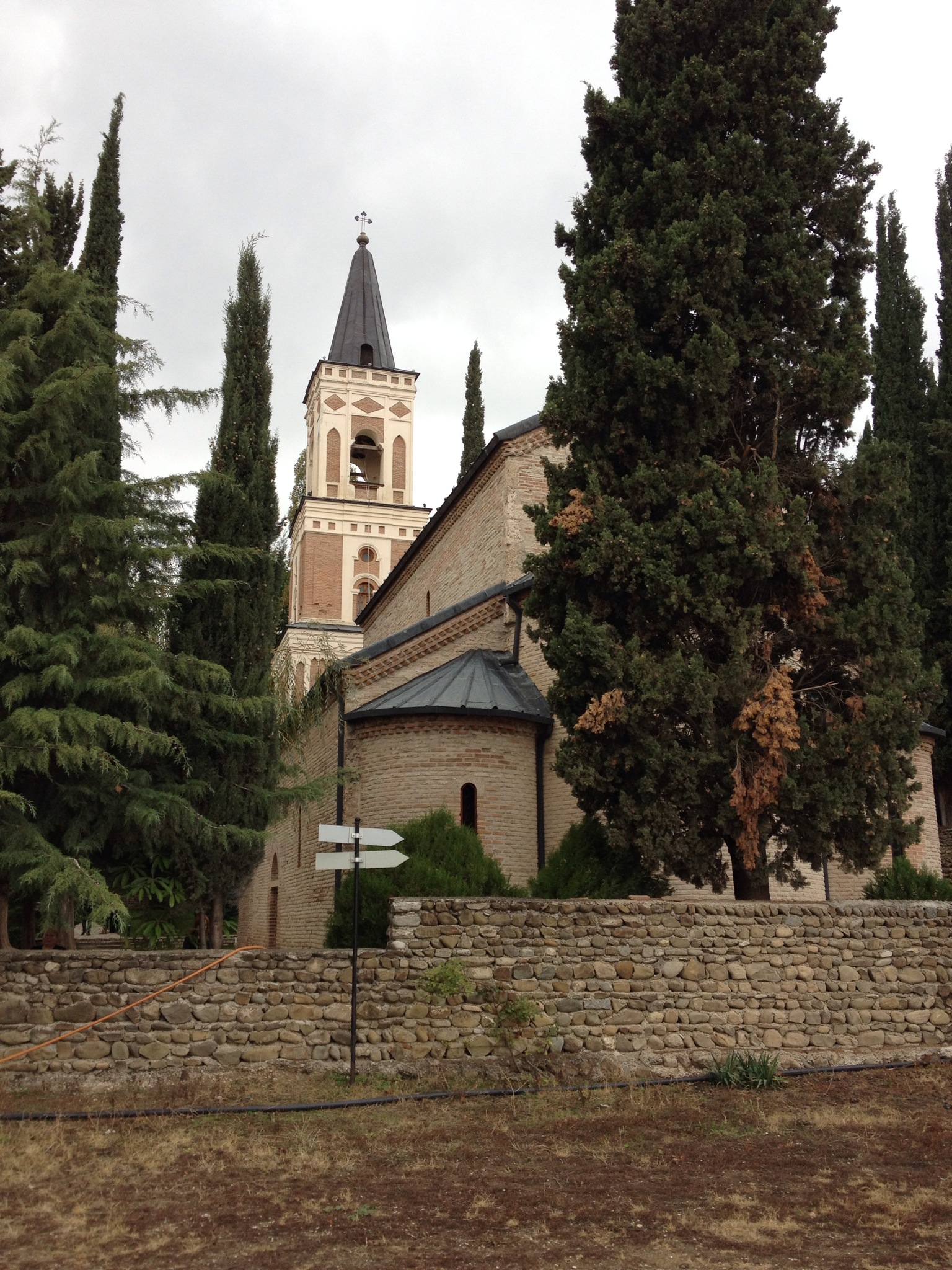
Feeling quite mellow after all this, I set off with Peter and Helen to walk to the local monastery 2 kilometres away. Despite asking the way, we could find no signs to the monastery but ended up at a large Convent where St Niño was buried. There was a small chapel with a bell tower with a lot going on in terms of pilgrims and candle lighting. The second building was a church in the process of being built. The main brickwork had been completed but it had no doors or windows. The whole complex, including a large accommodation building and pilgrims cafe area looked out of the deep valley. These religious houses often have amazing views in my experience and this one was exceptional! They even had a holy spring and there was a good trade going on in plastic bottles being filled with the holy spring water. The whole place had a very festive air, with horse rides available. The horses were rather interestingly equipped with high heeled horse shoes to help them keep upright on the slippery cobbles – it gave them a rather haughty stance. Another rather quirky thing was the fact that the intricately etched maps of the complex all had three ‘you are here’ points on them. All very confusing!

Anyway, after thoroughly investigating the area, we asked a young English speaking nun if there was a more rural route back to Sighnaghi. She assured us there was and gave us directions. However, there wasn’t and before long we were scrambling up a steep tree covered bank to get back on the busy road we had previously walked on and had probably added three kilometres to our journey.

Having successfully returned to the town we collected Keith and set out to try to walk on the town walls that we had seen in the distance around the top of the hill. It just was not our day. By the time we had puffed up to the top of the hill, it became clear that our information was incorrect. There was no path around the top of the walls. We decided to have a drink on the way down to console ourselves and then continued our descent back to ‘centre ville’.

It was just as we reached our home stay that we found Diane’s head sticking out of a cellar cafe that she and Barry had retired to for supper. It took very little to persuade us to join them and a very merry evening was had by all, with interesting meals washed down with ‘black’ wine and served by a man in a track suite who plied us with grappa half way through the meal. No-one drank it but rather than offend we decanted it into an empty coke bottle for Keith to use as a fire lighter at our next bushcamp….,,,,

Friday – the Khans Palace and on to Georgia

We woke up to a dull and miserable day. Last nigh’s rain had stopped but it was still very damp and there was a chill in the air. It felt very autumnal. Season of mists and all that.

We breakfasted in our room on nuts and Pringles and the goats cheese purchased for our Caspian crossing, there being no breakfast supplied. There was good news of Sarah and Wendy though. Sarah is out of the clinic and they are hoping to catch us up in a few days. Very good news.

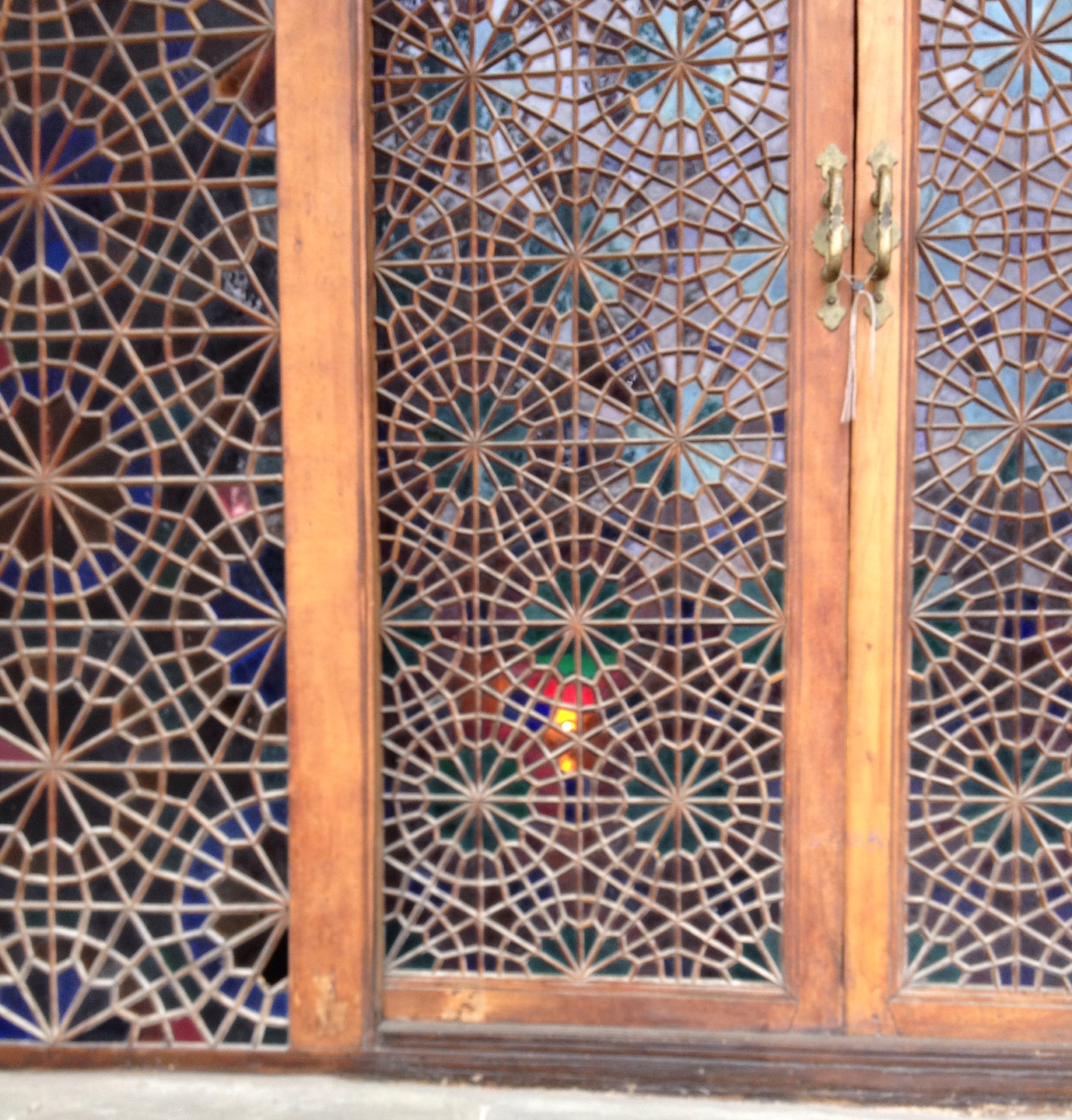
We then set off for the Khans Palace, just a few hundred metres up the road. Here I have to make a correction on yesterday’s publication. I talked of the Sheki windows being jewel coloured glass held in by wrought iron. It is not. It is held together by wood. I only realised this on close inspection at the palace, where every window is made of small pieces of jewel coloured glass set in a nail free wooden fret work. They are stunning,

The palace is dated 17th century and regrettably photographs could not be taken on the inside. We arrived to be told to put on j cloth foot coverings before we could cross the threshold….

It was worth it. The interior was incredible. Every wall and ceiling was covered in hand painted pictures. Battle scenes, flowers, dragons, trees. All were there, meticulously painted on every surface stone surface. The frustration of not being able to record the wonders photographically was immense. We wondered through the rooms spell bound by the pictures.

We eventually emerged to the outside by giant stone steps (these Khan types must have had very long legs) and wondered back to the truck, resisting the opportunity to buy a pot of hand knitted roses at the craft stall on the way.

We left the wooded hills and Sheki after our brief stay. It seemed dryer as we descended into the valley. We were back into the countryside and heading for the Georgian border as Penelope’s 72 hours in Georgia was running out. Our drive took us deep into rural Georgia. It was a chilly day , the coldest so far. The big fields we passed were ready for planting. The route was lined with trees and there were people with bags picking up hazel nuts from the copsed hazel nut trees.

Our route was lined by green grasslands and much more greenery that we recognised. There were chestnut trees, blackberries in the hedgerows and stinging nettles. We saw turkey’s, ducks and horses grazing by the side of the road. There were also signs of the oncoming winter with horse drawn carts stacked high with wood for winter fires. We passed small settlements with lots of cars parked haphazardly and large groups of men around, often the indication of a stock market of some kind. There were very few women or children about. As we drew near to the border the road became more bumpy and it seemed a very far cry from the sophistication of Baku.

The Azerbaijan/Georgian border was a dream compared to the others we have crossed. There are no visas required for Georgia. The only thing to comment on really were two long corridors. The first came after we had been ‘stamped’ out of Azerbaijan. Picking up our bags that had eventually passed through the broken X-ray machine, there was a long cream painted outside corridor with steps. As you walked along it, to the right was a brick wall. To the left a glass window. The path gradually climbed up to the office to receive the Georgian entry stamp, after which there was a similarly lengthy corridor which, after a similar length of climb, brought you out on a bridge guarded by a man with a gun. After walking over the wide expanse of the bridge looking down onto a stoney riverbed with very little water in it, you were in Georgia. As I said, a very easy and quick crossing, but I could not help feeling that if you had a false passport or were trying to smuggle something through, you would have a very long tramp with your heart pounding wondering if you were going to get away with it…. As neither of those things applied there were no such fears, but I could not help but ponder on the topic during my lonely walk into Georgia.

The border behind us, we set off with our Georgian guide – ZsaZsa (a bit unlikely I know and even more unlikely if you saw him! ) – to find our camp site. It was by now pouring with rain, so to say enthusiasm was low was something of an understatement! We were headed for a town called Lagodekhi and it’s nearby wooded parkland. Here Penelope skidded to a alt under dripping trees. We had arrived. In the distance we could see one or two large buildings through the trees – a nature centre project funded by UNESCO. We were to find that this housed a wonderful clean loo – what more could we ask for!!?! Perhaps to camp indoors……

As we are made of sterner stuff, the Ritz was set up and we retrieved our sleeping equipment from the truck, trying to keep it dry as the trees and the heavens continued to pour.

ZsaZsa (mid 50’s sporting a hunters waistcoat under his jacket, grey moustache and hair and glasses on a cord around his neck) then produced a huge plastic container of his friend’s home brewed red wine, which it seemed rude to refuse. Keith, now nominated fire monitor, set about building a fire with very wet wood and we all huddled under the shelter of Penelope’s awning. Up until now this has been our sun shade – now it is the rain tent.

A thick vegetable stew was produced for supper which was good and we sat around chatting and drinking our home brew wine and some ventured out in the rain around the fire, but overall it was a very early night and we went to sleep with the sound of rain ringing in our ears.