
We had a late start and left Tbilisi in bright sunshine. to was a lovely day. Our route out of the city took us along the riverside. Birds, people and broken concrete could be seen at the shallow waters edge. Fishermen rested rods on the concrete river wall. To our left the city soon ran out and hills appeared. Tall apartment blocks continued across the river. As we veered away from the river, the trees were interspersed with petrol stations – lots of them. We then came to some waste ground and then somewhat surprisingly, in short succession, a Porsche showroom, a Volkswagen showroom and a large Carrefour supermarket. All somewhat unusual for this trip!
Soon after this came the sign indicating we had left Tbikisi. We were heading to Gori, the birthplace of Stalin. On the way we passed a refugee camp built for Georgians who had fled Russia in 2008, during one of the many conflicts between Russia and Georgia. On this particular occasion Russia bombed Gori and several people were killed.
ZžzzaaazzzzZzzzz Zzlz
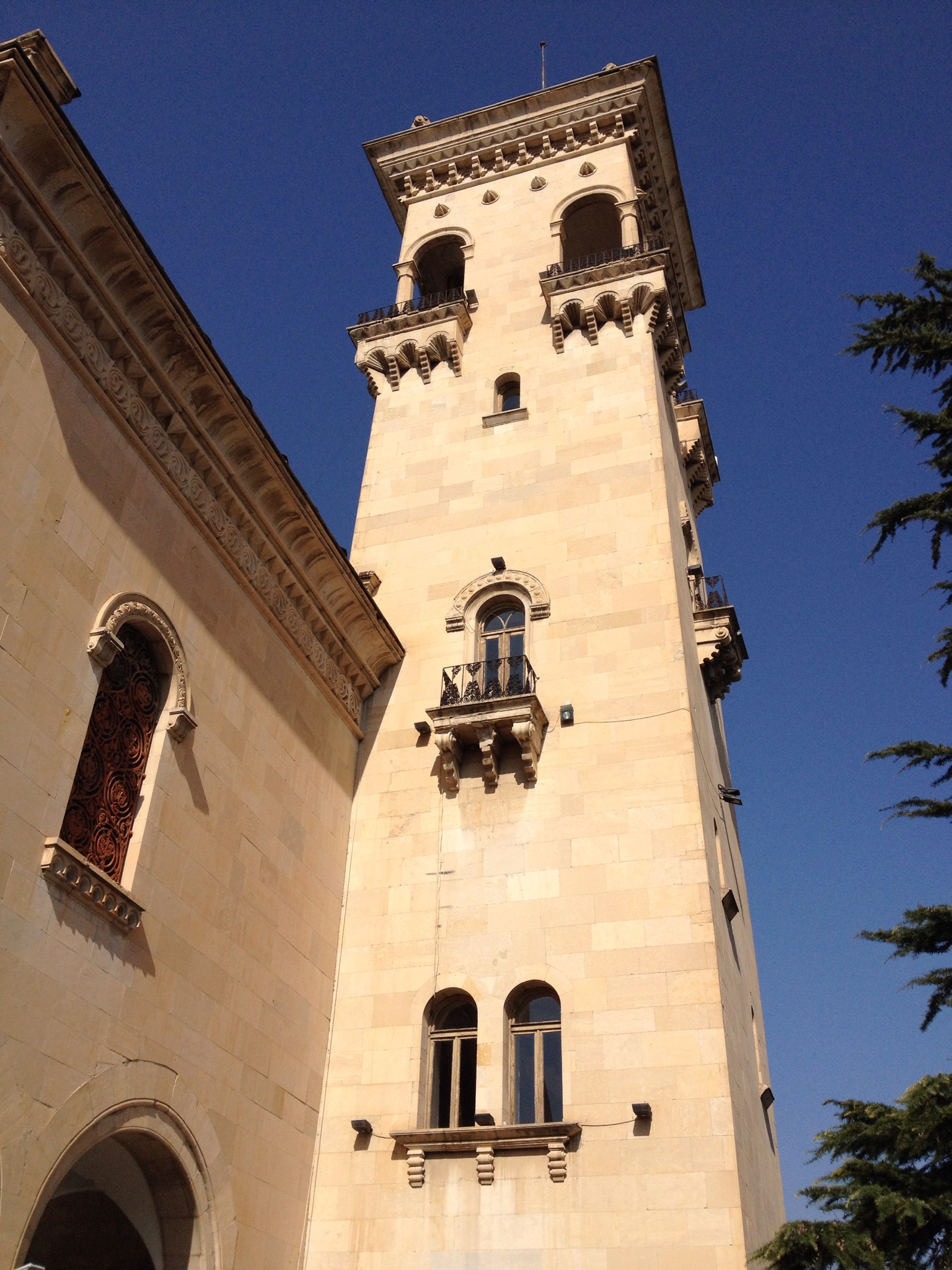
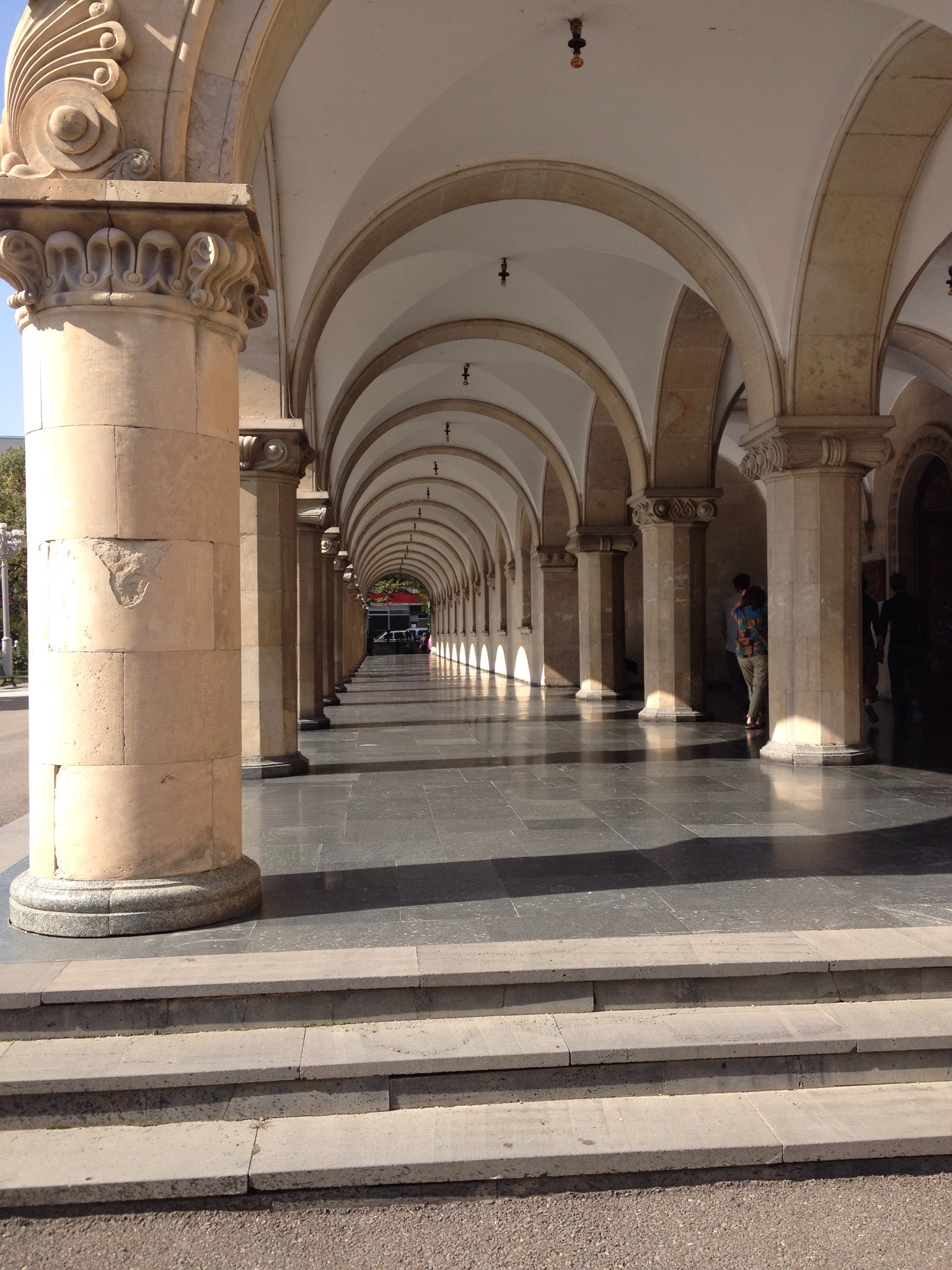
At Gori we visited the purpose built Stalin Museum. We were shown round very briskly by guide who looked like a character out of one of Beryl Cook’s paintings rendering the situation even more bizarre than it already was. Stalin was born in Gori in 1879 and went to school there. His father was a shoemaker and his mother a dressmaker. His mother wanted him to become a priest so he was sent to a seminary from which he was expelled at 15 because of his involvement in revolutionary activities. He then became a professional revolutionary and started to publish political articles. He was arrested when he was 22 (the first of many arrests) and was exiled to Siberia. He escaped all but the last time when he served 4 years before being released by the revolutionary forces.
In 1911 he left Georgia for Russia, and changed his name he chose for himself – Stalin. During the 1917 he was on the revolutionary council and after the revolution he became a member of the government. Not long after that he became the Secretary of the Revolutionary Council,
Lenin, who Stalin originally met in London when part of a Russian delegation, died in 1924. Stalin was nominated to carry on Lenin’s work and was one of the pall bearers at Lenin’s funeral although by all accounts Lenin was not very fond of him. In 1926 he made an official visit to Georgia and visited the country for the last time.
We were told of his enterprise and innovation eg collective farms. However our guide did acknowledge that he did ‘made mistakes’. An understatement of the first order methinks! The walls were covered with pictures of him during every stage of his life and there was memorabilia from his life at the Kremlin. Among the pictures were some of Stalin with Churchill and other world leaders. Only a passing reference was made to the Battle of Leningrad where 800,000 people died and somewhat more attention made of Stalin’s role in the unconditional surrender of Germany in 1945.
Stalin was married twice. His first wife died young and his second committed suicide. He had a son by his first wife who was taken prisoner by the Germans, Hitler offered to release him to exchange him for one of the German generals. Stalin refused, saying that all Russians young men ‘were his sons’. His son was shot. He had two more children by his second wife. The son died in prison and the daughter spent much of her life in America.
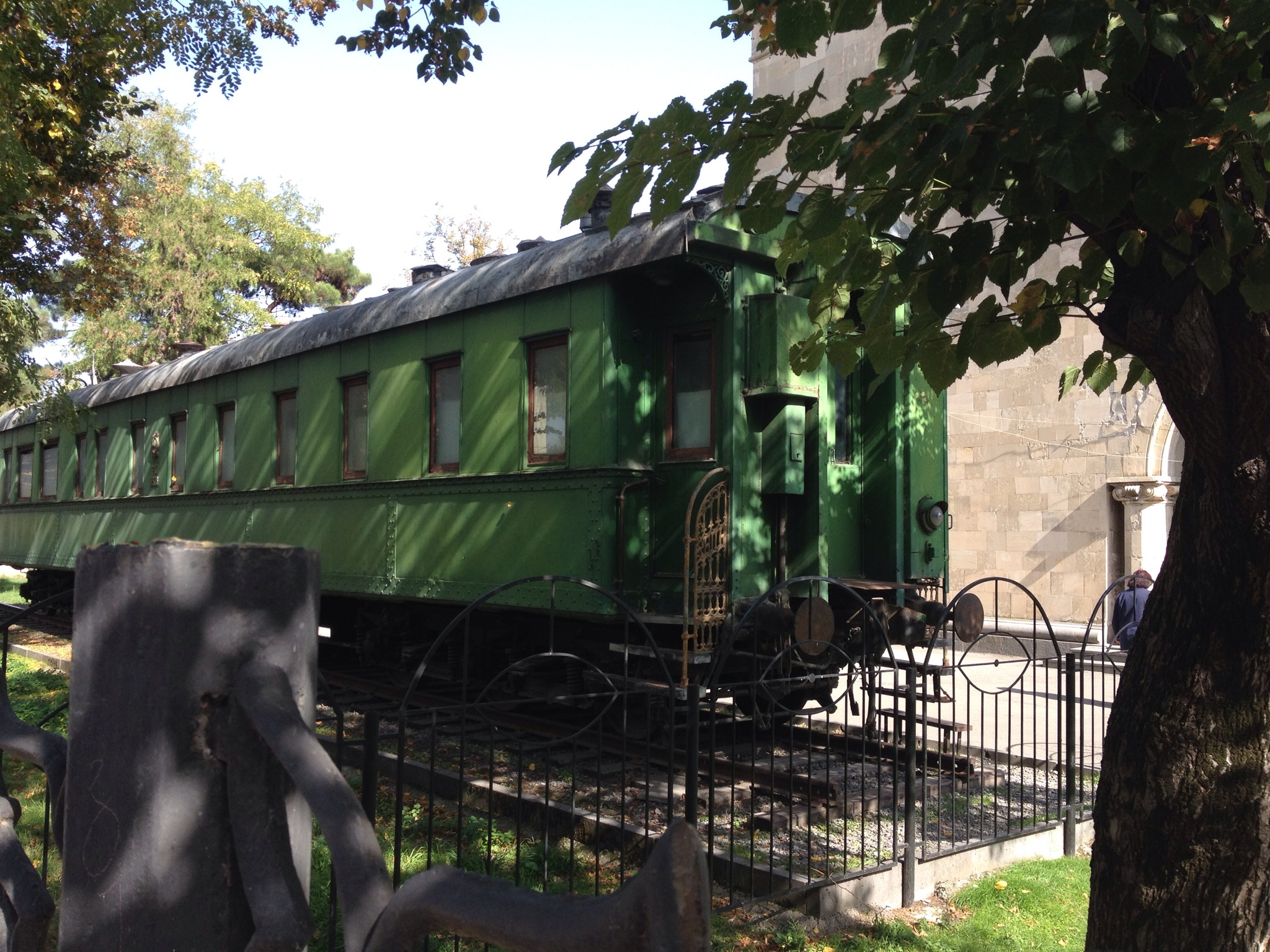
Stalin died in 1953 aged 74. The museum has a bronze of his death mask. He was eventually buried in Red Square, having eventually been removed from his mausoleum where he lay instate until 1962.Of the 4 million people who were sent to Siberia during his watch, most died. In the grounds of the museum is the wooden house where Stalin spent the first 4 years of his life – his parents rented one room and the basement as his workshop and the bullet prove carriage of his train that he travelled around in.
In just one room of the museum we were shown the chains that people were held by and there was brief mention of the programs that took place.
It was I stark contrast to this that we moved on to put our tents up to dry out while we visited the ancient cave city of Uplistsikhe. This incredible place once housed 20,000 people and was at one stage an international trading post on one of the branches of the Silk Road.
The evidence is that it was originally built by people who worshipped celestial bodies and fertility in the 3rd millennium BC. It is one of the oldest urban sites in he Caucasus. Over the years it has not only been a religious site, moving from pagan to Christian and back to pagan again before returning to Christianity, but it was also used as a fortress and kings lived there.
The buildings all had roofs and were much better preserved until a bad earthquake in circa 1920 when a lot of damage occurred. It is a fascinating place with hand dug holes in the rock for everything from cooking and baking bread , through to wine making and making sacrifice. There is evidence of a theatre with rows of seats for the audience and decoration of the ceilings and walks of the caves with carving to look like beams in the stone. Channels have been dug to allow water to flow and in one place there are a wall of holes thought to be a ‘cupboard’ used by an apothecary to dry herbs and medicinal plants. Some of the caves are coloured, these were painted in the Russian period when the site was used to make films.
Excavations have revealed gold treasure including imported pieces of jewellery. There is also evidence of a 7 ancient wine presses and they were known to grow vines on the rock.. Most of the temples had wine cellars. (It is obvious that these people knew what they were about!)
It was a very interesting area and one that has not yet revealed all its secrets. There is still a lot of mystery surrounding the perfectly round holes – some as deep as 20 metres – how were the dug out and what were they for? On top of the cave dwellings there is three named church that dominates the sky line as if there for good measure. The final mystery is the tunnel, believe to be dug very early on in the cave city’s existence and used as an escape route and a means of collecting water as it runs out into the river below which was believed to have covered its entrance…….




Although it was dull when we set out, the day improved and became beautifully warm and sunny – perfect for enjoying a lovely city.
After breakfast, Zaza arrived to act as our guide. He not only lives here, he works for one of the art galleries as well as his work as an archeologist – he is proving to be a national treasure! So knowledgable.
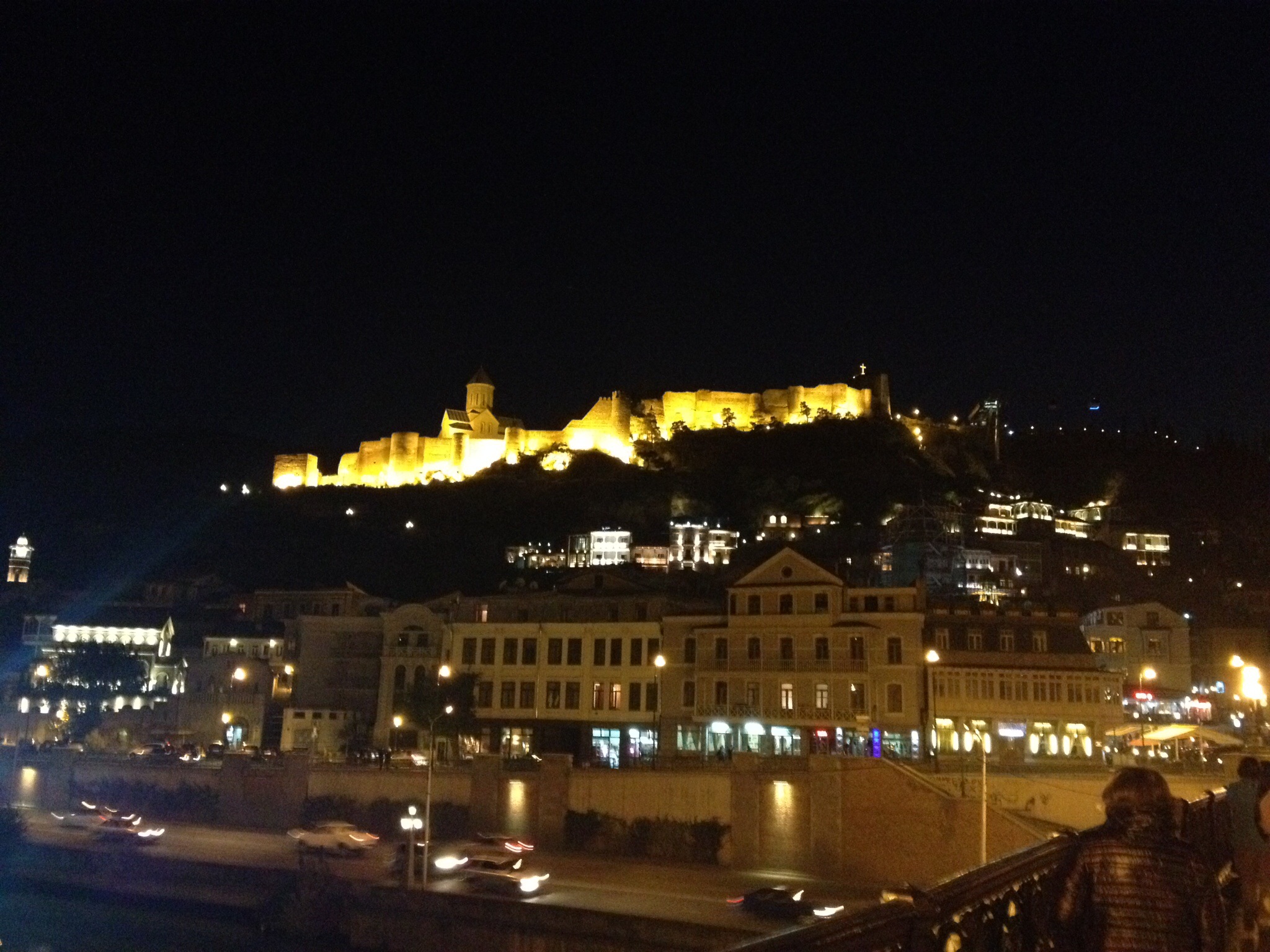
We started the tour by standing in the grounds of the church at the bottom of the road from the hotel. We were on a terrace on the high river bank looking over to the old town as it slopes down towards the river on the other side. Although not originally the Georgian capital, the area came to fame when it was found to have hot springs that an ancient king rather took to. He decreed that the capital should move its location – Tbilisi means ‘warm city’. The springs are still there, as are the old baths which are still in operation. We could see the domes of the bath house buildings as we looked down from our terrace. Artefacts would indicate that there has been a settlement on the site since the 3/4th century.
The top of the hill opposite is dominated by a huge fortress and the original town grew around it’s base. Tbilisi has the same history as so many places we have seen on our journey since China – destroyed by the Persians it grew up again with its narrow, twisting streets and was then ravaged by the soviets.
Now it has an old town under renovation and a new modern city spreading out on the other side of the river. Most noticeable were some really odd architectural shapes that could be seen in the bridges. the unfinished concert hall – two massive silver tubes that were to glisten in the sun later in the day – and what looked like a gigantic patch of mushrooms which was the civic building. These are all the output of a recent young president wanting to make his mark.
Tbilisi has a multi ethnic population and a real cukture mix – so much so that the only mosque in the old town provides a place of worship for both Sunni and Shiite Moslems. Amazing given all the ‘fuss’ elsewhere…….
A key feature of the housing architecture is the large balconies. We asked about this when we saw them in the old town of Baku but did not really get an answer but apparently they are popular because it gets so hot. Everybody lives on the balcony!
We descended from the terrace and crossed the bridge at the bottom of the road. First we passed the bath house and then peered down into a huge crack In the earth – a small gorge with water trickling through it to join the main river. Apparently the Russians used it as a rubbish tip – it must have been very smelly in the heat of the summer and so close to the old town buildings….
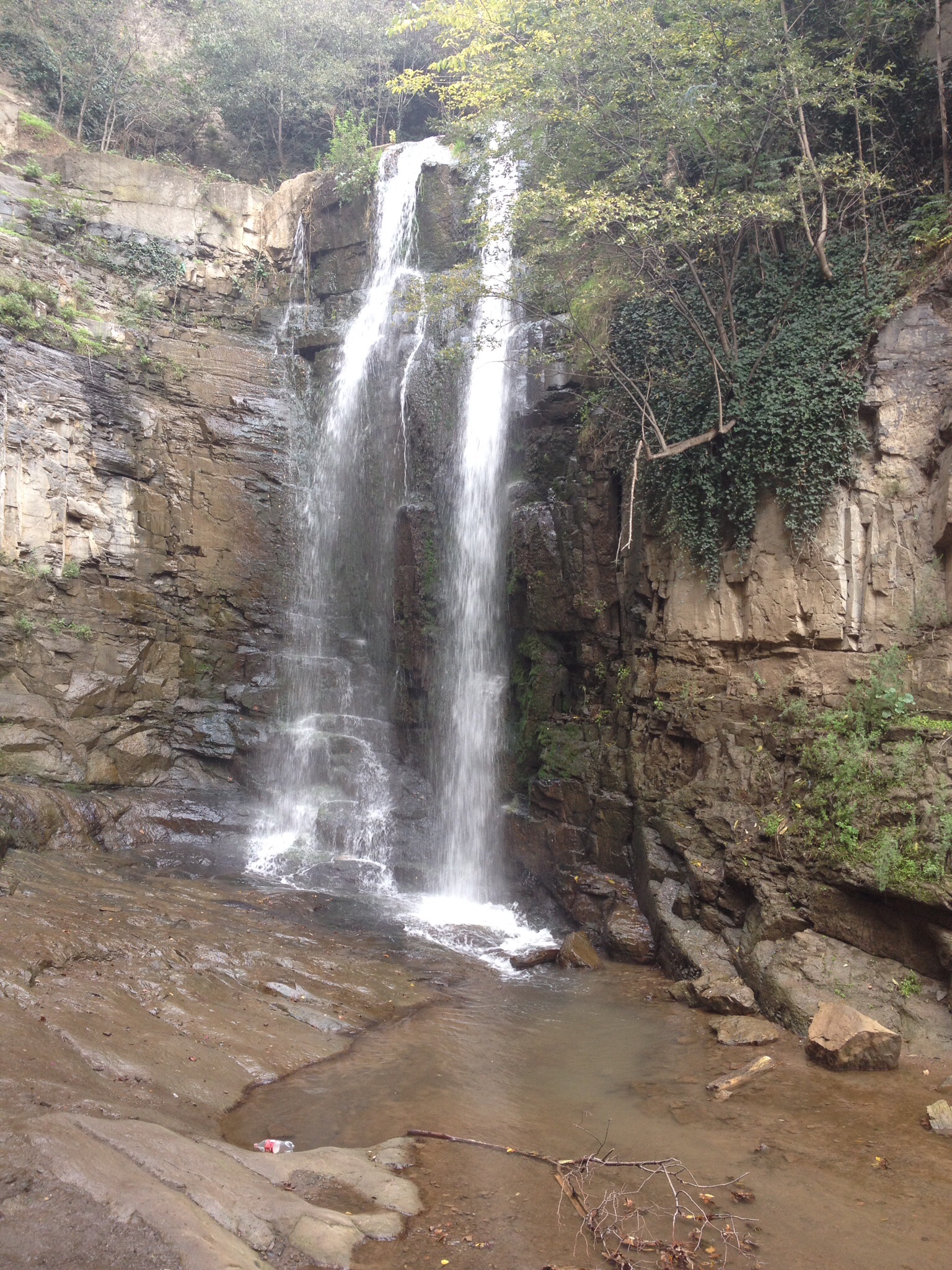
Walking up the gorge, with high cliffs either side you were suddenly transported to another place. Instant countryside. The sides of the gorge rising like cliffs over our heads, but trees, shrubs and grass underfoot. The water in the narrow river bed trickled over boulders and stones and as we rounded the corner we were confronted with a natural waterfall. Not what you expect in a modern city. We crossed the stream and climbed a spiral metal staircase to take us us to the road level of the old town. We were immediately in the old town. Initially we walked through recently renovated buildings with some rather startling mistakes! One of the new marble external staircases had been built across the front door of the house behind it. Hmmmmm.
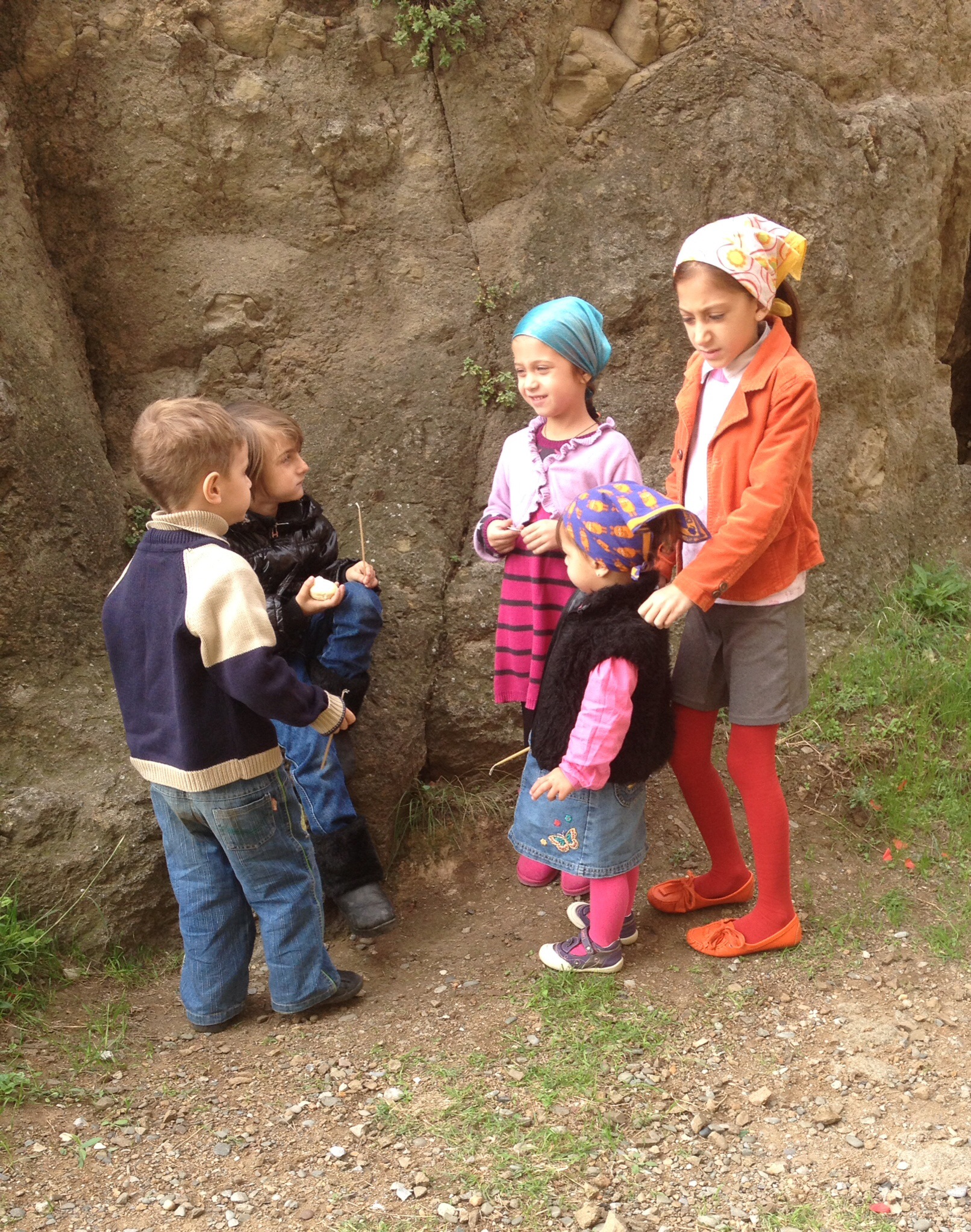
We walked on up the steep narrow street. We passed the mosque, up and up until we came to the church by the fort. It was Sunday and coming up for service time so people had begun to gather. As we peered over the church wall down into the city – now from the other side – a young member of the clergy came out and started to toll one of the rusting bells. At this, even more cars arrived. It is obviously a big thing here. While both parents were inside, children played outside in the sun as the sound of singing came from within the building. Peeping in the door – it was true – they were all standing.
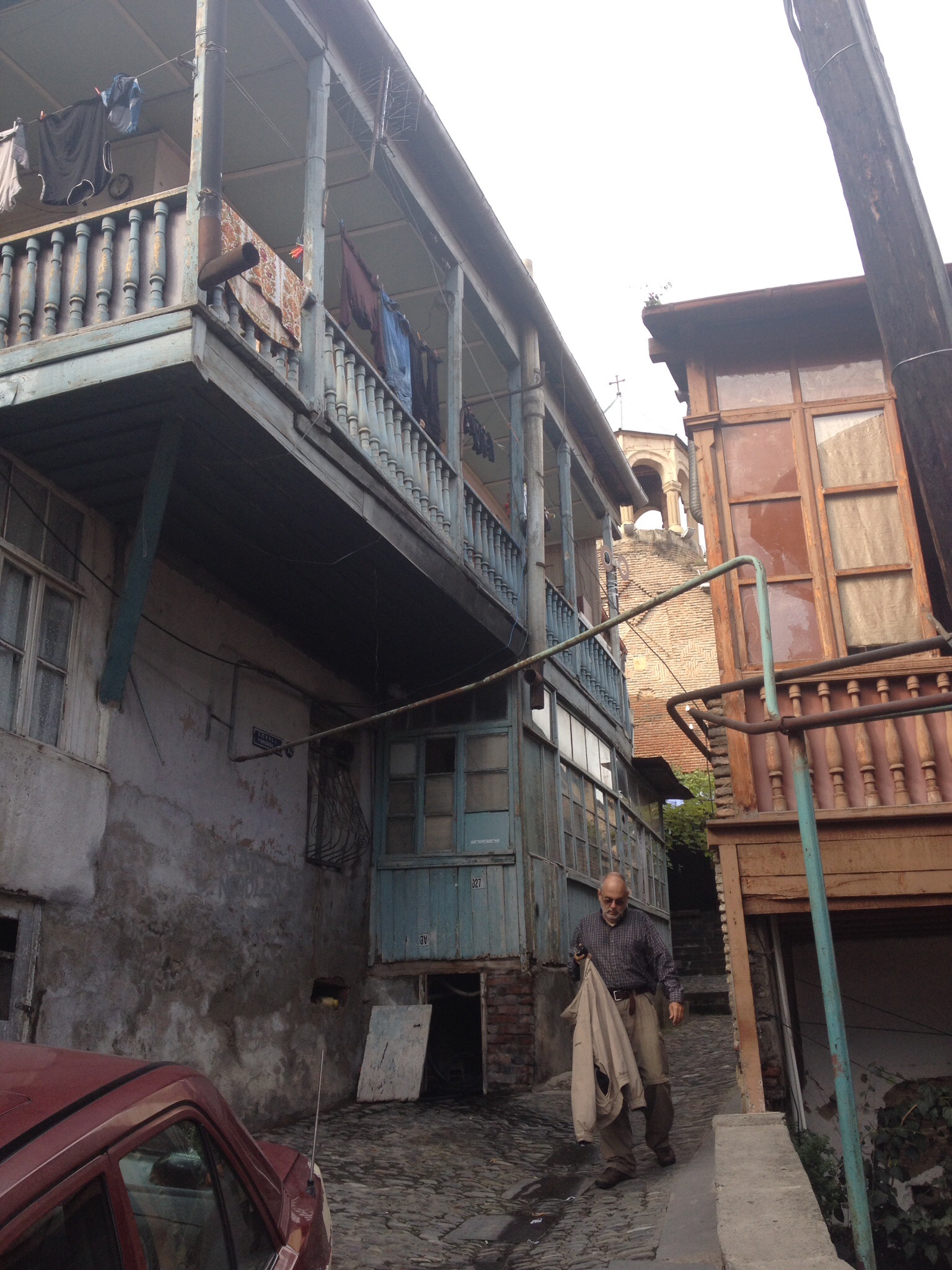
We moved on further up the battlements. A huge female similar to Mother Armenia, stood in a similar stance, sword in hand, looking down on her Georgian citizens below. Having taken in the view ourselves we started our descent. This time we found ourselves in the real, not renovated old town. This was much poorer. The buildings, although in the same style, were in various stages of dilapidation. Peeling paint, rusting ironwork, a labyrinth of external pipe work and dangling wires were all in evidence in the narrow winding streets. Amongst all this, washing hung from strings attached to anything with an appropriate hook or nail.
We passed people emerging from another church, near a site of an ancient Zoroastrian site. Cats and kittens were everywhere. One of our number, Barry (or Sir Barrington as he has come to be known) is very fond of cats and had a field day of photography in Tbilisi! We eventually arrived at the bottom of the hill and the old town continued on its route to Freedom Square where ancient joins modern on this side of the river.
One rather bizarre incident has to be reported. We were taking a path passed a church that was a level below us. We were looking at the usual large congregation that was milling around the entrance to the church, as Zaza explained another topical point, when around the corner came some men carrying – much to our amazement – an open coffin. Horrified, we were shocked into stunned silence as we unwittingly stared down into the exposed face of the deceased (nun as we later found out) who was being rather unceremoniously carried into the church…… This trip does not cease to amaze us.
Continuing on our way we passed a clock tower with something of a fairy tale aspect. Built in several sections it took the form of sort of boxed sections in squares at slightly different angles and differing materials. It gave an indication of all sorts of ‘goings on’ when the hours were struck. It had a big iron girder on one side holding it up. Words fail me (really!) to describe the clock tower – hopefully a photograph will help!
After this it was a short walk along old exposed city walls that ran along at pavement level beside us to Freedom Square, passing on the way a cheese shop. (How exciting was that!!)
The square is surrounded by huge buildings – art galleries and museums – although one side is just a pseudo classic facade facing with nothing behind it! A tall column stood in the centre with a gold George and the Dragon on top. George certainly gets about…,,,,,
This marked the end of the tour and we raced back to the clock to see what happened. Sure enough an angel emerged with a hammer to strike a bell to toll the hours at the top and lower down, clock puppet figures emerged and rotated past us. A huge crowd had gathered for this, rather as I remember a crows gathering by the Liberty’s clock off Regent Street when I was a child. Is the Liberty’s clock still there?
We had a rather more hearty lunch than we had anticipated in a nearby cafe and then took off on our own to explore. We wondered art galleries, enamel museums and expensive shops. I bought fingerless gloves and we continued to hunt for a small (we are fast running out of walls at home) picture to mark our trip, but found nothing despite walking along the river later in the afternoon to the Dry Bridge Market.
This is an area where anyone can go and sell anything it would appear. Although dominated by paintings, people had laid out all manner of things on the pavements. Much looked to be rubbish, but some struck me as sad as elderly people sat by ancient chipped pots and pans looking as though they were selling their last possessions. Good job I have no where to put them in the truck! Along the riverside was a whole row of book sellers, old books piled high in purpose built stalls.



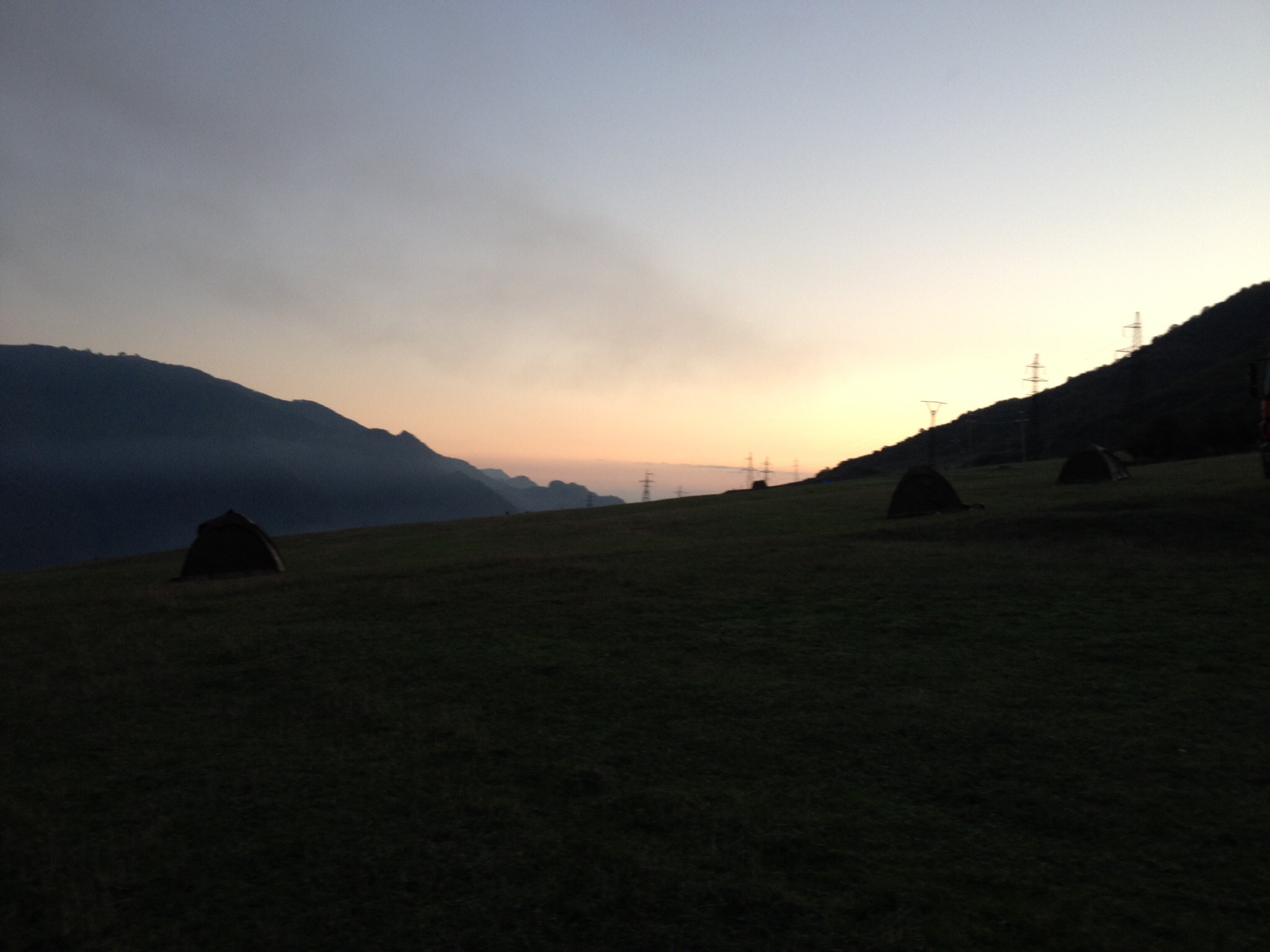
It was a cold, but dry night and the coldest morning so far. There was a lovely pink sunrise and the clouds lower down in the valley created a rather wonderful mystical scene as we peered over them. Some birds wheeled in a changing black pattern overhead in the early morning light. A magical moment.
We were pleased to find that nothing had got too damp overnight so we were able pack up the Ritz and our camping bag that holds our sleeping bags, sleeping mats and pillows. Several of the most recent wet camping nights have led to our having to dry the sleeping bags out in the truck before stuffing them away.
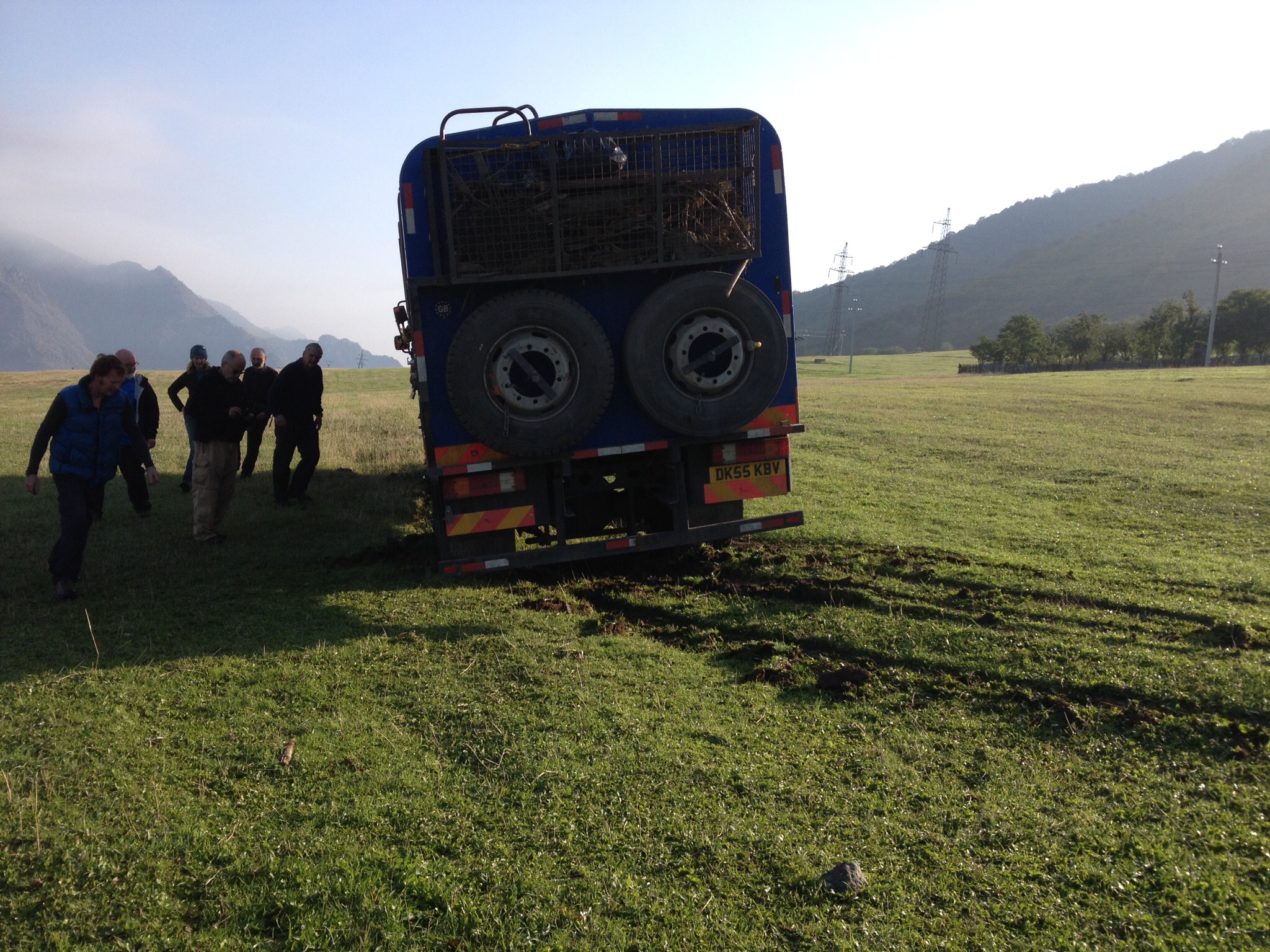
After breakfast set we set off for the half an hour ride to the border. However, the brief hop to Georgia was not to be. Within the first 50 yards Penelope slewed in the mud and came to an abrupt stop, back wheels dug six inches in the turf. A muddy hour and much churning later there had still been no progress. Zaza and Emma went off into the village for help while Simon, with us working as his labourers, continued to try to get the truck to make progress up the hill. About twenty minutes later, five men wandered down towards us. They looked more likely to be an additional audience to the drama than offering help but, as it proved, our first impression was incorrect and this was not the case. About five minutes later the roaring of a large engine heralded the arrival over the hill of one of the heavyweight Russian Gaz trucks that had appeared on the trip earlier to get us up to the high pastureland of Kyrgystan.
Initially, the Russian heavyweight equally had no joy, but once the decision had been made to run the truck down the field to another exit, Penelope was able to kick herself out of the mud. We were not allowed to ride the truck out, so made our way to the road on foot and met up with Simon and Penelope when they were safely out of the mud. Two hours later than anticipated, we were back on track.
We zig zagged down the hill as the road made its way to the bottom of the valley through the tree covered slopes of the valley sides. Fruit sellers occasionally appeared on the roadside. The day’s earlier sunshine had clouded over and by the time we reached the border it was quite a grey day. Happily, I think it was the easiest border crossing we have experienced so far and before long we were back in Georgia, our last country before Turkey.
We passed through almost tumble down towns, with crumbling concrete and with television satellite dishes vying for position with washing on apartment balconies. There were few people about.
In another couple of hours the enormous sprawl of Tbilisi was below us. A quarter of Georgia’s population live in Tbilisi the capital. From the road,
blocks and blocks of white apartment buildings shone in sunshine across the other side of the valley to our approach. On the edge of the city there were signs of additional building as pipes were being laid and land cleared. Eventually the river that divides the new and old city came into view and then the opposite bank rose to cliff like proportions. Hotels peered down from the cliff top in a rather haughty way like elderly matrons overseeing the day to day activity of the traffic below.
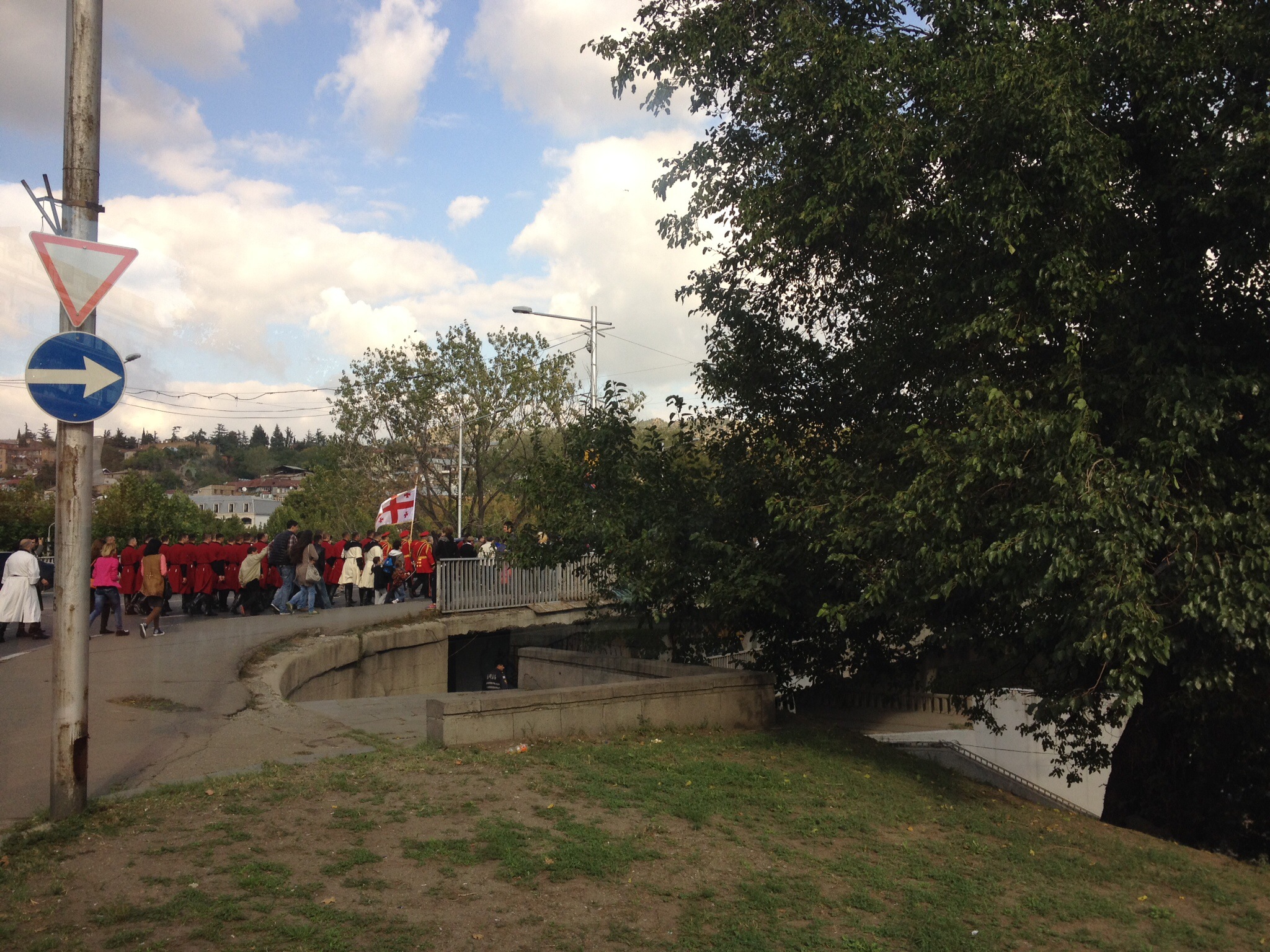
Our hotel was on the other side of the river. The first bridge we came to was closed. Driving on we found an alternative way across the river and turned towards the city. We followed several tree lined streets and turned into the Freedom Square and we ground to a halt for the second time in the day. Now what? A parade! Suddenly the paraders came into our view some in local costumes – many were quite young. Unfortunately the drivers behind us did not have the benefit of our high perch and lots of hooting broke out behind us.
Despite the pressure from behind, we waited and watched the young people go past. Eventually a policeman signalled us forward and we found our hotel in a narrow street just across from the old city. The cars parked by the side of the road and the wedding taking place in the church at the bottom of the road made it a very tight squeeze, but we were able to get out and into our rooms.
Keith and I decided not to take on Tbilisi at this stage but to rejoin our chums for the Georgian food and dancing in the evening. A wise decision.
When we got to the venue it was to find quite a gathering of people in rather festive mood, including the group from the Dragoman truck, Odyssey’s arch competitors. I think we last saw them in Baku. Their numbers are about 20 in about the same sized vehicle. Take it from me, that number would be horrendous. We are now at 10, having retrieved Sarah and Wendy and life is very comfortable.
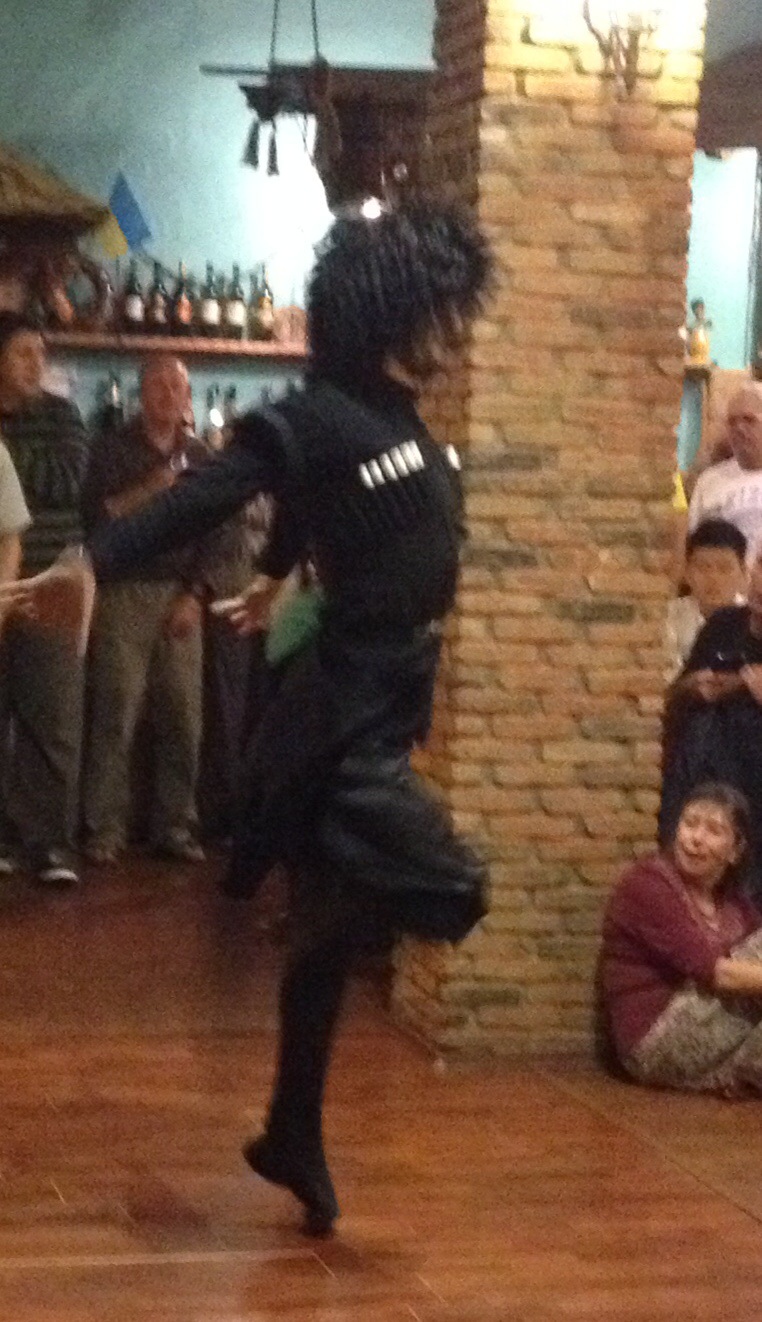
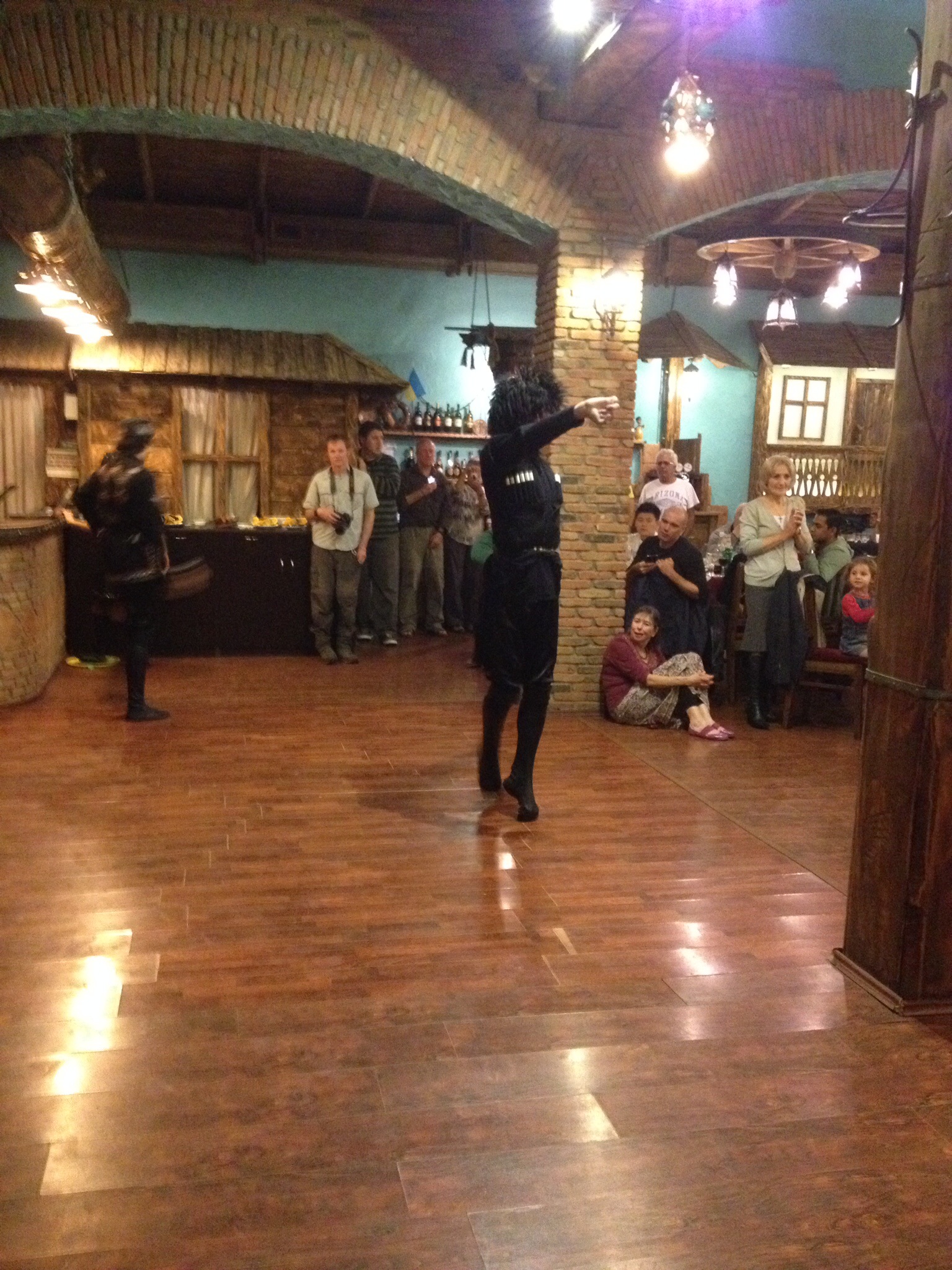
The food and traditional dancing were great. To top the evening, ZaZa bought all the ladies a rose. These Georgians are such charmers…….




 pollytheperil